
Ice Cream Calories: Scoops, Portions and Enjoying Dessert
Make sense of ice cream portions and enjoy dessert with a realistic view of the whole serving.
Key Takeaways
- A scoop is a shape, not a standard weight.
- Toppings can add as much as the ice cream itself.
- Ice cream can fit during weight management.
- Low-sugar or high-protein versions are not unlimited.
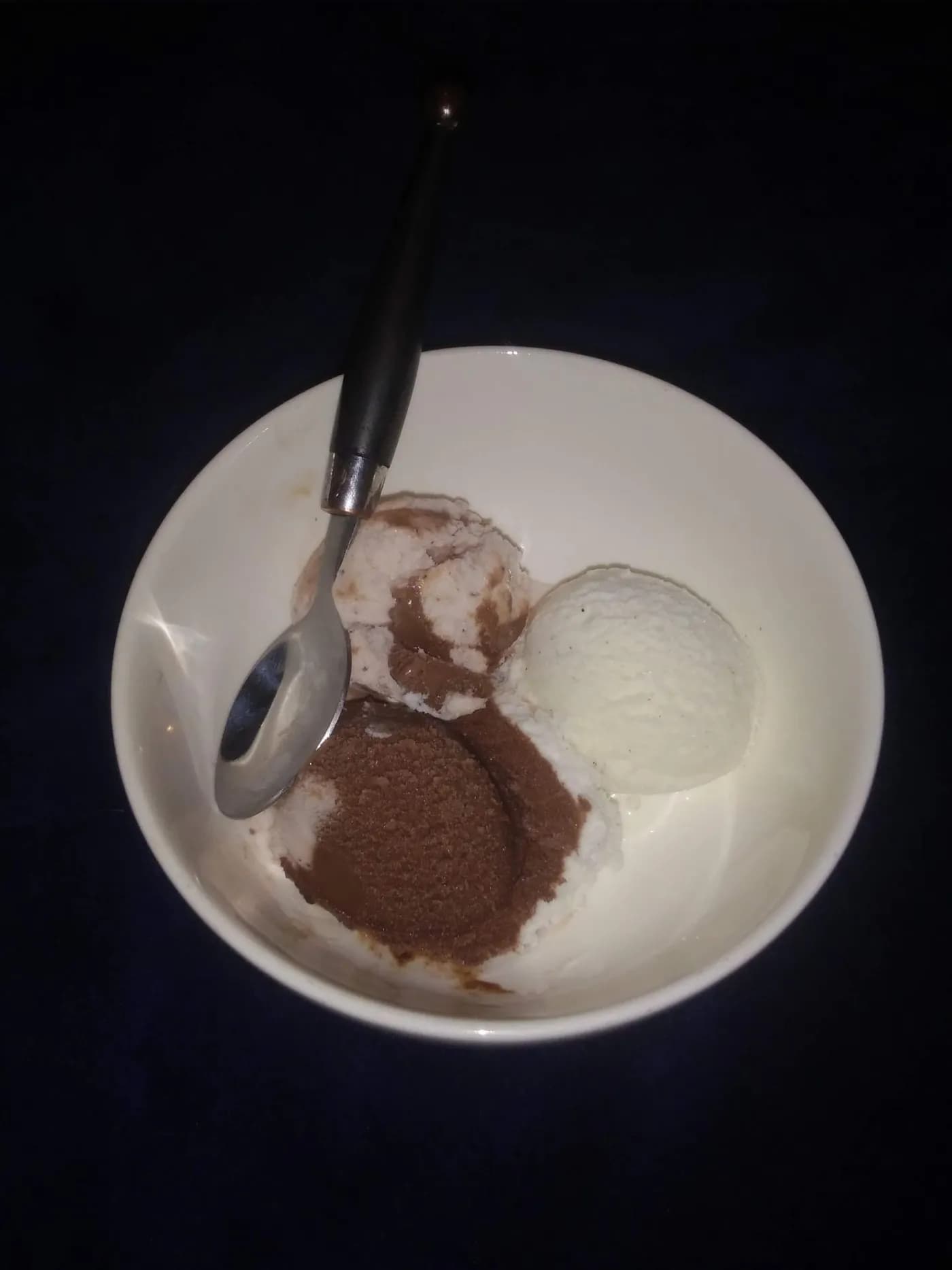
“How many calories are in a scoop?” is a reasonable question with an inconvenient answer: scoops are not a fixed size. The recipe, amount of air, serving and toppings all change the result. You do not need to ban ice cream to manage your food intake. A useful approach is to understand the portion you enjoy and keep the whole dessert in view.
Why one calorie number is not enough
Ice cream contains ingredients such as milk, cream, sugar and flavourings in different proportions. Richer recipes, nuts, chocolate pieces and swirls can change its energy content.
A common plain vanilla ice cream is roughly 200 calories per 100 g, but that is a guide rather than a value for every brand. Some products contain more or less.
For the product you actually eat, the packet is the better reference. You only need two pieces of information: the stated amount and the calories for that amount. There is no need to analyse every ingredient before serving dessert.
A scoop describes shape, not a standard weight
A small home scoop and a large shop scoop can differ considerably. A neatly rounded scoop can also weigh differently depending on the ice cream's density.
Volume and weight are not the same. A 100 ml serving is not automatically 100 g because ice cream contains air. Mixing those units can make a comparison misleading.
If you want a better sense of your usual portion, measure it once using the same unit as the packet. You do not have to weigh dessert forever. A one-time check can show whether the bowl usually contains one stated serving or considerably more.
Use simple arithmetic when it helps
Imagine a product provides 200 calories per 100 g. A 50 g serving would provide about 100 calories, and 75 g would provide about 150. These are illustrations, not claims for a particular brand.
If the packet instead gives calories per serving, count how many of those servings are in your bowl. Do not assume a small-looking tub is intended as one serving.
The purpose is understanding, not precision for its own sake. Restaurant portions may only allow an estimate. A reasonable estimate is usually more helpful than treating an uncertain number as exact or giving up on portions entirely.
Toppings can become much of the dessert
A cone, sauce, brownie, nuts and whipped cream can add substantially to the serving. They also change the texture and enjoyment, so choose the additions you actually want.
For example, you might prefer a small portion with a favourite sauce to a much larger plain serving. Or the ice cream itself may be the part you enjoy most, making several extras unnecessary.
Serve it in a bowl or on a plate so the amount is visible. Eating directly from a large tub makes it easier to keep going without noticing, especially while distracted.
Can ice cream fit during weight management?
Yes, an appropriate portion can fit into an overall eating pattern. Its effect depends on frequency, serving and the rest of the food you eat, rather than a special property that instantly causes weight gain.
Avoid skipping a proper meal to save space for dessert if that leaves you hungry and unsatisfied. A meal with vegetables, protein and a staple can come first, with dessert as an enjoyable addition when wanted.
You also do not need to compensate afterwards with fasting or excessive exercise. Return to normal meals. An approach that includes occasional enjoyment may be easier to sustain than a rigid rule that turns one serving into a failure.
What do low-sugar and high-protein versions mean?
A lower-sugar product can still contain energy from fat and other ingredients. High protein describes one feature, not permission to eat an unlimited amount.
Some alternatives use sweeteners or sugar alcohols, which may cause digestive discomfort in larger amounts for some people. Taste and tolerance matter as well as the calorie figure.
Choose a version you enjoy in a portion that works. A smaller amount of your preferred ice cream may be more satisfying than a large portion of a substitute you dislike. There is no requirement to turn every dessert into a nutrition product.
Ice cream, kulfi and frozen dessert differ
Kulfi can be dense and rich, and its portion should not be assumed equivalent to a similarly sized airy scoop. Fruit sorbets may contain less fat but can still provide considerable sugar.
In India, ice cream and frozen desserts are different standardised product categories. The use of permitted vegetable fat in a compliant frozen dessert does not automatically mean it is unsafe or made from plastic.
Judge the actual product for taste, portion and nutrition rather than repeating scare claims. A dairy base alone does not make a rich dessert equivalent to a plain glass of milk.
Diabetes and lactose need separate thought
Ice cream contains carbohydrate and can affect blood glucose. Someone with diabetes may be able to include a portion within their plan, but a no-added-sugar claim does not make it carbohydrate-free.
Lactose intolerance can cause symptoms with dairy ice cream, depending on the amount and product. Lactose-free versions may help with that issue.
Milk allergy is different: lactose-free dairy still contains milk proteins. Choose a genuinely suitable alternative according to an allergy plan, and consider nuts or other ingredients in toppings and shared scoops too.
Keep frozen food safely frozen
Store ice cream according to the product instructions and avoid leaving the tub out for a long serving session. Return it to the freezer promptly after taking the portion you need.
Do not assume badly melted ice cream is restored to its original safety simply by freezing it again. Time and temperature matter, particularly in hot weather.
Choose a serving you will enjoy, sit down and eat it before it melts. Calories can help you understand the portion, but they do not need to remove the pleasure from dessert.
Editorial sources
Frequently Asked Questions
Related Articles
Vegetarian Ice Cream: What to Check, Plus a Homemade Recipe
Most ice cream is already vegetarian, since the base is milk, cream, sugar, and flavouring — the real question is whether gelatin or rennet-derived.

Gluten Free Desserts: Naturally Gluten-Free Sweets to Try at Home
Indian sweet-making has long relied on rice flour, besan, ragi, and coconut rather than wheat, so many traditional desserts are naturally gluten-free.

Coffee Calories: Black Coffee, Milk, Sugar and Cafe Drinks
Black coffee has almost no calories; milk, sugar, syrups and cup size add them. Learn to estimate the calories in your own cup.
Sugarcane Juice Calories: Sugar, Portions and Safe Stalls
Sugarcane juice gets almost all its calories from natural sugar. How glass size changes the count, who should be careful and how to pick a clean stall.