
Vegetarian Ice Cream: What to Check, Plus a Homemade Recipe
Most ice cream is already vegetarian, since the base is milk, cream, sugar, and flavouring — the real question is whether gelatin or rennet-derived.
Key Takeaways
- Standard dairy ice cream is vegetarian by default – milk, cream, and sugar don’t involve slaughter.
- Gelatin is the occasional exception, sometimes used as a stabilizer in cheaper brands.
- Rennet, a bigger concern in cheese, is essentially never used in ice cream.
- Cochineal (E120), a red colouring from crushed insects, occasionally appears in red ice creams.
- A basic no-churn version needs just 3-4 ingredients and no ice cream maker.
Most tubs of ice cream on the shelf are already vegetarian ice cream, since the base is simply milk, cream, sugar, and flavouring — none of which involve meat. The real question isn’t whether ice cream in general is vegetarian, but whether specific additives like gelatin, certain stabilizers, or rennet-derived ingredients have made their way in, which happens occasionally but far less often than people assume. This article covers what to actually look for on a label, why it’s a smaller concern than it is for cheese, and a simple recipe for making your own vegetarian ice cream at home.
Quick Facts
- Standard dairy ice cream is vegetarian by default — the base ingredients (milk, cream, sugar) don’t involve animal slaughter
- The occasional exception is gelatin, sometimes used as a stabilizer in cheaper or specific commercial brands
- Rennet, a bigger concern in cheese, is essentially never used in ice cream
- Always check for “gelatin” specifically on the ingredient label if you’re strict about vegetarian food
- A basic no-churn vegetarian ice cream needs just 3-4 ingredients and no ice cream maker
Why Ice Cream Is Almost Always Vegetarian to Begin With
Vegetarianism, in most definitions used in India and internationally, excludes meat, poultry, fish, and often ingredients derived from animal slaughter, like gelatin and rennet — but it does include dairy. Since ice cream’s core ingredients are milk fat, milk solids, sugar, and stabilizers like guar gum or locust bean gum, the vast majority of ice cream sold anywhere qualifies as vegetarian ice cream without any special effort. This is different from a food like cheese, where rennet (an enzyme traditionally sourced from calf stomach lining) is genuinely common in production. Ice cream almost never uses rennet, so that particular worry doesn’t really apply here. In practice, this means the tub in your freezer is very likely already vegetarian ice cream without you having to do anything at all.
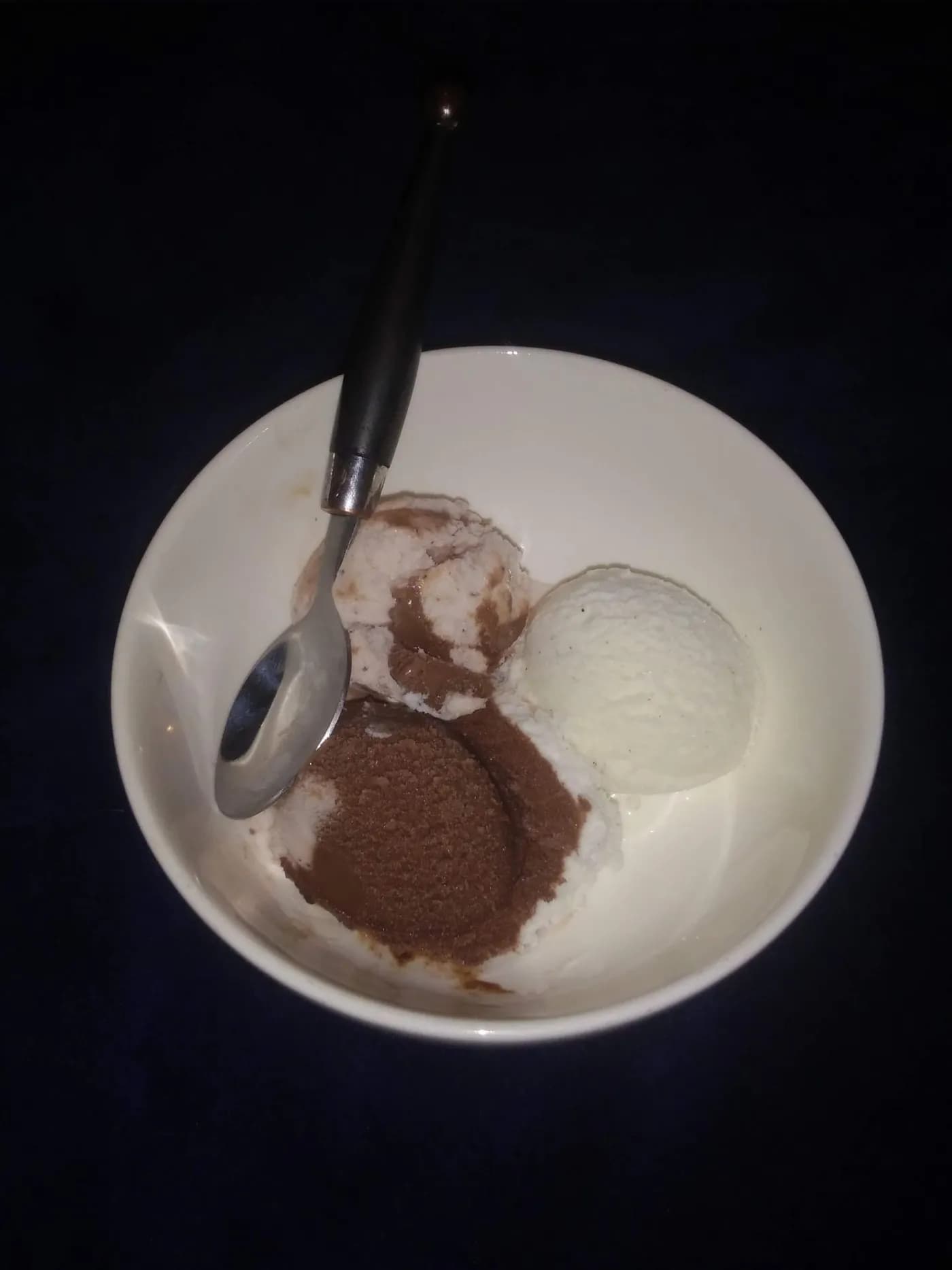
Photo: Bowl ~ Ice cream, CC BY-SA 4.0, via Wikimedia Commons
What to Actually Check For
If you want to be thorough about your vegetarian ice cream, there are really only two things worth checking on the label:
- Gelatin: Some ice creams, especially cheaper commercial ones or certain gelato-style products, use gelatin as a stabilizer to control ice crystal formation and improve texture. Gelatin is derived from animal collagen, so it’s not vegetarian. It’s not the norm, but it does appear on some ingredient lists.
- Cochineal or carmine (E120): This is a red colouring made from crushed insects, occasionally used in strawberry or red-coloured ice creams and desserts. It’s not classified the same way as meat by every vegetarian standard, but many vegetarians choose to avoid it once they know its source.
Everything else typically found in ice cream — guar gum, carrageenan, lecithin, pectin, vanilla extract, natural or artificial flavouring — is plant-derived or synthetic and doesn’t raise the same concern. If a brand explicitly labels its product with a green dot (common on Indian packaging to indicate vegetarian) or a “suitable for vegetarians” note, that’s generally a reliable shortcut so you don’t have to read every ingredient every time to confirm you’ve got vegetarian ice cream.
This kind of label-checking comes up with other treats too — Vegan Dark Chocolate walks through a near-identical check for dairy hiding in supposedly dark bars. And if reaching for a scoop is more about a stress-driven sweet tooth than actual hunger, How to Reduce Sugar Cravings gets into why that happens and what helps beyond willpower.
A Simple Homemade Vegetarian Ice Cream Recipe
This is a no-churn recipe, so you don’t need an ice cream maker — just a freezer and a whisk or hand mixer, and you’ll end up with a properly creamy vegetarian ice cream in a few easy steps.
Ingredients:
- 2 cups heavy whipping cream, chilled
- 1 can (400ml) sweetened condensed milk
- 1 tsp vanilla extract
- Optional mix-ins: ½ cup chopped fruit, crushed nuts, or cocoa powder
Method:
- In a large, chilled bowl, whip the cold cream using a hand mixer until it forms stiff peaks. This usually takes 4-5 minutes.
- In a separate bowl, whisk the condensed milk and vanilla extract together until smooth.
- Gently fold the condensed milk mixture into the whipped cream in three batches, using a spatula and a light hand so you don’t deflate the whipped air.
- If using mix-ins like fruit or nuts, fold them in at this stage.
- Pour the mixture into a loaf tin or any freezer-safe container and smooth the top.
- Cover with a lid or cling film pressed directly onto the surface, to prevent ice crystals from forming.
- Freeze for at least 6 hours, ideally overnight, before scooping and serving.
Once it’s set, you’ll have a full tub of homemade vegetarian ice cream ready to scoop straight out of the freezer.
This method skips gelatin entirely, relying on whipped cream and condensed milk for a soft, scoopable texture, so it’s a safe, genuinely vegetarian ice cream you can make with full control over what goes in.
Ice Cream Is Still a Treat Food
It’s worth being honest here: whether it’s homemade or store-bought, ice cream is a dessert high in sugar and saturated fat, and being vegetarian doesn’t change that. A typical serving of vanilla ice cream runs about 200-270 calories per cup, with 12-16g of fat and 20-28g of sugar, depending on the brand or recipe. None of that makes it something to avoid entirely, but it’s not a health food just because it happens to be dairy-based and meets vegetarian standards — moderation still applies to vegetarian ice cream the same way it would for any dessert.
Frequently Asked Questions
Related Articles
Protein rich vegetarian foods: the perfect plate habit
Learn how protein rich vegetarian foods support energy, strength and fullness. Use the perfect plate habit with greens, grains and protein.

Protein-rich vegetarian foods: 1/4th plate habit
Explore protein, carbohydrates, healthy fats and meal planning for strength training, muscle building and recovery.

How to Get Enough Protein on a Vegetarian Diet
Learn how protein rich vegetarian foods support energy, strength and fullness. Use the perfect plate habit with greens, grains and protein.