
Maltose: The Sugar Behind Malting and Some Sweet Foods
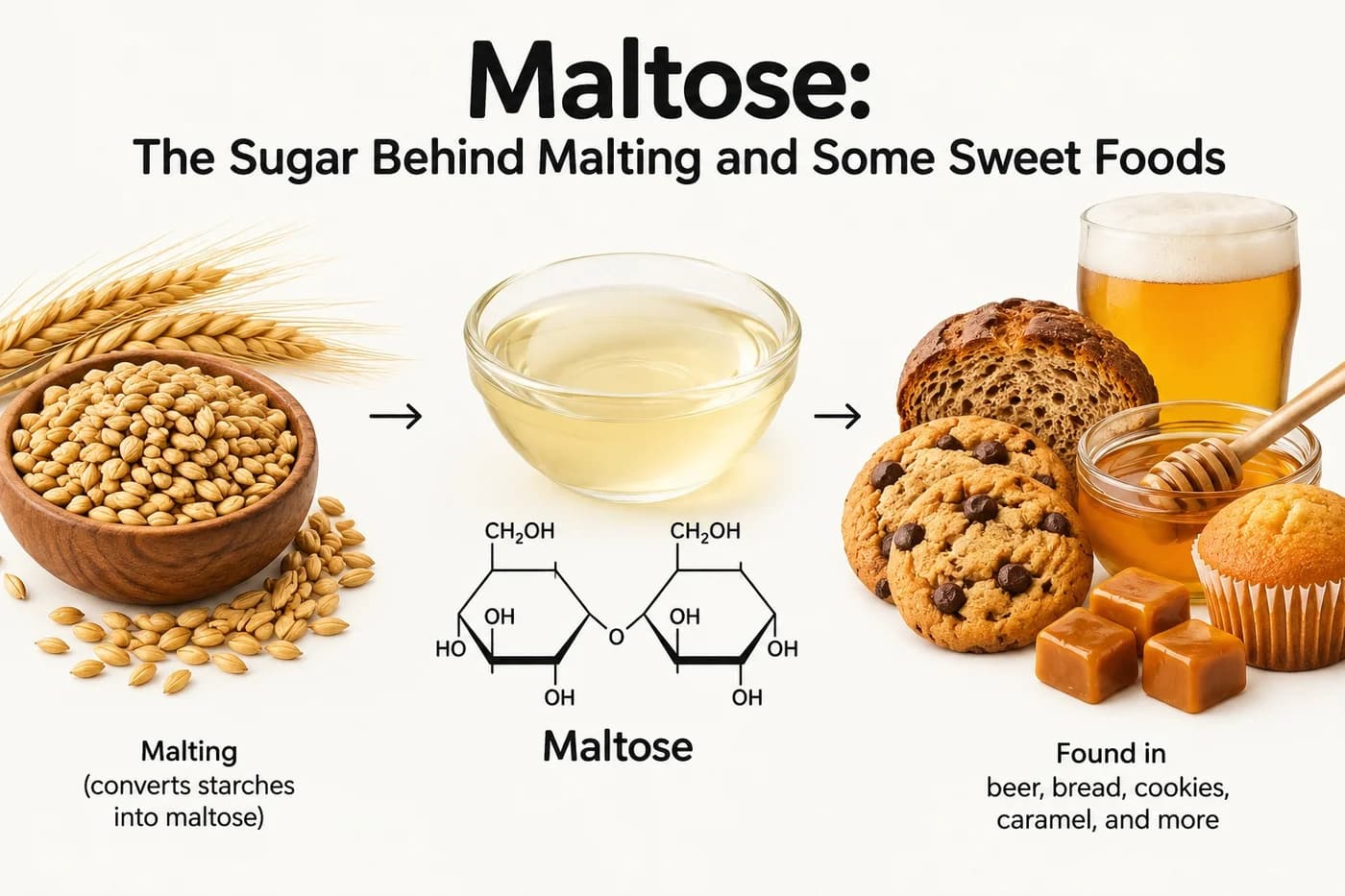
Maltose forms when starch breaks down and is found in some malted foods. Its grain origin does not make it free from sugar or calories.
Key Takeaways
- Maltose is two glucose units joined together.
- Malting grains is what creates maltose.
- Maltose is not the same as maltodextrin.
- Less sweet does not mean fewer calories.
Maltose may be an unfamiliar word on a packet, but its name gives a clue: it is associated with malt. It forms when starch is broken into smaller pieces, including during grain germination and some food-processing methods.
It is also a sugar. A malty flavour, a cereal origin or the absence of ordinary table sugar does not make a food free from sugars or carbohydrate. Understanding where maltose comes from helps you make sense of malt drinks, syrups and breakfast foods without memorising a long chemistry list.
Two glucose units joined together
Maltose is made from two glucose molecules linked together. During digestion, enzymes in the small intestine split it so the glucose can be absorbed and used for energy.
Table sugar, or sucrose, is different: it contains glucose and fructose. Lactose, the sugar in milk, is another distinct combination. These differences explain the names, but they do not make maltose a calorie-free alternative.
Like other ordinary digestible sugars, maltose provides about four calories per gram. Its taste can be less sweet than sucrose, yet lower sweetness does not mean lower energy for the same weight.
How malting creates it
When a grain germinates, enzymes begin breaking down stored starch. Malting uses controlled germination followed by drying to develop ingredients used in foods and drinks. Barley is a familiar example.
The resulting malt ingredient is not pure maltose. It may contain other sugars, starches, flavour compounds and grain components. A malt extract and an isolated maltose syrup therefore do not have identical compositions.
This also explains why a nutrition number for one ingredient cannot describe every malt beverage. The recipe, serving and any milk or sugar added during preparation all affect the final drink.
Where you may come across it
Maltose or malt-derived ingredients can appear in malted beverages, some breakfast cereals, confectionery, bakery foods and syrups. It can also arise when starch-containing foods are processed or digested.
The word malt on a food does not tell you how much sugar you will consume. A small amount used for flavour in bread differs from a large serving of a sweetened drink powder.
Look at the finished food you actually eat. Is it a substantial breakfast, a drink alongside breakfast or a sweet snack? Its role in the day is more useful than deciding its health value from one ingredient name.
Maltose is not maltodextrin
The names sound similar, but maltodextrin usually consists of longer chains of glucose units derived from starch. It is used for texture, bulk or a readily available carbohydrate source in different products.
It may not taste very sweet, and it may not be counted in the sugars line in the same way as maltose. It still contributes digestible carbohydrate and can affect blood glucose.
This is a useful example of why no added sugar does not mean no carbohydrate. The total carbohydrate and the amount eaten matter, particularly when a product is used frequently or someone manages diabetes.
What does it mean for blood sugar?

Maltose is broken down into glucose, so it can raise blood glucose. It is not a special sweetener that people with diabetes can use freely. A product being made from grains does not remove that effect.
The response to the whole food also depends on portion, fibre, protein, fat, preparation and treatment. A spoonful within a mixed meal is different from a large drink consumed on its own.
If you already have an individual diabetes plan, include these foods within it rather than creating a separate exemption for malt. Our article on how to control sugar covers everyday changes that can reduce the overall sugar load.
Less sweet can still mean a large serving
Because maltose is less sweet than table sugar, a food can provide considerable carbohydrate without tasting intensely sugary. Conversely, taste alone cannot tell you the amount of added sugar in a product.
For example, a powder mixed with milk combines the powder’s carbohydrate with the milk’s lactose. Adding another spoon of sugar increases the total again. Comparing only the dry powder with a prepared drink can create a misleading impression.
You do not need to calculate every sip. It is enough to notice whether a sweetened beverage is an occasional preference or a daily addition that has quietly replaced more substantial food.
Does maltose offer special nutrition?
Maltose itself is mainly an energy source. It does not supply a meaningful package of fibre, protein or vitamins simply because it can come from a grain.
A malted food may contain added vitamins and minerals or other grain nutrients. Those belong to the full product, not to maltose as a molecule. A fortified drink can provide a nutrient without making all of its other ingredients nutritionally necessary.
For a more nourishing breakfast, think about the meal: oats or another staple, a protein food and fruit can each contribute something useful. A malty drink does not have to carry the whole responsibility.
Teeth and frequent sipping
Sugars can contribute to tooth decay when oral bacteria use them to produce acids. Maltose is not an exception because its name sounds more technical or traditional than sugar.
Frequency matters. A drink sipped over a long morning gives repeated exposure, while a smaller serving with a meal creates a different pattern. Water can remain the default drink between meals.
Regular brushing with fluoride toothpaste is important, but it does not turn continuous sweet sipping into a neutral habit. Changing the routine is often more useful than replacing one sugar name with another.
Keep the decision practical
You do not need to avoid every food containing maltose. A bread, a small dessert and a daily large sweet drink differ in portion and purpose. Treat the food according to that context.
Choose a malted flavour if you enjoy it, while remembering that maltose remains sugar and maltodextrin remains carbohydrate. The useful habit is understanding the portion and the whole product, rather than letting an unfamiliar ingredient name decide whether something sounds healthy.
Editorial sources
Frequently Asked Questions
Related Articles
What Is Maltodextrin? Uses, Blood Sugar and Safety
Maltodextrin is a rapidly digested carbohydrate made by partially breaking down starch from corn, rice, potato, wheat or another source.

Maltitol: Sugar-Free Sweets, Blood Sugar and Digestion
Maltitol sweetens many sugar-free chocolates and bars. Here is how it affects calories, blood glucose and digestion, and how to read the label.

What Is Sucrose: Sources, Labels and Health Effects
Sucrose is ordinary table sugar, a carbohydrate made from one glucose molecule joined to one fructose molecule.
