
Monk Fruit Sweetener: Uses, Blends and Safety
Monk fruit extract is intensely sweet, but most packets are blends. Here is what the label tells you about taste, glucose and digestion.
Key Takeaways
- Pure monk fruit extract is intensely sweet and adds negligible calories at normal amounts.
- Most packets are blends with erythritol, allulose or dextrose, so read the ingredient list.
- Bloating or loose stools usually come from sugar alcohols in the blend, not the fruit extract.
- Swapping out some added sugar can help, but a sweetener does not make a dessert balanced.
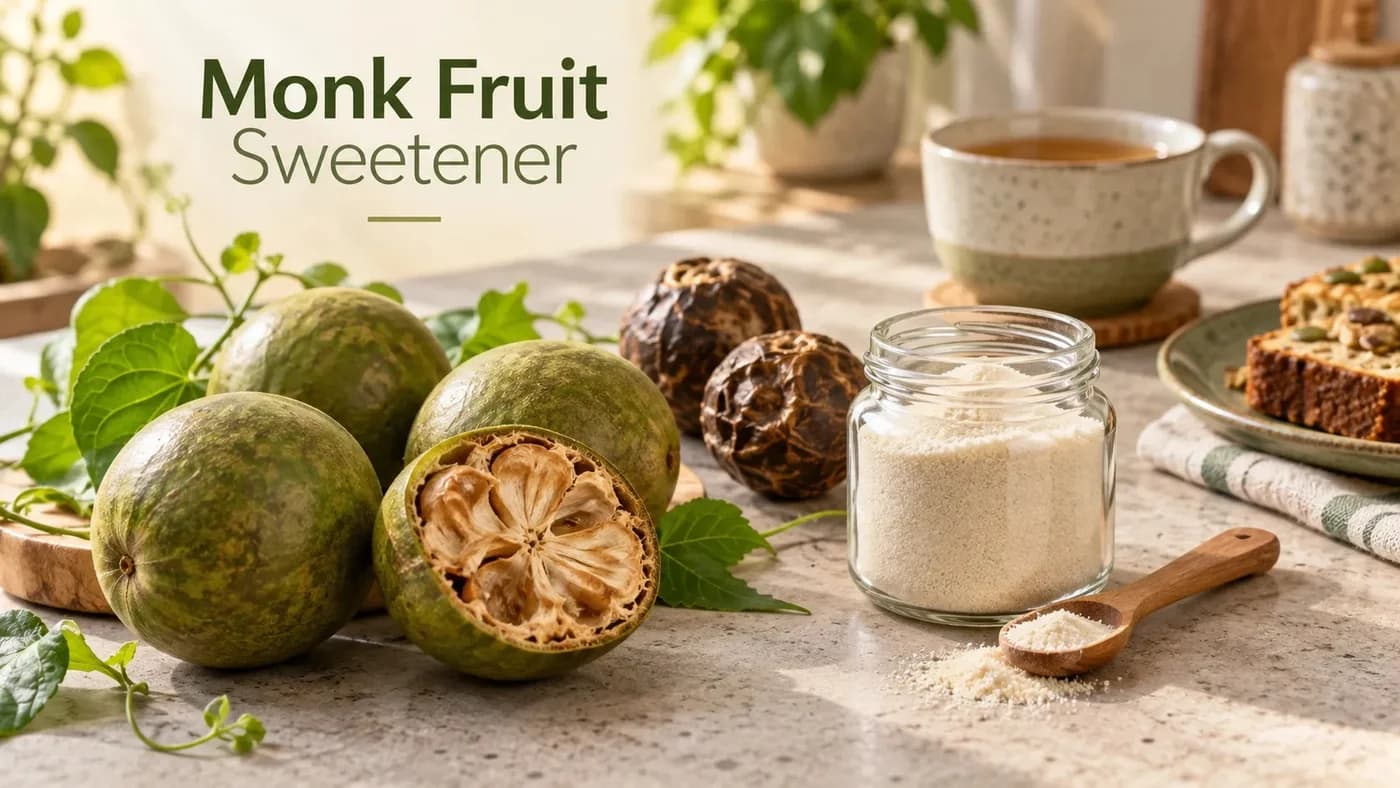
Monk fruit sweetener comes from extracts of luo han guo, a small gourd traditionally grown in southern China. Compounds called mogrosides provide intense sweetness, so very little pure extract is needed. The packet in a kitchen cupboard, however, is often mostly erythritol or another bulking ingredient, and understanding that blend matters more than the fruit illustration on the front.
Where does the sweetness come from?
Mogrosides are not sugars, even though the tongue perceives them as sweet. Manufacturers extract and purify these compounds from the fruit, then use tiny quantities in foods and drinks. This is different from eating a serving of fresh fruit: the sweetener does not provide the fibre, volume or broad nutrient mix you would get from whole fruit.
Why is pure extract rarely sold alone?
Because monk fruit extract can be hundreds of times sweeter than sugar, a sugar-sized spoon of it would be far too much. Brands mix it with erythritol, allulose, dextrose or fibres to create bulk and make measuring easier. As a result, two "monk fruit" products can have different calories, carbohydrate, aftertaste and effects on the gut.
Reading past the front label
Turn the pack around and find the first ingredient, the serving size and the carbohydrate line. Dextrose adds digestible carbohydrate, sugar alcohols such as erythritol may affect digestion, and inulin adds fermentable fibre. Also check whether the product is a tabletop sweetener or a concentrated liquid, since the measuring instructions can differ dramatically.
Does it affect blood glucose?
A pure mogroside extract contributes negligible digestible carbohydrate in the amount used, so it should not raise glucose the way sugar does. Blended products vary, and a sweetener does not cancel the carbohydrate in flour, milk or other ingredients. People managing diabetes should read the complete nutrition panel and assess the whole meal, rather than trusting a zero-sugar claim in isolation. Medical treatment decisions stay with your diabetes care team.
What it can and cannot do
Replacing some added sugar may reduce calories or help you meet a glucose-management plan. It does not automatically cause weight loss, cure diabetes or retrain appetite. Water, unsweetened drinks and naturally less-sweet foods can stay part of the plan rather than replacing every sugar source with an intense sweetener.
Frequency matters more than tiny differences between brands. For someone who rarely drinks sweet beverages, buying a substitute may solve no real problem. For someone who has several sugary drinks a day, switching some of them could be meaningful. If "sugar free" labels encourage more sweet snacks overall, though, the change may not help.
Why digestive symptoms often come from the blend
Erythritol and other sugar alcohols can cause bloating, gas or loose stools in some people, particularly in large amounts. That reaction may be blamed on monk fruit even when the extract is only a tiny component. Start with a small portion, note the bulking agent and compare products rather than concluding that all monk fruit sweeteners behave alike.
Taste and kitchen use
Monk fruit can have a lingering or fruity aftertaste that is more noticeable in plain tea than in a strongly flavoured recipe. It works in drinks, curd and some no-cook foods. Baking is trickier because sugar provides bulk, browning, moisture and structure, so use a recipe designed for your exact blend instead of making a blind one-to-one swap.
Is monk fruit sweetener safe?
Regulators in several countries have accepted purified monk fruit extracts for specified food uses, and the US FDA has received GRAS notices for certain preparations without objection. That does not mean every homemade concentrate or supplement has the same evidence behind it. Buy labelled food products from reputable manufacturers and use them according to the directions. If symptoms repeatedly follow its use, note the pattern and discuss it with an appropriate professional.
Evidence on long-term outcomes is more limited than evidence on short-term food safety.
Pregnancy and children
Normal food use is different from medicinal dosing, but long-term data in pregnancy and in very young children are limited. There is usually no nutritional need to give children intensely sweetened foods often. Pregnant people with diabetes or complex dietary needs can ask their clinician how a particular blend fits their plan.
Using it sensibly
Use monk fruit when it solves a specific problem, such as lowering the sugar in a drink you have every day, and keep the amount modest. Change one product at a time and notice taste, convenience and digestive comfort over a week before deciding whether to keep it. Some people enjoy monk fruit; others dislike the aftertaste or prefer a measured amount of sugar, and neither choice says anything about discipline. Persistent symptoms need qualified care rather than another product switch.
Editorial sources
Frequently Asked Questions
Related Articles

Stevia: Benefits, Uses & Ayurvedic Properties
Stevia (Madhupatra) is a natural, calorie-free sweetener with powerful Ayurvedic benefits for blood sugar regulation, weight management, liver health.


Jaggery vs Sugar: Which Sweetener Is Actually Healthier?
Jaggery is often seen as the natural, guilt-free option, but nutritionally that’s only partly true — both are concentrated carbohydrates that affect.


Sorbitol: Uses, Digestive Effects and Label Reading
Sorbitol is a sugar alcohol used in sugar-free foods, medicines and dental products, but larger amounts commonly cause gas or loose stools.