
MSG: What It Is, Sodium Facts and Safety
What MSG is, how its sodium compares with table salt, what safety reviews conclude, reported sensitivity and how to cook with a light hand.
Key Takeaways
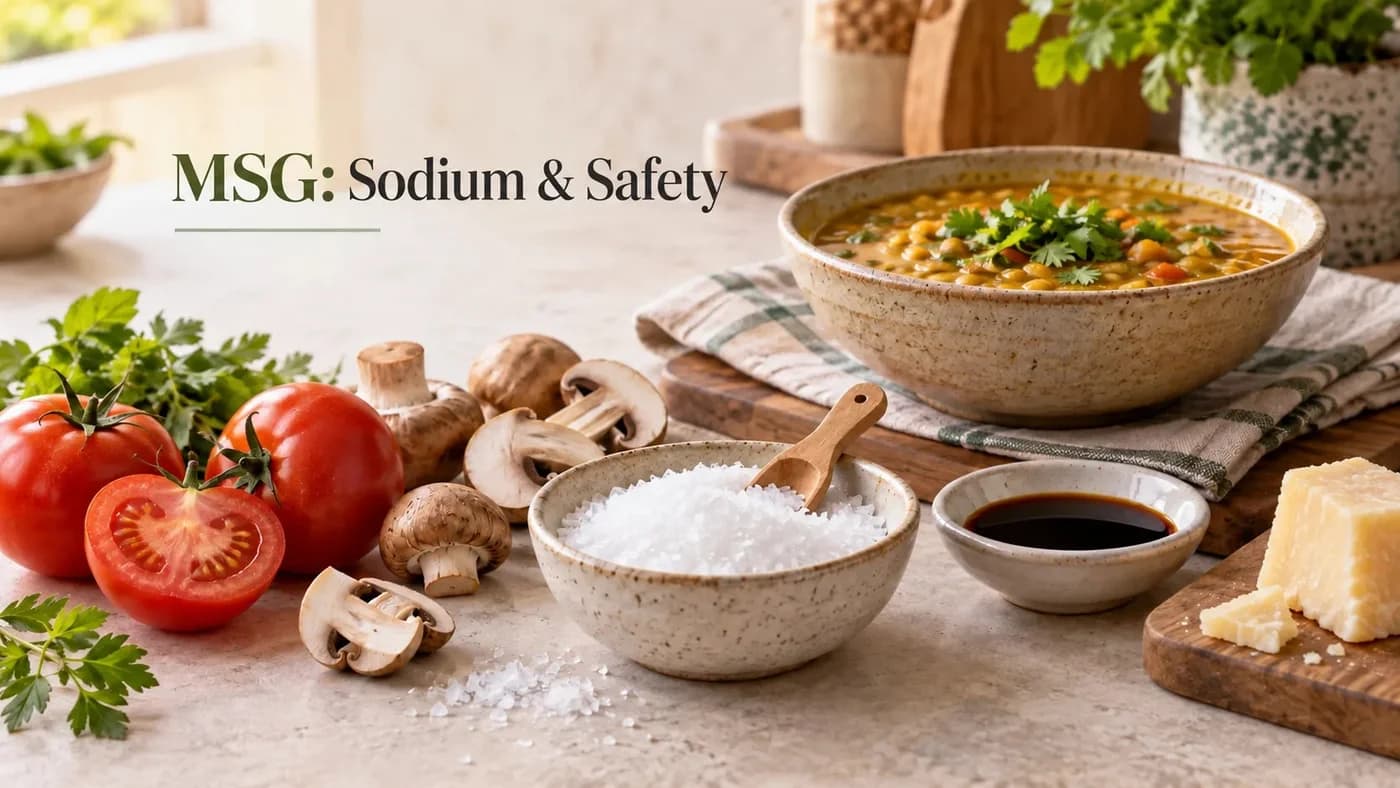
- MSG is the sodium salt of glutamic acid, the same glutamate found in tomatoes and aged cheese.
- The US FDA classifies added MSG as generally recognised as safe at customary intakes.
- MSG is about 12% sodium versus roughly 39% for table salt, but both count towards sodium.
- A few people report short-lived symptoms after large doses, especially taken without food.
Monosodium glutamate, better known as MSG, is a flavour enhancer that supplies glutamate, the same amino acid found naturally in tomatoes, mushrooms and aged cheese, paired with sodium. It creates umami, a savoury taste. Decades of fear have made MSG sound mysterious, but food-safety authorities consider it safe at customary intakes. The useful conversation about MSG safety is about dose, sodium and individual experience.
Glutamate is not foreign to food
Glutamate is an amino acid present in the body and in many familiar foods. Free glutamate activates umami receptors, whether it comes from a tomato, a fermented ingredient or MSG seasoning. The digestive system handles glutamate from these sources in the same fundamental way; the label does not make the molecule uniquely toxic.
Why cooks use MSG
A small amount can round out soups, noodles, stir-fries and pulse dishes, especially when a recipe tastes flat rather than simply under-salted. It does not add every dimension of flavour, so aromatics, acidity, texture and spices still matter. Used thoughtfully, MSG is one tool in a vegetarian kitchen, not a shortcut that fixes poor ingredients.
The sodium comparison
MSG is about 12 percent sodium by weight, whereas table salt is roughly 39 percent sodium. Because MSG also contributes a strong savoury taste, replacing some, but not necessarily all, salt with MSG may lower sodium in certain recipes while keeping them palatable. Adding MSG on top of the usual salt, however, raises the total rather than reducing it.
What safety reviews conclude
MSG safety has been reviewed repeatedly. The US FDA classifies added MSG as generally recognised as safe, and international expert bodies, including the FAO/WHO Joint Expert Committee on Food Additives, have reviewed its toxicology. Normal culinary exposure is not linked to brain damage or chronic disease in the general population. Claims based on injecting very high doses into animals do not represent how people digest MSG in a meal.
About reported sensitivity
Some people describe headache, flushing, tingling or palpitations after consuming a large dose of MSG, particularly without food. Controlled blinded studies have not shown consistent reactions at ordinary meal levels, but an individual can still observe a pattern. A calm, consistent food diary is more informative than assuming every symptom after a restaurant meal came from MSG.
The history behind the fear
The phrase "Chinese restaurant syndrome" grew from an anecdotal letter and helped attach stigma to an ingredient used across Asian cuisines. Similar glutamate-rich ingredients appear worldwide. Separating evidence from cultural stereotyping lets people discuss genuine symptoms and sodium goals without blaming a cuisine.
How MSG appears on labels
Packaged foods generally list monosodium glutamate or MSG when it is added directly. Ingredients such as yeast extract, hydrolysed vegetable protein or parmesan can also contribute free glutamate but are not chemically identical label terms. People trying to identify a trigger should record the whole product and portion, not scan for a single word.
Cooking with a light hand
Begin with a pinch in a pot of dal, vegetable soup or mushroom stir-fry, then taste before adding salt. MSG works best in savoury dishes and can become unpleasant when overused. A small measuring spoon prevents accidental pouring and makes it easier to compare the dish with and without the seasoning.
MSG is also not the only route to savouriness. Tomatoes, mushrooms, fermented soy foods, aged cheese and nutritional yeast can deepen a vegetarian dish, each with its own nutrients and sodium profile. Combining a modest pinch of MSG with browned vegetables, spices and acidity may produce more flavour than simply adding more salt.
Who should pay closer attention
Anyone advised to restrict sodium for blood pressure, heart failure or kidney disease should count MSG within their whole sodium budget. A suspected reaction can be discussed with a clinician or dietitian, especially if symptoms are severe or inconsistent. Breathing difficulty, swelling or fainting always requires urgent assessment rather than a home challenge.
A balanced verdict
The bottom line on MSG safety is that it is neither a health food nor a poison. It is a sodium-containing flavour ingredient that can be useful in small quantities and may help reduce total salt when used as a partial substitute. The best decision depends on the recipe, overall sodium intake and whether a person repeatedly notices symptoms under similar conditions.
Editorial sources
Frequently Asked Questions
Related Articles
Sodium Benzoate: Uses, Safety and Label Reading
This preservative is used mainly in acidic foods and drinks to limit microbial growth. Its presence on a label does not mean a food is toxic.

Sorbitol: Uses, Digestive Effects and Label Reading
Sorbitol is a sugar alcohol used in sugar-free foods, medicines and dental products, but larger amounts commonly cause gas or loose stools.


How to Maintain Blood Pressure: 7 Daily Habits That Keep Your Numbers in the Healthy Range
150-300 minutes of weekly moderate aerobic activity plus stress reduction form the foundation of lifestyle-based blood pressure management, per WHO
