
Quercetin: Food Sources, Supplement Claims and What Matters
Quercetin is a plant compound found in familiar foods. Keep research findings in perspective and choose variety over unnecessary supplementation.
Key Takeaways
- Quercetin is a flavonoid found in onions and apples.
- Antioxidant is a lab description, not a promise.
- Allergy and immunity claims need limits.
- Supplements carry a separate risk profile.
Onions and apples are ordinary foods, but one of their plant compounds is often sold in capsules with much bigger promises. Quercetin is a flavonoid, a type of polyphenol found in many plant foods. It is studied for possible effects on inflammation and other processes. That makes it an interesting research subject, not a nutrient everyone needs to buy separately.
For everyday eating, varied plant foods are the useful starting point. The question of taking a concentrated supplement is separate from the question of enjoying an onion in sabzi.
Where do you find it?
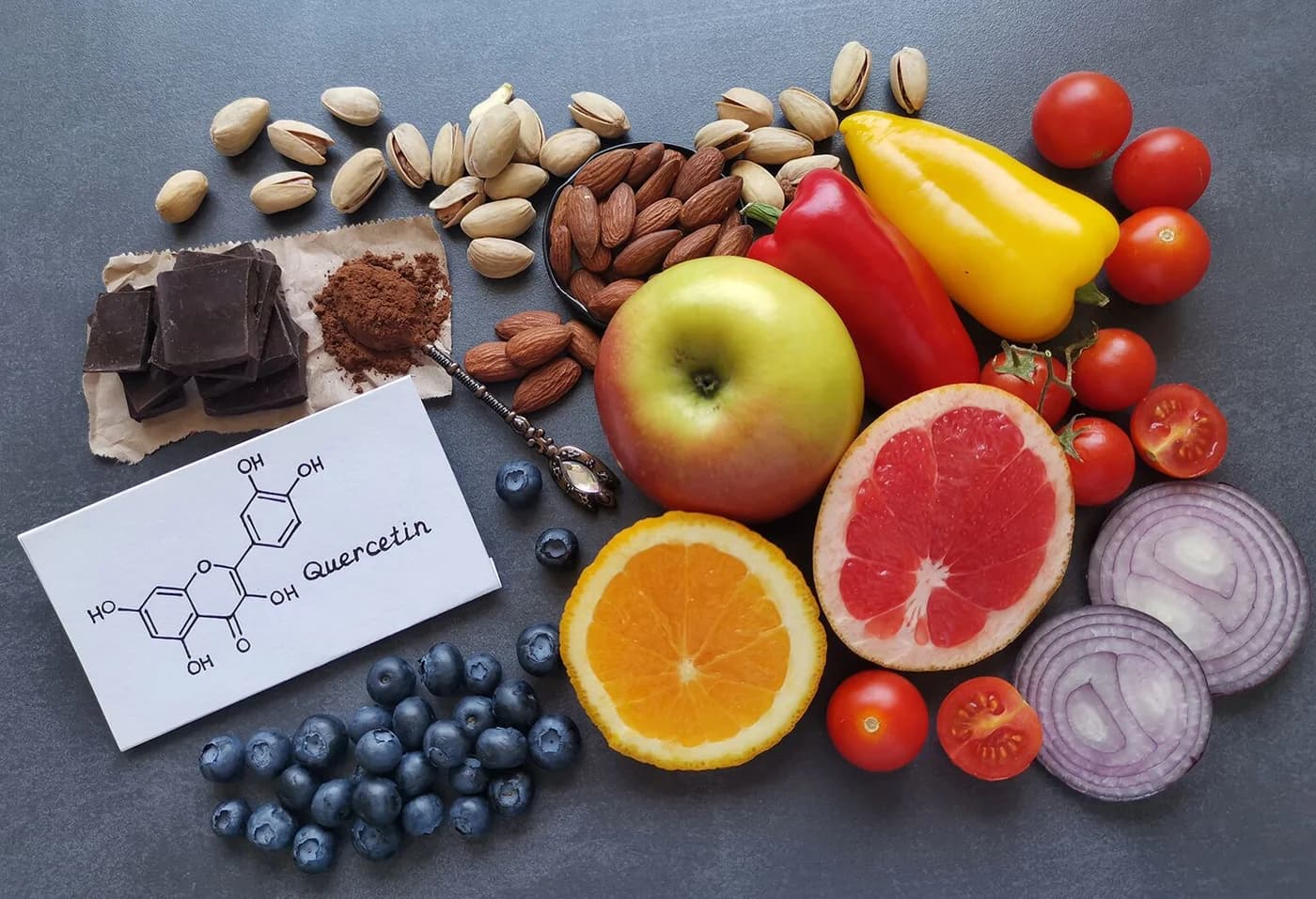
Quercetin occurs in foods including onions, apples, berries, leafy vegetables and tea. The amount varies with the variety, growing conditions, storage and preparation.
A food ranking can be misleading if it ignores the portion. An ingredient with a high value per 100 g may be eaten only as a tiny garnish. A familiar food eaten regularly may contribute more in practice.
You do not need a special shopping list to include it. Onions in cooking, an apple as fruit and a range of vegetables already provide plant compounds alongside other useful nutrients. Expensive powders are not a prerequisite for that variety.
Antioxidant is a laboratory description, not a promise
Quercetin can show antioxidant activity in experiments. Researchers also study how it affects pathways involved in inflammation and cell function.
What happens in a laboratory does not tell us that a capsule prevents a heart attack, cures an allergy or treats cancer. Digestion and metabolism change what reaches tissues, and the experimental exposure may differ greatly from food intake.
That gap does not make the research worthless. It tells us which claims are still uncertain. A plausible mechanism is a reason to study an outcome carefully, rather than announce the outcome before it has been demonstrated in people.
What does blood-pressure research show?
Some small trials have reported modest blood-pressure reductions with quercetin supplements in particular groups. Other results vary, and the studies do not establish a routine treatment for everyone with high blood pressure.
A supplement dose in a trial is also different from the amount in an ordinary serving of onion. Eating more onions cannot be assumed to reproduce the same measured effect.
For blood-pressure management, useful priorities remain reducing excessive sodium, regular activity, appropriate weight management and prescribed medicines where needed. Keep readings and follow-up consistent. Do not stop a medicine because a plant compound sounds like a gentler version of it.
Allergy claims are not the same as allergy treatment
Quercetin is often promoted as a natural antihistamine. Laboratory findings about histamine release do not prove that an over-the-counter supplement reliably controls a person's allergy symptoms.
There is no basis for using it instead of an emergency allergy plan. Breathing difficulty, throat swelling or faintness needs emergency action, not another capsule.
For recurring sneezing, itchy eyes or skin symptoms, use an approach suited to the cause. Avoiding a known trigger and using established treatment can be more useful than experimenting with several supplements at once. Food quercetin does not make a known allergen safe to eat.
Immunity and cancer claims need limits
No single compound supplies all the functions described by the word immunity. Taking more quercetin is not established protection against everyday infections or a substitute for vaccination.
Likewise, effects on cancer cells in experiments do not make quercetin an effective cancer treatment in people. Concentrated antioxidant supplements may also interact with some cancer treatments.
If you are receiving cancer care, do not add it independently. That is a specific treatment-interaction concern, not a reason to remove normal portions of fruit and vegetables from meals. The food and the high-dose product are different exposures.
Make the food useful on the plate
An onion can add flavour to dal, a vegetable dish or a cooked bean preparation. If raw onion causes discomfort, use a cooked form or another vegetable rather than forcing it for one compound.
Eat a sound apple with its washed skin if you enjoy it, or choose another fruit. There is no need to eat the same fruit every day or chase a bitter peel supplement.
Variety is easier to sustain than a quercetin score. Rotate foods according to season and budget, and keep pulses, whole grains and protein foods in the pattern. A compound-rich garnish does not make an otherwise inadequate meal complete.
Preparation is not a competition
Cooking and processing can change plant compounds, but one universal rule cannot tell you that raw food is always better. Preparation also affects safety, texture and whether you enjoy eating the food at all.
Use methods that suit the ingredient. Wash produce, cook foods that need cooking and avoid relying on a single nutrient measurement to choose every dish.
The goal is a varied routine you actually eat. An elaborate plan designed to preserve the highest theoretical quercetin amount can be less useful if it makes meals inconvenient or causes you to avoid foods you previously enjoyed.
Supplements have a separate risk profile
Capsules can contain amounts well beyond normal food exposure. Products may also combine quercetin with other ingredients, so a claim about one compound may not describe the whole product.
Long-term safety at high supplemental amounts is not fully established. Medicine interactions and limited information in pregnancy or breastfeeding are reasons not to treat it as a harmless default purchase.
There is no established daily quercetin requirement to meet through tablets. If you have no clear reason to take a supplement, skipping it is reasonable. You can still enjoy foods containing it without making a medical decision out of each meal.
Keep the purpose clear
A useful question is what you want to improve. If the goal is more varied food, add a vegetable or fruit you like. If the goal is controlling blood pressure or allergy symptoms, use an established plan for that condition.
Quercetin helps explain why plants interest researchers. It does not need to become another number to count or another product to add to your day. Ordinary food variety has a clearer practical role than a collection of isolated compounds.
Editorial sources
Frequently Asked Questions
Related Articles
Onion Benefits: Nutrition Facts, Uses and Safety
Onion benefits can add variety, flavour and useful nutrients to a vegetarian eating pattern. Its exact nutrition depends on the form, serving and.

Antioxidant Supplements: What the Trials Found, Benefits and Risks
Big trials of beta-carotene, vitamin E and selenium pills found no broad protection and some harm. When antioxidant supplements help and when to skip.
Apple Glycaemic Index: Is an Apple Okay for Blood Sugar?
Apples generally have a low glycaemic index, but the number is not a pass or fail mark. Here is how to use it if you watch your blood sugar.