
Rooibos Tea: A Caffeine-Free Cup with a Different Flavour
Rooibos offers a naturally caffeine-free cup. Choose it for taste and convenience while keeping health claims proportionate to the evidence.
Key Takeaways
- Plain rooibos is naturally caffeine-free.
- It can replace an evening caffeinated cup.
- Antioxidant claims need perspective.
- It is not a source to rely on for major nutrients.
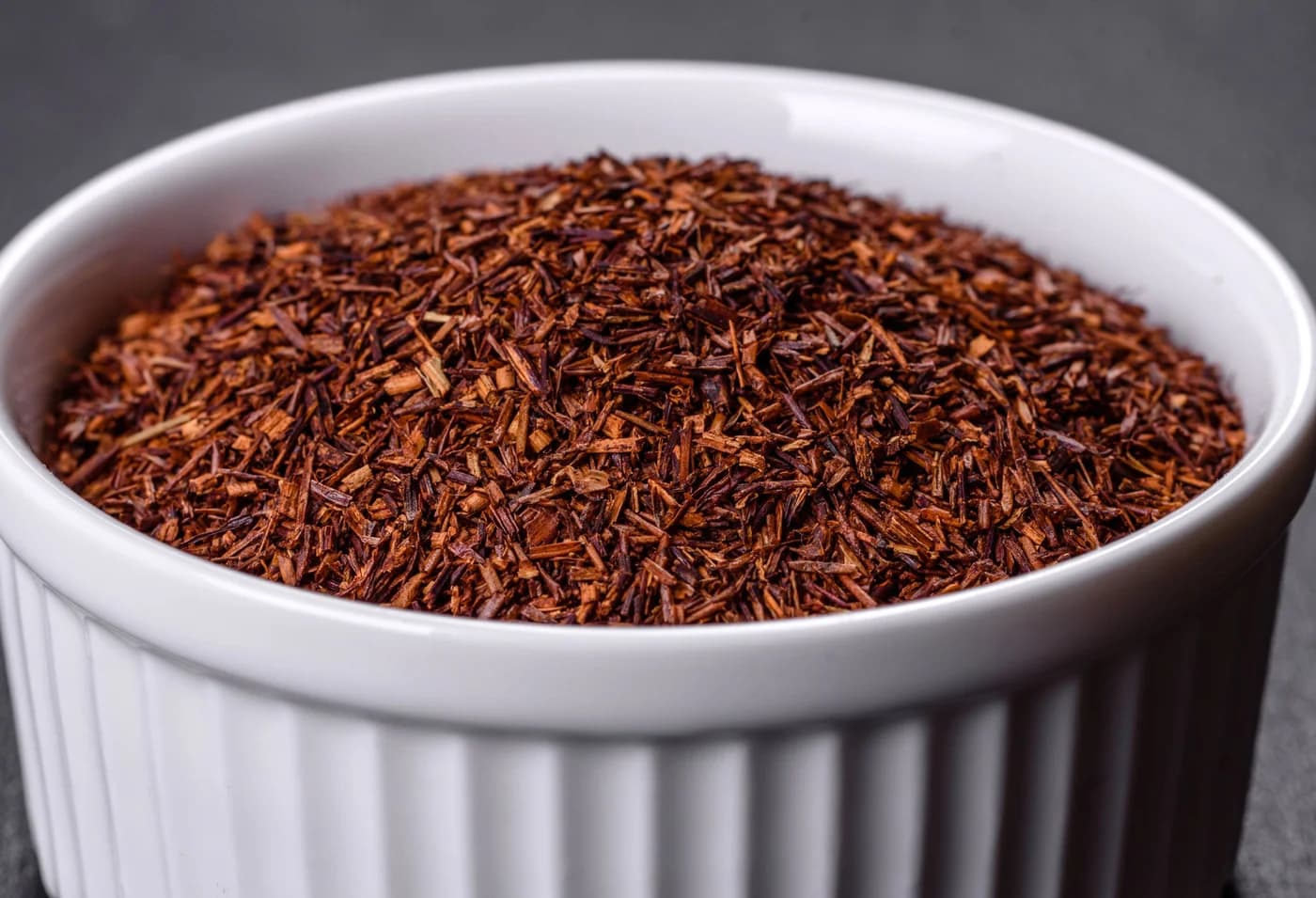
Rooibos has a warm reddish colour and a gently sweet, earthy flavour. It comes from a South African plant rather than the plant used for black and green tea. Plain rooibos is naturally caffeine-free, which can make it a useful alternative when you want a hot drink later in the day. That practical advantage is clearer than promises about detoxification, weight loss or treating high cholesterol.
What is rooibos?
Rooibos is made from the leaves and fine stems of Aspalathus linearis. Traditional red rooibos is processed to develop its characteristic colour and aroma. Green rooibos uses a different processing approach and usually has a lighter, more grassy character.
Neither is the same as green tea from Camellia sinensis. The word green describes the rooibos preparation, not a guarantee that it contains caffeine like ordinary tea.
If you are new to it, start with a small pack of plain rooibos. A blend can be enjoyable, but spices, sweeteners or caffeinated tea may change the drink. There is no need to begin with a complex wellness mixture to discover whether you like its taste.
The useful caffeine-free swap
An evening rooibos can replace a regular tea or coffee if caffeine is disrupting sleep. You keep the familiar action of making a warm cup without adding more caffeine from the plain herb.
That does not mean rooibos is a sleeping medicine. A drink can be compatible with a calmer evening without directly treating insomnia.
If you still sleep poorly, look beyond the cup: irregular hours, discomfort, stress and other sleep problems may need attention. Replacing late caffeine is one practical change, not proof that any caffeine-free drink guarantees a good night. Choose a comfortable serving rather than drinking a large amount immediately before bed.
Brew for the flavour you enjoy
Use a tea bag or a small amount of loose rooibos with hot water. Steep for several minutes according to the product and taste, then remove the bag or strain.
Its flavour often tolerates a longer steep than delicate green tea, but there is no need to make it extremely strong. Start with a normal cup and adjust the next one.
You can drink it plain or add a little milk if you enjoy that combination. Lemon or a small amount of a familiar spice is another taste choice. None is necessary to activate a health benefit. The recipe should make the cup pleasant rather than create another rule about the right way to drink tea.
Unsweetened can be a useful everyday option
Plain brewed rooibos contributes very little energy. If it replaces a heavily sweetened drink, it can reduce the sugar in that part of the day.
Honey, jaggery and syrups still add sugar. Their presence may be a flavour preference, but they do not become necessary because the drink is herbal.
Try a milder brew before assuming it needs several spoonfuls of sweetness. Rooibos has a different taste from regular tea, so allow a few ordinary servings to decide whether you enjoy it. If not, another unsweetened drink can serve the same practical role. There is no health obligation to learn to like this one.
Antioxidant claims need perspective
Rooibos contains plant compounds studied for antioxidant activity. A laboratory result describes chemical behaviour under particular conditions; it does not establish that a cup prevents disease in a person.
Human studies are relatively limited. One small study followed adults at cardiovascular risk who drank several cups daily and measured changes in markers, including blood lipids. That is an interesting research finding, not a universal instruction to copy the quantity or replace treatment.
There is no established daily cup target for preventing heart disease, lowering glucose or losing weight. A pleasant drink can fit a healthy routine without being presented as the main reason that routine works.
It is not a source to rely on for major nutrients
A brewed herbal drink is mostly water. Claims that a cup supplies an impressive collection of minerals can distract from the modest quantities usually involved.
Food remains the foundation for protein, calcium, iron and other needs. If you add milk or a fortified drink, some of the bowl or cup's nutrition comes from that addition rather than the rooibos.
Do not use tea in place of a meal when you need food. A warm cup may feel filling briefly, but it does not necessarily provide enough nourishment for the next several hours. Keep it alongside a useful routine instead of using it to suppress hunger.
Iced rooibos works too
Brew, cool promptly and refrigerate in a clean covered container. Serve with ice and a slice of washed fruit if you enjoy the flavour.
This can be a simple alternative to bottled sweet tea. Adding fruit syrup, juice or several sweeteners creates a different drink, so judge the whole recipe rather than the herbal base alone.
Avoid leaving a prepared drink warm all day, particularly once milk or fruit has been added. Make manageable batches and keep serving equipment clean. You do not need a special cold-brew ritual for hydration; plain safe water remains an equally useful everyday option.
Keep ordinary use separate from concentrated products
Rooibos extracts, capsules and large medicinal quantities should not be assumed equivalent to an occasional brewed cup. Long-term high intake has a less certain safety profile, and rare liver-injury reports have involved herbal tea use.
These reports do not establish that a normal serving commonly causes harm. They do show why drinking more for a promised treatment benefit is not automatically better.
If a product repeatedly causes discomfort, stop using it. Jaundice, dark urine or persistent unexplained vomiting needs prompt attention. Pregnancy, breastfeeding or a significant medical condition is also a reason to avoid experimenting with concentrated preparations rather than assuming a plant drink has no limits.
Choose it for a clear reason
Rooibos may suit you because you like the flavour, want a caffeine-free evening cup or prefer an unsweetened alternative to a bottled drink. Those are specific, useful reasons.
It does not need a detox schedule or an exact time of day. Keep the amount comfortable and leave room for food and other drinks.
A successful tea habit is one that fits naturally into life. Rooibos can offer that without asking you to track antioxidant scores or turn an enjoyable cup into another treatment plan.
Editorial sources
Frequently Asked Questions
Related Articles
Herbal Tea Recipes: 5 Simple Blends for Daily Routine
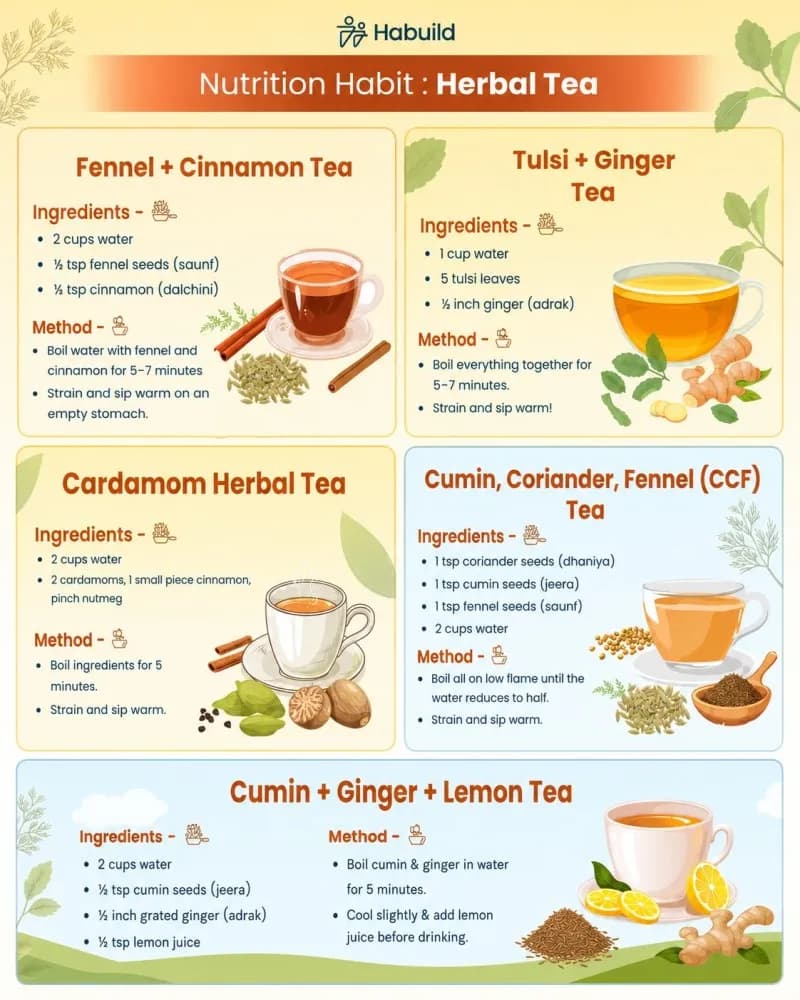
These five herbal tea blends use common Indian kitchen ingredients like fennel, cinnamon, tulsi, ginger, and cardamom — light, warm drinks, not medicine..

Green Tea Caffeine: How Much Is in Your Cup?
Understand the caffeine in your actual cup and adjust brewing and timing to suit your day.

Side Effects of Drinking Tea: Caffeine, Iron Absorption and Acidity
Tea can be an enjoyable daily drink, yet its side effects depend on the type, strength, cup size, timing and everything added to it.
Black Tea Benefits: Caffeine and Smart Timing
Black tea is made from fully oxidised tea leaves and naturally contains caffeine and polyphenols.
