
Yerba Mate: Caffeine, Brewing and Everyday Choices
A practical introduction to mate, from brewing a mild cup to protecting your sleep.
Key Takeaways
- Yerba mate contains caffeine, and the amount varies.
- Count it with your other caffeine through the day.
- Avoid drinking it very hot.
- It is not a fat-loss tool.
Yerba mate can feel like tea and coffee have met somewhere in the middle. It is an earthy, sometimes bitter drink with caffeine, traditionally enjoyed in parts of South America. If you are trying it for the first time, the most useful questions are how strong you brew it, how much you drink and whether it affects your sleep. The “superdrink” label adds much less.
What is yerba mate?
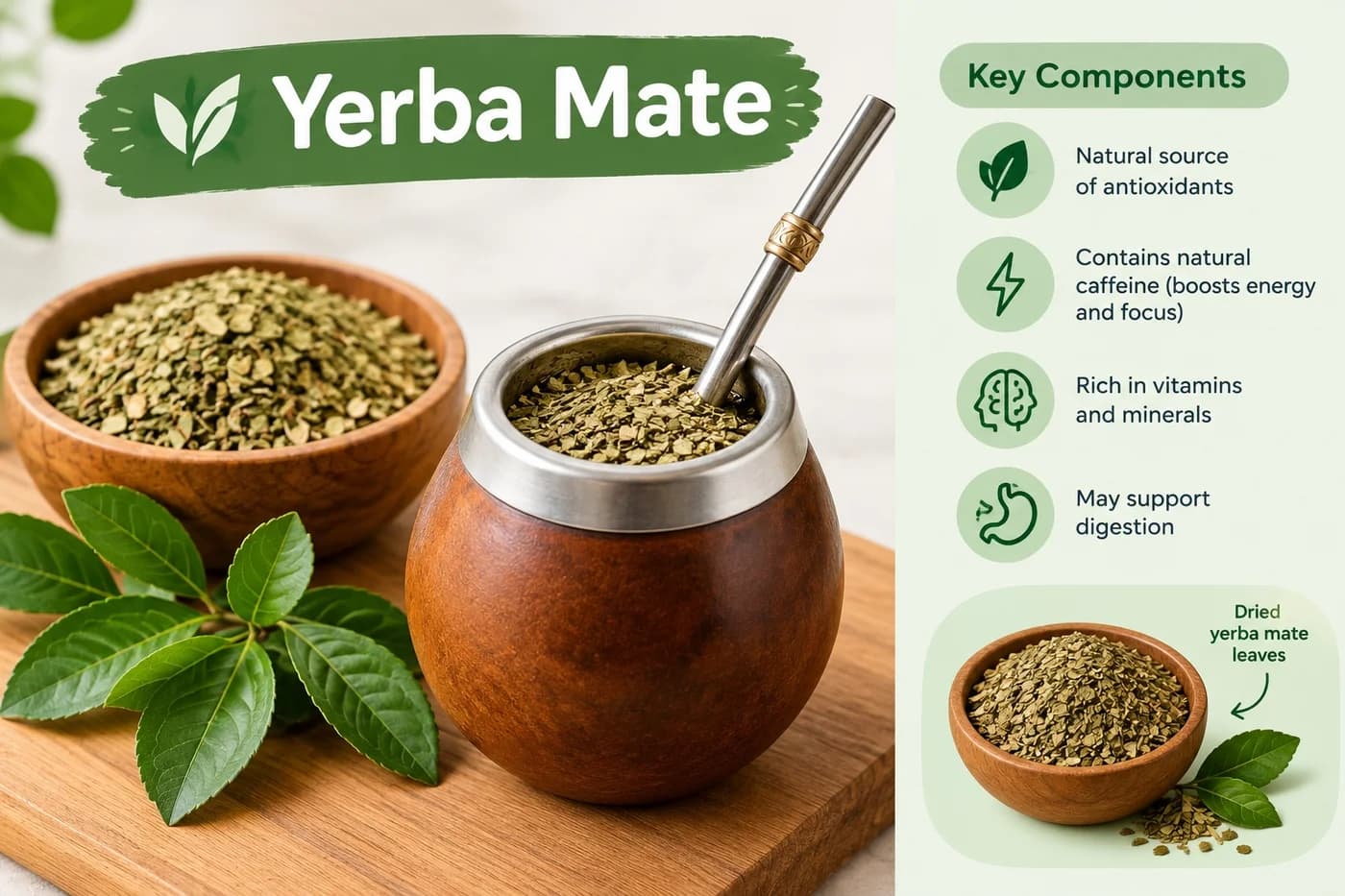
The drink is made from the leaves of Ilex paraguariensis. It may be prepared in a traditional gourd and sipped through a filtered straw called a bombilla, or brewed more simply using a tea bag or infuser.
Its flavour can be grassy, woody or smoky depending on processing and preparation. Some people enjoy it plain, while others sweeten it. Ready-to-drink bottles may taste very different from the unsweetened leaf infusion.
You do not need specialist equipment to find out whether you like it. A small packet and a simple brewing method are sufficient. Treat it as a new caffeinated drink, rather than a health routine you must adopt.
The caffeine amount is not fixed
Yerba mate contains caffeine. The amount in a serving varies with the quantity of leaf, water, brewing time and repeated infusions. A traditional session involving several refills is not the same as one small tea bag in a cup.
This makes statements such as “one mate equals one coffee” unreliable. The size of the coffee varies too. For everyday use, notice both the strength and the total amount you finish.
FDA guidance describes 400 mg of caffeine a day as an amount not generally associated with adverse effects for most healthy adults. That is an upper reference, not a target or a guarantee for every person. Some people feel uncomfortable with much less.
Count the rest of your day
A morning coffee, afternoon mate and pre-workout drink can add up even when each seems ordinary on its own. Tea, cola, energy drinks and some medicines may contribute caffeine as well.
If you want to see whether mate suits you, replace a usual caffeinated drink rather than immediately adding it on top. Start with a small, mild serving earlier in the day.
Jitteriness, palpitations, anxiety or disrupted sleep are reasons to reduce the amount. The absence of a dramatic “buzz” does not mean caffeine has stopped affecting your sleep. A drink that keeps you alert late at night may make the next morning harder.
Brew it for comfort, not intensity
Follow the preparation method for the form you have, using a modest amount of leaf at first. Let the drink cool until comfortably warm before sipping. There is no need to chase the strongest possible flavour.
If it tastes too bitter, try less leaf or a shorter steep before adding several spoonfuls of sugar. You may also find you simply prefer ordinary tea. That is a taste preference rather than a missed health opportunity.
For an iced version, prepare the drink with safe water, cool it promptly and refrigerate it. Keep the brewing vessel and straw clean, especially parts that retain damp leaves. Make only what you expect to drink soon.
Why temperature matters
Regularly drinking very hot beverages is a health concern. IARC has classified drinking beverages above about 65°C as probably carcinogenic to humans, with evidence relating particularly to the oesophagus.
This concern is about temperature, rather than proof that a comfortably warm cup of mate causes cancer. The practical action is simple: let hot drinks cool and avoid repeatedly scalding your mouth and throat.
You do not need a thermometer for every cup. If a drink is too hot to sip comfortably, wait. This advice also applies to chai, coffee and other very hot drinks, rather than singling out mate as uniquely dangerous.
Is it useful for fat loss?
Yerba mate is often marketed for appetite control and metabolism. These claims do not make it a dependable weight-loss treatment. A caffeinated drink cannot replace an eating pattern that meets your needs.
An unsweetened cup can be a lower-sugar alternative to a sugary beverage if you enjoy it. That benefit comes from the swap. Adding sweetened mate to a day already full of sweet drinks does not create the same change.
Avoid using caffeine to suppress hunger through a busy day. A late lunch or a missed meal is usually better addressed with accessible food than another stimulating drink. Keep something simple available, such as a sandwich, curd or fruit with roasted chana.
Bottled drinks and extracts deserve separate attention
A bottled mate drink may contain added sugar and several servings in one container. It can also be blended with other caffeine sources. The whole bottle matters if that is what you actually drink.
Capsules and concentrated extracts are a different decision from a cup brewed for enjoyment. Their effects and amounts cannot be judged by the comforting image of a traditional drink.
You do not need an extract to obtain the experience of drinking mate. For most curious readers, an occasional mild infusion is a more straightforward choice than a multi-ingredient energy or weight-loss product.
Who should limit or avoid it?
Pregnancy and breastfeeding require lower, individualised caffeine limits; mate needs to be counted within that total. Children should not be encouraged to use it as an energy drink.
People who find caffeine worsens anxiety, heart rhythm symptoms or sleep may prefer a caffeine-free drink. Certain medicines also interact with caffeine, so someone taking a stimulant or experiencing new palpitations needs specific advice rather than a generic serving recommendation.
If mate suits you, enjoy it at a comfortable temperature and an amount that leaves you feeling well. A good drink should fit your routine without taking over your appetite or your night.
Editorial sources
Frequently Asked Questions
Related Articles

Side Effects of Drinking Tea: Caffeine, Iron Absorption and Acidity
Tea can be an enjoyable daily drink, yet its side effects depend on the type, strength, cup size, timing and everything added to it.


Decaffeinated Coffee: Caffeine, Processing and Smart Choices
Decaffeinated coffee keeps much of coffee's flavour while removing most, but not all, of its caffeine.
Black Tea Benefits: Caffeine and Smart Timing
Black tea is made from fully oxidised tea leaves and naturally contains caffeine and polyphenols.

Does Tea Contain Caffeine? Types, Amounts and Timing
Most tea made from the Camellia sinensis plant contains caffeine, although the amount changes with the leaf, serving size and brewing method.