
Beauty Sleep Meaning: Is It Actually Real?
Beauty sleep meaning isn't just a folk phrase — deep sleep genuinely raises growth hormone and blood flow to skin while cortisol drops. See what the science says about looking rested.
Key Takeaways
- States the phrase predates modern sleep science by well over a century.
- States deep sleep raises growth hormone, supporting collagen production and cell repair.
- States cortisol, which drops during sleep, is linked to inflammation and collagen breakdown.
- States fragmented sleep produces worse skin outcomes than the same hours in one stretch.
- Names under-eye puffiness and duller skin tone as visible next-day effects of poor sleep.
- States perception studies confirm people reliably read poor sleep as a less alert expression.
Beauty sleep meaning, at its core, is the idea that quality sleep noticeably affects how your skin, face, and body look the next day — and unlike a lot of folk wisdom, this one holds up reasonably well under actual science, even if the mechanism isn’t as simple as “sleep more, look prettier.”
Where the phrase beauty sleep meaning actually comes from
The phrase predates modern sleep science by well over a century, originally used more loosely to describe any early, restorative sleep thought to preserve youthful appearance. It’s only in recent decades that researchers have been able to attach an actual physiological explanation to what was previously just an intuitive folk observation — which is part of why beauty sleep meaning has shifted from a slightly old-fashioned expression into something dermatologists now reference with real supporting evidence.
What is beauty sleep, scientifically
During deep sleep, your body increases production of growth hormone, which supports collagen production and cell repair — both directly relevant to skin health. Blood flow to the skin also increases during sleep, and the stress hormone cortisol drops, which matters because elevated cortisol is linked to inflammation, breakouts, and collagen breakdown. This is the real, physiological answer to what is beauty sleep beyond the folk phrase.
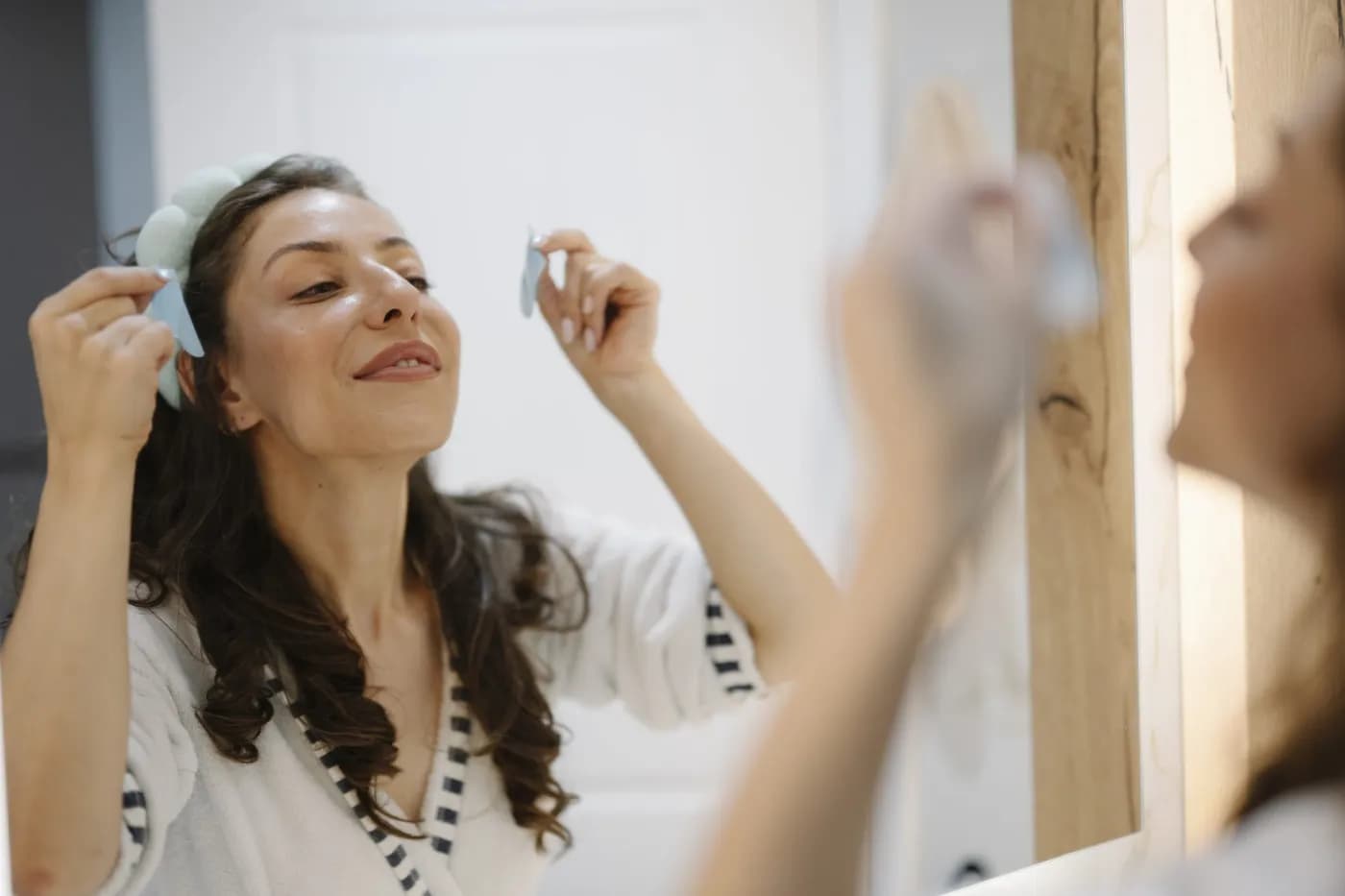
Morning skincare routine reflecting beauty sleep meaning
Visible effects of poor sleep, and what beauty sleep meaning looks like in practice
- Under-eye circles and puffiness — poor sleep increases fluid retention and reduces blood circulation around the eyes
- Duller skin tone — reduced blood flow during short sleep shows up as less radiant, more sallow-looking skin
- More visible fine lines over time — chronically disrupted collagen production from poor sleep contributes to premature skin aging
- Increased breakouts — elevated cortisol from sleep deprivation is linked to increased oil production and inflammation
- A more fatigued, less alert expression — subtle changes in eyelid position and facial muscle tone that people reliably perceive as looking “tired” or less attractive, confirmed in actual perception studies
Does beauty sleep meaning just come down to sleep quantity?
Not entirely — quality matters as much as quantity. Fragmented, frequently interrupted sleep produces worse skin and appearance outcomes than the same total hours slept in one consolidated stretch, since the deep-sleep stages where growth hormone peaks need to be reached and sustained, not just accumulated in short bursts. This is part of why sleep hygiene and a calm wind-down routine — including something as simple as essential oils for sleep as part of that routine — can support beauty sleep as much as simply going to bed earlier.
What actually supports beauty sleep meaning beyond just hours in bed
Since quality matters as much as quantity, a few practical habits support the full physiological benefit behind beauty sleep meaning: sleeping on your back or a silk/satin pillowcase reduces the friction linked to sleep lines and can modestly help with skin creasing over time; staying hydrated during the day supports the skin repair processes happening overnight; and a consistent bedtime helps your body reach and sustain the deep-sleep stages where growth hormone release peaks, rather than getting a shortened or fragmented version of it. None of these substitute for adequate sleep duration itself, but they help ensure the sleep you do get delivers the fuller benefit.
Beauty sleep meaning across different skin concerns
Different visible signs respond to different aspects of sleep. Under-eye puffiness responds most directly to a single night’s fluid retention and is often the fastest to improve with just one good night. Fine lines and collagen-related aging reflect a more cumulative pattern, responding to weeks or months of consistent quality sleep rather than one-off recovery. Breakouts linked to elevated cortisol tend to track fairly closely with recent stress and sleep quality together, meaning both need attention rather than sleep alone. Understanding which category a specific concern falls into sets more realistic expectations for how quickly improved sleep will actually show up on your skin.
Beauty sleep meaning: myths vs facts
Myth: Any 8 hours counts toward beauty sleep meaning. Fact: Uninterrupted, good-quality sleep matters more than the raw hour count — fragmented sleep blunts much of the skin-repair benefit.
Myth: Beauty sleep meaning is just marketing, not science. Fact: The hormonal and circulatory mechanisms behind it — growth hormone, cortisol, blood flow — are real and well documented, even if the phrase itself is informal.
Understanding beauty sleep meaning this way — as a real hormonal process rather than a cosmetic slogan — is what makes it worth actually prioritising rather than dismissing as a marketing phrase.
Frequently Asked Questions
Related Articles

Mudra for Insomnia: Hand Gestures That Support Better Sleep
Each finger represents one of the five elements, and joining specific fingers is said to balance these elements and shift the body toward calm before

How to Stop Snoring: 7 Proven Ways for Quiet, Restful Sleep
Snoring signals a partly blocked airway during sleep, and most cases are caused by lifestyle, posture, and breathing patterns you can change. See 7 proven ways for quiet, restful sleep.

Mudra for Sleep (Shakti Mudra): Steps, Benefits, and Precautions
Shakti Mudra and Prithvi Mudra activate the parasympathetic nervous system and establish a conditioned pre-sleep signal when held for 10-15 minutes before