
Exercise Before Sleep: Should You Work Out Before Bed?
Exercise before sleep has a mixed reputation for good reason — intensity and timing decide whether it energises you or helps you wind down. See which type works and which backfires.
Key Takeaways
- States vigorous exercise needs 1-2 hours to let elevated heart rate and adrenaline settle.
- States gentle yoga or stretching can help sleep without the stimulating hormone spike.
- States exercise done at any time of day reliably improves overall sleep quality over time.
- Recommends tracking your sleep after evening workouts for a couple of weeks to find your pattern.
- States individual sensitivity varies based on how fast body temperature returns to baseline.
- States light walking is generally neutral to mildly helpful, unlikely to disrupt sleep.
Exercise before sleep has a mixed reputation — some people swear it helps them crash into deep rest, others find it leaves them too wired to sleep at all, and the honest answer depends heavily on the type and intensity of the workout, and how close to bedtime it happens.
What the evidence actually says about exercise before sleep
Regular exercise, done at any time of day, reliably improves overall sleep quality over time. The more nuanced question is about timing a single session right before bed: vigorous exercise before sleep raises core body temperature, heart rate, and stimulating hormones like adrenaline, all of which typically need 1-2 hours to settle back down before your body is ready for sleep. Gentle movement, on the other hand, doesn’t carry the same stimulating effect and can genuinely help you wind down.
Which type of exercise before sleep helps vs. hurts
- Vigorous cardio or heavy strength training right before bed — generally counterproductive for most people, since the stimulating effect can delay sleep onset by raising alertness and heart rate
- Gentle yoga or stretching — can help rather than hurt, lowering physical tension without the stimulating hormone spike of intense exercise
- Light walking — generally neutral to mildly helpful, unlikely to disrupt sleep for most people
- Any exercise earlier in the day — supports better sleep at night regardless of type, since the stimulating effects have hours to settle before bedtime
If you enjoy movement as part of your wind-down routine specifically, bedtime yoga for sleep is built around exactly this — gentle enough to calm rather than energise, unlike a full workout.
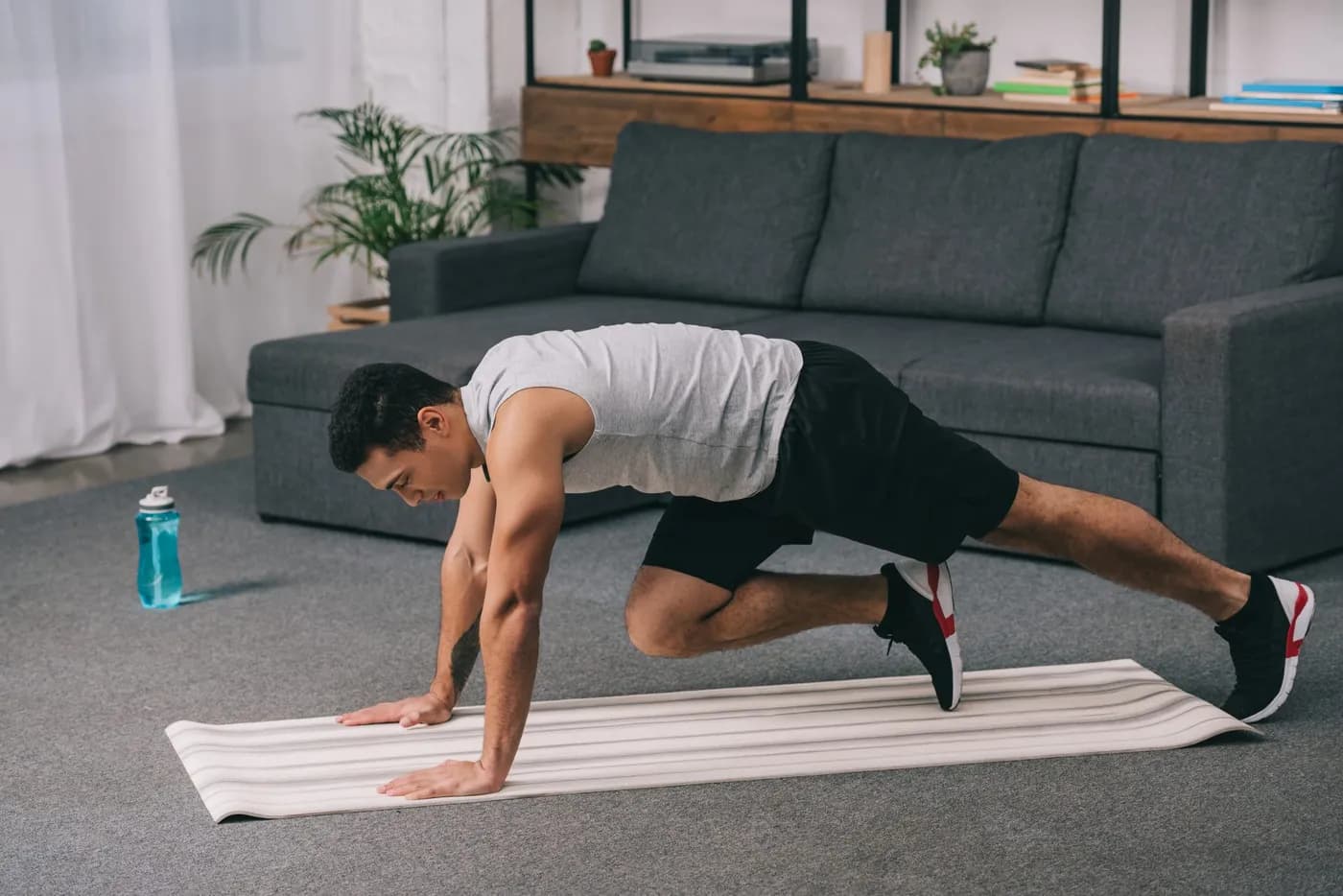
Home workout raising the question of exercise before sleep
Why individual response to exercise before sleep varies so much
Part of why advice about exercise before sleep feels inconsistent is that individual sensitivity genuinely varies. Some of this comes down to how quickly someone’s body temperature and adrenaline levels return to baseline after exertion — faster recovery means less residual stimulation by bedtime. Age, fitness level, and even genetics around stress-hormone clearance all play a role. This is why generic guidelines exist as a reasonable starting point, but tracking your own sleep after evening workouts for a couple of weeks is a more reliable way to know how exercise before sleep specifically affects you.
How much of a buffer do you need?
For vigorous exercise, aim to finish at least 1-2 hours before bed, giving your body temperature and heart rate time to come back down. Some people are more sensitive than others — if you notice intense evening workouts consistently delay your sleep, that’s a reliable personal signal to shift the timing earlier in the day, regardless of what general guidelines say.
What the research actually shows about exercise timing and sleep
Sleep-lab studies on exercise before sleep have produced more nuanced results than the simple “never work out at night” advice often suggests. Several studies have found that moderate exercise, even within an hour of bedtime, doesn’t meaningfully disrupt sleep onset for most healthy people — it’s specifically vigorous, high-intensity exercise close to bedtime that shows the clearest disruptive effect. This distinction between moderate and vigorous intensity matters more than a blanket time cutoff, since a brisk walk and a heavy weightlifting session an hour before bed are physiologically very different, even though both technically count as “exercise before sleep.”
Exercise before sleep and specific sleep goals
If your main concern is falling asleep quickly, avoiding vigorous exercise in the 1-2 hours before bed is the most consistently supported guidance. If your main concern is deep sleep quality or total sleep time, regular exercise at any time of day (including evening) tends to help rather than hurt, since the cumulative fitness benefit outweighs the acute stimulating effect of a single session, provided sleep onset itself isn’t being significantly delayed. Being clear about which specific outcome you’re optimising for helps make sense of what can otherwise look like contradictory advice.
When exercise before sleep is the exception, not the rule
A small number of people genuinely sleep better after an intense evening workout, likely due to physical exhaustion outweighing the stimulating effect for them personally. If this describes you and you’re not noticing sleep problems, there’s no strong reason to change a habit that’s working — the general caution about timing is a starting guideline, not a rule that applies identically to everyone.
Frequently Asked Questions
Related Articles

Sleeping Mudra: Best Hand Gestures to Fall Asleep Faster
Practice Sleeping Mudra with Habuild. Follow the best sleep hand gesture steps to relieve insomnia, calm the mind, and promote deep restful sleep. Start today!

How to Sleep Better at Night: 8 Proven Habits for Deeper, More Restful Sleep
Sleep quality is highly responsive to a few specific evening habits — no medication, expensive devices, or complicated protocols required. See all 8 proven habits.

How to Stop Snoring: 7 Proven Ways for Quiet, Restful Sleep
Snoring signals a partly blocked airway during sleep, and most cases are caused by lifestyle, posture, and breathing patterns you can change. See 7 proven ways for quiet, restful sleep.