
What Is a Good Sleep Score? How to Read Your Tracker
Your watch or ring gives you a number every morning, but what does it mean? Learn what a good sleep score is and how much to trust it.
Key Takeaways
- A sleep score is a 0 to 100 summary of your night, worked out by your tracker's own formula.
- On Fitbit and Garmin, 80 to 89 counts as good and 90 or more as excellent.
- Oura calls 85 or higher optimal and 70 to 84 good.
- Wearables detect sleep well but often miss time awake and misjudge sleep stages.
- Use your score as a rough guide to trends, not a verdict on every single night.
What Is a Sleep Score?
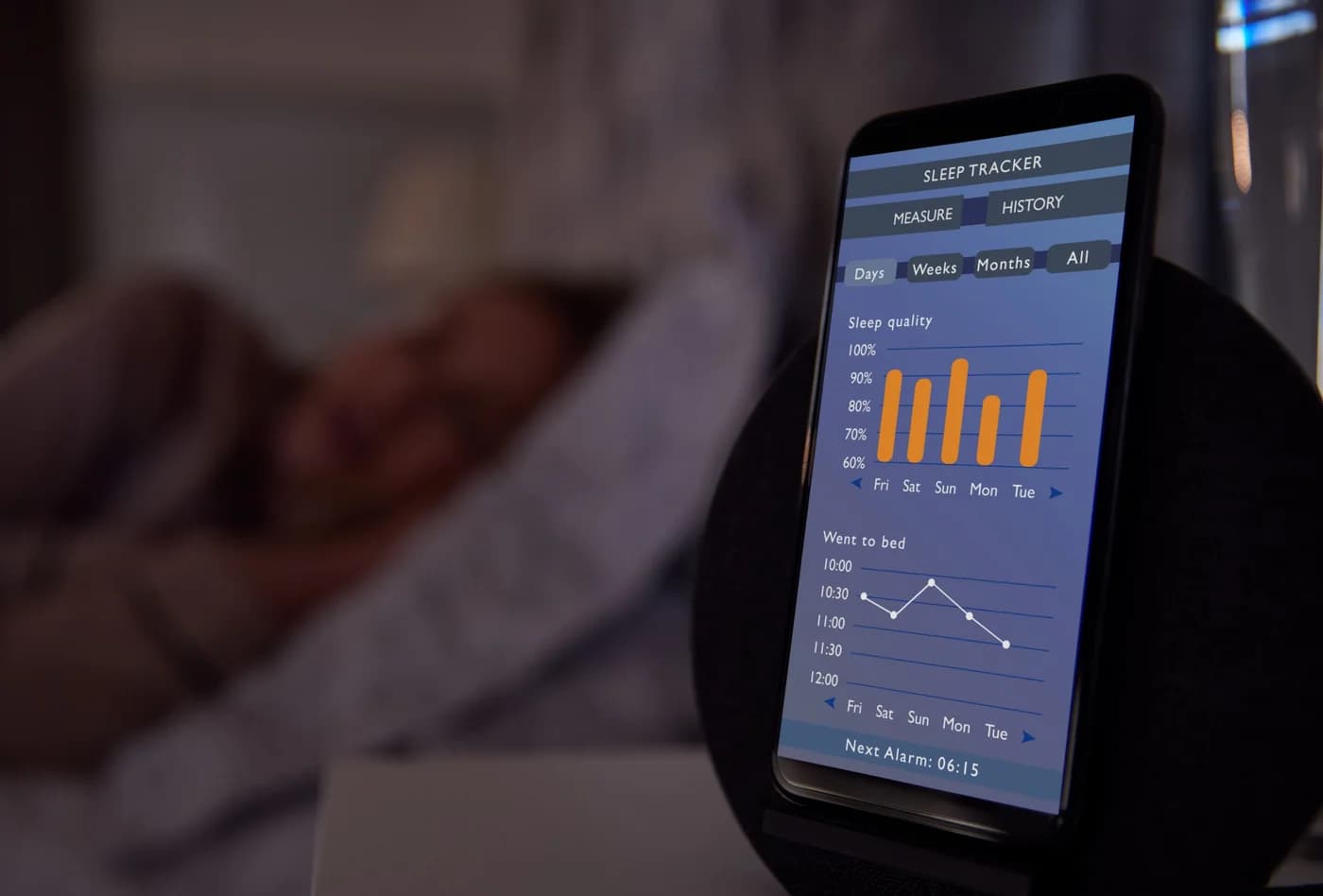
If you wear a smartwatch, fitness band or smart ring, you've probably woken up to a number between 0 and 100 telling you how well you slept. That number is a sleep score. It takes several things the device measured overnight, such as how long you slept, how restless you were and how often you woke, and rolls them into one simple figure.
The idea is helpful. Most of us can't read a chart of sleep stages and heart rate, but we can understand that 85 is better than 60. The catch is that every company uses its own formula, so a score from one brand isn't directly comparable with a score from another. None of these formulas is a medical measurement.
How Popular Trackers Calculate Your Score
Companies don't publish their exact formulas, but they do explain the main ingredients.
Fitbit says its score combines how long you slept, how quickly you reached steady sleep, how much of the night was spent in sound sleep, restlessness, full awakenings lasting more than five minutes and the total time you spent awake. It compares your data against targets adjusted for your age, gender and total sleep time. Fitbit's bands are 90 to 100 for excellent, 80 to 89 for good, 60 to 79 for fair and below 60 for poor.
Garmin says its score reflects how long and how well you slept, using estimates of light, deep and REM sleep, body movement, time awake, heart rate and heart rate variability. Garmin uses the same bands: 90 to 100 excellent, 80 to 89 good, 60 to 79 fair and below 60 poor. In a 2025 look at its users' data, Garmin reported that only a small minority averaged an excellent score, so don't be discouraged if you rarely see 90.
Oura's score draws on seven contributors: total sleep, efficiency (how much of your time in bed you were asleep), restfulness, REM sleep, deep sleep, how long you took to fall asleep and timing, meaning whether your sleep lined up with your body clock. Oura describes 85 or higher as optimal and 70 to 84 as good, while a score under 70 suggests something is off.
Other apps, including Samsung Health, have their own versions. Your app's help screen will usually explain what feeds into its number.
So, What Is a Good Sleep Score?
Using the bands above, a score of about 80 or more on Fitbit or Garmin, or 70 or more on Oura, is generally considered good. But your own pattern matters more than any single number. A steady average in the high 70s with you feeling rested is more meaningful than chasing a 95.
It's also normal for scores to move around. A late dinner, a stressful day, a hot room, travel or a cold can all pull your number down for a night or two.
What Goes Into the Number
Most scores lean heavily on a few measurements.
Duration is usually the biggest factor. If you only spend six hours in bed, it's hard to score highly, however well you slept.
Sleep stages are estimates of light, deep and REM sleep. Trackers infer these from movement and heart rate rather than measuring brain activity directly.
Restlessness and awakenings capture how much you moved and how often you woke. Several long awakenings will lower most scores.
Heart rate and heart rate variability are used by some brands to judge how settled and recovered your body was overnight.
How Accurate Are Sleep Trackers?
The gold standard for measuring sleep is polysomnography, an overnight test in a sleep lab that records brain waves, eye movements, muscle activity, breathing and heart rhythm. Wearables can't do this. They estimate sleep from your wrist or finger.
A 2020 study compared seven consumer sleep trackers with polysomnography in healthy young adults. All the devices were good at detecting when people were asleep. However, they were much weaker at spotting time spent awake, often counting quiet wakefulness as sleep. Their sleep stage results were inconsistent, and most devices missed a large share of deep and REM sleep, tending to label it as light sleep instead.
In practice, this means your total sleep time may be roughly right on many nights, but the detailed breakdown of deep and REM sleep should be taken with a pinch of salt. Trackers are best for spotting patterns over weeks, not for judging one night precisely.
Don't Let the Score Run Your Sleep
Tracking can be motivating, but it can also backfire. Sleep researchers have described a pattern they call orthosomnia, where people become so preoccupied with perfecting their tracker data that it adds to their worry about sleep. Some patients in their report spent extra time in bed trying to raise their numbers, which may actually worsen insomnia.
If you find yourself anxious about your score, checking it first thing every morning or feeling tired just because the number is low, take a break. Leave the device off for a week or hide the sleep screen. How you feel during the day, your energy, mood and focus, is a more important sign than any score.
How to Improve Your Sleep Score
Because duration counts for so much, the most reliable way to lift your score is to give yourself enough time to sleep. Most adults need at least seven hours of actual sleep, so allow a little more time in bed than that.
Keeping similar sleep and wake times each day can help with the timing and consistency that some trackers reward. A calm 30 to 60 minute wind-down, with dim lights and screens away, can help you fall asleep faster. A cool, dark, quiet bedroom may reduce awakenings and restlessness. Cutting back on caffeine after lunch and avoiding heavy meals and alcohol late in the evening can also help. Focus on these habits rather than the number, and the score will usually follow.
When to See a Doctor
A tracker can't diagnose a sleep disorder, and a good score doesn't rule one out. See a doctor if you regularly feel exhausted during the day, struggle to fall or stay asleep for weeks, snore loudly, or someone notices you stop breathing or gasp during sleep. You can share your tracker data as background, but a proper assessment may include a sleep study.
How Habuild Can Help
Habuild's live sessions combine yoga, exercise and breathing, which support better sleep. The Habuild app's Box Breathing habit is a calm way to relax before bed, without needing to check a score.
Editorial Sources
- Fitbit (Google) – What's the Sleep Score in the Google Health app
- Garmin – How Well Do You Sleep? New Data Examines Garmin Users' Sleep (2025)
- Oura – Your Oura Sleep Score & How To Interpret It
- Chinoy et al. – Performance of seven consumer sleep-tracking devices compared with polysomnography, Sleep (2021)
- Baron et al. – Orthosomnia: Are Some Patients Taking the Quantified Self Too Far?, Journal of Clinical Sleep Medicine (2017)
Health Disclaimer
This article is for general information only and is not medical advice. Sleep trackers are not medical devices; if you're worried about your sleep, please consult a doctor.
Frequently Asked Questions
Related Articles
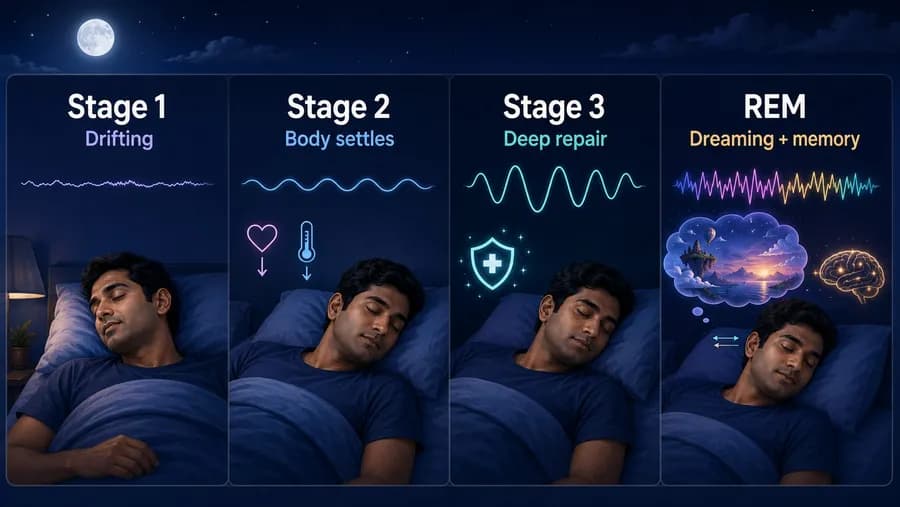
The Stages of Sleep and Why Each One Matters
The stages of sleep aren't interchangeable — each one handles a different kind of physical or mental repair. See how they cycle through the night, and why timing your wake-up around them matters.
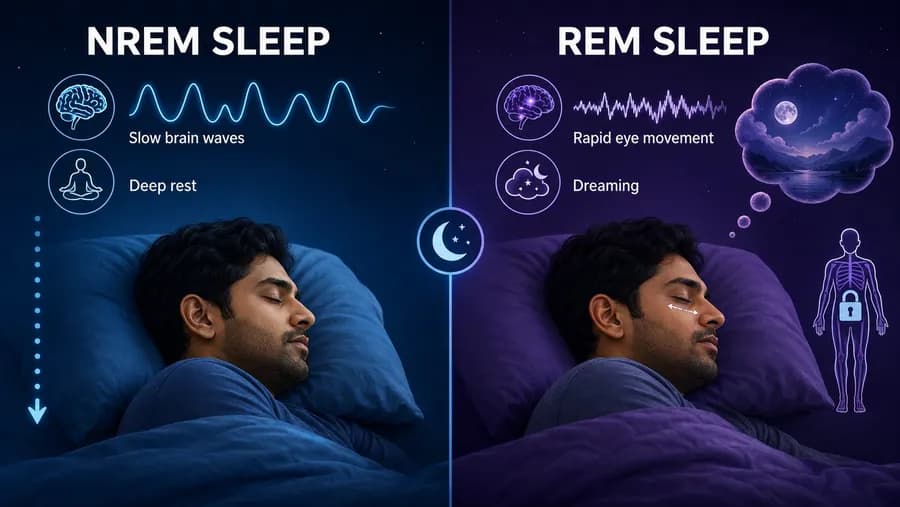
REM vs NREM Sleep: What’s the Difference?
REM vs NREM sleep is the most fundamental split in how sleep is organised — one handles physical restoration, the other handles memory and emotion. See how they differ, and why you need a balance of both.
How Many Hours of Sleep Is Necessary? A Realistic Answer
How many hours of sleep is necessary depends heavily on age, not a flat 8-hour rule for everyone. See the real ranges by life stage, and the signs you're falling short.

How to Get Deep Sleep: 7 Proven Ways to Improve and Lengthen Deep Sleep
Deep, slow-wave sleep is when the body physically repairs and the brain clears waste — the single most important phase for health and recovery. See 7 proven ways to improve and lengthen it.