
Breathing Exercises for Sleep: Techniques to Calm Your Mind
Breathing exercises for sleep work because slowing your exhale is one of the few nervous-system responses you can control directly. Try the techniques that calm a racing mind fastest.
Key Takeaways
- Explains slowing the exhale directly signals the nervous system it’s safe to stop being alert.
- Names 4-7-8 breathing’s long 8-count exhale as the specific mechanism doing the calming work.
- Recommends Bhramari’s humming vibration specifically as a traditional pre-sleep yogic technique.
- Recommends belly breathing with a hand on the stomach to fully engage the diaphragm.
- Suggests rotating between techniques if one starts losing its calming effect over time.
- States the nervous-system response to slow breathing kicks in within just a couple of minutes.
Breathing exercises for sleep work because breath is one of the few nervous-system responses you can control directly. Slowing and lengthening your exhale signals to your body that it’s safe to stop being alert, which is why these techniques can shift you out of a racing, wide-awake state faster than almost anything else you can do lying in bed.
Why breathing techniques for sleep work
Fast, shallow breathing is part of your body’s alert response — it’s what happens automatically when you’re stressed, and it’s also what quietly keeps you awake even when you’re only stressed about not sleeping. Slow, deep breathing does the opposite: it activates the parasympathetic nervous system, lowers heart rate, and tells your brain the emergency is over. Breathing exercises for sleep use this mechanism deliberately, rather than waiting for it to happen on its own.
Three breathing exercises for sleep to try tonight
- 4-7-8 breathing — inhale through the nose for 4 counts, hold for 7, exhale slowly through the mouth for 8; repeat 4 rounds. The long exhale is what does the calming work.
- Box breathing — inhale for 4 counts, hold for 4, exhale for 4, hold for 4, and repeat. Simple to remember and effective for a racing mind.
- Bhramari (humming bee breath) — inhale normally, then exhale while making a low humming sound with your mouth closed. The vibration itself has a calming effect on the nervous system and is a traditional yogic technique used specifically before sleep.
Any one of these breathing techniques for sleep can be done lying in bed, lights off, with no equipment or app needed.
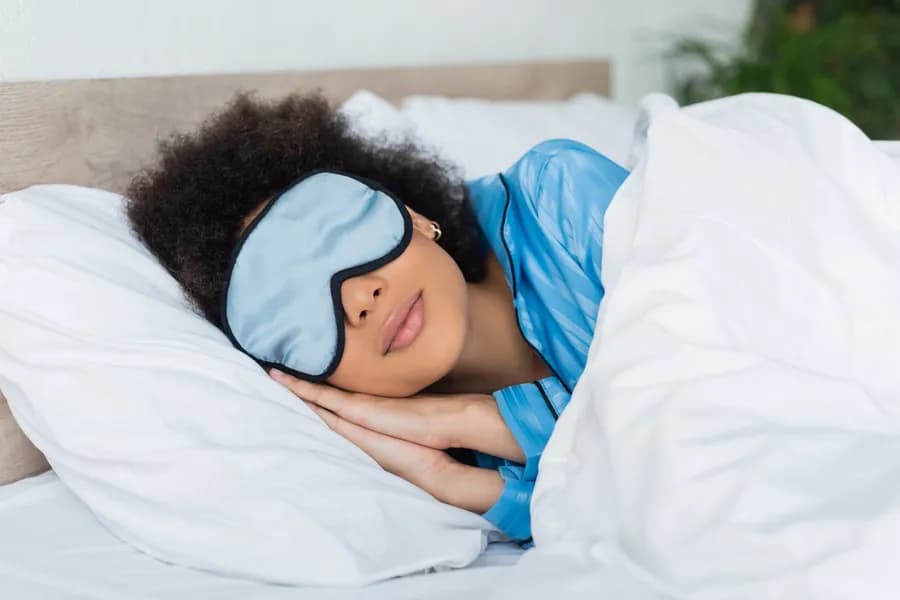
Falling asleep peacefully after breathing exercises for sleep
More breathing exercises for sleep worth learning
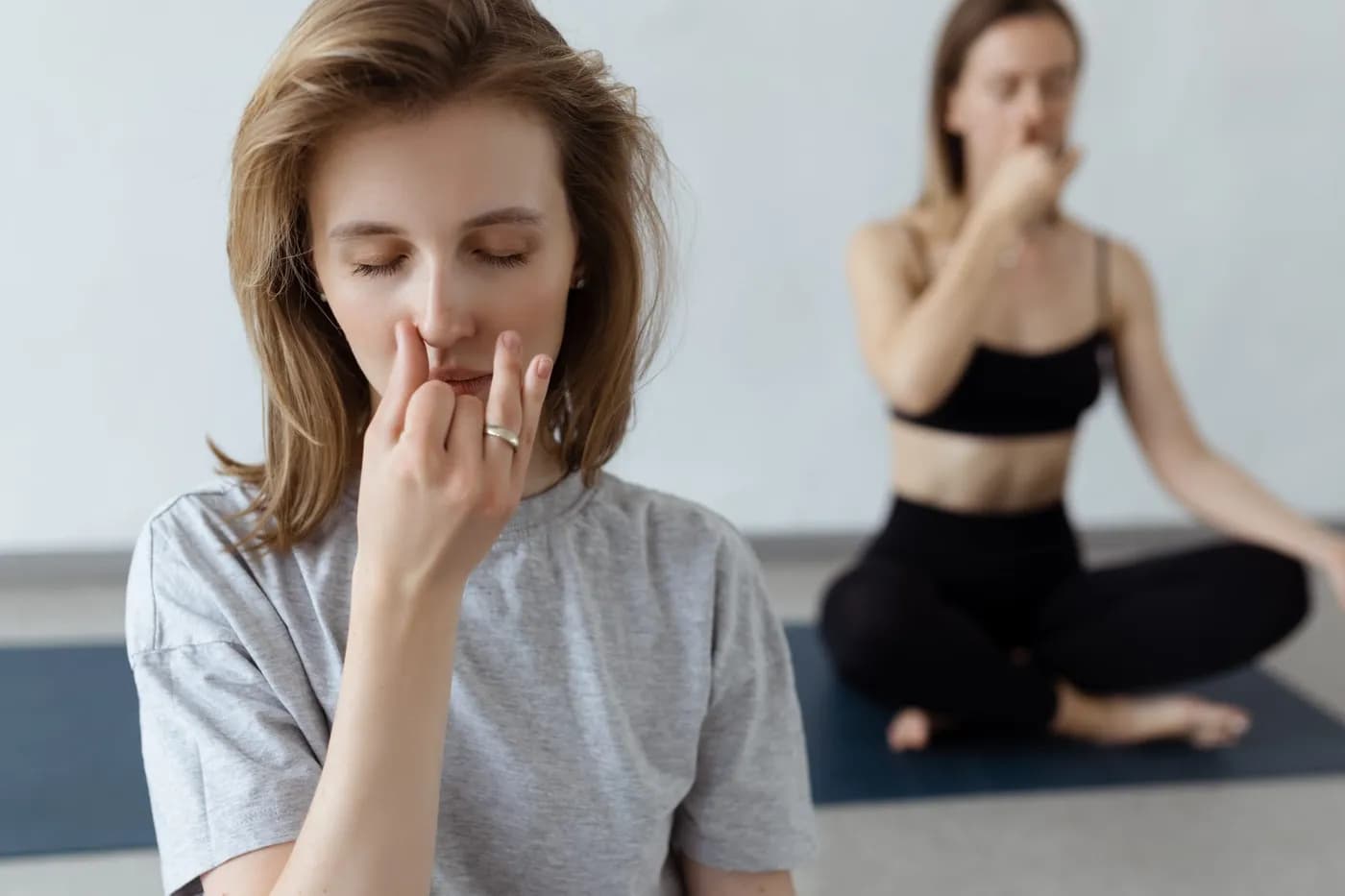
- Alternate nostril breathing (Nadi Shodhana) — using a thumb and finger to close one nostril at a time, breathing in through one side and out through the other; traditionally used to balance the nervous system and quiet mental chatter before rest
- Diaphragmatic (belly) breathing — placing a hand on your stomach and breathing so it rises more than your chest does, which engages the diaphragm fully and produces a deeper calming effect than shallow chest breathing
- Extended exhale breathing — simply making every exhale roughly twice as long as the inhale, without a fixed count; a good starting option for people who find 4-7-8’s counting itself distracting
- Progressive breath with muscle release — pairing each slow exhale with consciously releasing tension in one muscle group, moving from feet to head across several breaths
Rotating between a few of these breathing exercises for sleep, rather than relying on only one, can help if a single technique starts to feel routine or stops holding your attention as effectively over time.
How breathing exercises for sleep compare to other calming techniques
Breathing techniques for sleep are often the fastest-acting option among natural sleep aids, since the nervous-system response to slow breathing kicks in within a couple of minutes, compared to the longer build-up needed for something like herbal remedies or establishing new sleep hygiene habits. That said, breathing alone doesn’t address every cause of poor sleep — it’s most effective for a racing or anxious mind specifically, and less directly useful for issues like a disrupted sleep schedule or an uncomfortable sleep environment, which need their own separate fixes alongside breathwork.
How to build breathing exercises for sleep into a routine
Doing the practice at the same point every night — after you’re already in bed, lights off, phone away — helps your body start associating the pattern with sleep onset, which makes it work faster over time. If you want to combine breathwork with a fuller wind-down practice, what is yoga nidra builds on the same breath-led relaxation principle across a longer guided session, and bedtime yoga for sleep pairs gentle movement with breath before you lie down.
Common mistakes with breathing exercises for sleep
- Forcing the breath — straining to hit an exact count can itself feel stressful; approximate is fine, especially when starting out
- Doing it once and giving up — the calming effect gets stronger with repetition over several nights, not necessarily on the very first try
- Holding tension elsewhere in the body — shoulders and jaw often stay clenched even while breathing slows; a brief full-body relax alongside the breathing exercise helps more
Frequently Asked Questions
Related Articles
How to Sleep Better at Night: 8 Proven Habits for Deeper, More Restful Sleep
Sleep quality is highly responsive to a few specific evening habits — no medication, expensive devices, or complicated protocols required. See all 8 proven habits.

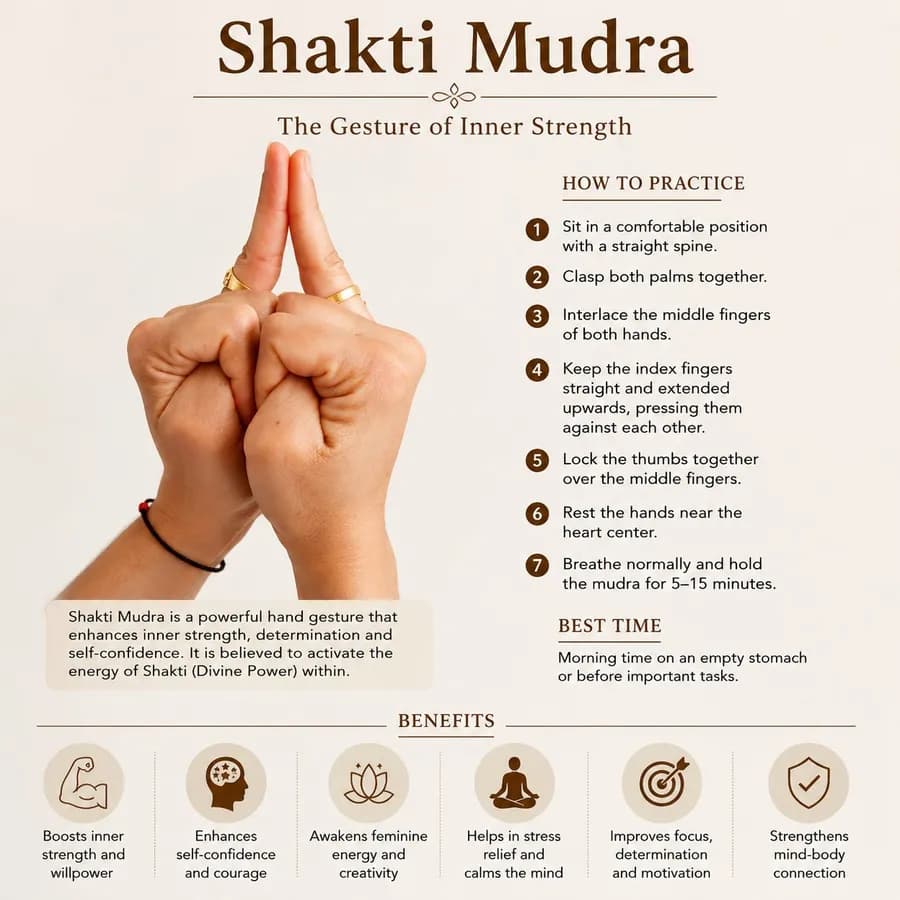
Mudra for Sleep (Shakti Mudra): Steps, Benefits, and Precautions
Shakti Mudra and Prithvi Mudra activate the parasympathetic nervous system and establish a conditioned pre-sleep signal when held for 10-15 minutes before

How to Reduce Stress: 8 Natural Ways to Calm Your Mind and Body
Chronically elevated cortisol disrupts sleep, digestion, mood, immunity, and weight — but the nervous system can be retrained with no equipment and no special knowledge. See all 8 natural ways.