
Hypnic Jerk: Why You Jerk While Falling Asleep
That sudden jolt just as you drift off, often with a feeling of falling, is called a hypnic jerk. Here's why it happens and how to have fewer of them.
Key Takeaways
- A hypnic jerk is a sudden, brief muscle twitch that happens as you fall asleep.
- It's very common and usually harmless; most people have one at some point.
- Caffeine, stress, tiredness and late-evening exercise may make jerks more likely.
- A calm bedtime routine and regular sleep can help reduce how often they happen.
- See a doctor if jerks keep you awake often, happen by day or come with other symptoms.
What Is a Hypnic Jerk?
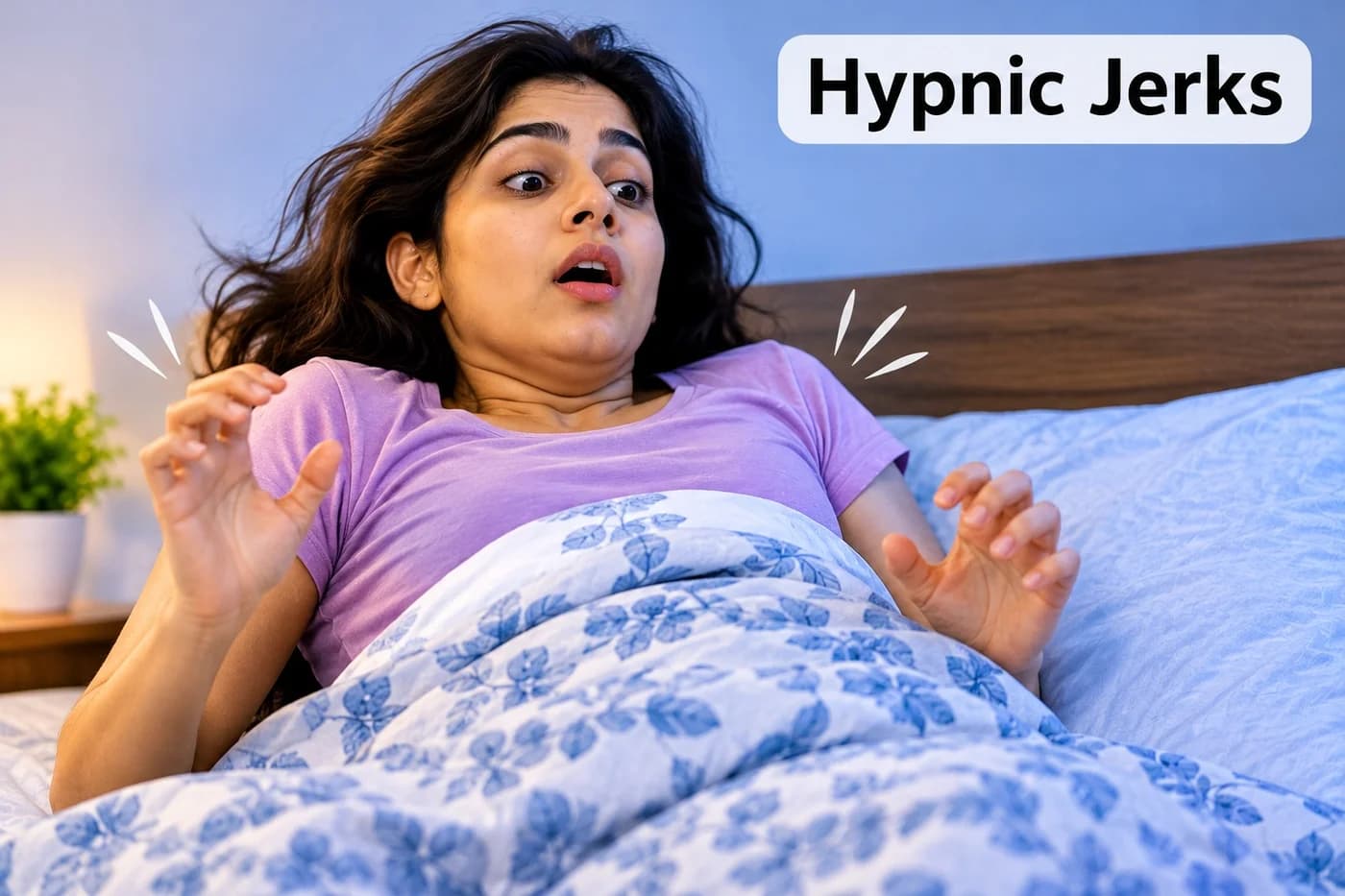
You're lying in bed, just starting to drift off, when suddenly your whole body jolts and you're wide awake again. Sometimes it comes with the feeling of tripping or falling, a flash of light or a loud sound in your head. This experience has a name: a hypnic jerk, also called a sleep start or hypnagogic jerk.
A hypnic jerk is a quick, involuntary contraction of one or more muscles, often in the legs or arms, that happens in the transition from being awake to being asleep. It usually lasts less than a second. Some people barely notice it, while others are startled awake. Bed partners often notice them too.
How Common Are Hypnic Jerks?
Hypnic jerks are extremely common. Estimates suggest that up to 70% of people experience them. They can happen at any age and are generally considered a normal part of falling asleep rather than a sign of illness.
Why Do Hypnic Jerks Happen?
Scientists don't fully understand why hypnic jerks happen. One explanation is that as you fall asleep, your muscles relax and your brain shifts between the systems that keep you awake and those that put you to sleep. During this handover, a burst of nerve activity can briefly fire the muscles, producing the jerk.
Another popular theory is that the brain misreads the deep muscle relaxation of sleep onset as a sign that you are falling, and responds with a reflex to "catch" you. This might explain why many people feel like they're tripping or falling at the moment of the jerk. These ideas are interesting, but they haven't been proven.
Common Triggers
Although hypnic jerks can happen to anyone at any time, some things seem to make them more likely.
Caffeine and other stimulants
Tea, coffee, energy drinks and some medicines contain stimulants that keep the nervous system more alert. Having them in the afternoon or evening may make your body more prone to twitching as you fall asleep.
Stress and anxiety
When you're worried or tense, your body stays on alert even as you try to sleep. A busy, anxious mind is often linked to more frequent sleep starts, and being startled awake can in turn make you more anxious about falling asleep.
Being overtired
Irregular sleep or a run of short nights can make the transition into sleep less smooth. Many people notice more hypnic jerks after a period of poor sleep.
Intense exercise late in the evening
Regular exercise generally improves sleep, but a hard workout close to bedtime can leave your body and nervous system more stimulated, which may contribute to jerks for some people.
Are Hypnic Jerks Dangerous?
For most people, hypnic jerks are harmless. They don't damage your body and aren't a sign of a serious condition. The main problems they cause are being startled awake and, if they happen often, feeling anxious about falling asleep.
That said, there are times when it's worth getting checked. Speak to a doctor if the jerks happen often and regularly keep you awake, if they make you anxious about going to bed, if you have repeated jerking movements during the day, or if you notice other symptoms such as an urge to move your legs in the evening, confusion or loss of bladder control. These can point to other conditions, such as restless legs syndrome or a seizure disorder, that need proper assessment.
How to Reduce Hypnic Jerks
Because the common triggers are lifestyle factors, small changes often help. Cut back on caffeine, especially after lunch, and avoid energy drinks in the evening. Try to keep a regular sleep schedule, going to bed and waking up at about the same time every day, so you're not regularly overtired.
Plan hard workouts for earlier in the day if you notice more jerks after evening exercise, and keep the last few hours before bed for gentler movement such as stretching or relaxing yoga. Build a calm wind-down routine: dim the lights, put your phone away and do something quiet for 30 to 60 minutes before sleep.
Relaxation techniques can also help settle your nervous system before bed. Slow breathing, where you breathe out for longer than you breathe in, and gently relaxing each part of your body from head to toe are simple ways to do this.
Hypnic Jerks vs Other Night-Time Movements
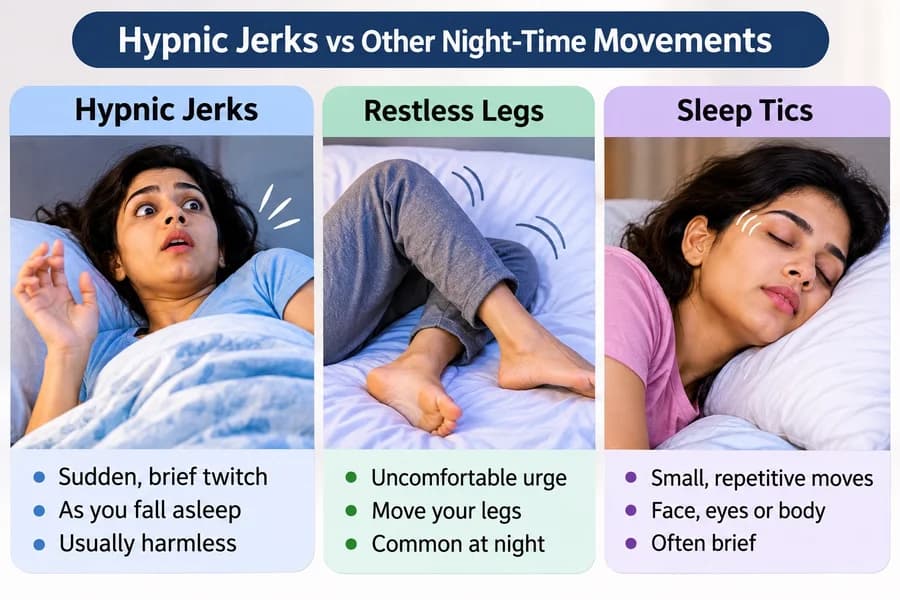
It helps to know how hypnic jerks differ from other movements at night. A hypnic jerk happens only as you're falling asleep, is a single sudden twitch and usually stops once you're fully asleep. Restless legs syndrome, by contrast, causes an uncomfortable urge to move your legs in the evening or when lying still, which eases when you move. Periodic limb movements are repeated, rhythmic leg movements during sleep that you may not notice yourself, though a bed partner might. If what you experience sounds more like these, it's worth mentioning to a doctor.
What to Do If a Hypnic Jerk Wakes You Up
If you're jolted awake, try not to worry about it. Remind yourself that it's normal and harmless, take a few slow breaths and let your body relax again. Getting frustrated or anxious makes it harder to fall back asleep. Most people drift off again within a few minutes.
Hypnic Jerks and Habuild
A steady routine of daytime movement and evening relaxation supports smoother sleep. Habuild's live sessions combine yoga, exercise and breathing, and the Habuild app's Box Breathing habit is an easy way to calm your body before bed.
Editorial Sources
- Sleep Foundation – Hypnic Jerk: Why You Twitch When You Sleep
- Cleveland Clinic – Why Do I Feel Like I'm Falling or Twitching As I'm Falling Asleep?
- Alghamdi – Hypnic jerks, major depressive disorder, and antidepressant use: a possible relationship (2023)
Health Disclaimer
This article is for general information only and is not medical advice. If you have frequent jerking movements or other unusual symptoms, please consult a doctor.
Frequently Asked Questions
Related Articles
How to Fall Asleep Fast When Your Mind Won’t Quiet Down
How to fall asleep fast usually comes down to giving your body the right signals, not trying harder. See the military method and other techniques that genuinely work.

Sleep Anxiety: Why You Can’t Relax at Night
Sleep anxiety is uniquely self-reinforcing — the fear of not sleeping is often exactly what keeps you awake. See how the cycle forms, and the fastest way to break it.

Common Types of Sleep Disorders and What Causes Them
Sleep disorders cover a wide range of conditions, from insomnia to sleep apnea to restless legs, and treatment differs completely by type. See how to recognise which one might be at play.
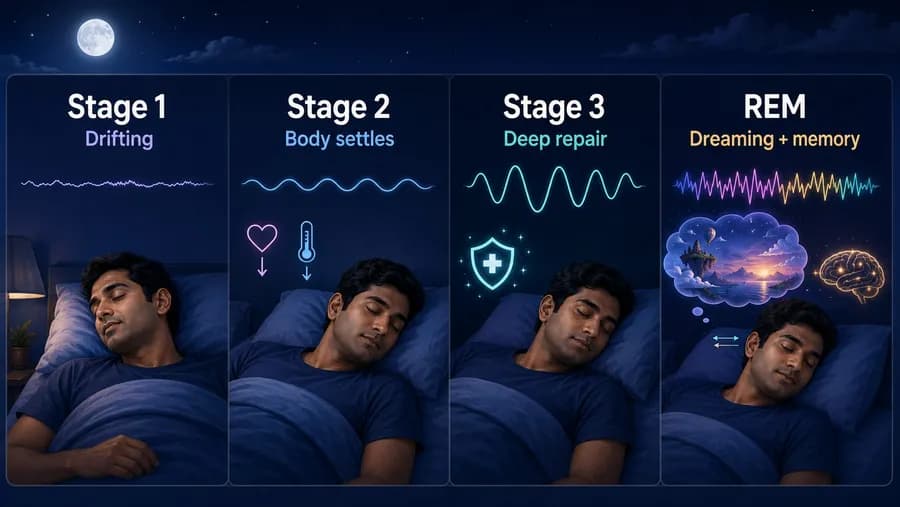
The Stages of Sleep and Why Each One Matters
The stages of sleep aren't interchangeable — each one handles a different kind of physical or mental repair. See how they cycle through the night, and why timing your wake-up around them matters.