
Mouth Taping for Sleep: Does This Trend Actually Work?
Mouth taping for sleep promises calmer, quieter breathing overnight — but the evidence is thinner than the trend suggests, and it isn't safe for everyone. See who should never try it.
Key Takeaways
- States mouth taping is explicitly not a treatment for diagnosed sleep apnea.
- Recommends a small vertical strip in the centre of the lips, not taping the whole mouth shut.
- Warns to confirm comfortable nasal breathing while awake before ever trying it asleep.
- States the trend grew faster on social media than in actual clinical research.
- Recommends stopping immediately if any anxiety or breathing difficulty is felt.
- Names sleeping on your side as an alternative that reduces mouth breathing without any tape.
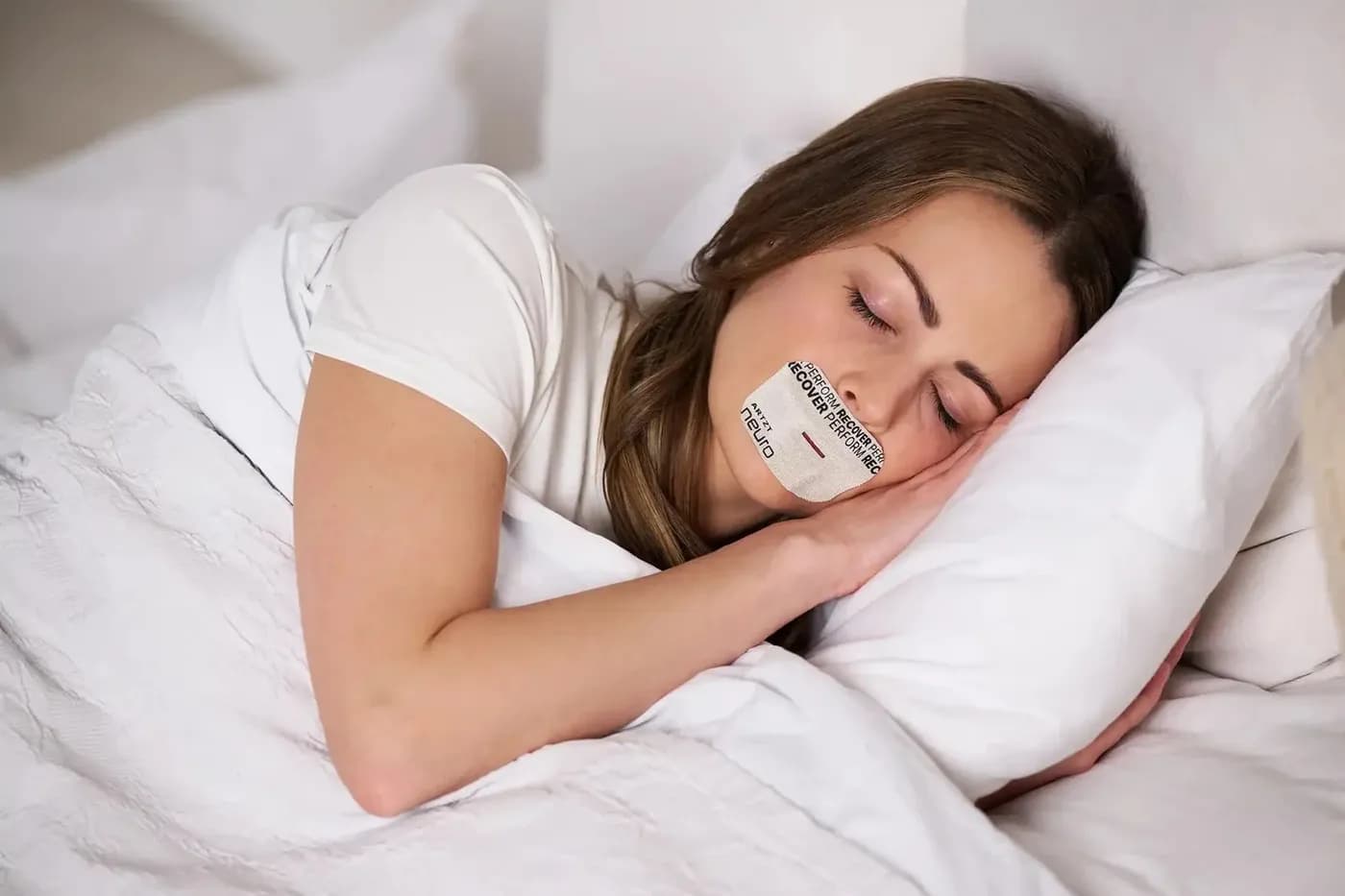
Mouth taping for sleep is the practice of placing a small strip of tape over closed lips before bed to force nose breathing through the night, on the idea that nasal breathing is calmer, more efficient, and reduces snoring and dry mouth compared to breathing through an open mouth.
What mouth taping for sleep actually claims to do
Nose breathing filters and humidifies air, produces nitric oxide that supports oxygen absorption, and tends to be slower and calmer than mouth breathing, which is often shallow and linked to snoring. Advocates of mouth tape for sleeping argue that gently keeping lips closed overnight nudges the body toward nasal breathing by default, reducing snoring, dry mouth, and morning grogginess.
What the evidence actually shows
The research here is thin. A handful of small studies suggest mouth taping for sleep may modestly help with mild snoring in people who can already breathe through their nose without difficulty, but there’s no strong evidence it improves sleep quality broadly, and it is explicitly not a treatment for sleep apnea. Most of what’s out there is anecdotal — a genuinely under-studied trend that’s grown faster on social media than in clinical research.
How to try mouth taping for sleep safely
- Use a tape specifically designed for skin and mouth taping — never household tape, which can irritate skin or be difficult to remove safely
- Start with a small vertical strip in the centre of closed lips rather than taping the whole mouth shut, so you can still open your mouth in an emergency
- Confirm you can breathe comfortably through your nose while awake before trying it asleep
- Stop immediately if you feel any anxiety, breathing difficulty, or skin irritation
Where the mouth taping for sleep trend actually came from
Mouth taping for sleep grew rapidly through wellness and biohacking communities online, often linked to broader claims about nasal breathing improving athletic performance, focus, and general health. Much of this popularisation draws on the idea that modern humans have become “mouth breathers” due to processed diets, screen-driven posture, and other lifestyle shifts — a claim with some plausibility around jaw development in children, but far less direct evidence connecting it to adult sleep quality specifically. This origin story is worth knowing, since it explains why the trend feels so confidently promoted online despite the underlying research being genuinely limited.
Alternatives if you want the benefits without taping
- Practising nasal breathing consciously while awake — building the habit during the day can carry over into lighter sleep more naturally than forcing it overnight with tape
- Treating nasal congestion at its source — a saline rinse, addressing allergies, or seeing an ENT for a structural issue solves the reason you’re mouth breathing rather than masking it
- Sleeping on your side — reduces mouth breathing and snoring for many people without any tape or device involved
- A humidifier in the bedroom — eases dry-mouth discomfort, one of the main complaints mouth taping for sleep is trying to solve, without the same safety concerns
Who should never try mouth taping for sleep
This is the most important part: anyone with sleep apnea, a diagnosed or suspected breathing disorder, a deviated septum, chronic nasal congestion, or any condition that makes nose breathing difficult should not use mouth tape for sleeping — restricting mouth breathing in someone who needs it to breathe adequately can be genuinely dangerous. If snoring is the concern that’s drawing you to this trend, how to stop snoring covers several safer, better-evidenced approaches to try first, and anyone with loud, frequent snoring alongside daytime fatigue should rule out sleep apnea before trying any snoring remedy, taped or otherwise.
What to expect in the first few nights
If you’ve confirmed nasal breathing is comfortable while awake and want to try mouth taping for sleep cautiously, expect an adjustment period. The first night or two often come with a heightened awareness of the tape itself, occasionally disrupting sleep more than helping it simply because it’s unfamiliar. Some people report drier lips or mild skin sensitivity where the tape sits, which usually settles once a suitable gentle tape is found. If sleep quality doesn’t improve within a week or two, or if anything about it feels wrong, that’s a reasonable point to stop rather than push through.
Common mistakes with mouth taping for sleep
- Trying it without checking nasal breathing first — if you’re congested or breathe through your mouth out of necessity, taping doesn’t fix the underlying issue and can make sleep worse, not better
- Using the wrong tape — regular tape isn’t designed for skin contact overnight and can cause irritation or pain on removal
- Ignoring undiagnosed sleep apnea — mouth taping is never a substitute for proper diagnosis and treatment if apnea is suspected
Frequently Asked Questions
Related Articles
How to Stop Snoring: 7 Proven Ways for Quiet, Restful Sleep
Snoring signals a partly blocked airway during sleep, and most cases are caused by lifestyle, posture, and breathing patterns you can change. See 7 proven ways for quiet, restful sleep.

How to Get Deep Sleep: 7 Proven Ways to Improve and Lengthen Deep Sleep
Deep, slow-wave sleep is when the body physically repairs and the brain clears waste — the single most important phase for health and recovery. See 7 proven ways to improve and lengthen it.