
Pregnancy Sleeping Positions: What’s Safe and What to Avoid
Pregnancy sleeping positions matter more as pregnancy progresses — what's fine in the first trimester isn't necessarily ideal by the third. See what's safe and what to avoid, trimester by trimester.
Key Takeaways
- States lying flat on the back from the second trimester can compress the vena cava vein.
- States the first trimester allows considerably more positional flexibility than later stages.
- States left-side sleeping is recommended once the uterus grows large enough to affect vessels.
- Names restless legs syndrome as a pregnancy discomfort not solved by position alone.
- Recommends a slightly elevated upper body with extra pillows specifically for pregnancy heartburn.
- States stomach sleeping becomes impractical for most women by the second or third trimester.
Pregnancy sleeping positions matter more as pregnancy progresses, since a growing belly changes both comfort and, later on, blood flow considerations that don’t apply earlier on — what’s fine in the first trimester isn’t necessarily ideal by the third.
The recommended sleeping position for pregnant women
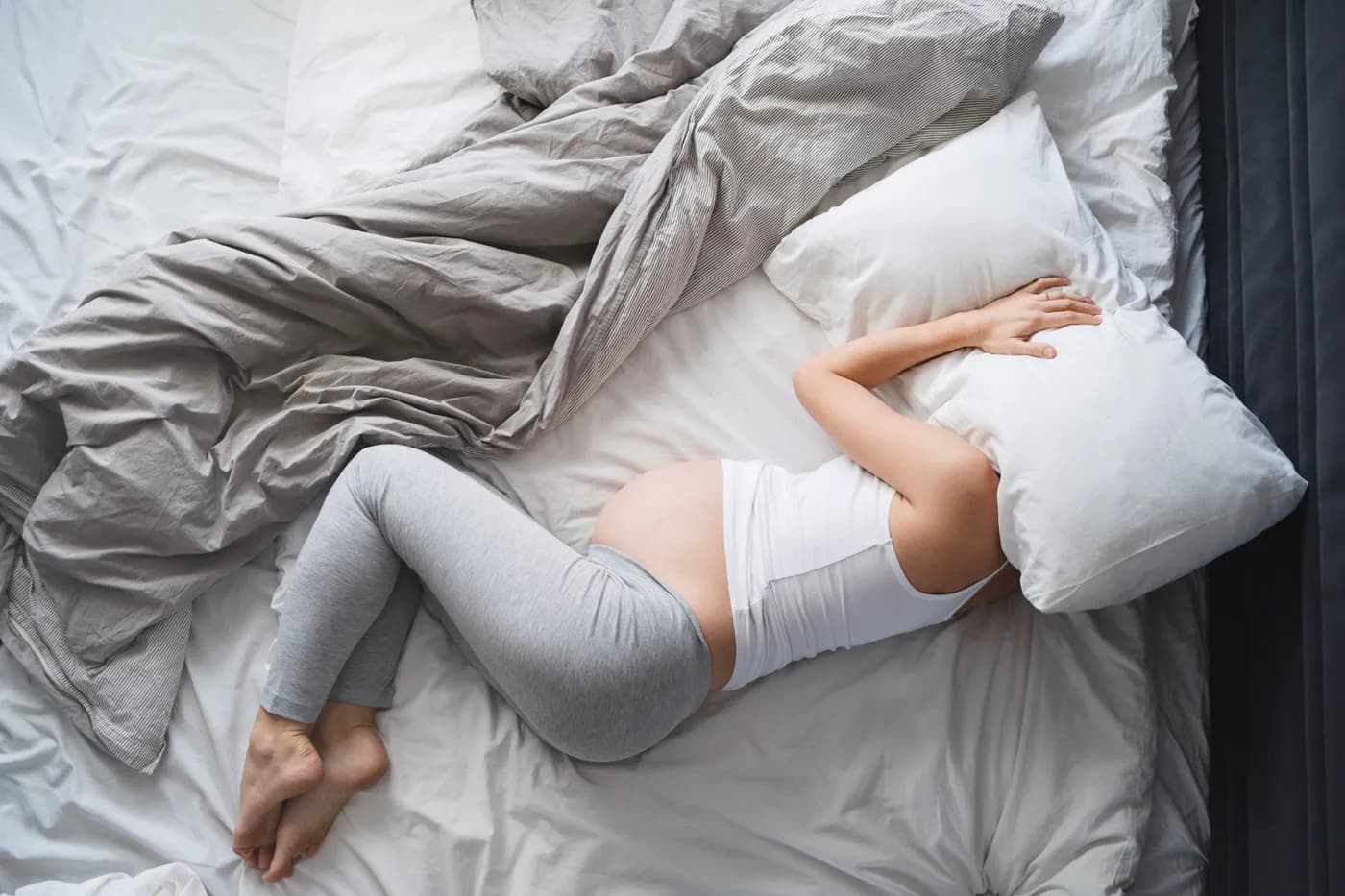
Among all pregnancy sleeping positions, left-side sleeping is the most widely recommended, particularly from the second trimester onward. Choosing the right one of these pregnancy sleeping positions early makes it easier to sustain through the later, less comfortable months. It improves blood flow to the uterus and placenta, and reduces pressure on the liver, which sits on the right side of the body. Placing a pillow between the knees, and optionally a wedge behind the lower back, makes this position more sustainable through a full pregnancy-length night.
Wrong sleeping positions during pregnancy to be aware of
- Flat on your back, especially from the second trimester onward — this can compress a major vein (the vena cava) that returns blood to the heart, potentially reducing blood flow to both you and the baby and causing dizziness or shortness of breath
- Stomach sleeping in later pregnancy — becomes physically uncomfortable and impractical for most women by the second or third trimester as the belly grows
- Long stretches on the right side exclusively — not dangerous occasionally, but the left side is preferred as your primary position for the blood-flow benefits described above
Pregnancy sleeping positions trimester by trimester
- First trimester — largely unrestricted; the uterus is still small and low in the pelvis, so comfort can guide your choice more than medical necessity
- Second trimester — the point at which left-side sleeping starts being actively recommended, as the growing uterus becomes large enough to affect major blood vessels when lying flat
- Third trimester — left-side sleeping becomes most important, alongside additional support (pregnancy pillow, wedge) as the belly’s size makes most other positions increasingly uncomfortable anyway
This progression is useful to know in advance, since many women assume strict rules apply from the very start of pregnancy when in fact the first trimester allows considerably more flexibility than later stages do.
Common discomforts that affect pregnancy sleeping positions
Heartburn, restless legs, frequent urination, and general difficulty getting comfortable all tend to intensify as pregnancy progresses, each interacting with position choice differently. Heartburn responds to a slightly elevated upper body, achievable with extra pillows alongside left-side sleeping. Restless legs syndrome, more common during pregnancy due to iron and other nutrient demands, isn’t solved by position alone and may need a doctor’s input if persistent. Understanding that these discomforts, not just the “correct” position itself, shape how comfortable a night’s sleep actually is helps set realistic expectations rather than assuming perfect position alone guarantees perfect sleep.
Is it dangerous if I wake up on my back?
No — this is one of the most common pregnancy worries, and it’s largely unfounded for brief periods. Occasionally rolling onto your back while asleep and shifting back to your side is normal and not harmful; the concern is about sustained, hours-long back sleeping, not brief transitional moments your body naturally moves through overnight.
Pregnancy sleeping positions for twins or a high-risk pregnancy
Women carrying twins or managing a high-risk pregnancy sometimes need more specific guidance than the general recommendations above, since the added size and weight from a multiple pregnancy can make left-side sleeping uncomfortable earlier and more urgently than in a single pregnancy. Alternating between the left side and a slight recline, with substantial pillow support under the belly, often works better than trying to stay strictly on one side for a full night. Given the added complexity, discussing pregnancy sleeping positions specifically with your obstetrician is worthwhile for twin or high-risk pregnancies, rather than relying solely on general guidance intended for a typical single pregnancy.
Making these pregnancy sleeping positions more comfortable night after night
- Use a full-length pregnancy pillow to support your belly, back, and the pillow-between-knees adjustment all at once
- Prop yourself up slightly with extra pillows if heartburn (common in later pregnancy) disrupts flat sleeping
- If lower back pain is part of what’s making pregnancy sleeping positions difficult to hold, how to relieve back pain during pregnancy while sleeping covers more targeted adjustments for that specific discomfort
Frequently Asked Questions
Related Articles
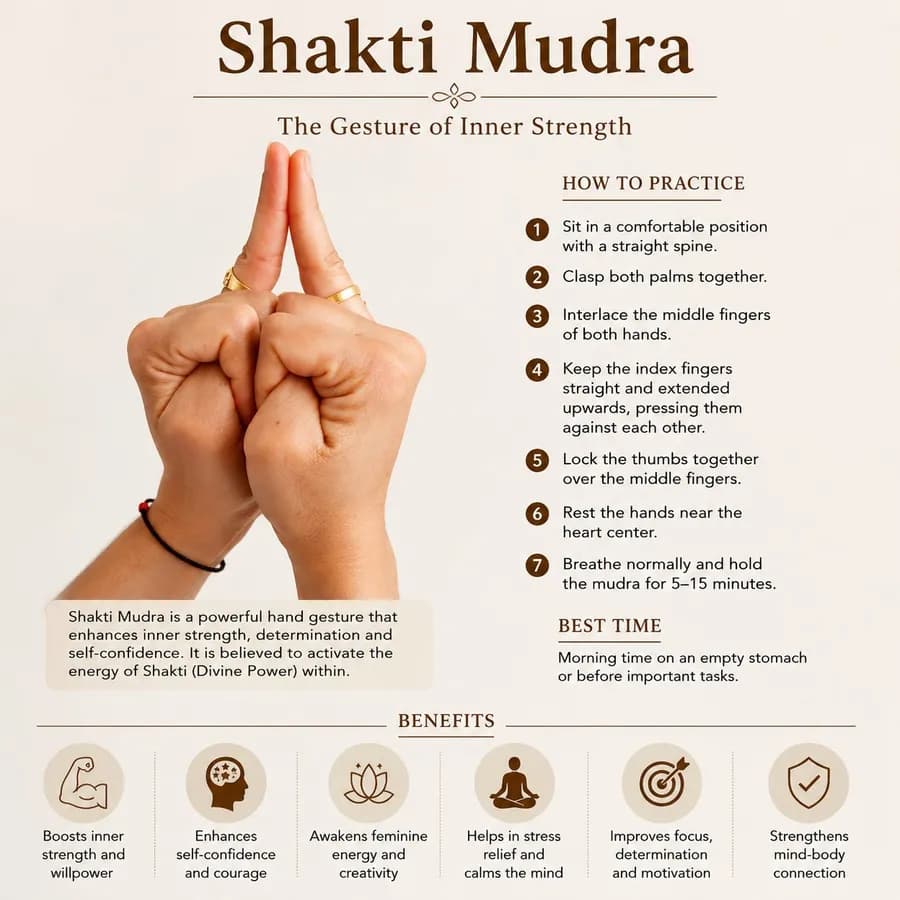
Mudra for Sleep (Shakti Mudra): Steps, Benefits, and Precautions
Shakti Mudra and Prithvi Mudra activate the parasympathetic nervous system and establish a conditioned pre-sleep signal when held for 10-15 minutes before


How to Get Deep Sleep: 7 Proven Ways to Improve and Lengthen Deep Sleep
Deep, slow-wave sleep is when the body physically repairs and the brain clears waste — the single most important phase for health and recovery. See 7 proven ways to improve and lengthen it.


How to Sleep Better at Night: 8 Proven Habits for Deeper, More Restful Sleep
Sleep quality is highly responsive to a few specific evening habits — no medication, expensive devices, or complicated protocols required. See all 8 proven habits.