
Screen Time Before Bed: Effects on Sleep
Scrolling in bed is a habit for many of us. Learn how screen time before bed affects your sleep, whether night mode helps and simple ways to cut back.
Key Takeaways
- Screens before bed can delay sleep through bright light and, often more, engaging content.
- In one study, reading on a glowing e-reader delayed melatonin and made it harder to fall asleep.
- Screen use at night is strongly linked with later bedtimes and shorter sleep in young people.
- Night mode may not be enough on its own; cutting screen time matters more.
- Try a screen-free last 30 to 60 minutes and keep your phone outside the bedroom.
Why Screens and Sleep Don't Mix
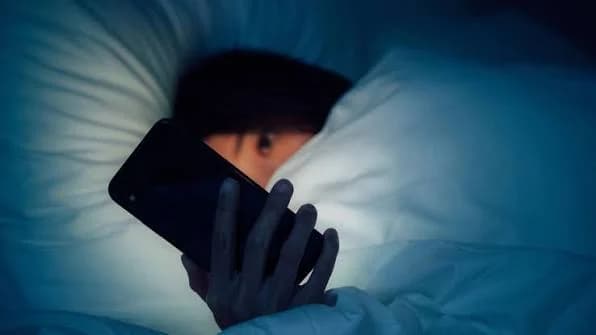
For many people, the last thing they see at night is a phone screen. A quick check of messages turns into 30 minutes of videos, and suddenly it's well past bedtime. Screens affect sleep in a few different ways, and understanding them can help you build better habits.
The Light Effect
Your body clock relies on light to know whether it's day or night. In the evening, as light fades, your brain starts releasing melatonin, a hormone that helps prepare you for sleep. Bright light at night, especially blue-rich light like the kind given off by screens and many LED lights, can suppress melatonin and shift your body clock later.
A well-known study tested this directly. Adults read either on a light-emitting e-reader or from a printed book for about four hours before bed over several nights. When they used the e-reader, they took longer to fall asleep, felt less sleepy in the evening, had delayed melatonin release and were less alert the next morning, even after eight hours in bed.
That study involved hours of reading at fairly close range. In everyday life, the light from a phone held for a short time may have a smaller effect, and researchers are still debating how big it really is. But there's another factor that may matter even more.
The Content Effect
What you do on a screen can keep you awake as much as the light itself. Social media, news, messages, games and gripping shows all keep your brain alert and engaged. Emotional or stressful content can raise your heart rate and make it harder to switch off. Many apps are designed to keep you scrolling, with endless feeds and autoplay, so it's easy to lose track of time and push your bedtime later and later.
Notifications are another problem. A phone buzzing or lighting up during the night can wake you or disturb your sleep.
What Research Shows in Children and Teenagers
Young people may be especially sensitive. A review of dozens of studies in school-age children and teenagers found that screen use was linked with later bedtimes and shorter total sleep in about 90% of the studies. Having devices in the bedroom was linked with poorer sleep too. This matters because teenagers need eight to ten hours of sleep a night, and short sleep affects learning, mood and health.
Does Night Mode Help?
Many phones have a night mode or blue light filter that makes the screen warmer in colour. It may reduce some of the blue light, and it's a sensible setting to use. However, research suggests it isn't a complete fix. In one study of young adults, using Night Shift didn't lead to better sleep. Among those who usually slept well, skipping the phone in the hour before bed led to better sleep than using it with Night Shift on. Lowering brightness and putting the phone away are more effective than relying on night mode alone.
Signs Your Screen Habit Is Affecting Your Sleep
You might be losing sleep to screens if you often plan to sleep but keep scrolling, go to bed much later than you meant to, feel wired rather than sleepy at bedtime, check your phone when you wake in the night or wake up tired after a late-night phone session. If several of these sound familiar, your screen habit may be one of the easiest things to change for better sleep.
How to Cut Back on Screen Time Before Bed
Set a screen curfew
Aim to put screens away 30 to 60 minutes before bed. Set an alarm or a bedtime reminder on your phone to prompt you.
Keep your phone out of the bedroom
Charge your phone in another room, or at least out of reach. Use a simple alarm clock instead of your phone if you need one.
Use do-not-disturb mode
Turn on do-not-disturb or bedtime mode so calls and messages don't wake you. Most phones allow important contacts to still get through.
Lower the brightness
If you do use a screen in the evening, dim it and use night mode. Dim the room lights as well.
Replace scrolling with a calming routine
Read a paper book, listen to soft music, stretch, journal or try slow breathing. Having something pleasant to do makes it easier to put the phone down.
Make a family plan
For children, keep TVs, tablets and phones out of bedrooms and agree on a screen-off time each night. Children are more likely to follow the rule if adults follow it too.
What to Do If You Wake Up at Night
Many people reach for their phone when they wake up in the night, to check the time or messages. This floods your eyes with light and your mind with information just when you need to drift back to sleep. Instead, keep the room dark, avoid checking the time and try slow breathing. If you can't fall back asleep after about 20 minutes, get up, sit somewhere quiet in dim light and read a paper book until you feel sleepy again.
When to Seek Help
If you've cut back on screens and still struggle to fall asleep or stay asleep for weeks, or feel tired every day, talk to a doctor. Ongoing insomnia and other sleep disorders can be treated.
How Habuild Can Help
Habuild's live sessions combine yoga, exercise and breathing, which support better sleep. The Habuild app's Box Breathing habit is a calm, screen-light way to relax before bed.
Editorial Sources
- Chang et al. – Evening use of light-emitting eReaders negatively affects sleep, circadian timing, and next-morning alertness, PNAS (2015)
- Hale & Guan – Screen time and sleep among school-aged children and adolescents: a systematic literature review, Sleep Medicine Reviews (2015)
- Duraccio et al. – Does iPhone night shift mitigate negative effects of smartphone use on sleep outcomes in emerging adults?, Sleep Health (2021)
- Sleep Foundation – How Electronics Affect Sleep
Health Disclaimer
This article is for general information only and is not medical advice. If you have ongoing sleep problems, please consult a doctor.
Frequently Asked Questions
Related Articles

Sleep Hygiene: The Daily Habits Behind Better Sleep
Sleep hygiene is the cumulative, unglamorous consistency of daily habits, not a single fix. See the core habits that matter most, and the ones most people overlook.

How to Fall Asleep Fast When Your Mind Won’t Quiet Down
How to fall asleep fast usually comes down to giving your body the right signals, not trying harder. See the military method and other techniques that genuinely work.
How to Sleep Better at Night: 8 Proven Habits for Deeper, More Restful Sleep
Sleep quality is highly responsive to a few specific evening habits — no medication, expensive devices, or complicated protocols required. See all 8 proven habits.

Meditation for Sleep: A Gentle Nightly Practice for Calm
Meditation for sleep won't knock you out like a pill, but it teaches your mind and body how to let go, night after night. Try a guided nightly practice with Habuild.