
Sleep Apnea Meaning: Symptoms and Types Explained
Sleep apnea meaning, at its simplest, is repeated pauses in breathing during sleep, often without you ever noticing it's happening. See the types, symptoms and when to get evaluated.
Key Takeaways
- Distinguishes obstructive apnea’s relaxed throat muscles from central apnea’s failed brain signal.
- States episodes can pause breathing for 10 seconds or longer without the person ever fully waking.
- Names loud snoring followed by silence then a gasp as the pattern partners notice first.
- States children’s apnea is more often caused by enlarged tonsils or adenoids than weight.
- Names hyperactivity and bedwetting past the expected age as apnea signs specific to children.
- States paediatric apnea is frequently mistaken for behavioural issues rather than sleep-related.
Sleep apnea meaning, at its simplest, is repeated pauses in breathing during sleep — brief moments, sometimes dozens or hundreds a night, where airflow stops or drops sharply enough to disturb sleep and lower blood oxygen, even if the person never fully wakes up to notice it happening.
Sleep apnea meaning and how an episode actually happens
During an episode, the muscles supporting the throat relax too much (in the most common type) or the brain briefly stops signalling the body to breathe (in a rarer type), causing airflow to pause for 10 seconds or longer. The body senses the drop in oxygen and briefly rouses itself just enough to resume breathing — usually without the person becoming consciously aware, which is exactly why sleep apnea meaning includes “loud snoring followed by silence, then a gasp,” a pattern partners often notice long before the person with apnea does.
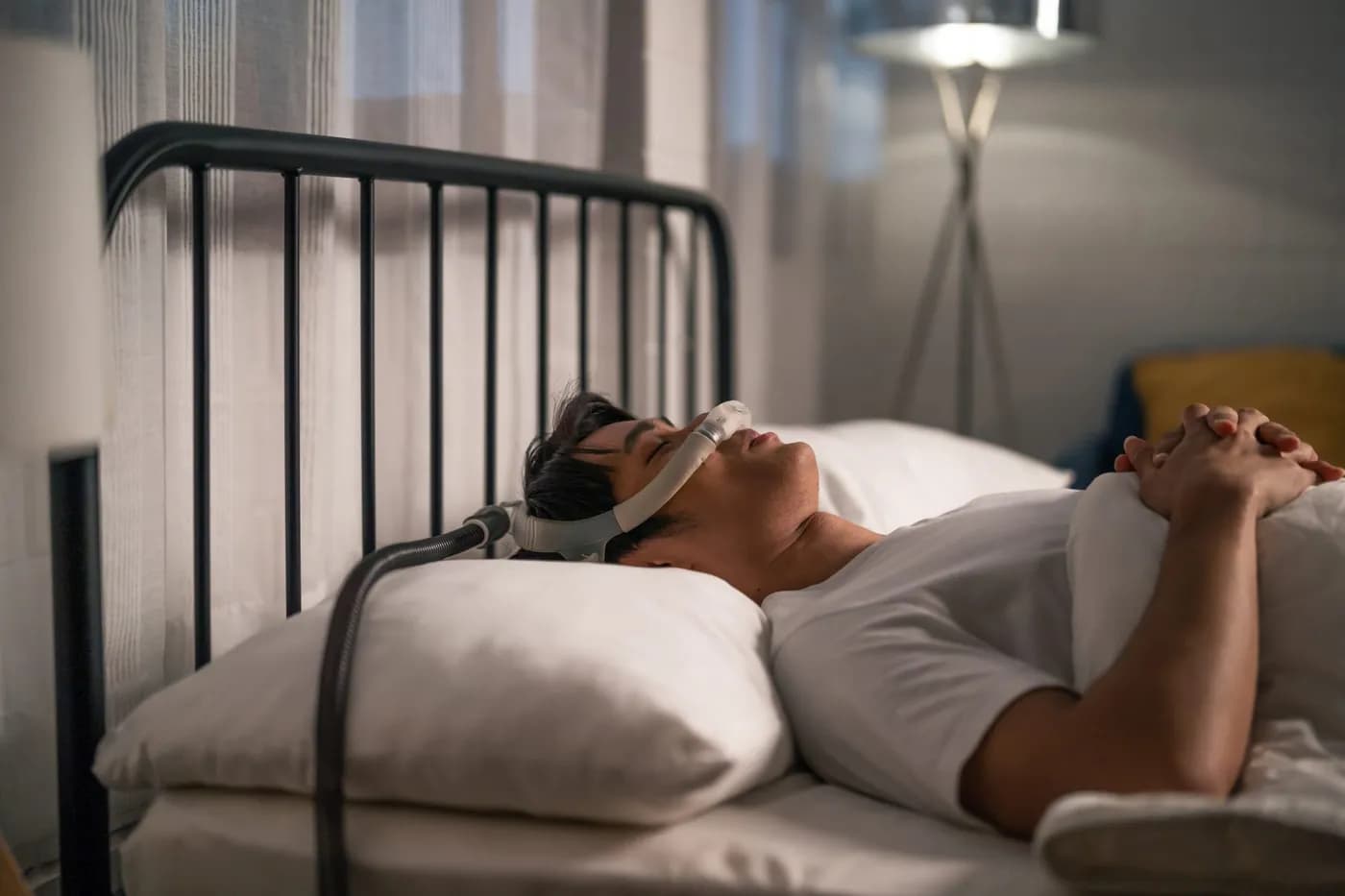
CPAP machine used to treat sleep apnea meaning explained
Sleep apnea meaning by type
- Obstructive sleep apnea — the most common type, caused by throat muscles relaxing and physically blocking the airway
- Central sleep apnea — much rarer, caused by the brain failing to send proper signals to the muscles that control breathing
- Complex (mixed) sleep apnea — a combination of both obstructive and central patterns in the same person
Sleep apnea meaning includes these common symptoms
- Loud, chronic snoring, often with pauses followed by gasping or choking sounds
- Waking up with a dry mouth, sore throat, or headache
- Excessive daytime sleepiness despite what seems like enough hours in bed
- Difficulty concentrating, irritability, or mood changes during the day
- A partner reporting witnessed breathing pauses during your sleep
Who is more likely to have sleep apnea
Obstructive sleep apnea is more common in people who are overweight, have a naturally narrower airway, are middle-aged or older, or have a family history of it. That said, it isn’t limited to any single body type — smaller-framed and younger people can have it too, particularly if there’s a structural airway or jaw factor involved. If several sleep apnea symptoms above sound familiar, a sleep study is the only way to confirm the diagnosis and its severity, which then guides what treatment — from sleep apnea treatment options like CPAP to lifestyle changes — actually makes sense for you.
Sleep apnea meaning in children, not just adults
Sleep apnea meaning isn’t limited to adults — obstructive sleep apnea affects a meaningful share of children too, most commonly caused by enlarged tonsils or adenoids rather than the weight-related factors more typical in adults. Signs in children look somewhat different from adult symptoms: instead of daytime sleepiness, affected children more often show hyperactivity, difficulty concentrating in school, bedwetting past the age it’s expected to resolve, or unusually heavy snoring. Paediatric sleep apnea is frequently under-recognised precisely because these symptoms get mistaken for behavioural issues rather than a sleep-breathing problem, which is why any child with loud, persistent snoring is worth having evaluated by a paediatrician rather than assumed to simply be a “heavy sleeper.”
How sleep apnea meaning connects to weight and metabolism
The relationship between sleep apnea and weight runs in both directions, which is part of a broader understanding of sleep apnea meaning worth knowing. Excess weight, particularly around the neck, is a major contributing factor to airway narrowing and obstructive sleep apnea. But sleep apnea itself also disrupts hormones that regulate hunger and metabolism, making weight management harder for people who already have it — creating a cycle where each factor can worsen the other. This is one of the reasons doctors often treat weight management as part of a comprehensive sleep apnea treatment plan, not a separate, unrelated health goal.
Why understanding sleep apnea meaning matters beyond bad sleep
Untreated sleep apnea isn’t just about feeling tired — the repeated oxygen drops are linked to real long-term cardiovascular risk, including high blood pressure, irregular heart rhythm, and increased stroke risk over time. This is why persistent, loud snoring with witnessed breathing pauses is worth taking seriously rather than dismissing as “just snoring.”
Frequently Asked Questions
Related Articles

How to Stop Snoring: 7 Proven Ways for Quiet, Restful Sleep
Snoring signals a partly blocked airway during sleep, and most cases are caused by lifestyle, posture, and breathing patterns you can change. See 7 proven ways for quiet, restful sleep.


Mudra for Insomnia: Hand Gestures That Support Better Sleep
Each finger represents one of the five elements, and joining specific fingers is said to balance these elements and shift the body toward calm before
