
Meditation for Depression: A Gentle, Honest Guide
Meditation for depression can be a modest support alongside proper care — never a replacement for it. This guide explains what it can realistically help with, and where to find guided support with Habuild.
Key Takeaways
- Meditation for depression is a gentle support, never a replacement for professional care.
- If you’re having thoughts of self-harm, reach out to a professional right now.
- Depression often loops on rumination – meditation offers a smaller place to rest attention.
- On hard days, it’s fine to skip sitting and try a slow walk or simply lying down instead.
- This is low-pressure self-care, with no expectation of ‘fixing’ anything.
If you’re reading this because things have felt heavy for a while, we want to say something clearly before anything else: if you’re experiencing persistent low mood, hopelessness, or any thoughts of harming yourself, please reach out to a mental health professional or a trusted person right now, not just to this article. Meditation for depression can be a small, gentle support alongside proper care — it is not, and should never be presented as, a replacement for it.
What Meditation for Depression Can Gently Offer
With that said clearly, there is a real, modest role meditation can play. Depression often comes with a busy, self-critical inner voice and a sense of disconnection from your own body. Mindfulness for depression — simply noticing your breath, a sound, or a sensation without judgment — can offer brief moments of relief from that inner noise, and a small, low-pressure way to practice self-care on days when everything else feels like too much.
It’s important to be honest about scale here. Meditation for depression is not a proven treatment for clinical depression on its own. Depression is a real medical condition, and for many people it needs therapy, and often medication, to genuinely improve. Meditation can sit alongside that care as one small supportive habit among several — it should never be the only thing you’re relying on if you’re managing a diagnosed condition.
One thing worth understanding, gently, is why depression can make even small tasks feel disproportionately heavy. Depression often narrows attention toward rumination — the same worried or self-critical thought looping again and again — and that loop takes up real mental space, leaving little room for anything else, including rest. Mindfulness for depression doesn’t argue with the loop or try to reason your way out of it. It simply offers a different, smaller place to rest your attention for a few minutes, which for some people creates brief breathing room inside a day that otherwise feels entirely taken over by heavy thoughts. That’s a modest thing, not a cure, but on a hard day, a modest thing can still matter.
A Word on Timing and Difficult Days
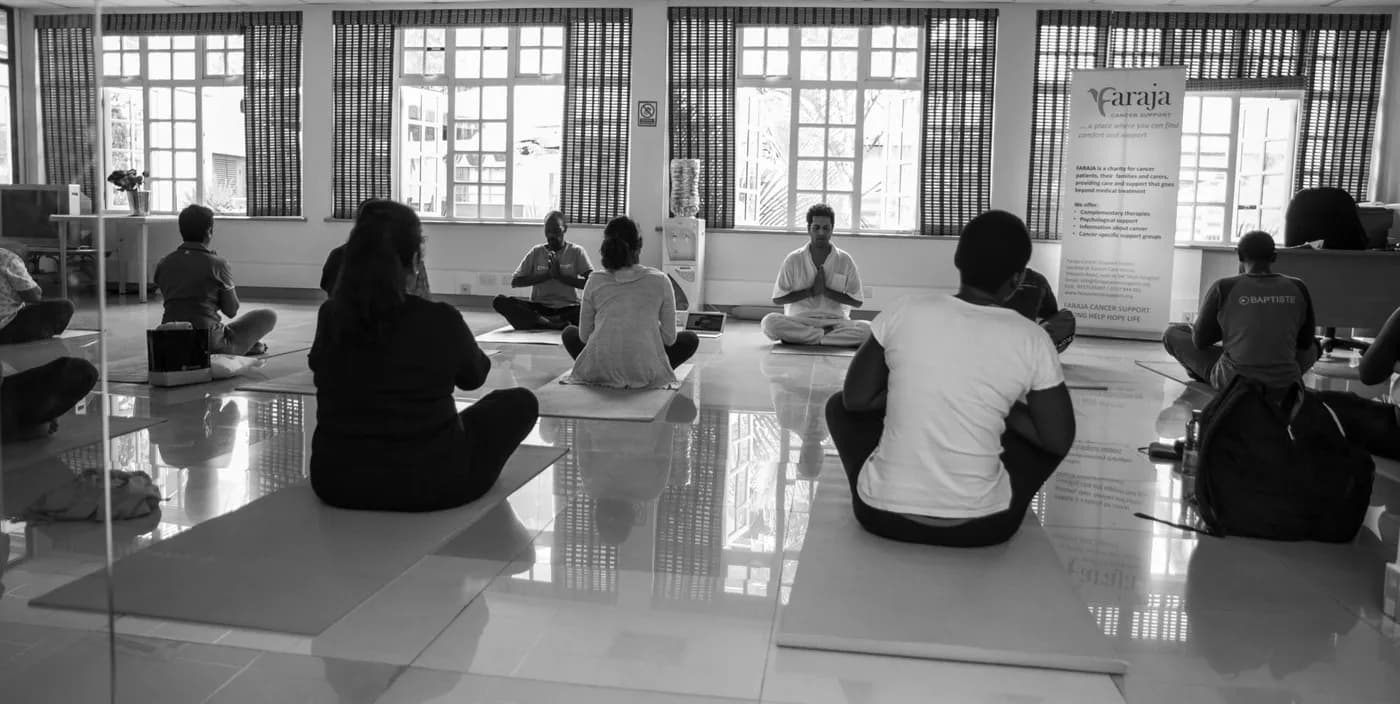
Some days, trying meditation for depression will feel completely inaccessible, and that’s worth naming directly rather than glossing over. If sitting still makes rumination louder rather than quieter, that’s a real and common experience, not a sign you’re doing it wrong. On those days, it’s fine to skip the sitting practice entirely and instead try something gentler — a slow walk, stepping outside for a few minutes, or simply lying down without any expectation of meditating at all. There’s no version of this practice that should ever feel like one more task you’re failing at.
Photo: Ctitmuss, CC0, via Wikimedia Commons
A Low-Pressure Practice, With No Expectation of “Fixing” Anything
This isn’t about achieving calm or feeling better by the end of the session. It’s simply a small act of self-care, with no pressure attached.
- Sit or lie down somewhere comfortable. There’s no need to force a particular posture.
- Notice your breath, without trying to change it. Just observe it as it naturally is.
- If your mind wanders to heavy or self-critical thoughts, that’s okay. Gently, without judgment, bring your attention back to the breath, as many times as you need to.
- Do this for just three to five minutes. There’s no benefit to forcing a longer session if it feels like too much today.
- Let the session be exactly what it was, nothing more. Some days this will feel calming. Some days it won’t feel like much at all. Both are fine.
A guided meditation for depression can make this easier on harder days, since a calm voice gives your mind something gentle to follow rather than being left alone with difficult thoughts.
A common misstep with this practice is turning it into another form of self-judgment — noticing you “failed” to stay focused, or that the session didn’t make you feel better, and treating that as evidence something is wrong with you. There’s no version of meditation for depression that works by getting it right. If you sat for three minutes and your mind wandered the entire time, that’s still a completed session, not a failed one.
This Works Best Alongside Real Support
We want to say this plainly rather than gloss over it: meditation for depression works best as one small, gentle addition to proper care — therapy, medical support, and the people around you — not as a stand-alone plan. If you haven’t already, please consider speaking with a doctor or therapist about how you’ve been feeling. Our piece on meditation for mental health goes deeper into how a regular sitting practice fits alongside professional care for anyone navigating mental health more broadly.
Frequently Asked Questions
Related Articles

How to Reduce Stress: 8 Natural Ways to Calm Your Mind and Body
Chronically elevated cortisol disrupts sleep, digestion, mood, immunity, and weight — but the nervous system can be retrained with no equipment and no special knowledge. See all 8 natural ways.


Benefits of Meditation: A Simple, Honest Guide
What meditation can really do for your mind and body — and what it can't. Start noticing the shifts for yourself with Habuild's daily guided meditation practice.

Meditation for ADHD: What Actually Helps
Meditation for ADHD isn't a treatment or cure — it's a support for attention regulation, used alongside proper diagnosis and care. See what realistically helps, and try guided sessions with Habuild.