
Meditation for Fear: A Simple Way to Meet It Calmly
Meditation for fear doesn't make the feared thing disappear — it trains you to meet the physical spike with a steadier nervous system. Learn how with Habuild's guided sessions.
Key Takeaways
- Fear usually has a clear trigger, unlike the free-floating quality of general anxiety.
- Extended-exhale breathing activates the vagus nerve, signaling the body to stand down.
- Name three things you can see to anchor yourself in the present, not the imagined worst case.
- Naming the fear plainly (‘I am afraid of the presentation’) tends to shrink it slightly.
- Different from exposure therapy – it doesn’t target the trigger itself directly.
Fear narrows your focus and speeds up your body — a racing heart, shallow breath, a strong urge to avoid whatever’s triggering it. Meditation for fear doesn’t make the feared thing disappear, but it trains you to meet that physical spike with a steadier nervous system, so fear has less power to control your reactions.
How Meditation for Fear Works
Fear and anxiety share the same physiological root — an activated stress response. Meditation to overcome fear works the same way it works for anxiety: slow, extended-exhale breathing signals your nervous system to calm down, while present-moment attention interrupts the mental spiral of “what if” thinking that often makes fear feel bigger than the actual situation.
What makes fear specifically distinct from general anxiety, and worth naming separately, is that fear usually has a clear trigger — a specific dog, a needle, a flight, a difficult conversation about to happen — rather than the free-floating quality anxiety often has. This matters for meditation for fear practically, because it means the practice can be timed and targeted: used right before or during exposure to the specific trigger, rather than only as a general daily habit. The extended exhale works by activating the parasympathetic nervous system directly through the vagus nerve, essentially giving your body permission to stand down from its alarm state even while the trigger is still present.
A Grounding Practice for Fearful Moments
- When fear rises, pause and take a slow breath in for four counts.
- Exhale for six to eight counts, longer than the inhale.
- Name three things you can see around you, to anchor yourself in the present moment rather than the imagined worst case.
- Repeat for a few rounds until your body feels a little steadier.
- Once your breathing has settled, name the fear plainly to yourself — “I am afraid of the presentation,” rather than letting it stay as a vague, formless dread. Naming a fear specifically tends to shrink it slightly, since vague fear is almost always scarier than a fear you can actually put into words.
The best meditation for fear is often this simple — not complicated, just a reliable way to interrupt the spiral and come back to the present. A common mistake is trying to talk yourself out of the fear entirely during the practice (“there’s nothing to be afraid of”) — this often backfires, since it can read as dismissive to a nervous system that’s already activated. It works better to acknowledge the fear is present, breathe through the physical spike, and let the intensity settle on its own rather than arguing with it.
Meditation for Fear vs. Exposure-Based Approaches
It’s worth understanding how meditation for fear relates to, and differs from, exposure-based approaches used in therapy. Exposure therapy works by gradually and repeatedly facing a feared situation until the fear response naturally diminishes — it directly targets the trigger itself. Meditation for fear doesn’t do that; it doesn’t ask you to approach the thing you’re afraid of at all. Instead, it changes how steadily your nervous system responds whenever fear does arise, whether or not you’re actively facing the trigger. The two approaches work well together — a calmer baseline nervous system, built through regular meditation, can make exposure-based work more tolerable — but meditation on its own is not a substitute for structured exposure therapy when a phobia is severe enough to need it.
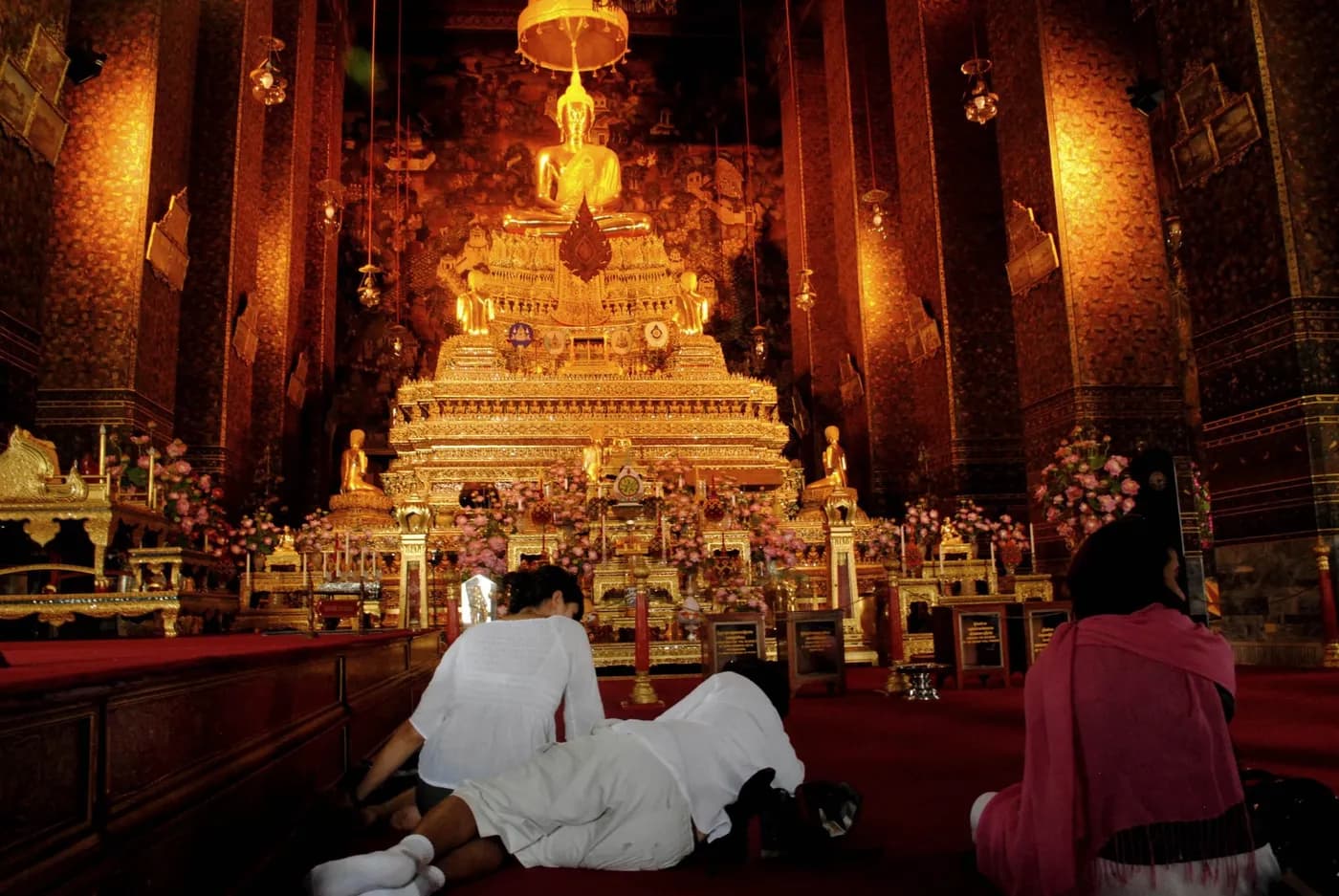
Photo: MaplesyrupSushi, CC BY-SA 4.0, via Wikimedia Commons
Building a Daily Practice for Long-Term Change
A regular ten-minute breath-awareness practice builds the underlying capacity to meet fear calmly, the same way it works for anxiety more broadly. If fear shows up often as general worry or anxious anticipation, our deeper guide on meditation for anxiety covers the same mechanism in more depth, including techniques for ongoing anxious patterns rather than single fearful moments.
A Note on Cultural and Everyday Fears
Fear shows up differently depending on what’s actually at stake, and meditation for fear works a little differently depending on the kind of fear you’re meeting. Fear of a specific, immediate event — an upcoming exam, a flight, a difficult conversation with a boss or in-law — tends to respond well to the grounding technique above, used close to the moment itself. Fear that’s more chronic and identity-linked — fear of failure, fear of judgment from family or community, fear of not measuring up — often needs the same breathing and grounding tools, but applied as a regular daily practice rather than a one-time rescue technique, since this kind of fear tends to resurface repeatedly rather than passing after a single triggering event. Recognising which kind of fear you’re dealing with can help you decide whether to reach for the grounding practice in the moment or build a steadier daily sit instead.
When Fear Needs More Than Meditation
If fear is severe, tied to trauma, or shows up as a diagnosed phobia or anxiety disorder, meditation for fear is a helpful complement, not a substitute for therapy. A trained therapist can work with the deeper roots of fear in ways a breathing practice alone cannot.
Frequently Asked Questions
Related Articles
How to Reduce Anxiety Immediately: 7 Techniques That Calm You Down Fast
Acute anxiety episodes respond to techniques that address the body-mind connection through breath, movement, and grounding, working within minutes. See

Anapana Meditation: Technique and Benefits
Anapana meditation, one of the oldest breath-awareness practices, simply asks you to observe the natural breath without controlling it. Learn the technique with Habuild's guided sessions.
Mantra Meditation: How It Works and How to Start
Mantra meditation uses a repeated word or sound instead of the breath as your anchor — often easier to hold onto on busy, distracted days. Learn how to start with Habuild's guided sessions.