
Mantra Meditation: How It Works and How to Start
Mantra meditation uses a repeated word or sound instead of the breath as your anchor — often easier to hold onto on busy, distracted days. Learn how to start with Habuild's guided sessions.
Key Takeaways
- Mantra meditation uses a repeated word or phrase instead of the breath as anchor.
- One of the oldest meditation formats in Indian tradition.
- Three levels of repetition: aloud, whispered, and fully silent.
- Start with any simple word like ‘Om’ or ‘peace’ for 5 to 10 minutes.
- Repeating too fast turns the mantra into a fidget – slow it down instead.
- A mala can help count repetitions during longer practice sessions.
Instead of using the breath as an anchor, mantra meditation uses a repeated word, sound, or short phrase — silently or aloud — as the point of focus. It’s one of the oldest meditation formats in Indian tradition, and many people find a mantra easier to hold onto than the subtler sensation of breathing, especially on busy or distracted days.
How Mantra Meditation Works
Meditation with mantra works through the same basic mechanism as any anchor-based practice: you rest attention on the repeated word, and gently return to it every time your mind wanders. The repetition itself has an additional calming quality — a steady, rhythmic sound naturally settles a busy mind, similar to how a lullaby settles a child. There’s also a physical layer to it that breath-only practices don’t have: forming a word, even silently, engages a faint sense of rhythm and vibration that many people find easier to “hold” than a purely mental instruction like “watch the breath.”
Traditionally, mantra meditation is also described in terms of three levels of repetition. Vaikhari japa is chanting aloud, with the mantra fully audible. Upanshu japa is a whispered, barely-audible repetition, moving lips slightly without full sound. Manasika japa is fully silent, mental repetition. Beginners often start with vaikhari, since hearing the sound helps hold focus, and naturally move toward manasika as concentration improves — there’s no requirement to move through all three, but knowing they exist explains why some teachers ask you to whisper at first rather than go straight to silent repetition.
A Simple Way to Start
- Choose a simple word or phrase — “Om,” “So Hum,” or even a neutral word like “peace” all work.
- Sit quietly, close your eyes, and begin silently repeating your chosen mantra, matching it loosely to your natural breath if that feels comfortable, though this isn’t required.
- When your mind wanders — and it will, often within seconds at first — gently return to repeating the mantra without frustration. The returning is the practice, not a sign you’re doing it wrong.
- Continue for five to ten minutes, using a phone timer so you’re not tempted to check the clock mid-session.
A common early mistake is rushing the repetition, chanting the mantra faster and faster as a kind of mental fidget rather than an anchor. If you notice this happening, deliberately slow down — a mantra repeated slowly and clearly does more for concentration than one rushed through on autopilot. Another mistake, especially with aloud practice, is straining the voice or chanting too loudly in an effort to “feel” something; a soft, natural volume works just as well and is far more sustainable over a longer sitting.
Meditation chants can also be done aloud in a group setting, which adds a communal, rhythmic quality that some practitioners find deepens the calming effect further.
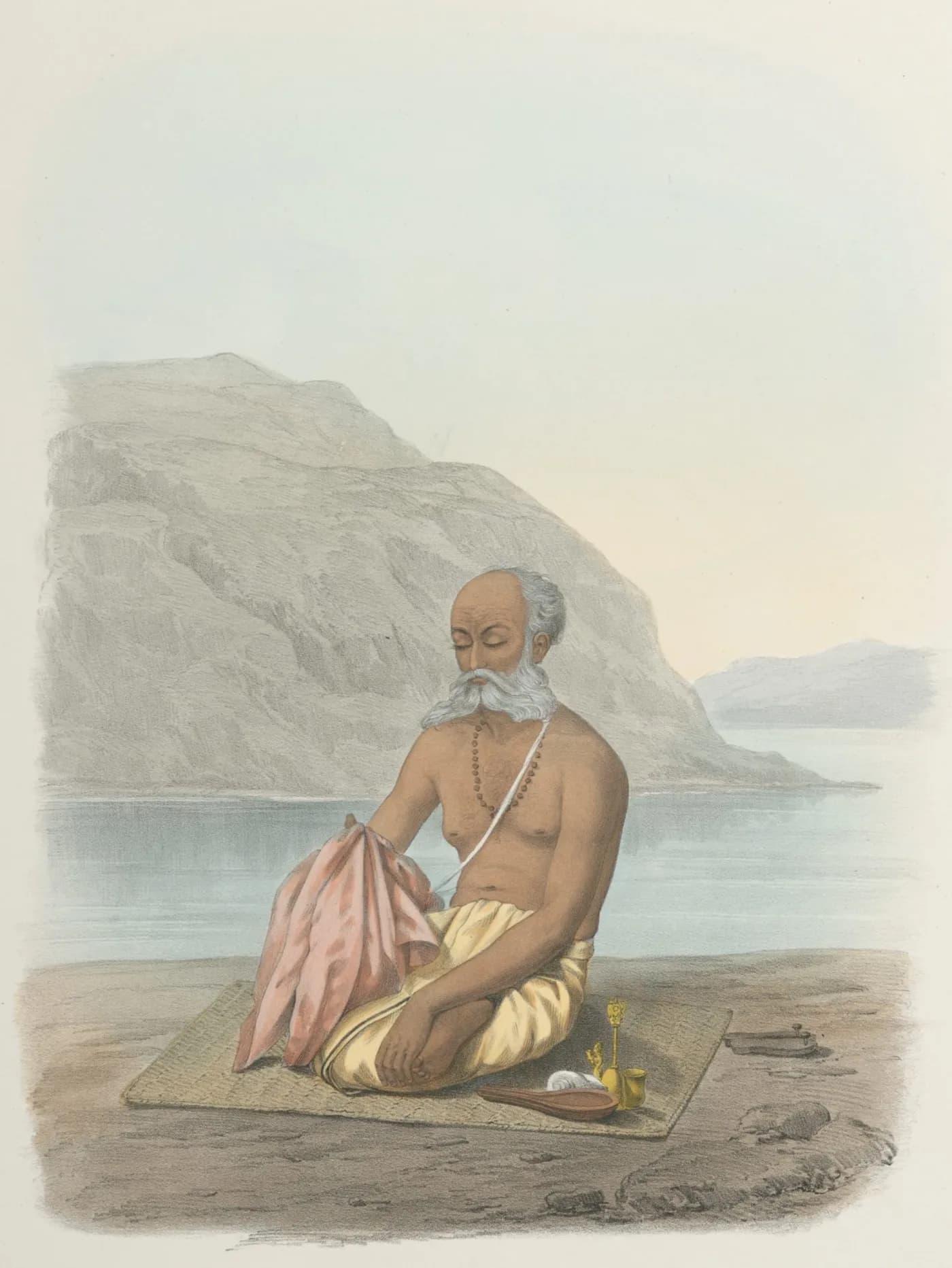
Photo: Rushtook, CC BY-SA 4.0, via Wikimedia Commons
Using a Mala for Counted Repetition
Many mantra practitioners count repetitions using a mala, a string of 108 beads, moving one bead per repetition with the thumb until a full round is complete. The number 108 carries traditional significance in Indian spiritual practice, though practically speaking, a mala simply gives restless hands something to do and removes the need to mentally count, freeing attention to stay on the mantra itself. You don’t need a mala to practice mantra meditation — a simple timer works just as well — but if counting appeals to you, or if you find your mind drifts to “how much longer” during silent sessions, a mala is worth trying.
Choosing Your Mantra
There’s no single “correct” mantra — traditional Sanskrit ones like Om carry specific cultural and spiritual weight, while a simple neutral word works just as well mechanically. If you’d like to explore two well-known traditional options in more depth, our guides on Om meditation and So Hum meditation cover each in detail. Beyond these, longer traditional chants like the Gayatri Mantra or the Mahamrityunjaya Mantra are also used as meditation anchors, though they work slightly differently since they’re full verses rather than a single repeated syllable — the focus there comes from following the whole phrase attentively rather than a short, rhythmic repeat.
However you choose your anchor, mantra meditation rewards consistency over novelty. Switching mantras every few days out of curiosity tends to slow progress, since part of what builds the calming effect is familiarity — the mind settles into a word it already half-knows far faster than one it’s still learning. Picking one mantra and staying with it for at least a few weeks before considering a change is generally the more useful approach.
If you’d like a broader daily practice to build around this, Habuild’s free yoga challenge is a gentle place to start.
Frequently Asked Questions
Related Articles
Dhyana Mudra: How to Practice and Its Benefits for Meditation
Practice Dhyana Mudra with Habuild. Follow the meditation hand gesture steps to calm the mind, deepen concentration, and support your daily practice. Start!

Sukhasana (Easy Pose): Steps Benefits and Meditation Foundation
Try sukhasana with Habuild. Discover the sukhasana pose to improve posture, reduce stress, and cultivate a calm and focused mind. Start your session today!
Gyan Mudra: How to Do It and Its Benefits for Focus and Memory
Practice Gyan Mudra with Habuild. Follow the wisdom hand gesture steps to improve focus, reduce anxiety, and enhance your meditation practice. Start today!