
Meditation for Healing: A Gentle Path to Calm
Meditation for healing offers your mind and body a safe place to slowly process grief, stress, or old hurt — alongside proper care, never in place of it. Explore guided sessions with Habuild.

Key Takeaways
- Meditation for healing is emotional/mental support, not a treatment for physical illness.
- Builds the skill of staying present with discomfort, not suppressing or being swept away.
- Works best as a steady, ongoing practice rather than a single session.
- Try a body-scan-with-compassion: notice tight spots and breathe gently into them.
- Works alongside good medical care, never as a replacement for it.
Some kinds of pain don’t show up on a scan. A loss you’re still carrying. A relationship that ended badly. A year that asked more of you than you had to give. For pain like this, meditation for healing can be a real support — not because it erases what happened, but because it gives your mind and body a safe place to slowly process it. Let’s be clear from the start: this is about emotional and mental healing — grief, stress, old hurt, the weight of change — not a treatment for physical illness. If you’re dealing with a medical condition, please keep seeing your doctor. Meditation works alongside good care, never in place of it.
With that said, there’s a lot meditation can quietly do for the parts of us that words and prescriptions don’t always reach. Let’s talk about what that looks like in practice.
What Meditation for Healing Actually Means
When people search for meditation for healing, they’re usually not looking for a cure. They’re looking for relief — a way to sit with grief without being flattened by it, a way to let go of anger that’s been sitting in the chest for months, a way to feel calmer while life sorts itself out. That’s exactly what this kind of meditation is for.
Emotional healing isn’t a straight line. It’s not about “getting over” something on a schedule. It’s about slowly building a different relationship with the feeling — from being ruled by it to being able to sit with it, breathe through it, and let it move at its own pace. Meditation helps here because it trains a very specific skill: staying present with something uncomfortable without either suppressing it or being swept away by it. That’s a skill grief, heartbreak, and stress all ask of us, and it’s one most of us were never taught.
This is also why meditation for healing tends to work best as a steady, ongoing practice rather than a one-time session. Five or ten quiet minutes, done regularly, slowly widens your capacity to hold difficult feelings without them running the whole show.
A Simple Body-Scan Meditation for Healing You Can Try Today
One of the gentlest ways to begin is a body-scan-with-compassion meditation. Emotions don’t just live in the mind — they show up as tightness in the shoulders, a knot in the stomach, a heaviness in the chest. This practice asks you to notice those places and meet them with kindness instead of pushing them away.
- Sit or lie down somewhere quiet. Close your eyes, or let your gaze soften downward. Take a few slow breaths to settle in.
- Start at the top of your head and move down slowly. Notice your forehead, your jaw, your neck, your shoulders, your chest, your stomach, all the way down to your feet. You’re not trying to change anything yet — just noticing.
- Pause wherever you feel tightness, heaviness, or emotion. This might be a tense jaw, a tight chest, or a knot in your stomach. There’s no right answer — just notice what’s actually there.
- Breathe gently into that spot. As you inhale, imagine your breath softening the area. As you exhale, silently say something kind to yourself, like “it’s okay to feel this” or “I’m allowed to feel this and be alright.”
- Stay for a few breaths, then continue the scan. Move through the rest of the body the same way, giving extra time to any area holding tension or emotion.
- Close by resting your hand on your heart. Take one full breath here before slowly opening your eyes.
Do this for eight to ten minutes and you already have a full practice. It’s especially useful in the evening, after a hard conversation, or on the anniversary of something difficult — any moment when your body is quietly holding more than your mind is willing to admit.
If you’re new to sitting with difficult emotions like this, it can help to build a wider foundation first. Our piece on meditation for mental health goes deeper into how a regular sitting practice supports everyday emotional wellbeing, and pairs well with the body-scan technique above. Many people also find it easier to begin with some structure rather than figuring things out alone, which is where a guided meditation for healing can genuinely help — a calm voice gently walking you through the noticing and the breathing, so you’re not managing the technique and the emotion at the same time.
Chakra Healing Meditation: An Old Framework, Held Lightly
If you’ve spent any time around yoga or meditation circles, you’ve probably heard of chakra healing meditation. In this tradition, the body is understood to have seven main energy centres, or chakras, running from the base of the spine to the crown of the head — each one loosely associated with different aspects of life, like security, creativity, confidence, love, expression, intuition, and awareness. A chakra healing meditation usually involves sitting quietly and visualising light, colour, or gentle breath moving through these centres, often paired with a short mantra or intention for each one.
It’s worth being honest here: chakras come from a centuries-old yogic and tantric tradition, not from modern medical science, and there isn’t scientific proof that they exist as physical structures. That doesn’t make the practice meaningless — plenty of people find real comfort and focus in this kind of visualisation, the same way many of us find comfort in ritual, in symbolism, or in setting an intention before starting something new. Think of it as one respected lens among several, not a proven mechanism. If it resonates with you, it’s a beautiful way to add structure and intention to your sitting practice. If it doesn’t, the breath-based techniques in this article work just as well without any of the chakra framework attached. We’ve written a fuller guide to chakra meditation if you’d like to explore the seven-centre practice in more depth.
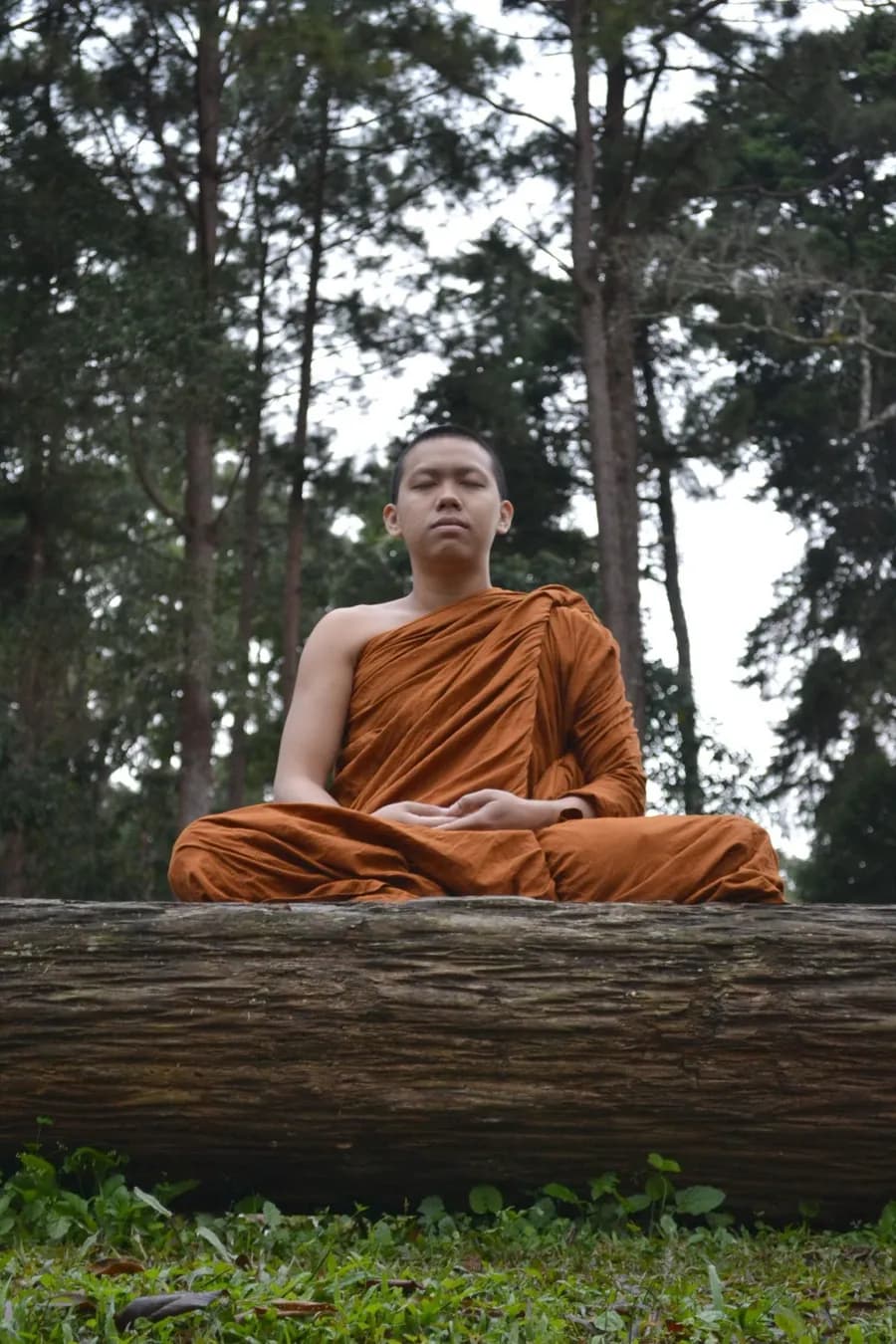
Photo: MEDITATIVE SILHOUETTE, CC BY 3.0, via Wikimedia Commons
Guided Meditation for Healing: A Gentler Way to Begin
If sitting in silence with a heavy heart feels like too much right now, you’re not alone, and you don’t have to start there. A guided meditation for healing — where a teacher’s voice walks you through the breath, the body scan, or a chakra visualisation — can be a much gentler entry point. The voice gives your mind something steady to hold onto, which matters a great deal on days when your own thoughts feel too loud or too sad to sit with quietly.
There’s no hierarchy here. Plenty of long-time practitioners still choose guided sessions on their hardest days, and plenty of beginners move to silent practice within a few weeks. Try both, and let whichever one calms you down more often be the one you return to.
What Meditation for Healing Can and Cannot Do
This is worth saying plainly, because hope can sometimes blur into overpromising. Meditation for healing can help you process grief, ease the grip of anxious or looping thoughts, soften anger, and build a steadier baseline of calm as you move through a hard season. It can make space between a feeling and your reaction to it, which is often where real change begins.
What it cannot do is treat physical illness, replace medication, or substitute for therapy when you need one. If you’re navigating depression, trauma, or a health condition, please keep your doctor or therapist in the loop — meditation sits alongside that care as a quiet, steady support, not instead of it. Anyone who tells you meditation alone cures disease is overselling a genuinely good practice. Used honestly, for what it’s actually good at, meditation for healing is one of the kindest daily habits you can build for your mind.
Making Meditation for Healing a Daily Habit, Not a One-Time Fix
Healing rarely happens in a single sitting, and that’s fine. What helps most is showing up regularly — even five minutes a day — so your nervous system slowly learns that it’s safe to soften. Try attaching your practice to something you already do, like right after brushing your teeth or just before bed, so it doesn’t depend on motivation alone. Some days the sitting will feel easy and some days it will feel like nothing happened at all. Both are normal, and both still count. That patience is really at the heart of meditation for healing.
Frequently Asked Questions
Related Articles

Benefits of Meditation: A Simple, Honest Guide
What meditation can really do for your mind and body — and what it can't. Start noticing the shifts for yourself with Habuild's daily guided meditation practice.
Anapana Meditation: Technique and Benefits
Anapana meditation, one of the oldest breath-awareness practices, simply asks you to observe the natural breath without controlling it. Learn the technique with Habuild's guided sessions.

Buddha Meditation: An Introduction to the Traditions
Buddha meditation isn't one technique but a family of traditions, all rooted in training the mind to see clearly rather than react on autopilot. Explore the main schools, and try guided sessions with Habuild.