
Meditation for Overthinking: How to Quiet a Looping Mind
Meditation for overthinking won't turn your mind quiet on command — it trains you to notice a looping thought and step out of it sooner each time. Learn the technique with Habuild's guided sessions.
Key Takeaways
- Overthinking is the same thoughts circling without moving anywhere new, unlike real thinking.
- Trains noticing you’re stuck in a loop and choosing to step out of it.
- Forcing thoughts away rarely works – it keeps them right in view instead.
- The gap between ‘I’m stuck’ and ‘I can step out’ shortens with regular practice.
- Most people notice the grip loosen over weeks, not after a single session.
If you have lain awake replaying the same conversation for the tenth time, or found yourself three steps into a “what if” spiral before you even realised it started, you already know what overthinking feels like from the inside. Meditation for overthinking isn’t a magic switch that turns your mind quiet on command. It’s a set of small, learnable skills that help you notice when a thought has started looping, and step out of that loop a little sooner each time. That’s the whole promise, and it’s a real one — not because the thoughts disappear, but because your relationship to them changes with practice.
What Overthinking Actually Is
It helps to be precise about what we’re dealing with, because “overthinking” gets used loosely. Thinking through a problem — weighing options for a job change, working out how to handle a difficult conversation — is productive. It moves toward a decision or an action, and then it settles.
Overthinking is different. It’s the same handful of thoughts circling again and again, without moving anywhere new. You replay the awkward thing you said at dinner for the fifth time, and nothing new is learned on the fifth pass that wasn’t already clear on the first. You rehearse an argument that hasn’t happened yet, imagining every possible reply, and somehow feel more anxious afterward, not more prepared. This is rumination — repetitive, unproductive looping — and it’s mentally exhausting precisely because it feels like work while producing nothing. Your mind is spinning the wheel, but the car isn’t moving.
This is exactly where meditation for overthinking becomes useful, because the problem isn’t that you’re “thinking too much” in some general sense — it’s that you’ve lost the ability to notice you’re stuck in a loop and choose to step out of it.
Why Meditation for Overthinking Works
Most people’s first instinct when they’re stuck in a thought loop is to try to force the thoughts away — to “just stop thinking about it.” If you’ve tried this, you already know it rarely works. Telling your mind not to think about something is a bit like telling yourself not to think of a pink elephant — the instruction itself keeps the elephant right there in view.
Meditation takes a completely different approach, and this is the actual mechanism behind meditation for overthinking. It doesn’t train you to have fewer thoughts. It trains a different skill entirely: noticing that you’ve drifted into a thought, and gently returning your attention somewhere else — usually the breath. Every time you do this during a sit, you’re rehearsing the exact move you need in daily life when a worry starts looping. The noticing gets a little faster. The gap between “I’m stuck in this” and “I can step out of this” gets a little shorter. Nobody promises this happens after one session, but with regular, unglamorous practice, most people do notice the grip loosens over weeks, not minutes.
This is why mindfulness meditation for overthinking tends to work better than sheer willpower. Willpower tries to suppress a thought directly, which usually backfires. Mindfulness works alongside the thought — you let it be there, notice it clearly, and choose not to follow it further. That small shift, repeated often enough, is what actually reduces the grip of a looping mind over time.
The Noting Practice: A Simple Meditation to Stop Overthinking
Here’s a practical technique you can start using today, sometimes called “noting” or “labeling.” It’s one of the most direct tools within meditation for overthinking, because it works with the very same mental loop that’s causing trouble.
Sit somewhere reasonably quiet, close your eyes if that’s comfortable, and bring your attention to your natural breath — not controlling it, just feeling it move in and out. You don’t need more than five or ten minutes to begin.
When you notice your mind has wandered into a thought — and with overthinking, it usually happens fast — don’t scold yourself and don’t try to muscle the thought away. Instead, mentally note it. A soft, silent label like “thinking, thinking” or simply “thinking” is enough. You’re not analysing the thought, arguing with it, or judging whether it’s important. You’re just naming what happened — thinking occurred — and then returning your attention to the breath.
If the same worry comes back thirty seconds later, you note it again: “thinking, thinking.” Then you return to the breath again. There’s no limit on how many times you do this in a single sit. Each round of noting and returning is not a failure — it’s a full repetition of the actual skill meditation to stop overthinking is built on. Some days you’ll note a thought once and settle for a while. Other days you’ll note the same loop forty times in ten minutes. Both are completely normal, and both count as real practice.
What makes noting so useful for overthinking specifically is that it creates a tiny gap between you and the thought. Instead of being fully inside the loop — living the argument, replaying the mistake — you become someone observing “ah, thinking is happening” from a small step back. That small step back is precisely where the loop loses some of its pull.
For many people whose overthinking is closely tied to anxious energy — a racing heart, a tight chest, a sense of dread alongside the looping thoughts — it’s worth reading Habuild’s guide on meditation for anxiety, since the two often show up together and the practices for meditation for overthinking and anxiety overlap heavily. And if you’re completely new to sitting practice in general and want the basics first, meditation for beginners is a good place to start before layering on these more targeted techniques.
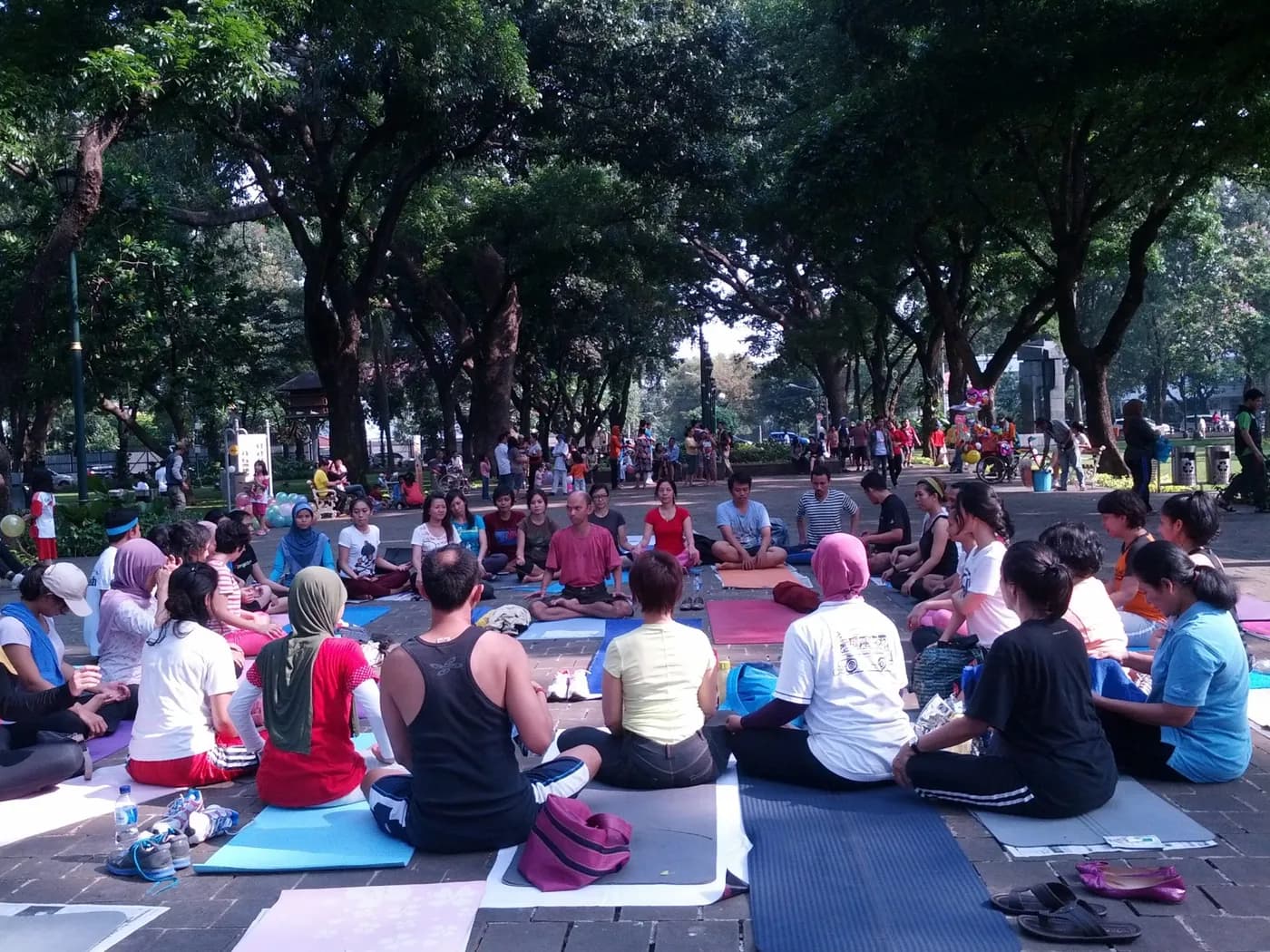
Photo: Juan Gatica, CC BY-SA 2.0, via Wikimedia Commons
A Body Scan for Meditation for Overthinking on Especially Stuck Days
Some days, noting alone doesn’t feel like enough — the mind is too wound up, and every attempt to note and return just gets swept straight back into the loop. On those days, a body scan version of meditation for overthinking can help, because it gives your attention somewhere more physical and steady to land than the breath alone.
Sit or lie down comfortably. Instead of watching the breath, slowly move your attention through your body — starting at your feet, then ankles, calves, knees, moving upward bit by bit. At each area, just notice whatever sensation is there: warmth, tingling, tightness, or nothing much at all. There’s nothing to fix or change, just noticing.
The body scan works well for a stuck, overthinking mind because physical sensation is harder to spiral on than a worry is. It’s difficult to ruminate about the feeling in your left shoulder the way you can ruminate about an email you sent. This makes it a gentler entry point on days when your usual meditation for overthinking practice feels impossible to settle into. Once you feel a bit more grounded after a few minutes of scanning, you can shift back to breath awareness and noting if you’d like, or simply stay with the body scan until your timer ends.
Being Honest About What Meditation for Overthinking Can and Can’t Do
It would be dishonest to promise that a single session of meditation for overthinking will switch off your looping mind. It won’t, and anyone who tells you otherwise is overselling a genuinely good practice. What actually happens, for most people who stick with it, is gradual: the loops don’t vanish, but you notice them sooner, and the noticing itself starts to loosen their grip a little more each week. Three months of five-minute daily sits will generally do more than one thirty-minute session followed by silence.
It’s also worth being clear about the limits. If your overthinking is severe, persistent, and tied to ongoing anxiety or depression — if it’s affecting your sleep, your work, or your relationships in a serious way — meditation is a genuinely helpful companion practice, but it isn’t a replacement for professional support. A therapist or counsellor can work with the deeper patterns behind chronic rumination in ways that a breathing practice alone cannot. Using meditation for overthinking alongside that kind of support, rather than instead of it, tends to work best for people in that situation. There’s no shame in needing both.
Building Meditation for Overthinking Into a Daily Habit
Like most things worth doing, meditation for overthinking rewards consistency far more than intensity. Five honest minutes of noting practice each morning, done most days, will train your noticing muscle more reliably than an occasional heroic thirty-minute sit. Pick a time you’ll actually keep — right after you wake up, or during a short break in your day — and let the sessions be imperfect. A session where you note “thinking, thinking” forty times is not a bad session. It’s forty repetitions of exactly the skill meditation for overthinking is built on.
Frequently Asked Questions
Related Articles
Anapana Meditation: Technique and Benefits
Anapana meditation, one of the oldest breath-awareness practices, simply asks you to observe the natural breath without controlling it. Learn the technique with Habuild's guided sessions.
How to Reduce Anxiety Immediately: 7 Techniques That Calm You Down Fast
Acute anxiety episodes respond to techniques that address the body-mind connection through breath, movement, and grounding, working within minutes. See


Chakra Meditation: A 7-Chakra Guide for Beginners
Chakra meditation moves through all seven energy centres in a single sitting, giving beginners a felt sense of the whole system. Try a guided 7-chakra practice with Habuild.