
Meditation for Relaxation: A Simple Way to Unwind
Meditation for relaxation gives your body permission to let go of tension, and your mind a few quiet minutes to stop running. Unwind with a guided session from Habuild.
Key Takeaways
- Meditation for relaxation releases built-up tension you didn’t notice carrying all day.
- Different from stress meditation – this is an everyday unwind, not a crisis response.
- Works on the body and mind together, not just one or the other.
- Try progressive muscle relaxation: tense each body part for 5 seconds, then release.
- The soft, heavy feeling right after releasing tension is the whole point.
There’s a particular kind of tiredness that doesn’t go away with rest. You lie down, and your shoulders are still up near your ears. Your jaw is tight. Your mind keeps replaying the day — the meeting that went sideways, the traffic, the to-do list that never actually ends. This is where meditation for relaxation earns its place. It isn’t about fixing a problem or managing a crisis. It’s simply about giving your body permission to let go of the tension it’s been carrying, and giving your mind a few quiet minutes to stop running.
This is a little different from meditating to manage stress specifically, which is more about calming an activated nervous system in the middle of a difficult moment. Meditation for relaxation is gentler and more everyday than that. It’s the practice you reach for at the end of an ordinary day, not necessarily a hard one — the unwinding you do simply because you’ve been “on” for hours and your body and mind both need to come back down.
What Meditation for Relaxation Actually Feels Like
Most of us carry tension without noticing it. Your shoulders creep up while you’re typing an email. Your fists clench slightly while you’re stuck in traffic. Your forehead tightens while you’re reading a message you’re not sure how to reply to. None of this feels dramatic in the moment, so it quietly builds up, layer by layer, until you sit down at the end of the day and realise your whole body feels like a clenched fist.
At the same time, your mind is doing its own version of this. Thoughts pile up — half-finished conversations, things you meant to say, small worries about tomorrow. None of it is a full-blown crisis. It’s just noise, and a lot of it.
Meditation for relaxation works on both of these at once. It isn’t only a mental exercise, and it isn’t only a physical one. It’s the combination — releasing tension from the body while also quieting the mental chatter — that makes it feel like such a genuine reset. You’re not just distracting yourself from a busy mind. You’re actually softening the grip, in the body and in the head, at the same time.
The Practice: Progressive Muscle Relaxation with Breath Awareness
Here is a simple, practical technique that brings physical release and mental quiet together. It’s called progressive muscle relaxation, and pairing it with slow breath awareness makes it a lovely way to unwind after a long day.
- Find a comfortable position. Lie down on your back, or sit in a chair with your back supported. Let your arms rest by your sides or in your lap. Close your eyes if that feels natural.
- Start at your feet. Gently curl your toes and tighten the muscles in your feet for about five seconds. Then let go completely. Notice the difference between the tension and the release — that soft, heavy feeling right after you let go is the whole point of meditation for relaxation.
- Move upward, one part at a time. Tense your calves, hold for five seconds, release. Then your thighs. Then your stomach. Then your hands, making a soft fist and releasing. Then your shoulders, scrunching them up toward your ears and dropping them back down. Finish with your face — scrunch it up gently, then let it go completely soft.
- Pause and notice your whole body. After you’ve worked through each muscle group, take a moment to simply notice how your body feels now compared to when you started. Most people notice a real difference — heavier, looser, calmer.
- Settle into slow breathing. Once your body has released its tension, shift your attention to your breath. Don’t force it or count it. Just let it slow down naturally, noticing the gentle rise and fall of your chest or belly. Stay here for three to five minutes, simply following each breath.
- Come back gently. When you’re ready, open your eyes slowly. Give yourself a moment before you get up and move on with whatever’s next.
The whole thing takes ten to fifteen minutes, though even a shortened version — tensing and releasing just your shoulders, jaw, and hands, followed by a minute or two of slow breathing — can help when you’re short on time.
If your tension tends to show up specifically as stress from work or a particular worry, you might find it useful to also look at meditation for stress, which focuses more on calming an activated nervous system in the moment. And if you want a broader set of tools beyond meditation, our piece on relaxation exercises covers other simple ways to release tension through the day, which pair nicely with the practice here.
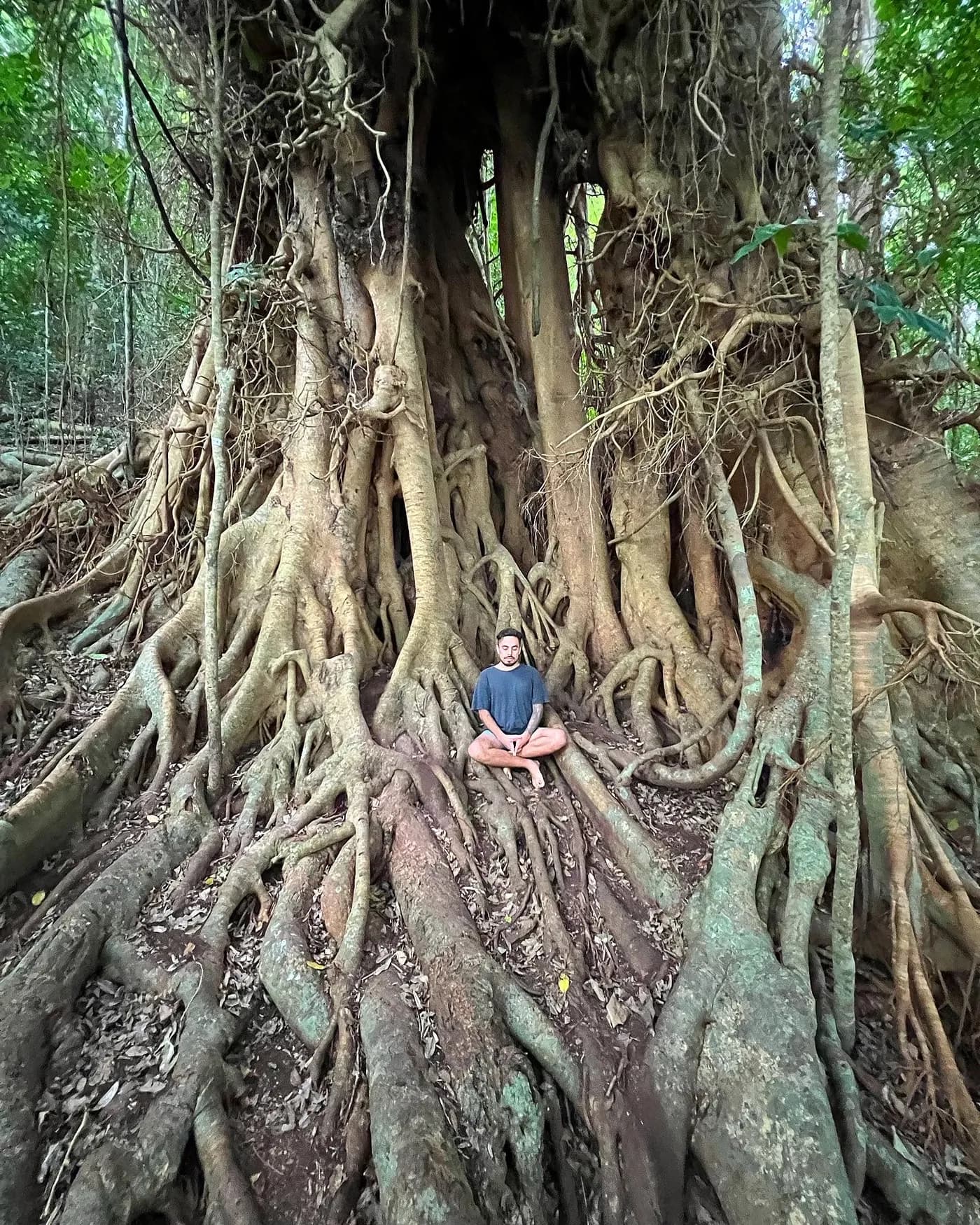
Photo: Joseph RENGER, CC BY-SA 3.0, via Wikimedia Commons
When to Use This Practice
This kind of meditation for relaxation is flexible, which is part of what makes it useful. Some good moments to reach for it:
- After work, especially on days when you’ve been sitting, scrolling, or in back-to-back meetings and your body feels stiff and your mind feels full.
- Before a stressful event, like an interview, a difficult conversation, or a presentation, when you want to walk in feeling settled rather than wound up.
- Whenever tension builds up, even mid-afternoon at your desk, if you notice your shoulders are up near your ears or your jaw is clenched.
This is different from a practice you’d do specifically to fall asleep, or one you’d reach for in the middle of an anxious spiral — those deserve their own focused approaches. Think of meditation for relaxation as the everyday unwind, not a targeted fix for a specific problem. It’s the practice for ordinary tiredness and ordinary tension, which, if we’re honest, is most days.
Making Meditation for Relaxation a Daily Habit
You don’t need a perfect setup to benefit from this. A few minutes on your bed before you change out of your work clothes, or a quiet corner of the living room after everyone else has gone to sleep, works just fine. What matters more than the setting is consistency. Doing this for even five minutes most evenings will teach your body what “letting go” actually feels like, so it becomes easier to access, even outside of the practice itself.
Over time, many people notice they carry less tension through the day in general — not because the day got easier, but because the body has learned a faster way back to calm. That’s really the quiet promise of a regular meditation for relaxation practice: not that stress disappears, but that unwinding from it gets easier and quicker each time you practise.
Frequently Asked Questions
Related Articles

How to Get Deep Sleep: 7 Proven Ways to Improve and Lengthen Deep Sleep
Deep, slow-wave sleep is when the body physically repairs and the brain clears waste — the single most important phase for health and recovery. See 7 proven ways to improve and lengthen it.


Binaural Beats Meditation: Does It Work?
Binaural beats meditation plays two slightly different tones, one in each ear, so the brain perceives a third pulsing beat used as a calming anchor. Learn how to try it, and what the evidence actually supports.

10 Minute Meditation: A Quick Daily Reset
A 10 minute meditation is long enough to settle into real calm and short enough to actually do daily. Find your own quick daily reset with Habuild's guided sessions.