
Transcendental Meditation: A Simple, Honest Guide
Transcendental Meditation, or TM, is a specific technique that's built a reputation for calm focus among practitioners worldwide. Learn what it actually is, in plain language, with Habuild.
Key Takeaways
- A mantra-based technique developed by Maharishi Mahesh Yogi in the 1950s.
- Typically practiced 15-20 minutes, twice daily, sitting quietly with eyes closed.
- Built on ‘effortless’ settling – you don’t concentrate on the mantra, you let it work.
- Unlike mindfulness, TM doesn’t ask you to observe your thoughts or watch your breath.
- Neither approach is better – it depends on whether you prefer effort or effortlessness.
If you have heard people talk about Transcendental Meditation and wondered what it actually is, you are not alone. Maybe a colleague mentioned they do “TM” every morning, or you saw a documentary where a celebrity credited transcendental meditation for keeping them calm. It sounds a little mysterious, almost exclusive. This article is here to take the mystery out of it, in plain language, so you can decide for yourself whether it is something you want to explore.
What Is Transcendental Meditation, Exactly?
Transcendental Meditation, often shortened to TM, is a specific meditation technique developed by Maharishi Mahesh Yogi in India in the 1950s. He later brought it to the West, where it became widely known in the 1960s and 70s, partly because well-known musicians and public figures practised it and spoke about it openly.
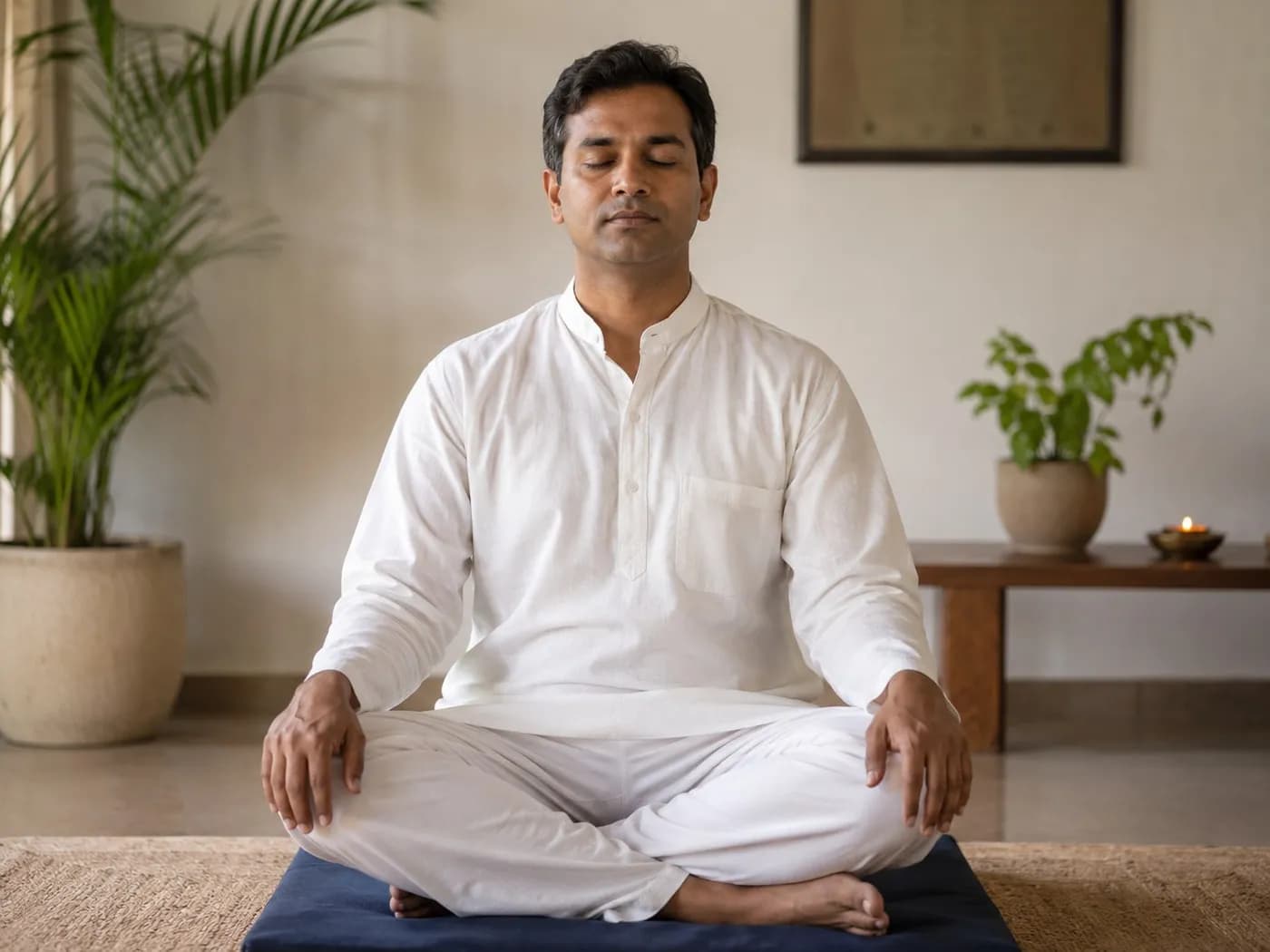
At its heart, it is a mantra-based technique. You sit comfortably with your eyes closed and silently repeat a specific sound, or mantra, given to you during training. The idea is not to force your mind to focus hard on anything. Instead, you let the mantra settle you into a quieter, more restful state almost on its own. This is usually practised for about fifteen to twenty minutes, twice a day — once in the morning and once in the evening, sitting quietly with your eyes closed.
What makes this approach distinct is the word “effortless.” Maharishi Mahesh Yogi taught that the mind naturally wants to settle down, the way a glass of muddy water settles when you stop stirring it. You are not trying to empty your thoughts or push distractions away. You simply let the mantra do quiet work in the background while thoughts come and go.
How Transcendental Meditation Differs from Mindfulness Meditation
This is where a lot of confusion comes from, because most of us have grown up hearing “meditation” used as one big umbrella word. But TM and mindfulness meditation are built on quite different ideas.
Mindfulness meditation, the kind you might have tried through an app or a yoga class, asks you to pay close attention to something — your breath, bodily sensations, or the sounds around you. When your mind wanders, you gently notice this and bring your attention back. It is a practice of awareness and observation, and there is a mild effort involved in noticing and returning.
TM asks for the opposite kind of engagement. There is no active attempt to observe your thoughts or watch your breath. You are not trying to concentrate on anything, including the mantra itself. The mantra is simply a vehicle that helps the mind move naturally toward a quieter, subtler state, without the effort of concentration. This is why practitioners often describe it as “effortless” while describing mindfulness as something that takes gentle, ongoing attention.
Neither is better than the other in some absolute sense. They are simply different roads. If sitting with intense focus on your breath already feels calming to you, mindfulness may suit you well. If you are drawn to something more passive, where you are not asked to actively manage your attention, the idea behind TM might appeal to you more.
How Is Transcendental Meditation Traditionally Taught?
Here is something important to be upfront about: TM, in its authentic and complete form, is not something you learn from a YouTube video or a blog post — including this one. It is traditionally taught over a structured course, usually across four consecutive days, by a certified TM teacher trained by the organisation that Maharishi Mahesh Yogi founded.
During this course, a certified teacher assigns you a personal mantra, based on a traditional selection process, and walks you through the correct way to use it. There are follow-up sessions afterward to check that you are practising correctly. This is a paid course — fees vary by country and have changed over the years, and in India they tend to be more accessible than in the US or Europe, though still a real expense for many households.
We want to be honest about this rather than pretend transcendental meditation is something anyone can fully replicate for free. The organised, certified version of TM is a specific paid programme with specific training, and Habuild does not teach TM or claim to. If the structured version genuinely interests you, looking up a certified teacher or the official TM organisation in India is the accurate next step.
Trying a Mantra-Based Practice at Home
That said, plenty of people want to explore the general feel of mantra-based meditation without committing to a paid course straightaway, just to see if this kind of stillness suits them. A self-guided approximation will not be identical to formal transcendental meditation — there is no personalised mantra selection, no certified teacher checking your form — but it can still be a genuinely calming daily habit.
Here is a simple version to try, similar in spirit to the transcendental meditation technique, that you can do at home:
- Sit comfortably in a quiet spot, on a chair or cross-legged on the floor. Your back should be supported and relaxed, not rigid.
- Close your eyes gently.
- Choose a simple, meaningful sound to repeat silently. Many people use a traditional Sanskrit sound like “Om,” or a word that feels calming and neutral to them.
- Repeat the sound silently in your mind, without forcing your breath or your attention to match it. Let it happen at whatever pace feels natural.
- When you notice you have drifted into a thought, do not scold yourself or yank your focus back sharply. Simply return to the sound, softly, the way you would return your gaze to a familiar face in a crowd.
- Sit like this for ten to twenty minutes. A timer with a gentle alarm helps, so you are not checking the clock.
- Open your eyes slowly and give yourself a minute before standing up.
This is not transcendental meditation in the certified, official sense, and it would not be honest to call it that. But as a home practice, a mantra-based sitting like this borrows the same basic principle — a quiet sound, an effortless return, twice-daily consistency — and many people genuinely find it settling.
Photo: gtall1, CC BY 2.0, via Openverse
What Does the Research Actually Say?
Transcendental meditation is one of the more researched meditation techniques, partly because it has been practised in a standardised way for decades, which makes it easier to study than more varied practices. Here is what the honest, current picture looks like.
Several studies, including ones reviewed by the American Heart Association, have looked at TM in relation to blood pressure, and some have found modest reductions, particularly in people managing stress-related high blood pressure. Other research has associated regular transcendental meditation practice with lower levels of the stress hormone cortisol and reported improvements in focus and anxiety symptoms.
It is worth being careful here, though. Many of these studies are small, some are funded or conducted by researchers connected to the TM organisation itself, which is a real limitation to acknowledge, and results are not always consistent across trials. Meditation research in general — across mindfulness, TM, and other techniques — often struggles with small sample sizes and short study durations. So the fair summary is this: transcendental meditation shows genuinely promising signals for stress reduction, blood pressure, and focus, similar to what is seen with other consistent meditation practices, but it is not a proven cure for any condition, and it should not replace medical treatment for high blood pressure or anxiety.
Is the TM Course Worth Paying For?
This is the question most people actually want answered, so let us address it directly instead of dancing around it.
The official transcendental meditation course is a paid programme, and the fee is a genuine consideration for most Indian households. It is fair to ask whether it is worth paying for, especially when so many meditation resources are free.
Here is an honest way to think about it. The course fee covers something specific: a personalised mantra, one-on-one instruction from a certified teacher, and structured follow-up sessions to correct your technique. For some people, that structure and personal attention is exactly what helps a practice stick, the same way some people need a personal trainer rather than a YouTube workout video. If you have tried meditating on your own before and struggled to stay consistent, the accountability of a paid course with a real teacher might genuinely be worth it to you.
On the other hand, if your main goal is simply to build a calmer, quieter daily habit — not necessarily to practise TM in its exact certified form — you do not need to spend money to get started. A simple mantra-based sitting practice, done consistently morning and evening, can offer many of the same everyday benefits: a calmer nervous system, a few minutes away from notifications, and a gentler start and end to your day. You can always explore the official course later if you find you love this kind of practice and want the more precise, personalised version.
There is no single right answer here. It depends on your budget, how much structure helps you stay consistent, and how deeply you want to go. What matters most is that you are not misled either way — into thinking the free version is identical to certified transcendental meditation, or into thinking you cannot benefit from mantra-based sitting without paying for it.
Where TM Fits Among Other Meditation Styles
If you are new to meditation in general, it helps to see where transcendental meditation sits next to other approaches you may have heard of. Our guide to the different types of meditation in yoga walks through breath-focused, body-scan, and mantra-based practices side by side, which can help you figure out what your temperament is drawn to.
It also helps to understand that meditation and yoga, while often mentioned in the same breath, are not the same thing. If you have ever wondered how the two actually relate, our piece on the difference between yoga and meditation lays this out simply — useful context whether you are curious about TM specifically or meditation more broadly.
Making It a Daily Habit
Whichever direction you choose — the certified course, a simple mantra-based sitting at home, or just reading and reflecting for now — the real value in any meditation practice comes from showing up regularly, not from finding the one “correct” technique. Fifteen quiet minutes twice a day, done consistently for a few months, will likely do more for you than an occasional hour-long session.
If you are already building a daily wellness routine, meditation tends to sit naturally alongside movement. Many people who begin a consistent yoga practice find that a few minutes of quiet, mantra-based sitting afterward feels like a natural next step. If you would like some structure and company while you build that kind of daily habit, Habuild’s free yoga challenge is a gentle place to start, and you can bring a short meditation practice like this into your mornings alongside it.
Frequently Asked Questions
Related Articles
Anapana Meditation: Technique and Benefits
Anapana meditation, one of the oldest breath-awareness practices, simply asks you to observe the natural breath without controlling it. Learn the technique with Habuild's guided sessions.

Benefits of Meditation: A Simple, Honest Guide
What meditation can really do for your mind and body — and what it can't. Start noticing the shifts for yourself with Habuild's daily guided meditation practice.

Binaural Beats Meditation: Does It Work?
Binaural beats meditation plays two slightly different tones, one in each ear, so the brain perceives a third pulsing beat used as a calming anchor. Learn how to try it, and what the evidence actually supports.