The 6-6-6 Walking Rule: What It Is and How to Start
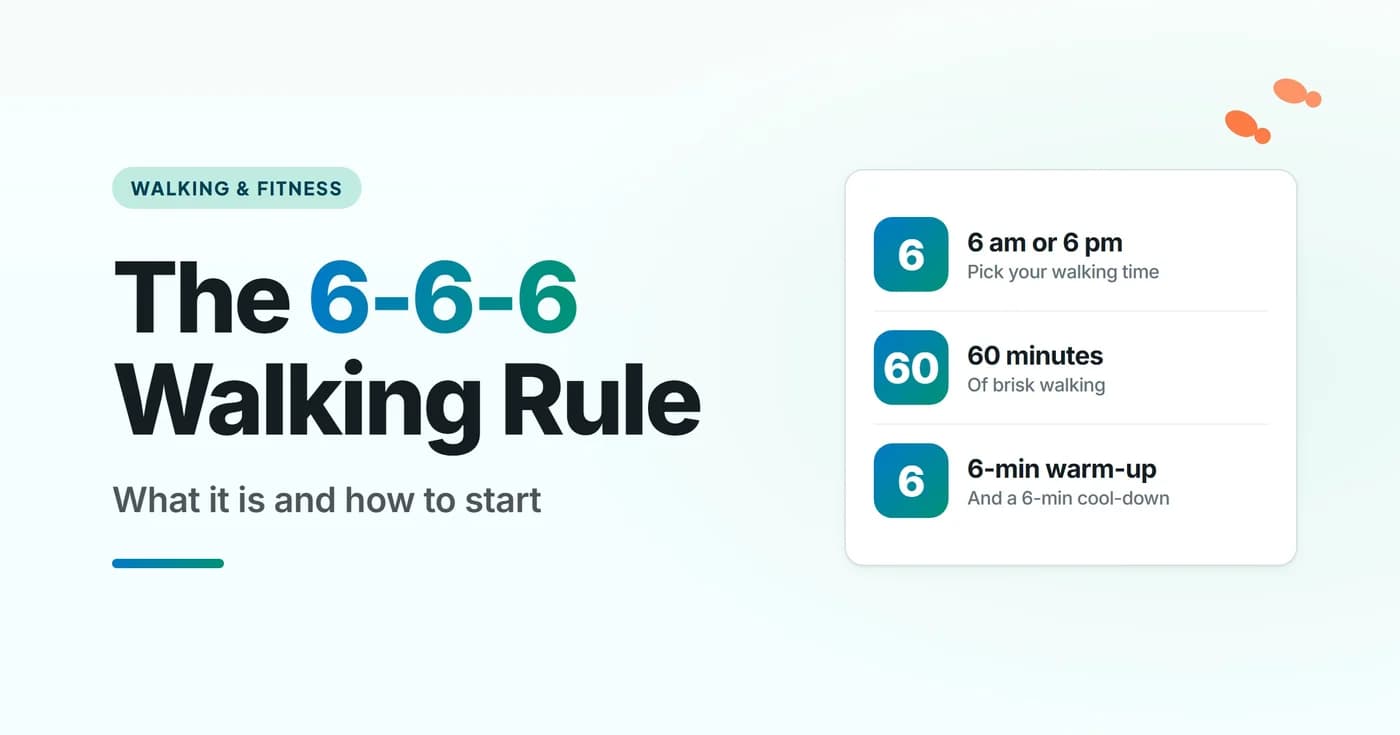
A 6-minute warm-up, 60 minutes of brisk walking and a 6-minute cool-down, at 6 am or 6 pm. Here's how to make it work for you.
Key Takeaways
- The 6-6-6 rule: walk at 6 am or 6 pm, warm up for 6 minutes, walk briskly for 60, cool down for 6.
- It is a popular walking trend, not a routine that has been tested in clinical studies.
- Five 60-minute brisk walks a week reach WHO's higher target of 300 moderate minutes.
- Beginners can start with 20 to 30 minutes and build up over a few weeks.
- Add strength work on 2 days a week for a more complete routine.
What Is the 6-6-6 Walking Rule?
The 6-6-6 walking rule is a simple walking routine that has become popular online because it's so easy to remember. You start your walk at either 6 am or 6 pm, spend the first 6 minutes warming up at a slow, comfortable pace, walk briskly for 60 minutes, and then slow down again for a 6-minute cool-down. All together, that's about 72 minutes on your feet.
Part of the appeal is that there is nothing to buy and nothing complicated to learn. You don't need a gym, a treadmill or a fitness tracker, just a pair of comfortable shoes and a safe place to walk. The three sixes also give the routine a clear shape, which makes it easier to follow than a vague goal like "walk more".
Why the Structure Makes Sense
The 6-6-6 rule itself has not been studied as a programme, but each part of it follows sensible exercise principles.
A fixed time builds a habit
Choosing 6 am or 6 pm turns walking into an appointment rather than something you squeeze in "when you get time". Habits are much easier to keep when they are linked to a regular cue, such as waking up in the morning or finishing work in the evening. Over a few weeks, the walk can start to feel as automatic as brushing your teeth.
The warm-up prepares your body
Six minutes of easy walking gradually raises your heart rate and loosens the hips, knees and ankles. Jumping straight into a fast pace, especially early in the morning when the body often feels stiff, is less comfortable and can make the first part of the walk feel like a struggle.
The cool-down helps you settle
Slowing down for the last 6 minutes lets your breathing and heart rate come down gently instead of stopping suddenly. It's also a good moment to notice how you feel, which can make the habit more rewarding.
The 60 minutes do the main work
An hour of brisk walking counts as moderate-intensity activity. The World Health Organization recommends that adults do at least 150 minutes of moderate activity a week, and suggests building up to 300 minutes for extra benefit. Five 6-6-6 walks a week would take you to that higher 300-minute level.
How Brisk Is "Brisk"?
"Brisk" is the part most people get wrong. A gentle stroll is still good for you, but it isn't what the 6-6-6 rule asks for. A brisk walk should make you breathe faster and feel warm, while still letting you talk.
The easiest check is the talk test. If you can speak in short sentences but couldn't comfortably sing, you're probably at the right pace. Researchers also use step rate as a guide: about 100 steps a minute is often used as a rough marker of moderate-intensity walking, which works out to about 3,000 steps in 30 minutes. In terms of speed, brisk walking is roughly 5.5 to 6.5 km an hour for most adults on flat ground.
If you can't keep a brisk pace for the full hour yet, that's normal. Walk briskly for as long as you can, slow down to recover, then pick up the pace again. Your stamina will improve with practice.
What Does the Evidence Say?
There are no clinical trials on the 6-6-6 routine itself, so be wary of any claim that it guarantees a set amount of weight loss. What we do know is that regular walking is strongly linked to better health. WHO lists regular physical activity among the ways to lower the risk of heart disease, type 2 diabetes and some cancers, and to support mental health.
Research on daily steps points the same way. A large analysis of 15 studies and more than 47,000 adults, published in The Lancet Public Health in 2022, found that people who took more steps each day had a lower risk of dying during the study period. The benefit levelled off at about 6,000 to 8,000 steps a day for adults over 60, and at 8,000 to 10,000 steps a day for younger adults.
A 72-minute walk adds several thousand steps to your day, so the 6-6-6 rule can help you reach those levels. But you don't need to follow it exactly to benefit. A 30-minute brisk walk still makes a real difference.
6 am or 6 pm: Which Should You Choose?
The best time is simply the one you can keep on most days, and each option has its own pros and cons in Indian conditions.
A 6 am walk is cooler in summer, and roads and parks are usually quieter. It also gets your activity done before work and family duties take over, so it's less likely to be skipped. On the other hand, air quality can be poor on winter mornings in many cities, so it's worth checking the local AQI and walking indoors on bad days. Your body may also feel stiff early in the day, so don't rush the warm-up.
A 6 pm walk suits people who aren't morning people. Your body is usually warmer and more flexible by evening, and a walk is a good way to switch off after the workday. However, it can still be hot in summer, so carry water and choose shaded routes. Evening traffic and crowded footpaths can also make it harder to keep a steady pace, so a park or quieter street may work better.
A 4-Week Plan to Build Up to 6-6-6
If you're not used to walking for an hour, build up gradually rather than starting with 72 minutes on day one:
- Week 1: 6-minute warm-up, 20 minutes brisk, 6-minute cool-down, 4 to 5 days
- Week 2: 6-minute warm-up, 30 minutes brisk, 6-minute cool-down, 5 days
- Week 3: 6-minute warm-up, 45 minutes brisk, 6-minute cool-down, 5 days
- Week 4: 6-minute warm-up, 60 minutes brisk, 6-minute cool-down, 5 days
If an hour is simply too long for your schedule, the shorter versions still count. Thirty minutes of brisk walking on 5 days already meets WHO's minimum of 150 minutes a week.
Who Should Be Careful
The 6-6-6 rule is low-impact, but an hour of brisk walking is still a real workout. Talk to your doctor before starting if you have a heart condition, high blood pressure that isn't controlled, or diabetes. The same applies if you have knee, hip or foot pain, have had joint surgery, are pregnant or have recently given birth, or have been inactive for a long time and feel unsure about your balance.
While walking, stop and rest if you feel chest pain, dizziness, unusual breathlessness or sharp joint pain, and seek medical advice if these symptoms don't settle.
Make Walking Part of a Complete Routine
Walking is excellent for your heart and stamina, but it does little to build upper-body strength. That's why WHO also recommends muscle-strengthening activities on at least 2 days a week. A simple way to cover both is to walk on most days and add two short strength sessions, using exercises such as squats, wall push-ups and glute bridges.
Habuild's live sessions include walking along with exercises, yoga and breathing, and the Habuild app's Walk Daily habit can help you keep track of your walks.
Editorial Sources
- Healthline – We Tried It: 6-6-6 Walking Challenge
- WHO – Be Healthy: Physical activity
- Paluch et al. – Daily steps and all-cause mortality, The Lancet Public Health (2022)
- Tudor-Locke et al. – How many steps/day are enough? For older adults and special populations (2011)
Health Disclaimer
This article is for general information only and is not medical advice. Please consult a doctor before starting any new exercise routine, especially if you have a health condition, an injury or are pregnant.
Frequently Asked Questions
Related Articles

10 Benefits of Walking 30 Minutes a Day for Health, Fitness, and Weight Loss
The trick isn't to walk longer, it's to walk daily, at the right pace, with consistency over months. See all 10 benefits for health, fitness, and weight loss.


Walking Exercise: a Complete Guide to Walking Programs, Treadmill Plans, and Daily Workouts
The difference between a casual stroll and a transformative walking routine isn't speed or distance — it's intentional pacing, consistent volume, and progression. See the complete guide to programs and plans.

Benefits of Walking after Dinner: What Post-Meal Walking Does for Your Health
Muscle contractions during walking consume blood glucose directly, bypassing insulin, while the movement also improves digestion and supports the.

How Many Calories Do 10000 Steps Burn?
There is no single calorie number for 10,000 steps. Body size, pace and terrain change the result, so a realistic estimate is a range, not a promise.