
Benefits of Daily Exercise: Strength, Energy & More
Discover the key benefits of daily exercise — from stronger muscles to better sleep. Start your journey with Habuild's guided strength program with a 14-day free trial.
Key Takeaways
- Just 20 to 30 minutes of daily movement measurably improves energy, mood, and long-term health.
- Strength training creates an afterburn effect, burning calories for hours after the session ends.
- Weight-bearing movement prompts bones to grow denser, especially valuable as you age.
- Endorphins and dopamine released during exercise sharpen focus for the entire day.
- Even moderate daily movement lowers resting heart rate and supports healthy blood pressure.
- Regulates the sleep-wake cycle, helping you fall asleep faster and sleep more deeply.
The benefits of daily exercise extend well beyond weight loss. When you move your body consistently — even for 20 to 30 minutes a day — your energy improves, your mood stabilises, your muscles grow stronger, and your long-term health outlook changes significantly. Whether you prefer strength training, yoga, or walking, building a daily movement habit is one of the highest-return investments you can make in yourself.
This guide breaks down exactly what consistent exercise does for your body and mind — and how to build the habit that actually sticks. If you are looking for a place to start, Habuild’s Strength Training For Beginners program offers structured, guided sessions you can follow from home with zero equipment.
10 Proven Benefits of Daily Exercise
- Builds Lean Muscle Mass Regular strength-based movement — push-ups, squats, and resistance work — stimulates muscle fibres and gradually increases lean muscle tissue. Even a short daily session adds up significantly over weeks. More muscle means a stronger, more capable body at every age.
- Boosts Metabolism Throughout the Day Daily physical activity raises your resting metabolic rate. Your body continues burning energy even after your session ends. Strength training in particular creates an afterburn effect that can persist for hours post-workout.
- Improves Bone Density Weight-bearing exercises place healthy stress on bones, prompting them to grow denser and stronger over time. This is especially valuable as you age, when bone loss naturally accelerates. Consistent daily movement supports bone health and may reduce the risk of related issues down the line.
- Enhances Functional Strength and Mobility Daily exercise trains your body for real-life movement — climbing stairs, carrying groceries, sitting at a desk without discomfort. Building foundational stability through consistent practice supports everything else you do throughout the day.
- Supports Gradual Fat Loss When paired with mindful nutrition, daily physical activity creates a consistent caloric deficit over time. More importantly, it preserves muscle while fat reduces — resulting in a leaner composition rather than just a lower number on the scale.
- Sharpens Mental Focus and Reduces Stress Exercise triggers the release of endorphins and dopamine — neurochemicals that lift mood, reduce anxiety, and improve concentration. Many members report that a morning workout sets a calmer, more focused tone for the entire day.
- Improves Cardiovascular Health Even moderate-intensity daily movement strengthens the heart muscle, lowers resting heart rate, and supports healthy blood pressure levels over time. Your heart is itself a muscle — and it responds to regular training just like any other.
- Promotes Better Sleep Quality Physical activity regulates the body’s natural sleep-wake cycle. People who exercise daily tend to fall asleep faster and experience deeper, more restorative sleep — which in turn supports better recovery, mood, and energy the next day.
- Strengthens Immune Function Moderate daily exercise is consistently linked to better immune resilience. It helps the body manage inflammation more effectively and may reduce the frequency and severity of common illnesses when practised consistently over months.
- Builds Long-Term Consistency as a Life Skill Perhaps the most underrated benefit: the discipline of showing up every day becomes its own reward. People who build a daily exercise habit often report it positively influences their eating habits, sleep quality, and decision-making across all areas of life.
How to Get Started with Daily Exercise
What You Need to Begin
Almost nothing. A mat, comfortable clothing, and 20 to 30 minutes of free time is genuinely all you need to start. Most beginner-friendly strength and yoga routines require zero equipment and can be done in your living room. The barrier to entry is far lower than most people assume.
Setting Realistic Goals
Start with a goal of showing up — not a goal of transformation. Committing to 15 minutes of movement every day for two weeks is more valuable than ambitious five-day-a-week plans that collapse by Thursday. Avoid overtraining early on; soreness is fine, exhaustion is not. Progress compounds quietly, so trust the process.
Start with the Basics
For beginners, three movement categories cover everything: push (push-ups, overhead press), pull (rows, band pulls), and lower body (squats, lunges). Add a plank for core stability and a five-minute warm-up to protect your joints. The benefits of plank exercise are well worth exploring — it is one of the most effective foundational moves you can include in any daily training routine.
Best Exercises for Daily Physical Activity
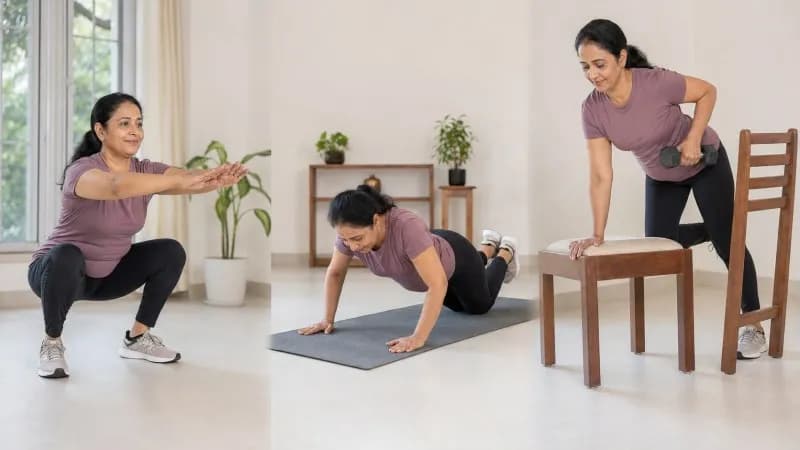
Push-Ups
One of the most accessible and effective upper-body exercises. Daily push-ups strengthen the chest, shoulders, and triceps while engaging the core. Even 10 push-ups a day — done consistently — produce measurable strength gains over four to six weeks. Start with knee push-ups if needed and progress from there.
Suggested start: 3 sets × 8–10 reps
Bodyweight Squats
Squats train the quads, glutes, and hamstrings simultaneously while improving hip mobility and posture. They mimic real-life movement patterns your body performs dozens of times each day. Building lower-body strength through consistent squatting is one of the smartest investments in long-term mobility.
Suggested start: 3 sets × 12–15 reps
Plank
A full-body isometric hold that builds deep core stability, shoulder strength, and spinal alignment. Hold for 20 to 30 seconds to start and gradually build toward 60 seconds. Including a plank in your daily routine has cascading benefits for posture and lower-back comfort.
Suggested start: 3 holds × 20–30 seconds
Lunges
Lunges develop single-leg strength and balance — critical for injury prevention and everyday mobility. Forward lunges, reverse lunges, and lateral lunges each target slightly different muscles, making them versatile enough to rotate through your weekly routine.
Suggested start: 3 sets × 10 reps per leg
Dumbbell Rows (or Band Rows)
Pulling movements are often neglected in home workouts, but they are essential for balanced strength and good posture — especially for people who sit at desks for long hours. A simple single-arm row with a water bottle or resistance band works well at home.
Suggested start: 3 sets × 10–12 reps per side
Glute Bridges
An excellent lower-body and core movement that activates the glutes and strengthens the lower back. Glute bridges are gentle enough for complete beginners while remaining effective even for advanced practitioners when loaded with resistance.
Suggested start: 3 sets × 15 reps
Mountain Climbers
A dynamic core and cardio exercise that elevates heart rate while building abdominal strength. Mountain climbers are a great way to close out a session with an energy burst, even in a small space.
Suggested start: 3 sets × 20 seconds
Common Mistakes to Avoid When Exercising Daily
- Poor Form Rushing through reps with sloppy technique is the fastest route to injury and the slowest route to progress. Always prioritise range of motion and controlled movement over the number of repetitions. If a movement feels wrong, slow it down and revisit the fundamentals before adding volume.
- Skipping the Warm-Up Cold muscles are far more vulnerable to strains. A five-minute warm-up — joint rotations, light walking, or dynamic stretches — prepares your nervous system and increases blood flow to working muscles. It takes five minutes and can save weeks of recovery time.
- Overtraining Too Soon Many beginners go all-out in week one and burn out or get injured by week two. Your body adapts to exercise over time and needs recovery between sessions to grow stronger. Start at 60 to 70 percent of your perceived capacity and build incrementally week by week.
- Inconsistency The single biggest obstacle to seeing results from daily exercise is not doing it daily. Missing one day is fine; missing four in a row breaks the habit loop. Structure matters more than intensity — a 20-minute session every day outperforms a two-hour session twice a week for most people. Understanding the difference between yoga and exercise approaches can also help you choose a format you will genuinely enjoy showing up for.
Who Should Try Daily Exercise?
- Beginners Daily exercise is arguably most valuable for people just starting out. Short, low-intensity sessions build the habit neurologically before the body even needs to work hard. If you are brand new to structured training, a guided program removes the guesswork entirely.
- Women A persistent myth suggests that strength training makes women bulky. In reality, women have significantly lower testosterone levels than men, which makes large muscle hypertrophy very unlikely from standard training. What women do gain from daily exercise: stronger bones, better posture, improved hormonal balance, and a leaner body composition over time. Explore what Strength Training For Women looks like in practice.
- Older Adults Daily physical activity becomes increasingly important with age — for bone density, balance, cognitive health, and independence. Low-impact options like yoga, walking, and bodyweight movements are joint-friendly and highly effective. Consult your doctor before starting a new exercise routine if you have existing health conditions.
- Working Professionals If you sit for eight or more hours a day, your posture, hip flexors, and lower back are under chronic stress. A consistent daily movement practice — even 20 minutes — counteracts the physical effects of prolonged sitting, improves focus at work, and reduces end-of-day fatigue significantly. Habuild’s Daily Online Yoga Classes are designed to fit into a working professional’s schedule without demanding a commute or a gym membership.
Build Strength with a Routine That Actually Works
Building strength is not about doing random workouts — it is about consistency, guidance, and following a structured plan. With the right support, you can train effectively from home and see real progress over time. Daily exercise only delivers on its promise when the habit is sustainable, and sustainability comes from structure.
What You Get with Habuild’s Strong Everyday Program:
- Daily live guided strength and yoga sessions
- Beginner-to-advanced progression built into the curriculum
- No-equipment, home-friendly workouts
- Expert guidance to support correct form and prevent injury
- A consistent community that makes showing up easier every day
Start Your Strength Training Journey
Related reads: Benefits of Leg Exercises: Strength, Stability & More · Importance of Regular Exercise: Benefits & How to Start
The benefits listed here — more strength, steadier energy, better sleep — are really benefits of daily exercise done consistently, not of any single workout. That distinction is what separates people who feel the difference from those who don’t. Habuild’s Strong Everyday program gives you a guided daily structure designed to help that consistency actually happen.
Frequently Asked Questions
Related Articles

Benefits of Exercising in Morning
Discover the top benefits of exercising in morning — from better energy to fat loss. Start your day right with Habuild. try free for 14 days.
10 Benefits of Lifting Weights You Should Know
Discover the top benefits of lifting weights — from burning fat to building strength. Start your journey with Habuild's guided strength training program.
Active Recovery Workout: Benefits, Best Exercises & How to Get Started
Discover the best active recovery workout routines for full body relief. Learn exercises, mistakes to avoid, and how to stay consistent. Start for ₹1 today.

Benefits of Leg Exercises: Strength, Stability & More
Discover the top benefits of leg exercises for strength, posture, and daily energy. Start a structured routine today — try Habuild with a 14-day free trial.

Warm Up Exercises Before Workout
Discover the best warm up exercises before workout to boost shoulder stability and prevent injury. Start your ₹1 trial with Habuild today.