
Benefits of Skipping Exercise: 10 Reasons to Start Today
Discover the top benefits of skipping exercise for weight loss, strength, and stamina. Start your 14-day free trial trial with Habuild's guided strength training today.
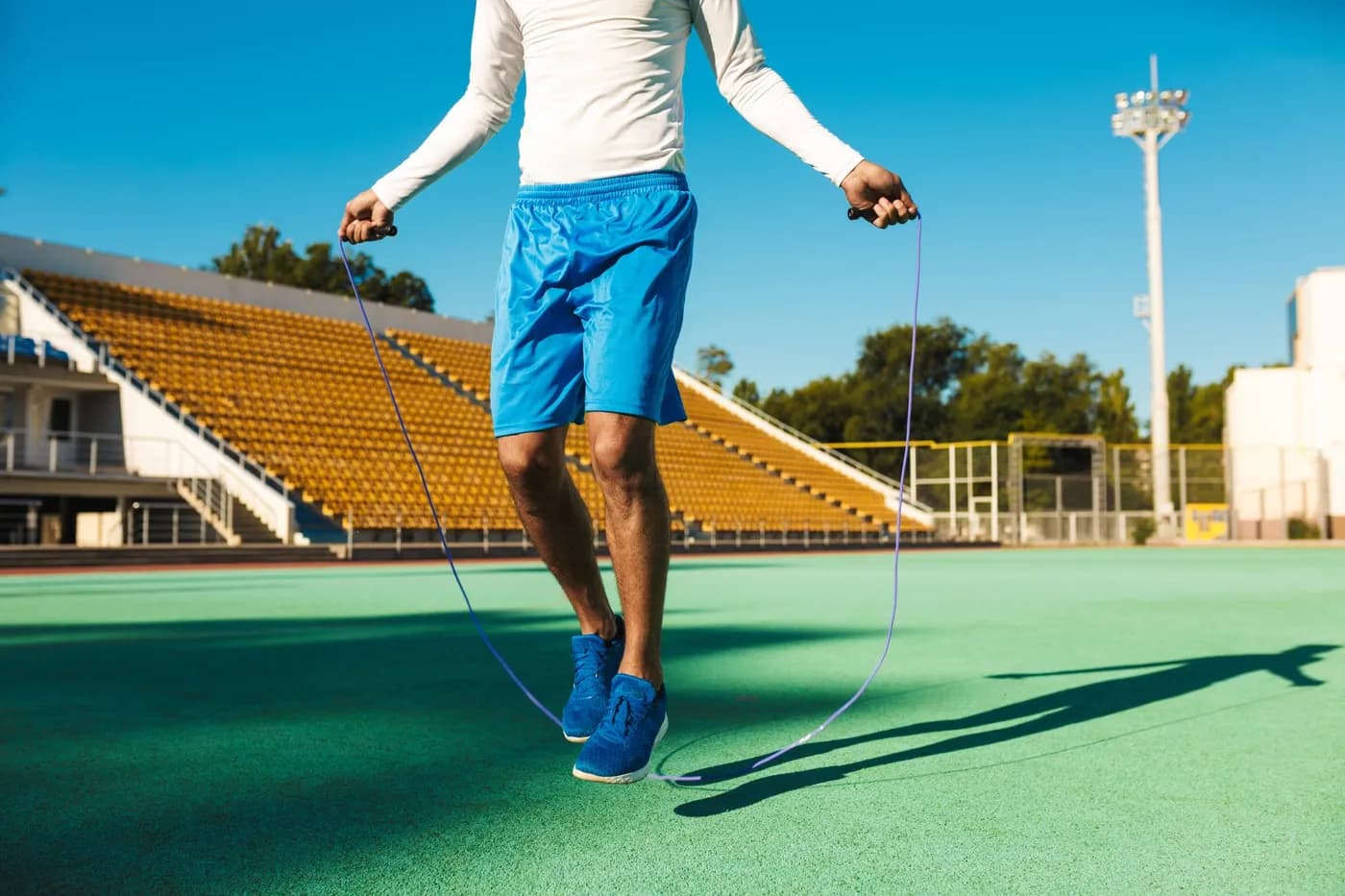
Key Takeaways
- Just 10-15 minutes of consistent rope skipping can improve aerobic capacity over time.
- Engages the calves, quads, glutes, core, and shoulders simultaneously in one movement.
- The rhythmic timing required trains the neuromuscular system, sharpening coordination and balance.
- A weight-bearing exercise that stimulates bone-forming cells to support bone density.
- Elevates metabolic rate not just during the workout but for a period afterward.
- A jump rope costs very little and fits in a bag, making it accessible almost anywhere.
The benefits of skipping exercise include improved cardiovascular endurance, full-body muscle tone, better coordination, and effective calorie burning — all from a single jump rope. Whether you are a beginner or returning to fitness, skipping is one of the most accessible and time-efficient workouts you can do from home.
Whether you are a complete beginner or someone returning to fitness, skipping offers a full-body workout that builds cardiovascular endurance, strengthens muscles, and supports healthy weight management — all without needing a gym. This guide breaks down exactly why skipping deserves a regular spot in your routine and how to get started safely.
10 Key Benefits of Skipping Exercise
- Strengthens the Heart and Lungs Skipping is a high-intensity cardiovascular activity that challenges your heart to pump blood more efficiently. Even 10–15 minutes of consistent rope skipping can improve aerobic capacity over time, supporting better stamina in daily life.
- Supports Weight Management One of the most sought-after advantages of skipping rope exercise is its calorie-burning potential. Skipping at a moderate pace helps create the calorie deficit that, combined with a balanced diet, gradually supports weight loss. The benefits of rope skipping for weight loss become more pronounced when practiced consistently over weeks.
- Builds Full-Body Muscle Tone Unlike isolation exercises, skipping engages the calves, quads, glutes, core, and shoulders simultaneously. Over time, this promotes lean muscle tone across multiple muscle groups in a single session.
- Improves Coordination and Balance The rhythmic timing required to skip rope trains your neuromuscular system. Regular practice noticeably improves hand-eye coordination, balance, and spatial awareness — skills that translate to better performance in other physical activities.
- Enhances Bone Density Skipping is a weight-bearing exercise that places healthy stress on bones. This stimulates bone-forming cells and may help support bone density over time, which is especially relevant as you age.
- Boosts Metabolism High-intensity intervals of skipping elevate your metabolic rate — not just during the workout but for a period afterward. This metabolic effect makes skipping an efficient choice when time is limited.
- Reduces Stress and Improves Mood Rhythmic, repetitive movement like skipping triggers the release of endorphins, the body’s natural mood-lifters. A short skipping session in the morning can set a more energized, focused tone for the rest of the day.
- Requires Minimal Equipment and Space A jump rope costs very little, fits in a bag, and can be used in a small living room, terrace, or garden. This makes skipping one of the most accessible fitness tools for anyone working out at home.
- Improves Posture and Core Stability Maintaining correct form while skipping — upright torso, engaged core, relaxed shoulders — naturally reinforces better posture. Over time, this carries over into how you stand and move throughout the day. Pairing skipping with dedicated core strength exercises can deepen that core engagement meaningfully.
- Easy to Progress at Your Own Pace Skipping is infinitely scalable — from slow single jumps for beginners to double-unders for advanced athletes. You control the intensity, making it suitable for virtually any fitness level.
How to Get Started with Skipping Exercise
What You Need to Begin
All you need is a rope the right length for your height (when you stand on the middle of the rope, the handles should reach your armpits), supportive footwear, and a small flat surface. No gym membership or expensive equipment required.
Setting Realistic Goals
Start with just 5 minutes of skipping broken into 30-second intervals with 30-second rests. Gradual progression — not overtraining — is what produces lasting results. Aim to add one extra minute each week rather than doubling your workload overnight. Pairing skipping with a daily walking habit is a simple, sustainable way to build overall fitness consistency.
Start with the Basics
Master the basic two-foot jump before trying any variations. Keep your elbows close to your sides, rotate the rope with your wrists rather than your arms, and land softly on the balls of your feet to reduce joint impact. Once you can skip continuously for 2 minutes, you are ready to explore alternate-foot skipping or speed intervals.
Best Exercises to Pair with Skipping
Squats
Squats build lower-body strength that directly supports your jumping power. Do 3 sets of 12–15 bodyweight squats on alternate days. This reinforces the quad and glute engagement you use every time you push off the ground while skipping.
Push-Ups
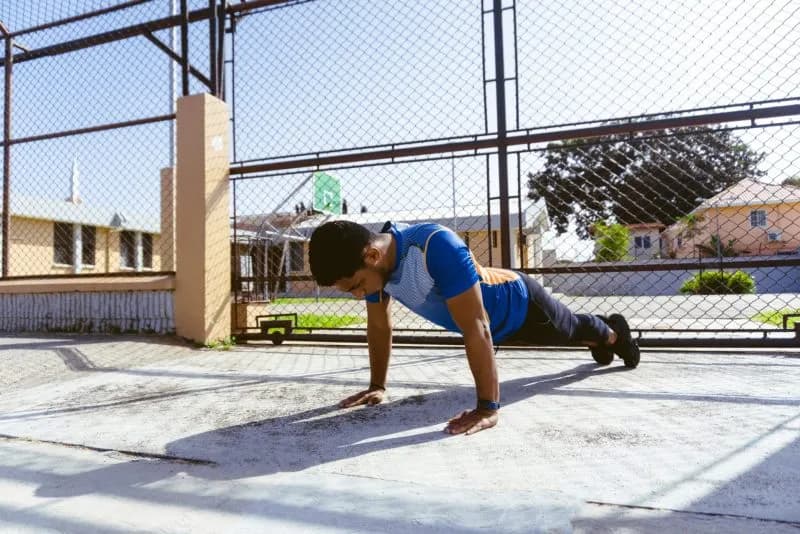
Push-ups complement skipping by targeting the chest, shoulders, and triceps — the upper-body muscles that guide the rope. Start with 3 sets of 8–10 and progress to 15 as you grow stronger.
Lunges
Forward and reverse lunges develop single-leg stability, which improves your balance during alternate-foot skipping drills. Aim for 10 reps per leg, 2–3 sets. For more focused lower-body work, structured leg strength exercises are a solid complement to your skipping routine.
Plank
A strong core is what keeps your torso upright and stable during extended skipping sessions. Hold a forearm plank for 20–45 seconds and build from there. Learn more about the full benefits of plank exercise and why it belongs in every beginner’s toolkit.
Glute Bridges
Glute bridges activate the posterior chain — glutes and hamstrings — which are heavily recruited during jumping. 3 sets of 15 reps, 2–3 times per week, will noticeably improve your power and landing mechanics.
Mountain Climbers
Mountain climbers mimic the cardiovascular demand of skipping while adding core and shoulder endurance. Use them as a warm-up or as a finisher after your skipping sets.
Dumbbell Rows (or Resistance Band Rows)
Back strength supports the upright posture you need during rope skipping. If you have dumbbells or a resistance band, 3 sets of 10–12 rows per arm will build the upper-back stability that makes longer skipping sessions feel more comfortable.
Common Mistakes to Avoid When Skipping
- Poor Form Swinging the rope from the shoulders instead of the wrists is the most common beginner error. It wastes energy, increases shoulder fatigue, and makes timing inconsistent. Focus on small, controlled wrist circles to spin the rope efficiently.
- Skipping Warm-Up Jumping straight into high-intensity skipping without warming up stresses the ankles, knees, and calves. Spend 3–5 minutes doing light jogging in place, ankle rolls, and leg swings before picking up the rope.
- Overtraining More is not always better. Skipping every single day at high intensity without rest days can lead to shin splints or joint discomfort. Two to four sessions per week, with recovery days in between, is more effective than daily overexertion.
- Inconsistency The advantages of skipping rope exercise — improved stamina, better coordination, gradual weight management — only accumulate with regularity. Sporadic sessions every few weeks produce very little. A structured weekly schedule, even if sessions are short, is what drives real progress.
Who Should Try Skipping Exercise?
- Beginners Skipping is one of the most beginner-friendly cardio options available. You start slow, master the basics, and gradually increase duration. There is no technical skill barrier — if you can jump, you can start today.
- Women Skipping builds lean muscle tone and cardiovascular fitness without adding bulk. It is a common misconception that jumping rope leads to overly muscular legs — in practice, it produces a toned, functional physique. Understanding the difference between yoga and exercise can also help women design a balanced routine that combines flexibility with strength.
- Older Adults For older adults in good health, low-intensity skipping can support bone density and coordination. Start with very short intervals and consult your doctor before beginning any new exercise program — this applies especially if you have joint concerns or existing health conditions.
- Working Professionals Time is the biggest barrier for most working adults. A 10–15 minute skipping session delivers meaningful cardiovascular and metabolic benefits in a fraction of the time a gym workout takes. It fits a lunch break, a morning routine, or an evening wind-down equally well.
Build Strength with a Routine That Actually Works
Building fitness through skipping is not about doing random jumps every few days — it is about consistency, progression, and having the right support structure around you. With guided daily sessions, you can combine skipping with strength training effectively, maintain correct form, and stay accountable week after week.
What You Get with Habuild’s Strong Everyday Program:
- Daily live guided strength and cardio sessions
- Beginner-to-advanced progression built into every week
- No-equipment and home-friendly workouts
- Expert guidance to ensure correct form from day one
- Community support to keep you consistent even on tough days
Start Your Strength Training Journey
Related reads: Importance of Regular Exercise: Benefits & How to Start · What Is Isometric Exercise? Benefits, Examples & How to Start
Skipping rope is deceptively simple, but the stamina and weight-loss benefits it offers only show up with regular practice — a few sporadic sessions barely move the needle compared to a structured weekly rhythm. Habuild’s Strong Everyday program can help you build that rhythm through guided, structured daily training.
Frequently Asked Questions
Related Articles
Burpees for Fat Loss: Benefits, Technique & Beginner Guide
Discover how burpees for fat loss work, key benefits, correct form, and a beginner routine. Start your free 7-day trial with Habuild today.
Warm Up Exercises Before Workout
Discover the best warm up exercises before workout to boost shoulder stability and prevent injury. Start your ₹1 trial with Habuild today.
Body Fat Kaise Kam Kare
Body fat kaise kam kare — jaanein sahi yoga aasan, exercises aur tips jo aapki consistency badhayein. Shuru karein sirf 14-day free trial mein Habuild ke saath.

What Are Burpees Exercises? Benefits & How To Do Them
A squat, a plank, a push-up, and a vertical jump combine into one continuous movement that works nearly every major muscle group with zero equipment. See the benefits and how to do them.

10 Benefits of Walking for Women
Discover the top benefits of walking for women — from bone health to hormonal balance. Try Habuild's guided program for just ₹1 for your first 7 days.