
What Is Isometric Exercise? Benefits, Examples & How to Start
What is isometric exercise? Learn how static holds build strength, who should try them, and how to start today with guided support from Habuild.

Key Takeaways
- Muscles contract and generate force without any visible joint movement or change in length.
- Isometric contractions recruit a high number of motor units simultaneously for baseline tension.
- Often used in physiotherapy since they don’t move the joint through a range of motion.
- Hand-grip holds and wall sits may gradually support healthier blood pressure over time.
- Holding still forces focus on the working muscle, sharpening the mind-muscle connection.
- Begin with holds of just 10-20 seconds per position rather than white-knuckling through long ones.
If you’ve ever held a plank, pressed your palms together, or held a wall sit until your legs burned — you’ve already done an isometric exercise. What is isometric exercise, exactly? It’s a form of strength training where your muscles contract and generate force without any visible joint movement or change in muscle length. The muscle works hard, the body stays still, and the results are very real.
Unlike traditional lifts or dynamic movements, isometric training asks you to hold a position under tension. This makes it accessible, joint-friendly, and surprisingly effective — whether you’re rehabbing an injury, building a base of functional strength, or simply looking for a quieter, equipment-free way to train.
6 Key Benefits of Isometric Exercise
- Builds Functional Muscle Tension Isometric contractions recruit a high number of motor units simultaneously. Over time, this helps your muscles develop stronger baseline tension — which directly supports everyday tasks like carrying, pushing, and stabilising your spine.
- Supports Joint Health and Rehabilitation Because isometrics don’t move the joint through a range of motion, they’re often used in physiotherapy and recovery protocols. People managing knee discomfort, shoulder stiffness, or back pain through movement training often find isometrics a safe starting point.
- Improves Muscular Endurance Holding a position for time — whether a plank or a squat hold — trains your muscles to sustain effort over extended periods. This transfers directly to better stamina in workouts and daily activity. Complementing your isometric work with dedicated endurance-focused strength training can accelerate this further.
- Lowers Blood Pressure Over Time Research suggests that regular isometric exercise — particularly hand-grip holds and wall sits — may gradually support healthier blood pressure levels when practiced consistently alongside lifestyle changes. Always complement with your doctor’s guidance.
- Requires No Equipment A wall, your body weight, and the floor are all you need. This makes isometric training one of the most accessible forms of strength work, fitting easily into home routines or travel schedules.
- Enhances Mind-Muscle Connection Holding still forces you to focus on the muscle you’re working. This heightened awareness of what’s contracting helps you get more out of every session — a quality that carries over into dynamic lifting and yoga practice alike.
How to Get Started with Isometric Exercise
What You Need to Begin
Almost nothing. A yoga mat or non-slip surface is helpful. A wall works for wall sits and isometric presses. Your own body weight provides the resistance. If you’re looking for a more structured foundation, exploring home-based strength routines can give you a solid starting framework alongside your isometric practice.
Setting Realistic Goals
Begin with holds of 10–20 seconds per position. The goal isn’t to white-knuckle through pain — it’s to feel a steady, controlled burn in the target muscle. Progress by adding 5 seconds per week, or adding a second set. Consistency across multiple weeks matters far more than any single heroic session.
Start with the Basics
Pick two or three exercises from the list below and practice them three to four times a week. Pair each hold with slow, controlled breathing. If you’re also doing yoga or cardio, isometrics work well as a warm-up activation or cool-down finisher.
Best Isometric Exercises to Try
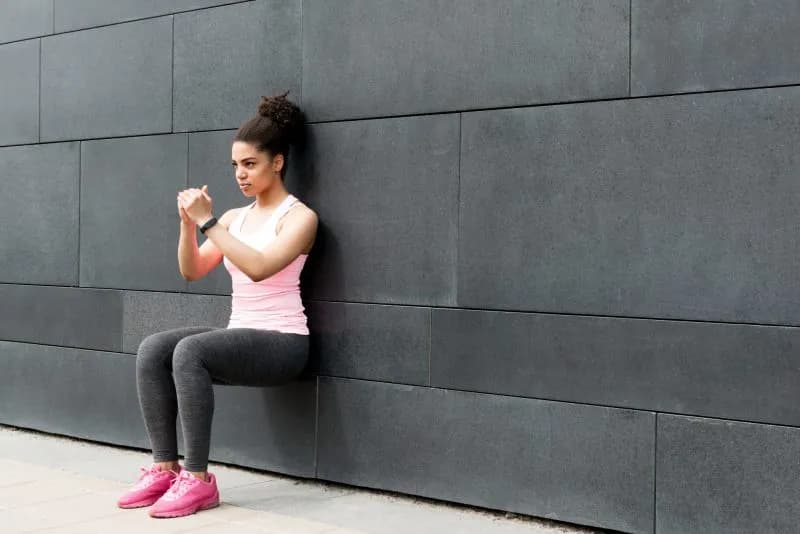
Wall Sit
Slide your back down a wall until your knees are at roughly 90 degrees. Hold the position, keeping your back flat against the wall. Start with 20 seconds, build to 60. This targets the quadriceps, hamstrings, and glutes with zero equipment.
Plank Hold
Forearms on the floor, body in a straight line from head to heels. Brace your core as if bracing for a light punch to the stomach. Hold for 20–45 seconds. The plank trains your entire anterior chain — core, shoulders, and hip flexors — simultaneously.
Isometric Push-Up Hold
Lower yourself to the halfway point of a push-up and hold there. Your chest should be a few inches above the floor. Hold for 10–20 seconds. This is one of the most effective isometric exercises for chest and triceps development without equipment.
Glute Bridge Hold
Lie on your back, feet flat on the floor, hips pushed up into a bridge. Squeeze your glutes as hard as possible at the top. Hold for 20–30 seconds. This strengthens the posterior chain and actively supports lower back stability.
Isometric Bicep Hold
Place your forearm under a table or desk and press upward firmly without moving. Your bicep contracts against the fixed resistance. Hold for 15–20 seconds per arm. No weights needed — just a sturdy surface.
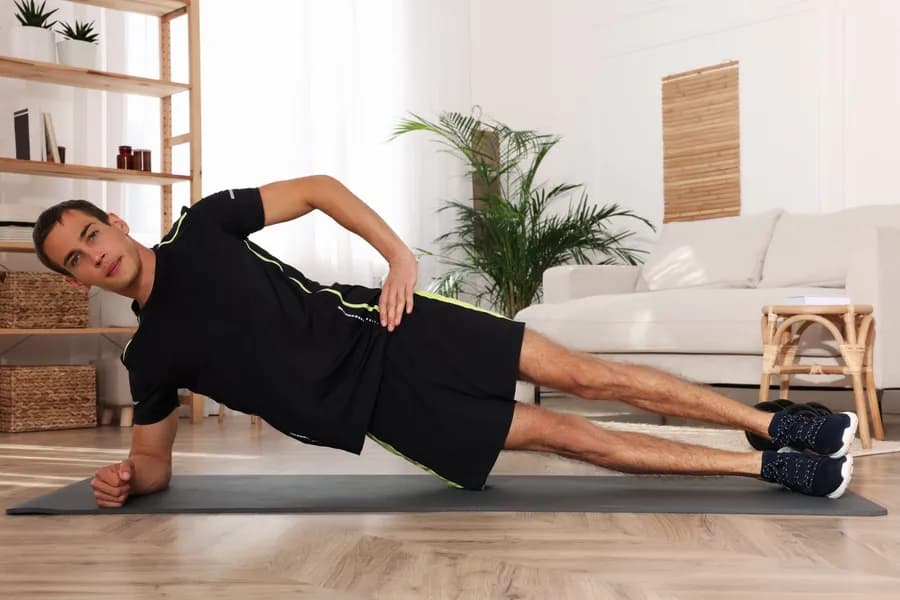
Side Plank Hold
Support your weight on one forearm, body in a straight diagonal line. This targets the obliques and hip abductors. Hold for 15–30 seconds per side. It’s especially valuable for spinal lateral stability that most exercises neglect.
Isometric Squat Hold (Chair Pose)
Stand with feet shoulder-width apart, lower into a squat as if sitting into a chair, and hold without touching anything. Hold for 20–40 seconds. This is essentially the same as Utkatasana in yoga — a pose that also builds lower-body isometric endurance effectively.
Common Mistakes to Avoid
- Holding Your Breath This is the most common error. Breath-holding spikes blood pressure and causes premature fatigue. Practice slow nasal breathing throughout every hold — inhale for 3 counts, exhale for 3 counts.
- Skipping the Warm-Up Even static exercises require warm tissue. Spend 5 minutes on light movement — arm circles, hip rotations, or a gentle walk — before loading your muscles into a hold. Cold muscles under isometric tension are more prone to cramping and strain.
- Overtraining the Same Position Isometrics are deceptively intense. Doing 10 sets of planks every day will not produce faster results — it will produce fatigue and stagnation. Two to three sets per exercise, four times a week, is more than enough stimulus for consistent progress.
- Inconsistency Isometric strength adapts specifically to the joint angle you train. A 3-week consistent practice will produce noticeably more stability than sporadic intense sessions. Small, regular investments outperform occasional efforts every time.
Who Should Try Isometric Exercise?
- Beginners Isometrics have an extremely low barrier to entry. There’s no technique to perfect, no equipment to buy, and no complex movement pattern to learn. A beginner can start with a 15-second wall sit and a 20-second plank on day one and build from there. Pairing isometrics with a beginner strength training program will give you the best foundation.
- Women A persistent myth suggests that strength training will create a bulky physique. Isometric training — like all strength work — builds lean, functional muscle. Women typically see improved tone, better posture, and greater stability without significant size changes. The focus is on feeling stronger, not looking different from a magazine.
- Older Adults Because isometrics don’t involve rapid joint movement, they’re particularly well-suited for people managing arthritis, osteoporosis, or reduced mobility. They support bone density and postural muscles without the impact stress of dynamic exercises. Always consult your doctor before starting any new exercise routine if you have existing health conditions.
- Working Professionals Desk posture creates muscular imbalances — tight hip flexors, weak glutes, rounded shoulders. A 10-minute isometric routine targeting the core, glutes, and upper back can gradually counteract hours of sitting. No gym required — just a quiet corner and your own body weight.
Build Strength with a Routine That Actually Works
Building real strength isn’t about doing random exercises — it’s about consistent practice guided by someone who knows what progression looks like. Isometric training is powerful precisely because it’s repeatable: you can do it every day, at home, without equipment, and feel the cumulative effect over weeks.
With Habuild’s Strong Everyday program, you get:
- Daily live guided strength and yoga sessions — including isometric work
- Beginner-to-advanced progression so you never plateau or overtrain
- No-equipment, home-friendly workouts designed around real schedules
- Expert guidance to ensure correct form and safe holds
- A community that keeps you showing up, even on low-motivation days
Explore what strength training for overall fitness looks like when it’s structured, progressive, and actually enjoyable.
Related reads: Importance of Regular Exercise: Benefits & How to Start · What Is Intense Exercise? Meaning, Examples & Benefits
Static holds build strength quietly, but only when they’re practiced with enough regularity for your muscles to adapt to sustained tension over time. Isometric work fits naturally into a broader, structured training plan rather than standing alone. Strong Everyday offers that kind of guided, everyday structure to help isometric strength actually take hold.
Understanding what is isometric and isotonic exercise comes down to movement: isometric holds stay still, isotonic exercise moves through a range. What is an example of isometric exercise? A wall sit or a plank, both held without movement. And what is isometric exercise and what is its focus, in one line — building strength and stability at a single joint angle rather than across a full range of motion.
Frequently Asked Questions
Related Articles
What Are Isometric Exercises? Benefits & Best Moves
Planks, wall sits, and static holds contract your muscles and produce force while the joint angle and muscle length stay the same. See the benefits and best moves.
What Are Compound Exercises? Benefits & Best Moves
Squats, push-ups, deadlifts, and rows work two or more muscle groups across multiple joints at once, training your body as a system. See the benefits and best moves.
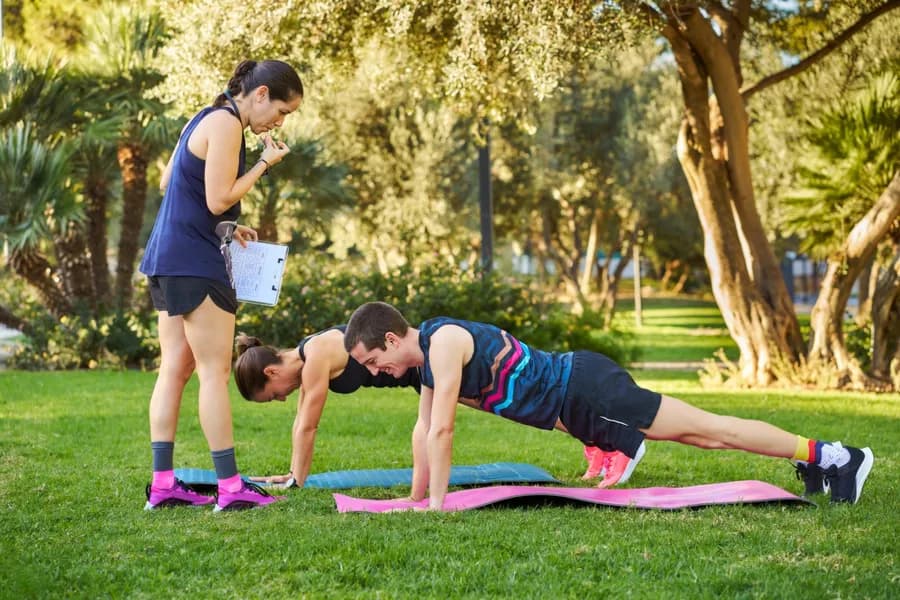
How to Do a Plank Properly: Step-by-Step Guide for Beginners
A correctly done plank activates the core, shoulders, glutes, and back muscles at once, but most people make form errors that eliminate the benefit entirely. See the step-by-step guide.
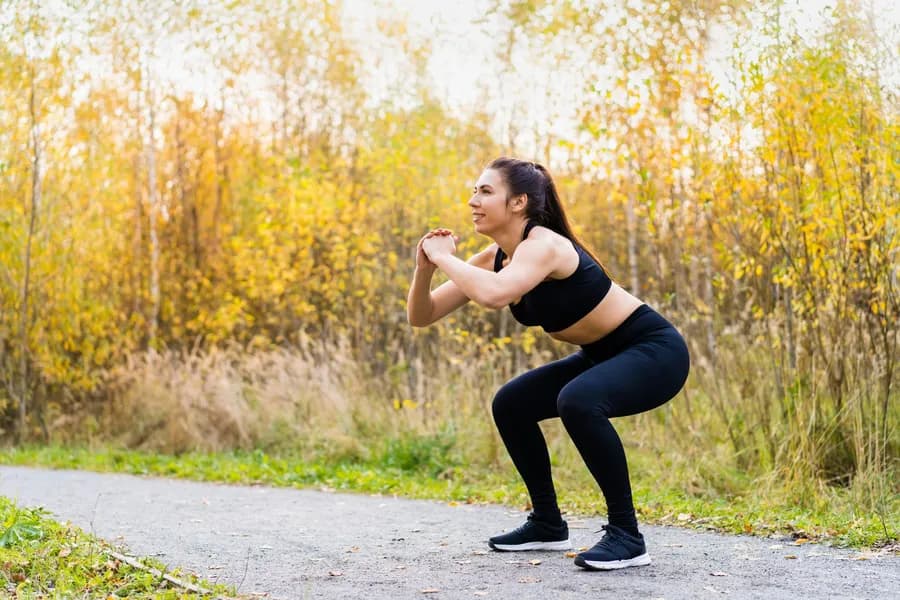
What Is Functional Strength Training? Benefits, Exercises & Tips
Discover what is functional strength training, its top benefits, best exercises, and how to get started. Try Habuild's guided program with a 14-day free trial.
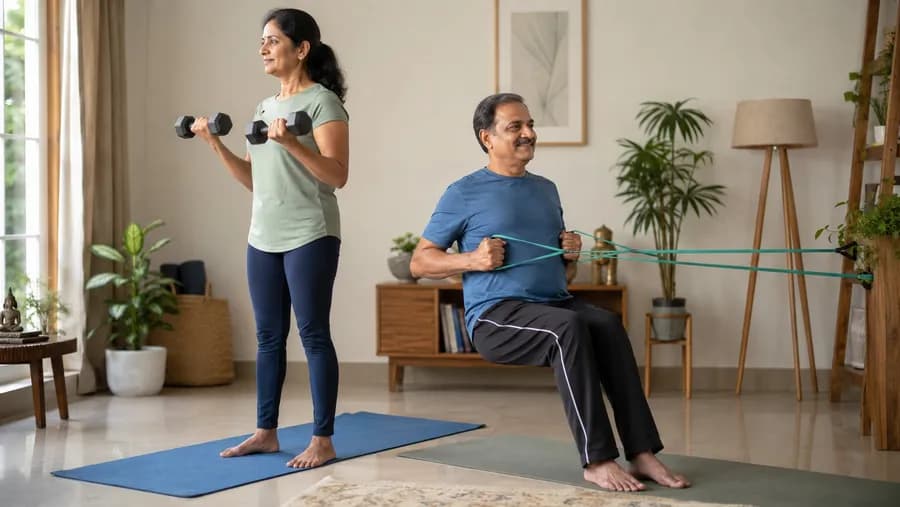
Strength Training vs Resistance Training: Key Differences
Strength training vs resistance training — what's the difference? Explore benefits, exercises, and how to start. Try Habuild for 14-day free trial.