
Calisthenics for Beginners: the Complete Starter Workout Plan
Your own bodyweight provides all the resistance needed for significant strength and muscle development in the first year of training — no gym, no weights required. See the complete starter workout plan.
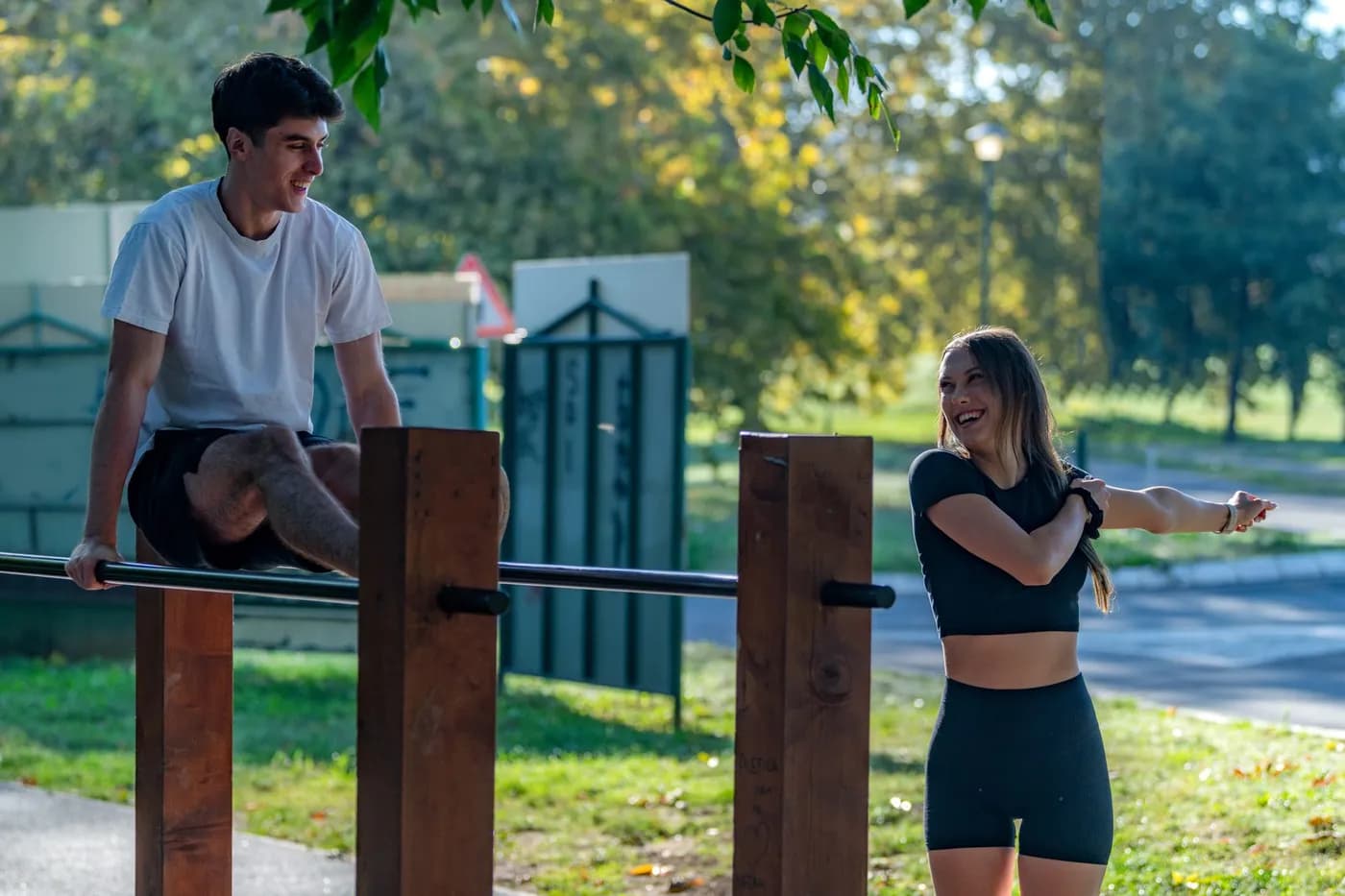
Key Takeaways
- A 2020 study found beginners gain 40% more strength in 12 weeks than intermediate trainees.
- Beginners often achieve half their entire training career's strength gains in just 3-6 months.
- The same push-ups, squats, and planks scale continuously to elite skills like one-arm push-ups.
- A pull-up bar becomes useful only after 4-6 weeks, once pulling exercises become accessible.
- Follows a structured 3-days-weekly plan with 3 sets per exercise and 60-second rests.
- Requires nothing beyond a floor mat and comfortable clothing to begin.
Calisthenics for beginners is the most accessible strength training system available — no gym, no weights, no prior experience required. Your own bodyweight provides all the resistance needed for significant strength and muscle development in the first year of training. This complete beginner calisthenics workout guide covers everything you need to start correctly, progress safely, and build lasting results from home.
Benefits of Beginner Calisthenics
- Beginner Calisthenics Workout — Builds Real Strength from Day One — Even the simplest calisthenics exercises for beginners — wall push-ups, air squats, planks — provide genuine muscular strengthening stimulus. The principle of progressive overload applies equally to bodyweight as to weights: as long as the movement challenges the muscle, adaptation occurs. Beginners often achieve half their entire training career's strength gains in the first 3–6 months.
- Calisthenics Training for Beginners — Develops Coordination and Body Awareness — Calisthenics movements train neuromuscular coordination alongside pure strength — the ability to control the body through space with precision and efficiency. This coordination development is unique to bodyweight training and produces movement quality improvements that transfer to every physical activity.
- Basic Calisthenics Workout — Zero Cost, Any Location — A basic calisthenics workout for beginners requires no investment and no special location. The programme can be performed in a bedroom, a balcony, or a park — making it the most logistically accessible strength training option available.
- Scales Continuously from Beginner to Elite — The same exercises used in a basic calisthenics workout beginners programme (push-ups, squats, planks) are the foundation for the most advanced calisthenics skills (one-arm push-ups, handstands, front levers). There is no need to "graduate" from calisthenics — the system progressively challenges at every level.
Research: Untrained beginners gain 40% more strength in their first 12 weeks of resistance training than intermediate trainees doing the same programme — Journal of Strength and Conditioning Research, 2020.
How to Get Started with Calisthenics for Beginners
What You Need to Begin
A floor mat. Comfortable clothing. That is all. Calisthenics exercises for beginners worldwide begin with only floor space. A pull-up bar (₹500–1,500) becomes useful after the first 4–6 weeks when upper body pulling exercises become accessible.
Setting Realistic Goals for Beginners
Week 1–2: Learn the movement patterns. Form is the only priority. Week 3–4: First noticeable strength improvements. Month 2–3: Progress to harder variations. Month 4–6: Visible body composition change. Year 1: Master the 5 foundational movements and their intermediate progressions.
Start with the Calisthenics for Beginners Workout
The complete beginner calisthenics workout method: 3 days per week (Monday, Wednesday, Friday). 3 sets of each exercise with 60-second rests. Push-ups (modified if needed) + Squats + Plank + Glute Bridge + Superman Hold. 25–30 minutes per session. This covers all primary muscle groups and movement patterns from day one.
Best Calisthenics Exercises for Beginners
Wall or Knee Push-Up — 3×10 · Upper Body · Most Beginner-friendly
Begin at the wall (standing, hands at chest height, incline push-up) or on the knees. Identical movement pattern to standard push-ups at reduced load. Progress to standard push-up when 3 sets of 15 at the current variation is genuinely comfortable. Calisthenics exercises for beginners tip: never sacrifice range of motion (chest within 3cm of floor) for additional reps.
Air Squat — 4×15 · Lower Body · Foundation Movement
Feet hip-width apart, lower until hips are below parallel, press through heels to stand. The most important calisthenics for beginners lower body exercise. Drives the hormonal response (growth hormone) that supports development across the entire body. Progress: slow tempo (4-sec descent) → jump squat → Bulgarian split squat.
Forearm Plank — 3×20–30s · Core · Building Block
The most beginner-accessible core calisthenics exercise — forearms on floor, body in straight line. Build from 20 seconds to 60+ seconds over 4–6 weeks. The core strength developed in the plank supports every other calisthenics movement.
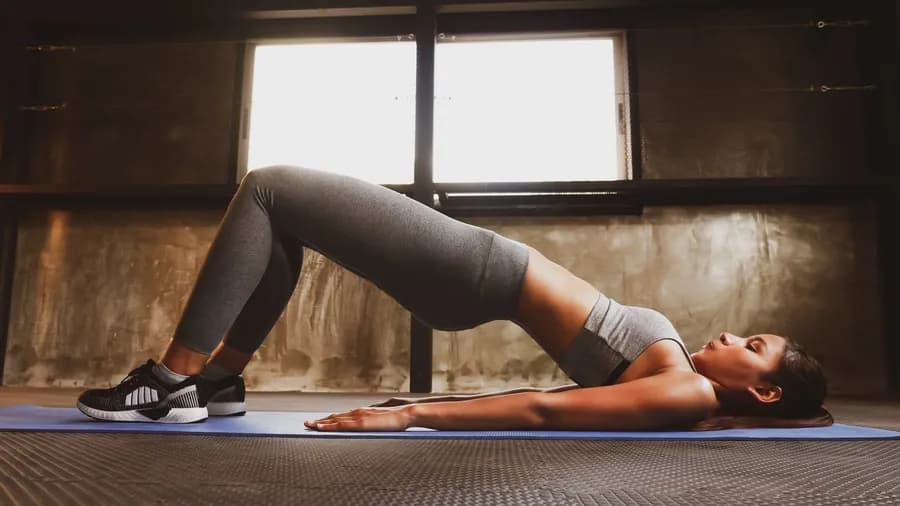
Glute Bridge — 3×15 + 2s Hold · Glutes · Posterior Chain
The most beginner-accessible posterior chain exercise — lying on back, feet flat, drive hips upward. Activates the glutes and hamstrings that desk work deactivates. Essential complement to squats for complete lower body development.
Inverted Row (Under Table) — 3×10 · Back · Upper Body Balance
Lie under a sturdy table, grip the edge, and row the chest up. The most beginner-accessible upper body pulling exercise — the essential complement to push-ups for balanced upper body development. Basic calisthenics workout note: every beginners programme should include both a push and a pull exercise.
Superman Hold — 3×10 + 2s Hold · Back · Core Complement
Lying face down, raise arms and legs simultaneously. The essential posterior chain exercise for beginners — strengthening the erector spinae and multifidus that support the spine in all other exercises and daily activities.
Common Mistakes to Avoid in Beginner Calisthenics
- Comparing to Advanced Practitioners — Watching calisthenics videos of advanced skills (muscle-ups, handstands) and feeling discouraged by the gap — abandoning a beginner programme that is actually producing results. Fix: every advanced calisthenics practitioner was once doing knee push-ups and 20-second planks — track only your own progress week by week, since the beginner phase is where the most rapid development occurs.
- No Progressive Overload — Doing 3 sets of 10 push-ups at the same difficulty for months — the most common reason beginner calisthenics produces frustration rather than results. Fix: every 2 weeks, increase either reps, sets, hold duration, or progress to a harder variation — if 3×10 is easy, do 3×12 or add a 3-second descent, since consistent challenge is the driver of continued development.
- Too Many Rest Days — Training once or twice per week does not provide sufficient stimulus for the consistent adaptation that makes beginner calisthenics rewarding. Fix: 3 days per week minimum for beginners, with rest days between sessions — daily 20-minute sessions at moderate intensity are even more effective for building the habit and neuromuscular learning that drives beginner progress.
Who Should Try Calisthenics for Beginners?
- Complete Beginners with Zero Fitness Background — The wall push-up, air squat, and forearm plank require no fitness, flexibility, or strength to begin. These three exercises alone provide sufficient stimulus for 6–8 weeks of initial development.
- Women Starting Strength Training — Beginner calisthenics is the ideal first strength training approach for women — building lean, defined strength without the intimidation of a gym environment or the confusion of equipment.
- Older Adults Building Functional Strength — All beginner calisthenics exercises have age-appropriate modifications. The functional strength built through calisthenics (squats = sitting and standing, push-ups = pushing and falling protection) directly improves daily independence. Medical clearance recommended for those with cardiovascular conditions.
- Working Professionals with No Time for the Gym — 30 minutes of calisthenics for beginners at home produces the same muscle development as gym sessions when progressive overload is applied. Zero commute, zero membership, complete flexibility.
Starting calisthenics is the easy part; staying on a plan long enough for your body to actually respond is where most beginners lose the thread. The exercises in this guide work best inside a programme that tells you exactly what comes next, week after week, instead of leaving you to guess. Strong Everyday offers exactly that kind of guided path for anyone just starting their bodyweight training.
Frequently Asked Questions
Related Articles
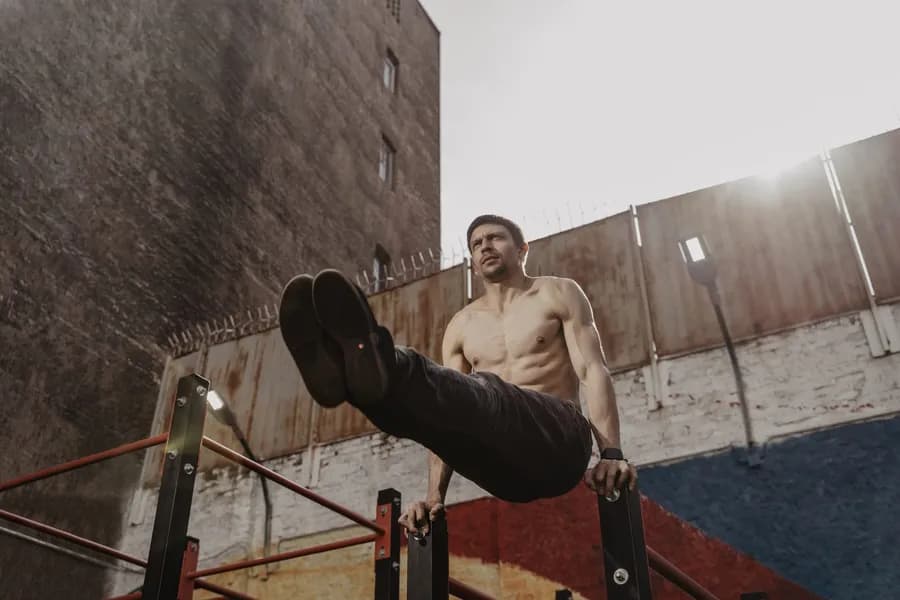
What is Calisthenics? Types, Exercises and Benefits Explained
From the Greek words for beautiful and strength, calisthenics uses only bodyweight to develop strength, flexibility, and physical capability. See the types, exercises, and benefits.
What is a Calisthenics Workout? the Complete Beginner's Guide
Bodyweight resistance training, rather than external weights or machines, develops strength, endurance, coordination, and body control. See the complete beginner's guide.

Calisthenics Body vs Gym Body: Which Training Produces Better Results?
Calisthenics produces a lean, functional, skill-based physique with extraordinary body control; gym training gives more direct control over muscle size and mass. See the key differences.
How to Build Body at Home: the Complete No-Equipment Muscle Building Guide
The best available workout is the one performed daily, not the theoretically best programme that requires a commute and a fee. See the complete no-equipment muscle building guide.
Full Body Workout at Home Without Equipment: 30-Minute Daily Plan
This 30-minute daily plan covers all major muscle groups using bodyweight only, producing a complete training stimulus in the time most people spend commuting to a gym. See the full plan.