
How to Build Body at Home: the Complete No-Equipment Muscle Building Guide
The best available workout is the one performed daily, not the theoretically best programme that requires a commute and a fee. See the complete no-equipment muscle building guide.
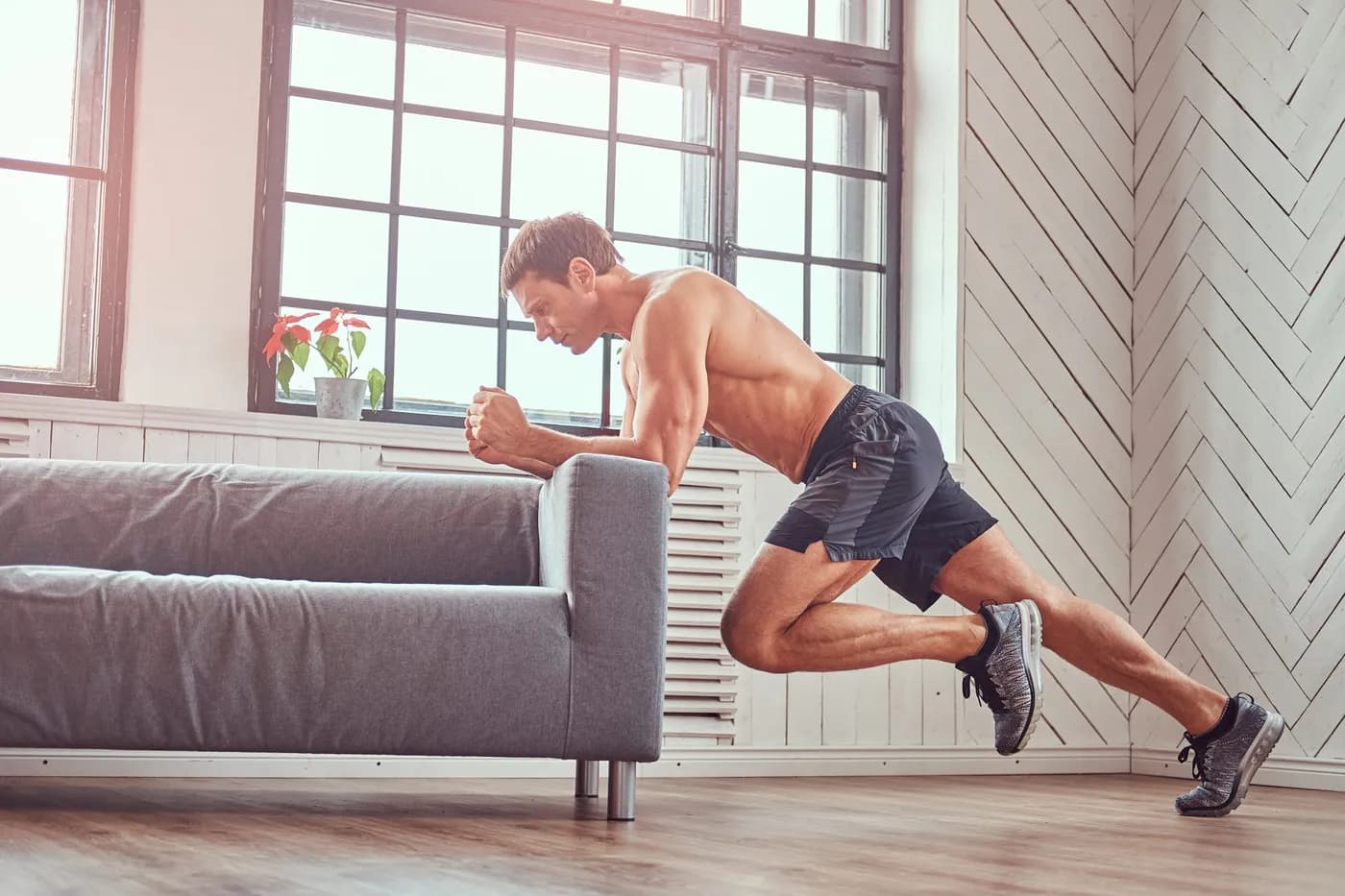
Key Takeaways
- Slowing the eccentric to 4-5 seconds replicates the mechanical tension of barbell training.
- Research confirms high-effort bodyweight sets near failure match gym-based muscle hypertrophy.
- Push-up, pull-up, squat, and plank variations cover every major muscle group without equipment.
- Daily 30-minute home training outperforms twice-weekly gym sessions on every measured metric.
- The friction of driving, parking, and changing at a gym is why memberships average once-weekly use.
- Progressions like archer push-ups and one-arm push-ups replace external load entirely.
Building a strong, muscular body at home — without a gym membership, without expensive equipment and without hours of daily training — is not only possible but, for many practitioners, more effective than gym-based training for one simple reason: consistency. The best available workout is the one performed daily, not the best theoretical programme that requires a commute, a fee and a schedule alignment to execute. This guide covers everything needed to understand how to build body at home, how to build chest muscles at home, how to start building muscle at home from zero, and how to build muscle without equipment through progressive bodyweight training that produces the same hypertrophic stimulus as gym-based resistance training when applied with the correct principles.
Does Home Training Really Build Muscle? Here is How
Progressive Overload at Home Produces the Same Hypertrophic Signal as Weights
The primary driver of muscle building is progressive overload — consistently challenging muscles beyond their current capacity. This principle applies equally to bodyweight training as to weighted gym training. Slowing the lowering phase (4-5 second eccentric), reducing rest periods, increasing repetitions and progressing to more demanding variations (standard push-up → archer push-up → one-arm push-up) produces the identical mechanical tension and metabolic stress that barbell and dumbbell training uses. Research confirms that high-effort bodyweight training produces comparable muscle hypertrophy to equivalent-load gym-based training when the effort is near failure.
Research confirms that high-effort bodyweight training produces comparable muscle hypertrophy to equivalent-load gym training when sets are taken near failure — establishing how to build body at home as a physiologically equivalent approach to gym-based muscle building.
No Equipment Required for Complete Muscular Development
How to build muscle without equipment: push-up variations cover the chest, triceps and anterior shoulders comprehensively; pull-up and row variations develop the back and biceps; squat and lunge progressions develop the lower body; plank and core variations develop the trunk. The complete muscle-building stimulus for every major muscle group is available from bodyweight exercises alone — the gym adds load convenience, not a physiologically irreplaceable stimulus.
Consistency from Home Outperforms Inconsistent Gym Training
The 15 minutes between the decision to train and beginning the first set at a gym — driving, parking, changing, finding equipment — is the primary reason gym memberships are used an average of once per week despite aspirational daily intent. How to start building muscle at home removes all friction: the training space is always available, always free and always 0 minutes away. Daily 30-minute home training outperforms twice-weekly gym training across every available muscle-building metric that research has measured.
Compound Bodyweight Movements Maximise Hormonal Response
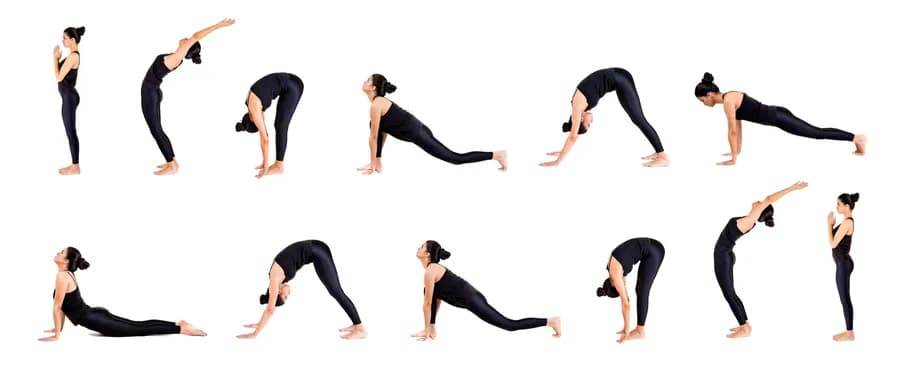
The compound movements available at home — Surya Namaskar, push-up to squat supersets, burpees, dynamic flows — load multiple muscle groups simultaneously and produce the testosterone and growth hormone elevation that large-muscle compound training drives. This systemic hormonal response amplifies the local muscle-building stimulus of each individual exercise, accelerating the body-building results that isolation exercises alone cannot produce.
How to Get Started Building Body at Home
What You Need to Begin
A yoga mat (approximately Rs.500-1500), 2-3 square metres of clear floor space and comfortable clothing. How to build muscle without equipment requires exactly this — nothing else. No dumbbells, no pull-up bar and no resistance bands are needed for the first 2-3 months of progressive bodyweight training. These additions become useful once bodyweight progressions are mastered but are not prerequisites for beginning.
Setting Realistic Goals
How to start building muscle at home with realistic expectations: beginners gain 0.5-1 kg of lean muscle per month in the first 3-6 months — the "beginner gains" phase where the body responds most dramatically to any resistance stimulus. This is 3-6 kg of visible lean muscle in the first training year — a transformation that changes body composition fundamentally when combined with adequate protein intake. Set this as the 6-month goal and measure monthly progress through circumference measurements and photographic comparison rather than scale weight alone.
Start with the Basics
How to build body at home starting point: 3 x 10 push-ups, 3 x 15 squats, 3 x 10 lunges each side, 3 x 20-second plank. Perform this 4 times per week. Add one repetition per set per week. Within 8-12 weeks this baseline produces the first visible muscle development — the foundation from which all subsequent home training progressions build. Prioritise correct form and a 3-second lowering phase over rapid repetition counts in the first 4 weeks.
Best Exercises to Build Body at Home

Push-Up — Chest, Triceps, Shoulders — 3 X 10-20 Reps
The foundational how to build chest muscles at home exercise — developing the pectoralis major, triceps brachii and anterior deltoid through the same horizontal pressing pattern as the bench press. Performed with a 3-4 second lowering phase and full range (chest to floor), push-ups produce genuine pectoral and triceps hypertrophy comparable to equivalent-effort bench press training. Progress: standard → wide grip (more pec) → diamond (more triceps) → archer → elevated feet (upper chest). Sets: 3 x 10-20 near failure. See also: how-to-do-knee-push-ups
Bodyweight Squat — Quadriceps, Glutes, Hamstrings — 3 X 15-25 Reps
The most important lower body exercise for how to build body at home — simultaneously loading the three largest lower body muscle groups that together comprise approximately 45% of total muscle mass. Squat variations provide the progressive overload: bodyweight → slow eccentric (5 seconds) → pause squat (3 sec bottom) → jump squat → Bulgarian split squat → pistol squat. Sets: 3 x 15-25 near failure with 4-second eccentric. See also: surya-namaskara
Pike Push-Up — Shoulders, Upper Chest — 3 X 10-15 Reps
Hips elevated in an inverted V, lowering the head toward the floor between the hands — the overhead pressing movement that develops the lateral and anterior deltoid as primary movers, producing the shoulder muscle development that standard push-ups underload. The most accessible available how to build muscle without equipment shoulder exercise before handstand push-up strength is established. See also: how-to-do-wall-push-ups
Surya Namaskar — Full Body Compound — 10-20 Rounds Daily
The 12-position sequential yoga flow that develops the chest, shoulders, triceps, back, core, hip flexors and legs in a single flowing sequence — the most comprehensive available single how to build body at home exercise producing both the muscle-building stimulus and the cardiovascular training that body composition transformation requires simultaneously. 20 vigorous rounds: 15-20 minutes, 200-300 kcal, full-body muscle activation. See also: yoga-for-beginners
Glute Bridge — Glutes, Hamstrings, Core — 3 X 20 Reps
Lying supine with knees bent, drive the hips to full extension — the primary glute and hamstring development exercise available without equipment. Progress: bilateral → single-leg → elevated single-leg → resistance band above knees. Among the most overlooked available home muscle-building exercises despite producing the gluteal development that both aesthetics and lower limb injury prevention most require. Sets: 3 x 20 with 2-second peak contraction. See also: resistance-exercises
Diamond Push-Up — Triceps, Inner Chest — 3 X 8-12 Reps
Hands forming a diamond beneath the sternum — the highest available triceps EMG activation in any bodyweight pressing exercise, producing the triceps development that gives the upper arm its defined shape. The most specific how to build chest muscles at home inner chest and arm exercise. Sets: 3 x 8-12 near failure. See also: how-to-do-diamond-push-ups
Plank Shoulder Tap — Core, Shoulders, Balance — 3 X 20 Reps (10 Each Side)
In plank position, tap each hand to the opposite shoulder alternately while maintaining the hips level — the anti-rotation core exercise that develops the deep stabilisers essential for all compound pressing and squatting movements. The core foundation that makes every other how to build body at home exercise more effective. Sets: 3 x 20 taps (10 each side).
Common Mistakes to Avoid
- Training Without Progressive Overload — Performing the same push-ups and squats at the same difficulty indefinitely removes the progressive challenge that signals muscle to grow. Without progressive overload — added reps, slower tempo, harder variations — the body adapts in weeks and stops building. Correction: add one difficulty element per week, whether an extra repetition, a slower eccentric, or a harder variation. Track your sessions on paper to make progression intentional rather than accidental.
- Insufficient Protein Intake — How to build body at home requires adequate protein to provide the amino acids for muscle protein synthesis — the biochemical process that converts training stimulus into actual muscle tissue. Most adults eating typical Indian diets consume 0.6-0.8 g of protein per kilogram of body weight daily — half the 1.4-1.6 g/kg that muscle building research supports. Correction: include a significant protein source at every meal: dal, paneer, curd, eggs, chicken or legumes.
- Skipping the Lower Body — Focusing entirely on how to build chest muscles at home and arms while neglecting squats, lunges and glute work produces the proportional imbalance that undermines both aesthetics and the systemic hormonal response that leg training drives. Research confirms that compound leg training produces the greatest whole-body testosterone and growth hormone elevation of any resistance exercise category — benefiting upper body development even when the upper body is trained separately. Correction: train the lower body at minimum twice weekly.
- Inconsistent Practice — Missing Multiple Days per Week — Muscle building requires a minimum frequency of 2 sessions per muscle group per week to maintain the muscle protein synthesis elevation that accumulates into visible hypertrophy. Missing 2-3 sessions per week reduces training frequency to insufficient levels for consistent progress. Correction: commit to daily 30-minute sessions rather than longer, less frequent sessions — the daily habit is more achievable and more effective than the 60-minute three-times-weekly schedule that most practitioners fail to maintain.
Who Should Try Home Body Building?
- Complete Beginners to Strength Training — Home training is the ideal starting point for beginners — the social comfort of private practice removes the intimidation of gym environments, the zero-commute removes the scheduling barrier, and bodyweight training at the beginner level produces the most dramatic available muscle-building results (beginner gains) from the simplest available exercises. Habuild's daily sessions provide the live instruction that prevents the form errors that beginners naturally develop without feedback.
- Women Seeking Lean Muscle Without Bulk — How to build body at home for women: bodyweight training specifically produces the lean, defined muscle appearance without the mass that heavy barbell training with high caloric surplus creates. Women's lower testosterone levels make bodyweight training the most physiologically appropriate available approach for the lean-defined physique goal most female practitioners seek. Habuild's programme is specifically designed for the female body composition goals that bodyweight training naturally supports.
- Older Adults Maintaining Muscle Mass and Function — After age 30, sedentary adults lose approximately 0.5 kg of muscle per year — a progressive decline that accelerates after 50 and directly determines the functional independence that quality of life in later decades requires. Home bodyweight training is the most accessible available intervention for this age-related muscle loss, with chair-assisted modifications making every exercise accessible regardless of starting fitness level. Consult a physician before beginning strength training if any cardiovascular or musculoskeletal conditions are present.
- Working Professionals with No Gym Time — The most common available training population for home body building — those who genuinely cannot allocate the 60-90 minutes that gym attendance requires but can consistently commit 30 minutes from home. Habuild's 6:00 AM and 7:00 AM live sessions are specifically designed for the pre-work window that working professionals identify as their most reliably available daily training time.
Build a Stronger Body at Home with a Routine That Actually Works
Building your body at home produces the same results as gym training — with daily guidance, correct technique and the structured progressive overload that Habuild's live sessions provide.
- Daily live guided strength and yoga sessions — 45 minutes, 6 days a week
- Beginner to advanced progression built in
- No equipment required — practice from home
- Expert live guidance for correct form every session
- Community of 1.5 Crore+ members for daily accountability
The consistency this guide points to as home training's real advantage only pays off when there's a plan behind it — otherwise consistency just means repeating the same workout without moving forward. A structured programme replaces that guesswork with a clear sequence of sessions designed to build on what came before. Strong Everyday gives you exactly that framework for building muscle at home, no equipment required.
Frequently Asked Questions
Related Articles
Full Body Workout at Home Without Equipment: 30-Minute Daily Plan
This 30-minute daily plan covers all major muscle groups using bodyweight only, producing a complete training stimulus in the time most people spend commuting to a gym. See the full plan.
Calisthenics for Beginners: the Complete Starter Workout Plan
Your own bodyweight provides all the resistance needed for significant strength and muscle development in the first year of training — no gym, no weights required. See the complete starter workout plan.
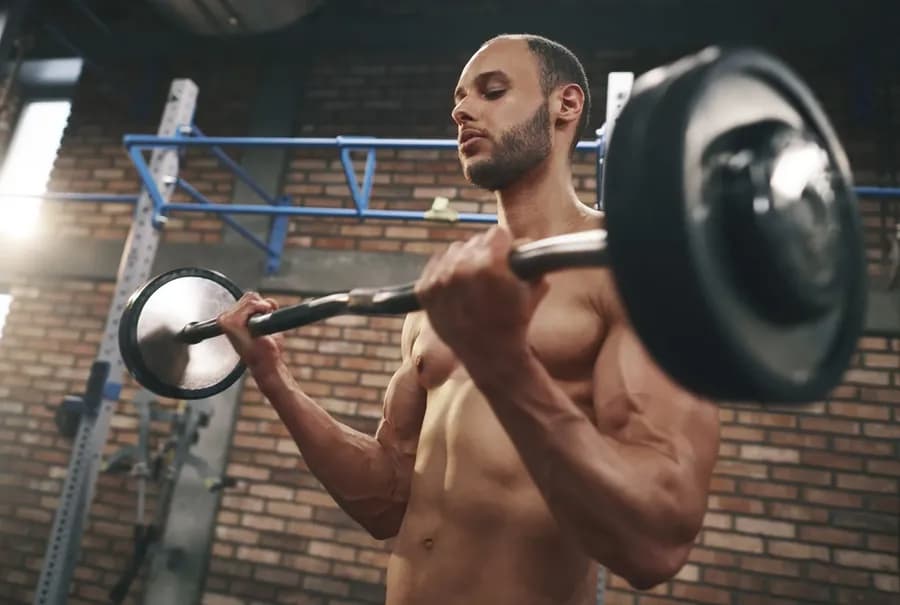
How to Increase Muscle Mass: a Practical Home Training Guide
Progressive overload, adequate protein, and proper recovery working together are what actually build muscle, whether training with bodyweight or dumbbells. See the practical home training guide.
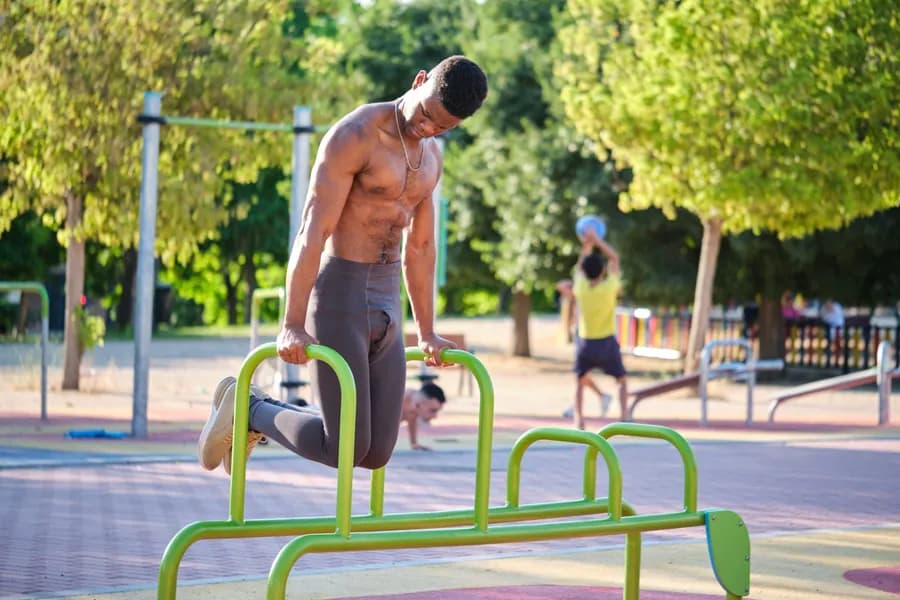
What is a Calisthenics Workout? the Complete Beginner's Guide
Bodyweight resistance training, rather than external weights or machines, develops strength, endurance, coordination, and body control. See the complete beginner's guide.
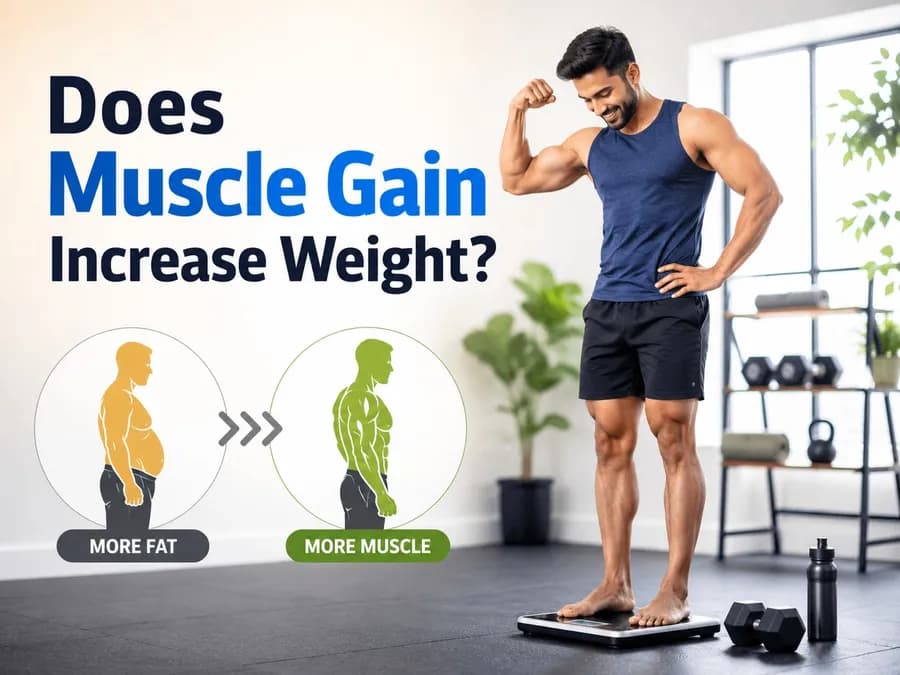
Does Muscle Gain Increase Weight? What the Scale is Not Telling You
Muscle is roughly 18% denser than fat by volume, so a given weight of muscle takes up less space — the scale can rise, stay flat, or fall while the body visibly transforms. See what the scale isn't telling you.