
Can Walking Lower Blood Pressure? What Research Says
Walking is one of the simplest lifestyle changes for blood pressure. Here's what research shows, how much walking helps and how to walk safely if you have high BP.
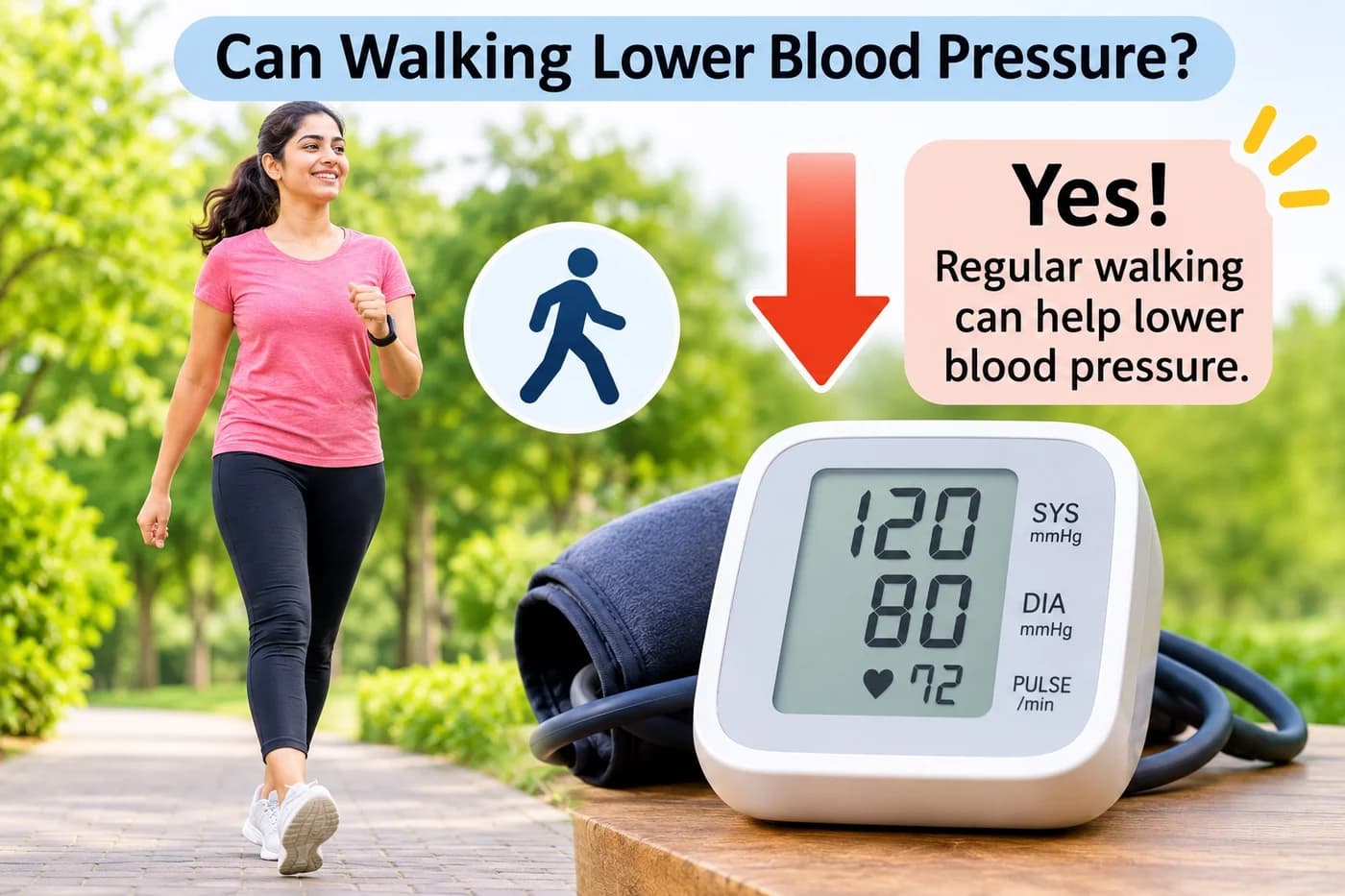
Key Takeaways
- A 2021 Cochrane review found walking lowered systolic blood pressure by about 4 mmHg on average.
- The NHS advises at least 150 minutes of exercise a week to help prevent high blood pressure.
- Brisk walking on most days is an easy way to reach that target.
- Walking supports, but doesn't replace, medicine your doctor has prescribed.
- Check with your doctor before starting if your blood pressure is high or uncontrolled.
Can Walking Really Help Blood Pressure?
Yes, for many people it can. High blood pressure, also called hypertension, is very common, and it often has no symptoms at all. That's what makes it dangerous: over time, it raises the risk of heart attack, stroke and kidney disease without you necessarily feeling unwell. Lifestyle changes, including regular physical activity, are a key part of both preventing and managing it.
Walking is one of the easiest ways to be more active. It needs no equipment or gym membership, it suits most ages and fitness levels, and you can fit it into even a busy day. For many people with high blood pressure, it's the most realistic place to start.
What the Research Shows
Walking and blood pressure
A 2021 Cochrane review, one of the most trusted types of medical evidence, looked at 73 randomised trials involving 5,763 people with high blood pressure. Compared with no exercise, walking programmes lowered systolic blood pressure (the top number) by about 4 mmHg, diastolic blood pressure (the bottom number) by about 1.8 mmHg, and resting heart rate by about 2.8 beats per minute.
A few mmHg may not sound like much. But even small drops in blood pressure, when they happen across a whole population, are linked to fewer heart attacks and strokes. For an individual, walking can be one useful part of a wider plan alongside diet, medicine and other habits.
Other types of exercise
A large 2023 review in the British Journal of Sports Medicine compared 270 trials of different types of exercise. All types lowered blood pressure:
- Aerobic exercise, such as walking and cycling: about 4.5 / 2.5 mmHg lower
- Dynamic resistance training, such as squats and push-ups: about 4.6 / 3.0 mmHg lower
- Combined aerobic and resistance training: about 6.0 / 2.5 mmHg lower
- Isometric exercise, such as wall sits and planks: about 8.2 / 4.0 mmHg lower
So walking works well, and adding some strength or isometric exercise to your routine may bring extra benefit. As always, check with your doctor before starting new types of exercise if you have high blood pressure.
How Much Walking Do You Need?
The NHS advises adults to aim for at least 150 minutes of exercise a week to help prevent high blood pressure. For walking, that could mean 30 minutes of brisk walking on 5 days, three 10-minute brisk walks a day on most days, or 45-minute walks on 3 or 4 days if that suits your week better. Brisk means you're breathing faster and can talk but not sing. Researchers often use about 100 steps a minute as a rough marker of moderate-intensity walking.
A Simple 4-Week Walking Plan
If you're starting from little or no activity, a gradual plan makes walking easier to stick with. In the first week, aim for 10 to 15 minutes of comfortable walking on most days. In the second week, extend that to about 20 minutes and include a few minutes at a brisker pace. By the third week, try 25 minutes, with most of it brisk, and by the fourth week, aim for 30 minutes of brisk walking on at least 5 days. That brings you to the 150 minutes a week the NHS recommends. If any week feels too hard, simply repeat it before moving on.
Tips for Walking With High Blood Pressure
Start and finish each walk with about 5 minutes of easy walking to warm up and cool down, rather than stopping suddenly. If you're not used to exercise, build up gradually, beginning with 10 to 15 minutes and adding a few minutes each week. You don't need to push hard to get the benefit: a moderate, steady pace is enough, and consistency matters more than the occasional long walk.
In Indian summers, avoid the hottest part of the day by walking early in the morning or in the evening, and carry water. Keep taking any medicine your doctor has prescribed, because walking supports your treatment but doesn't replace it. Checking your blood pressure at home can help you and your doctor see how you're doing over time.
Other Habits That Help Blood Pressure
Walking works best alongside other healthy habits. Eating less salt and more fruit and vegetables, keeping a healthy weight, limiting alcohol, not smoking, sleeping well and managing stress all play a part. Together, these changes can have a bigger effect than any single one on its own.
When to Be Careful
Speak to your doctor before starting a walking programme if your blood pressure is very high or not well controlled, if you have heart disease or chest pain, if you've had a stroke, if you take medicines that can cause dizziness, or if you are pregnant.
While walking, stop and get medical help straight away if you feel chest pain, severe breathlessness, dizziness, a severe headache or blurred vision.
Walking With Habuild
Habuild's live sessions include walking along with exercises, yoga and breathing, at a pace you can manage. The Habuild app's Walk Daily habit helps you keep track of your walks. Habuild's classes are general group sessions, not a treatment programme for blood pressure, so follow your doctor's advice.
Editorial Sources
- Lee et al. – Walking for hypertension, Cochrane Database of Systematic Reviews (2021)
- Edwards et al. – Exercise training and resting blood pressure, British Journal of Sports Medicine (2023)
- NHS – High blood pressure: prevention
- WHO – Physical activity fact sheet
Health Disclaimer
This article is for general information only and is not medical advice. Please consult your doctor before starting a new exercise routine, and never stop or change your blood pressure medicine without medical advice.
Frequently Asked Questions
Related Articles
Morning Exercise for High Blood Pressure: 7 Best Workouts to Lower BP Naturally
Consistent low-to-moderate movement — brisk walking, gentle yoga, pranayama, and bodyweight strength without breath-holding — lowers resting blood.

How to Maintain Blood Pressure: 7 Daily Habits That Keep Your Numbers in the Healthy Range
150-300 minutes of weekly moderate aerobic activity plus stress reduction form the foundation of lifestyle-based blood pressure management, per WHO

Yoga Asanas for High Blood Pressure: Steps, Benefits & Precautions
These gentle, restorative postures activate the parasympathetic nervous system — the body’s rest-and-restore mode — rather than raising the heart rate.


10 Benefits of Walking 30 Minutes a Day for Health, Fitness, and Weight Loss
The trick isn't to walk longer, it's to walk daily, at the right pace, with consistency over months. See all 10 benefits for health, fitness, and weight loss.