
10 Different Types of Plank Exercise for Every Level
Discover 10 different types of plank exercise to build core strength at home. Beginner-friendly variations with form tips. Start your 14-day free trial trial today.
Key Takeaways
- Includes the forearm plank, side plank, reverse plank, shoulder tap, hip dip, and single-leg plank.
- Each variation targets the core, obliques, glutes, and shoulders from a different angle.
- Beginners should hold each variation for 15-30 seconds, building to 45-60 seconds over two weeks.
- Master the standard forearm plank before progressing to dynamic or rotational variations.
- Dynamic plank types raise heart rate faster, burning more energy per set than static holds.
- A single variation recruits the abs, obliques, glutes, shoulders, and legs simultaneously.
Different types of plank exercise include the forearm plank, side plank, reverse plank, plank shoulder tap, plank hip dip, high plank, walking plank, plank to downward dog, side plank with rotation, and single-leg plank. Each variation targets your core, obliques, glutes, and shoulders from a different angle, making plank training one of the most effective no-equipment routines available.
If you think plank training is just about holding one static position, you are missing the bigger picture. The different types of plank exercise available — from the beginner-friendly forearm plank to the dynamic side plank with rotation — target your core, shoulders, glutes, and hips from multiple angles. Whether you are new to fitness or looking to challenge yourself with progressive variations, this guide covers ten effective plank variations, form tips, and who they suit best.
10 Benefits of Adding Plank Variations to Your Workout
- Builds a Stronger, More Stable Core Unlike crunches, planks engage your entire core — including the deep stabilising muscles around your spine. Regular plank training may gradually ease lower-back discomfort when practised consistently alongside good posture habits.
- Improves Posture and Spinal Alignment Planks train the muscles that hold your spine upright throughout the day. People who sit at desks for long hours often notice improved sitting posture after a few weeks of consistent plank practice. You can explore the full benefits of plank exercise to understand why this movement is so effective.
- Engages Multiple Muscle Groups at Once A single plank variation recruits your abs, obliques, glutes, shoulders, and legs simultaneously — making it one of the most time-efficient exercises in any home workout plan.
- Supports Fat Loss Through Muscle Activation Holding and moving through plank variations keeps your metabolism active. Dynamic plank types especially raise heart rate and burn more energy per set.
- No Equipment Needed Every plank variation in this guide requires zero equipment. A mat and a few square feet of floor space are all you need — making planks ideal for home training. Pairing plank work with broader core strength exercises creates a well-rounded foundation.
How to Get Started with Different Types of Plank Workout
What You Need to Begin
You need a yoga mat or a non-slip surface, comfortable clothing, and about 10–15 minutes per day. No weights, no bars, no gym membership. Start with two to three variations per session and build from there.
Setting Realistic Goals
Beginners should aim to hold each variation for 15–30 seconds per set and gradually increase to 45–60 seconds over two to three weeks. Chasing a 3-minute hold on day one usually leads to form breakdown and wasted effort. Consistency over intensity is the principle that creates results.
Start with the Basics
Master the standard forearm plank before progressing to dynamic or rotational variations. Once your hips stop sagging and your lower back stays neutral throughout a 30-second hold, you are ready to layer in complexity.
10 Best Types of Plank Exercises — With Form Guidance
1. Forearm Plank
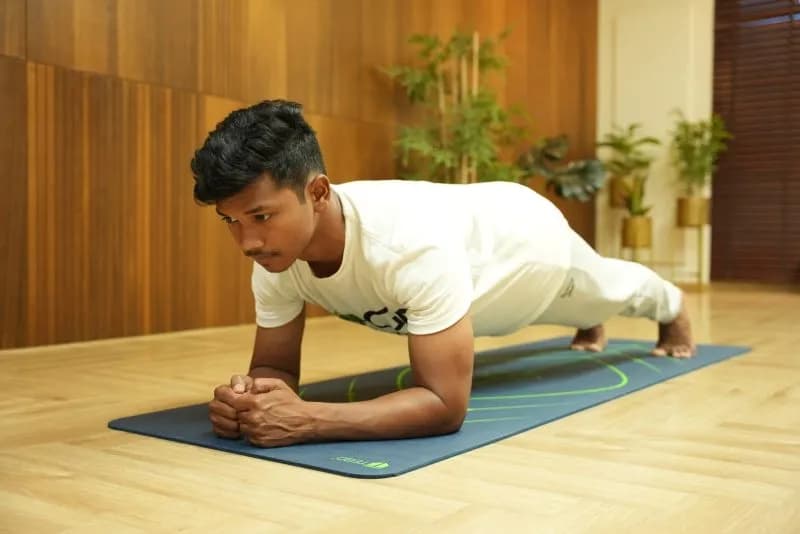
The foundation of all plank variations. Rest on your forearms with elbows under your shoulders, body in a straight line from head to heels. Squeeze your glutes and brace your core. Sets/Reps: 3 × 20–45 sec.
2. High Plank (Straight-Arm Plank)
Hands placed directly under shoulders, arms fully extended, body straight. This variation also loads your wrists and shoulders, improving upper-body stability. Sets/Reps: 3 × 20–40 sec.
3. Side Plank
Rotate onto one forearm or hand, stack your feet, and lift your hips. This variation targets the obliques and the lateral hip stabilisers intensely. Sets/Reps: 3 × 20–30 sec each side.
4. Reverse Plank
Sit with legs extended, place hands behind you and lift your hips until your body forms a straight line. This underused variation stretches the chest while strengthening the posterior chain. Sets/Reps: 3 × 15–25 sec.
5. Plank Shoulder Tap
From a high plank, alternate tapping each shoulder with the opposite hand while preventing hip rotation. This challenges anti-rotation stability — a key functional movement quality. Sets/Reps: 3 × 10 taps per side.
6. Plank Hip Dip
From a forearm plank, rotate your hips side to side, lowering them towards the floor without touching it. This is one of the most effective different types of planks for beginners who want to engage the obliques dynamically. Sets/Reps: 3 × 12–15 dips per side. The core strength plank builds naturally once hip dips feel manageable.
7. Plank to Downward Dog
From a high plank, push back into a downward-facing dog position, then return to plank. This fluid movement combines core activation with hamstring and shoulder mobility. Sets/Reps: 3 × 8–10 reps.
8. Walking Plank
Alternate moving from a forearm plank to a high plank — one arm at a time — and back down. This builds shoulder strength and challenges core stability under movement. Sets/Reps: 3 × 8 reps each direction.
9. Side Plank with Rotation
From a side plank, thread your top arm under your torso and rotate through the thoracic spine, then return. This is an advanced oblique and thoracic mobility drill. Sets/Reps: 3 × 8 reps per side.
10. Single-Leg Plank
From a forearm or high plank, raise one leg off the ground 6–8 inches while keeping hips square. This increases glute activation and challenges balance. Sets/Reps: 3 × 20 sec each leg. Pairing this with glutes strength exercises builds comprehensive lower-body stability.
Common Mistakes to Avoid
- Poor Form Sagging hips, raised bottoms, and flared elbows are the three most common form errors. They shift load away from your core and onto your lower back and shoulders. Film yourself from the side occasionally to self-check alignment.
- Skipping the Warm-Up Jumping straight into plank variations with cold shoulders and wrists increases injury risk. Spend 3–5 minutes on wrist circles, shoulder rolls, and cat-cow before your first set.
- Overtraining Daily plank sessions are fine at low volume, but attempting maximum-intensity plank circuits every day without rest leads to fatigue and stagnation. Alternate challenging sessions with lighter practice days.
- Inconsistency The most common reason people do not see core improvements is not doing too little — it is doing it on some days and skipping it on others. A 10-minute consistent daily practice outperforms a one-hour weekly session every time.
Who Should Try Different Types of Plank Exercise?
- Beginners Planks have one of the lowest barriers to entry in strength training. Start with the forearm plank and hip dip. You need no prior fitness experience — just a mat and willingness to show up daily.
- Women Planks build functional strength without bulk. They tone the waist, strengthen the pelvic floor, and improve posture — benefits that are particularly valuable for women across all age groups. Explore Kegel exercises as a complementary pelvic floor practice.
- Older Adults Planks support spinal stability and balance — two areas that matter most for healthy ageing. Modified versions on the knees reduce load while still engaging the core. Always consult your physician before starting if you have existing spinal conditions.
- Working Professionals You can fit a complete plank circuit into 10–12 minutes. For people with desk jobs and limited time, plank variations offer posture correction and core strengthening without needing to visit a gym.
Build Strength with a Routine That Actually Works
Building a stronger core isn’t about doing random planks on a whim — it’s about following a structured, progressive plan with proper guidance and daily accountability. With the right support, you can train effectively from home and notice real improvements in strength, posture, and endurance over time.
What You Get with Habuild’s Strength Training Program:
- Daily live guided strength and core sessions
- Beginner-to-advanced plank and strength progressions
- No-equipment, home-friendly workouts
- Expert guidance to ensure correct form and prevent injury
- A supportive community to keep you consistent every day
Start Your Strength Training Journey
Related reads: 20 Different Types of Exercises at Home · क्या Exercise Daily करना चाहिए? जानें सही जवाब
Cycling through plank variations builds real core strength only when the difficulty climbs in a deliberate order — jump to the hardest version too soon, or stick with the easiest one too long, and progress stalls either way. That’s exactly the kind of pacing a structured program handles better than trial and error. Habuild’s Strong Everyday program sequences core work like this into a routine that keeps building week after week.
Frequently Asked Questions
Related Articles
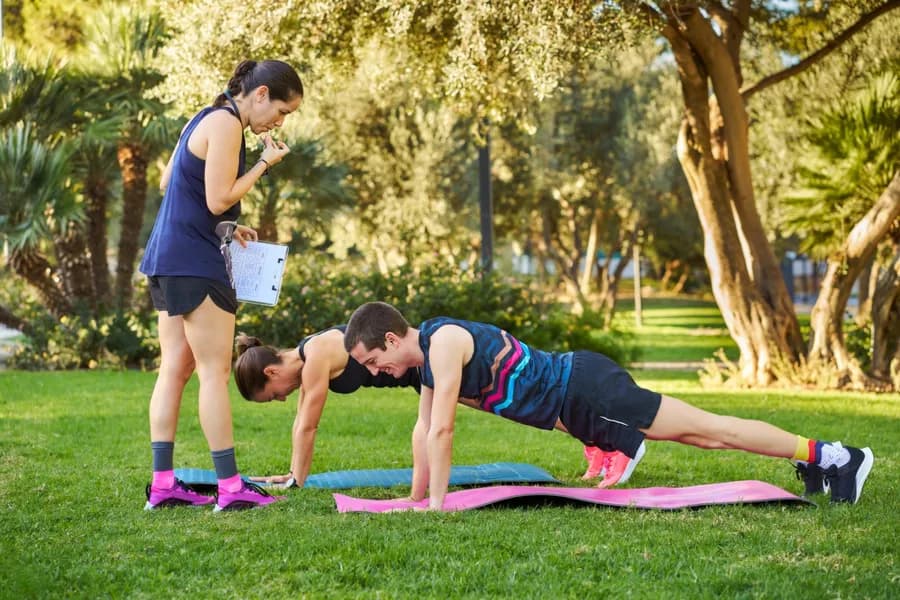
How to Do a Plank Properly: Step-by-Step Guide for Beginners
A correctly done plank activates the core, shoulders, glutes, and back muscles at once, but most people make form errors that eliminate the benefit entirely. See the step-by-step guide.
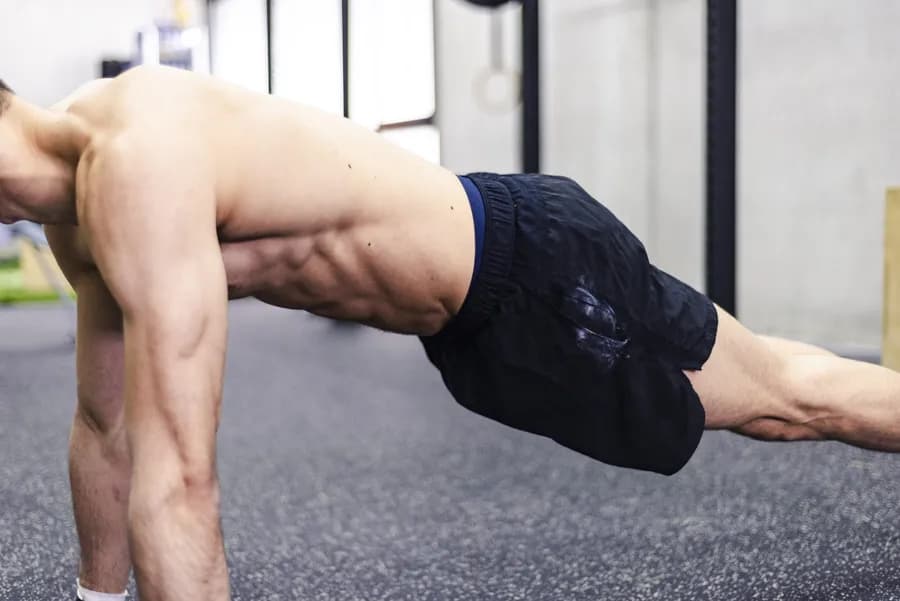
Do Planks Build Abs? the Honest Answer about Plank Effectiveness for Abs Development
Planks build the deep core muscles and isometric strength, but visible abs also require low enough body fat for that muscle to show — which needs full-body fat loss. See what planks actually do.
Types of Planks — 7 Variations to Build Stronger Core, Better Stability, and Lasting Results
Anti-extension, anti-rotation, and anti-lateral flexion variations each progressively build a different aspect of core strength beyond the standard forearm hold. See all 7 variations.
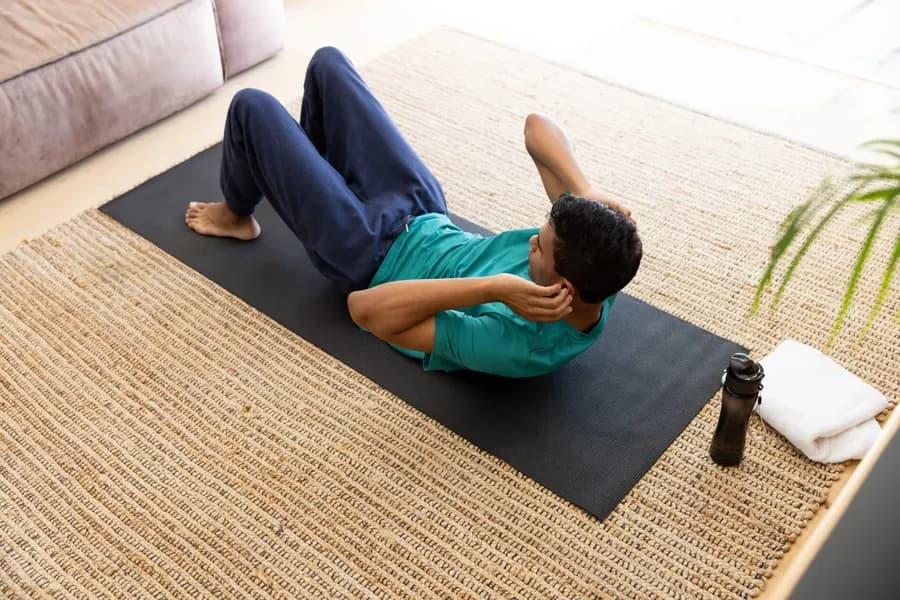
How to Do Crunches: Benefits, Techniques & Mistakes
Learn how to do crunches correctly — proper form, best variations, and common mistakes to avoid. Start building core strength today with expert guidance.
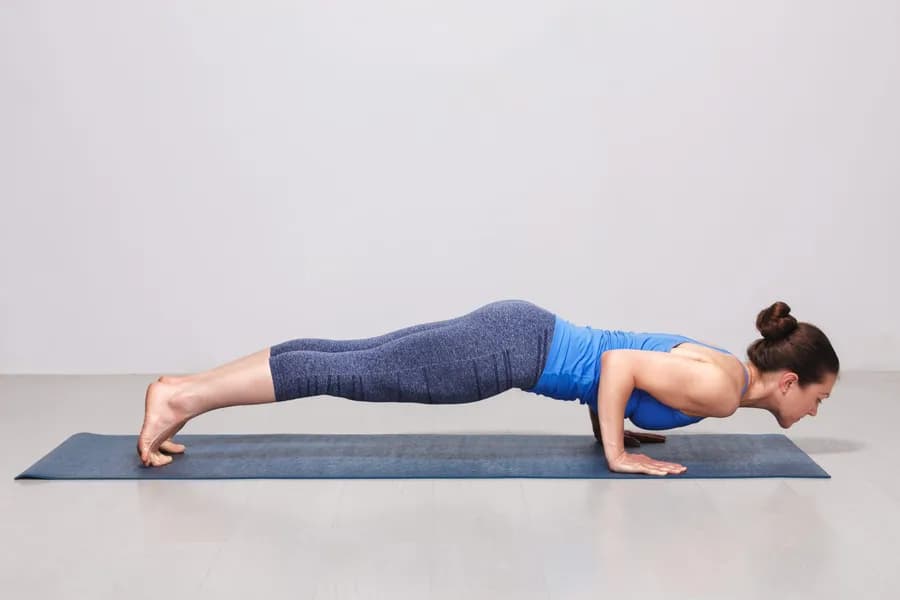
How to Strengthen Core Muscles: Exercises & Tips
Learn how to strengthen core muscles at home with expert exercises, beginner tips, and a structured routine. Start your free 7-day trial with Habuild today.