
How to Build Chest Muscles at Home
A push-up progression — standard, wide-grip, incline, decline, and diamond variations — develops measurable pectoral strength within eight to twelve weeks. See the full plan.
Key Takeaways
- A push-up progression – standard, wide-grip, incline, decline, diamond – builds real strength.
- Measurable pectoral strength and definition typically appear within eight to twelve weeks.
- Weak chest muscles often contribute to rounded shoulders in people who sit for long hours.
- No dumbbells needed at the beginner stage – bodyweight provides enough resistance.
- Training at 6 AM or 10 PM works the same, since there’s no gym schedule to work around.
To build chest muscles at home, you need no gym, no bench press, and no expensive equipment. A consistent push-up progression — standard, wide-grip, incline, decline, and diamond variations — combined with structured recovery and daily effort is enough to develop measurable pectoral strength and definition within eight to twelve weeks.
This guide covers everything: the key benefits of home chest training, how to get started, the best exercises to build your pecs at home, common mistakes that stall progress, and who this style of training works best for.
6 Key Benefits of Building Chest Muscles at Home
- Builds Functional Upper Body Strength Your chest muscles — primarily the pectoralis major and minor — are involved in nearly every pushing movement in daily life. Training them regularly builds practical strength that carries over to carrying groceries, lifting, and maintaining good posture throughout the day.
- Boosts Metabolism and Supports Fat Loss Muscle tissue is metabolically active. The more lean muscle you carry, the more calories your body burns at rest. Consistent chest training, combined with a full-body routine, may gradually support fat loss through structured strength work over time.
- Improves Posture and Reduces Shoulder Strain Weak chest muscles often contribute to rounded shoulders and poor posture, especially in people who sit at a desk for long hours. Strengthening the pecs helps balance the muscles around the shoulder joint, which may ease everyday tension and discomfort.
- Enhances Overall Upper Body Appearance A stronger, more defined chest gives the upper body a balanced, proportionate look. Whether your goal is aesthetic or functional, chest training contributes noticeably to how your upper body looks and feels.
- Supports Bone Density and Joint Health Resistance-based bodyweight training applies controlled stress to bones and connective tissue. Done consistently, this supports healthier bone density and more resilient shoulder and elbow joints — particularly important as you age.
- Zero Equipment, Flexible Scheduling No commute, no wait for equipment, no gym fees. You can train at 6 AM or 10 PM — whatever fits your life. Consistency becomes far easier when the workout is always accessible.
How to Get Started with Chest Training at Home
What You Need to Begin
To get started, you need nothing more than a mat and enough floor space to lie down. A stable chair or a low surface is useful for incline and decline push-up variations. No dumbbells required at the beginner stage — your bodyweight provides more than enough resistance when the technique is right.
If you want to progress past bodyweight work, a pair of light resistance bands can add load without taking up space. That is an optional upgrade, not a prerequisite.
Setting Realistic Goals
Aim to complete three to four training sessions per week for eight consecutive weeks. At the end of that period, you will notice measurable improvements in pressing strength, endurance, and muscle firmness.
Avoid going too hard too fast. Overtraining in the early weeks creates soreness that kills momentum. Steady, progressive effort beats intense-but-sporadic effort every time.
Start with the Basics
Before worrying about advanced variations, get comfortable with a proper standard push-up — hands slightly wider than shoulder-width, body in a straight line from head to heels, chest nearly touching the floor on each rep. Once you can do three sets of fifteen clean reps, introduce variations that target different parts of the chest. If you need a structured starting point, this beginner strength training guide walks you through the foundational principles.
Best Exercises to Build Pecs at Home
Standard Push-Up
The foundation of every home chest routine. Hands slightly wider than your shoulders, core tight, hips level — lower your chest to the floor in a controlled two-to-three second descent. This targets the middle chest most directly. 3 sets of 10–15 reps.
Wide-Grip Push-Up
Place your hands about 1.5 times shoulder-width apart. The increased distance shifts emphasis onto the outer chest, creating the width that gives the pecs a broader appearance. Lower slowly and feel the stretch across the chest at the bottom. 3 sets of 8–12 reps.
Incline Push-Up
Elevate your hands on a chair seat or low table, feet on the floor. This angle shifts work toward the lower chest and is a good regression for beginners who are not yet strong enough for standard floor push-ups. 3 sets of 12–15 reps.
Decline Push-Up
Place your feet on an elevated surface with hands on the floor. This angle targets the upper chest — the portion just below the collarbone that gives the chest a full, high appearance. Keep the core braced throughout to avoid sagging hips. 3 sets of 8–12 reps. You can explore this movement further in a complete chest workout guide.
Diamond Push-Up
Bring both hands together under your chest, forming a diamond shape with index fingers and thumbs. This variation heavily recruits the inner chest and triceps, giving the chest a more defined centre line. Use your knees if needed when starting out. 3 sets of 6–10 reps.
Chest Dip Using Two Chairs
Place two sturdy chairs facing each other, grip the back edges, and support your weight on straight arms. Lean your torso slightly forward as you lower yourself — the forward lean shifts load to the chest rather than purely the triceps. Introduce this after four to six weeks of push-up practice. 3 sets of 6–10 reps.
Isometric Chest Squeeze
Stand upright, press your palms firmly together in front of your chest, and squeeze as hard as possible for eight to ten seconds. Useful on recovery days or as a warm-up activation before a push-up session. 3 sets of 8–10 second holds.
Common Mistakes to Avoid When Training Chest at Home
- Poor Form on Push-Ups The most common error is flaring the elbows out at 90 degrees from the torso. This places significant strain on the shoulder joint and reduces chest activation. Keep elbows at roughly 45 degrees from your body — it feels slightly narrower than expected but is the mechanically correct position for both safety and muscle recruitment.
- Skipping the Warm-Up Going straight into max-effort push-ups is an easy way to strain a pec or tweak a shoulder. Spend three to five minutes on arm circles, shoulder rolls, and a few slow bodyweight reps before your working sets. The warm-up is what allows you to train consistently without setbacks.
- Overtraining Without Recovery Muscles grow during the recovery period after training, not during training itself. Allow 48 hours between sessions targeting the same muscle group. Two to three dedicated chest sessions per week, done well, will outperform daily training every time.
- Inconsistency Over Weeks The gap most people face is not a technique problem — it is a consistency problem. Progress in strength and muscle development is cumulative. Missing a session occasionally is fine. Missing sessions habitually breaks the adaptation cycle entirely. A structured routine with live guidance and community accountability is what separates people who see results from those who do not.
Who Should Try Home Chest Training?
- Beginners Home chest training is one of the most beginner-friendly starting points in fitness. Standard push-ups are scalable — start on your knees, progress to a full push-up, then advance to harder variations. There is no learning curve that requires professional coaching just to get started safely.
- Women A persistent myth suggests that chest training will make women look too bulky. In reality, women have significantly lower testosterone levels than men, making large muscle hypertrophy from bodyweight training alone physiologically unlikely. What chest training does deliver for women is improved posture, functional upper-body strength, and a toned, balanced physique. Learn more about strength training specifically designed for women.
- Older Adults Chest and upper-body strength training supports bone density, shoulder stability, and the ability to perform everyday tasks with ease — particularly important for adults over 50. Start with incline push-ups to reduce load and progress gradually. Consult your doctor before beginning any new exercise programme if you have existing health conditions.
- Working Professionals Long hours at a desk tighten the chest and weaken it simultaneously — rounded shoulders and forward-head posture are the visible result. A 20-minute home chest session three times a week can meaningfully improve both posture and energy levels over time. For professionals who want structured, time-efficient sessions, a focused upper body strength programme offers exactly that.
Build Strength with a Routine That Actually Works
Building a stronger chest is not about doing random push-ups and hoping for the best. It is about following a structured progression, showing up consistently, and having the right guidance so every session moves you forward.
With Habuild’s Strong Everyday programme, you get:
- Daily live-guided strength sessions
- Beginner-to-advanced progression built into the plan
- No-equipment, home-friendly workouts you can do anywhere
- Expert guidance to ensure correct form on every exercise
- A community that keeps you accountable and consistent
Start Your Strength Training Journey
Ready to start? Explore Habuild’s best-rated online classes and experience what consistent, structured training feels like.
Related reads: How to Build Leg Muscles at Home · Chest Workout at Home Without Equipment: Build Real Pectoral Strength
A push-up progression only builds real pectoral strength when each stage is trained consistently before you move to the next; random effort rarely carries you through eight full weeks of change. A structured program can pace that progression and keep you accountable to it in a way a solo routine often can’t. Habuild’s Strong Everyday program guides exactly that kind of chest and upper-body training, built around consistency over guesswork.
Frequently Asked Questions
Related Articles
How to Build Leg Muscles at Home
Squats, lunges, and glute bridges consistently train the quads, hamstrings, glutes, and calves — no gym or dumbbells needed. See the routine to build real leg strength.
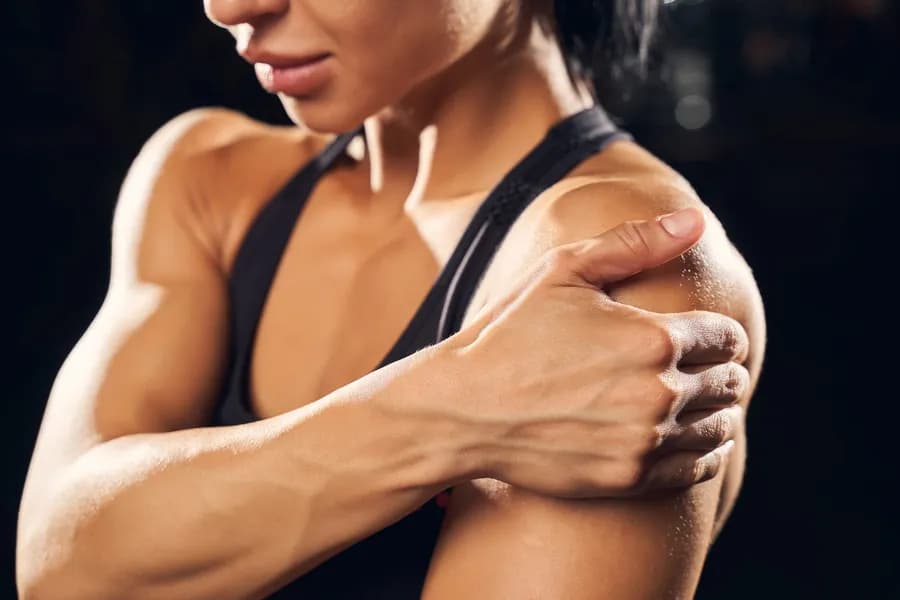
How to Build Shoulder Muscles: Exercises, Tips & a Routine That Works
Targeting all three deltoid heads — front, side, and rear — through pressing, raising, and pulling shows strength gains within four to six weeks. See the full routine.
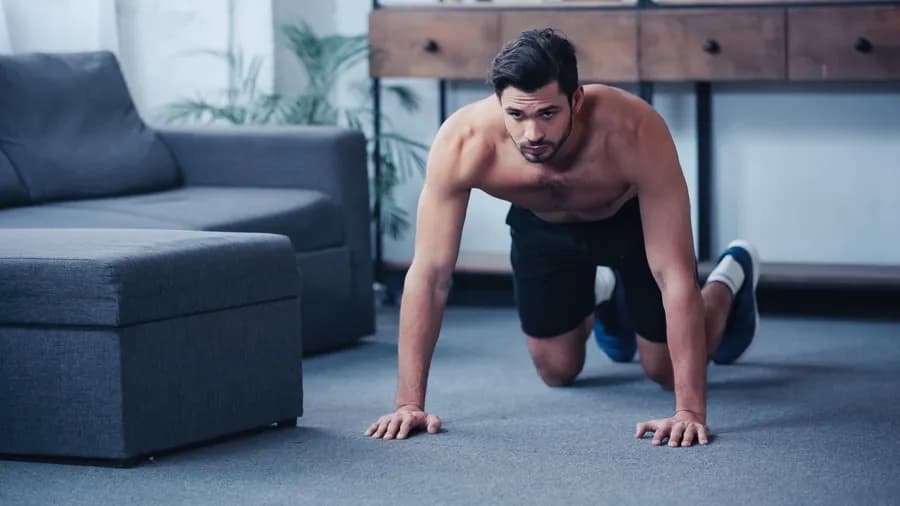
Best Home Exercises for Muscle Gain
Push-ups, squats, planks, and rows can stimulate real muscle growth with controlled form and progressive tension over 8-12 weeks — no gym needed. See the full plan.
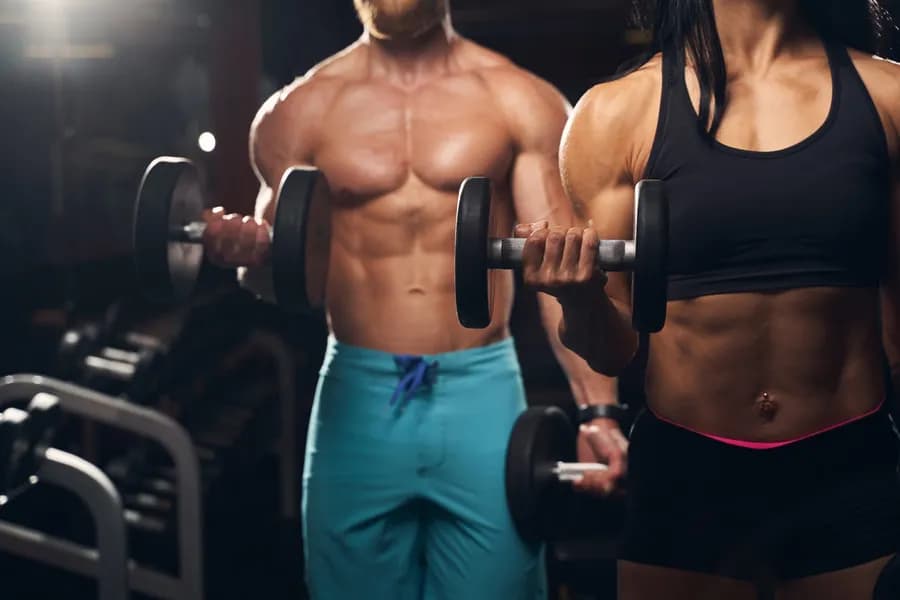
How to Build Trapezius Muscles: Exercises, Tips, and a Routine That Works
Shrugs, face pulls, bent-over rows, and farmer’s carries target all three regions of the trap — noticeable strength and posture gains appear within six to eight weeks. See the full routine.
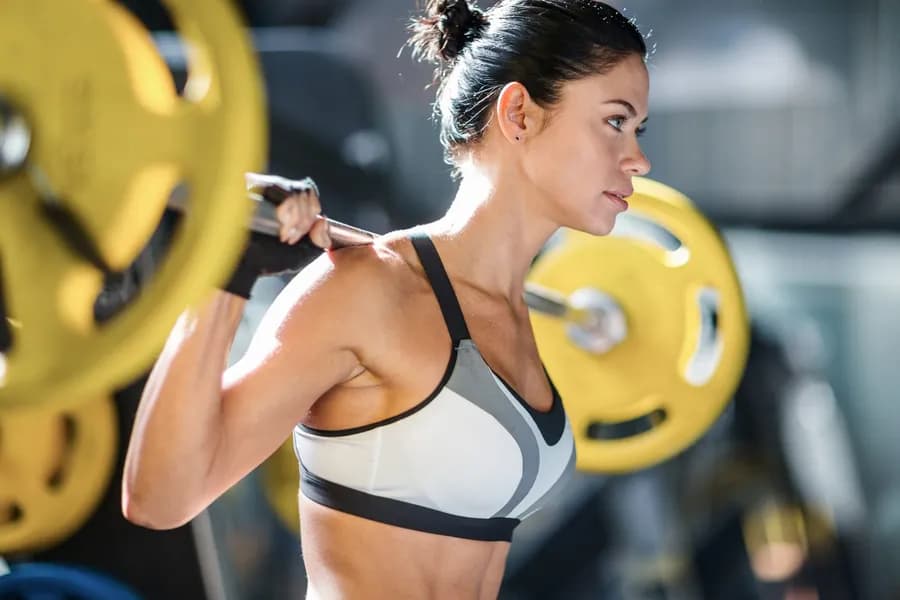
Chest Exercises for Women: Benefits, Best Moves & How to Get Started
A structured chest routine builds upper-body strength and improves posture without adding bulk — visible results within four to six weeks. See the best moves to start with.