
How to Build Shoulder Muscles: Exercises, Tips & a Routine That Works
Targeting all three deltoid heads — front, side, and rear — through pressing, raising, and pulling shows strength gains within four to six weeks. See the full routine.

Key Takeaways
- Targets all three deltoid heads – front, side, and rear – through pressing and raising.
- The shoulder is the body’s most mobile joint, which also makes it the most vulnerable.
- Meaningful strength gains typically show within four to six weeks of 2-3 sessions a week.
- Many beginners over-focus on chest and arms while neglecting shoulders entirely.
- Stronger shoulders take pressure off the neck and trapezius, easing chronic tension there.
Building shoulder muscles requires targeting all three deltoid heads — front, side, and rear — through consistent pressing, raising, and pulling movements. With two to three structured sessions per week, most beginners see meaningful strength gains within four to six weeks and visible muscle definition within eight to twelve weeks.
Learning how to build shoulder muscles is one of the best investments you can make in your overall fitness. Strong shoulders improve your posture, protect your joints, and give your upper body a balanced, capable look. Whether you’re starting from scratch or trying to break a plateau, this guide covers everything — from the best exercises to common mistakes that quietly slow your progress.
10 Benefits of Building Shoulder Muscles
- Improves Posture Weak shoulders are a leading cause of rounded posture, especially in people who sit at desks for long hours. Strengthening the deltoids and surrounding muscles helps pull your shoulders back into proper alignment over time.
- Protects the Shoulder Joint The shoulder is the most mobile joint in the body — which also makes it vulnerable. Stronger muscles around the rotator cuff and shoulder girdle provide natural cushioning and reduce the risk of strains.
- Boosts Upper Body Strength Shoulders are involved in almost every upper body movement — pushing, pulling, lifting overhead. Building them up directly improves performance in exercises like push-ups, rows, and overhead presses.
- Enhances Functional Strength Reaching, carrying, and lifting in daily life all call on your shoulders. Greater shoulder strength means these everyday tasks feel easier and less tiring over time.
- Supports Fat Loss Goals Muscle tissue is metabolically active. Adding lean muscle to your shoulders helps your body expend more energy at rest, which can gradually support fat loss over consistent weeks of training. If this is a specific goal, exploring strength training for fat loss is a great next step.
- Balances Muscle Development Many beginners focus heavily on chest and arms while ignoring shoulders. Balanced development prevents muscle imbalances that can cause discomfort or injury later.
- Increases Shoulder Mobility Structured shoulder training, especially when combined with mobility work, gradually improves your range of motion — making you feel freer and more capable in movement.
- Reduces Neck and Upper Back Tension Stronger, well-conditioned shoulder muscles take pressure off the neck and trapezius area, which often holds chronic tension — particularly in working professionals.
- Builds Confidence and Body Awareness Feeling stronger in your shoulders often translates into better body awareness, improved self-confidence, and a greater sense of control over your physical health.
- Supports Long-Term Athletic Performance Whether you swim, cycle, play cricket, or practice yoga, shoulder strength is foundational. Athletes in virtually every sport benefit from a structured approach to building shoulder strength.
How to Get Started with Building Shoulder Muscles
What You Need to Begin
You don’t need a gym membership or heavy dumbbells to start. Do you wonder then ,how to build shoulder muscles ? Many effective shoulder exercises use only your bodyweight — think push-up variations, pike push-ups, and wall handstands. If you do have access to a pair of light dumbbells or resistance bands, that opens up a wider range of movements. Start with what you have, and progress gradually.
Setting Realistic Goals
Noticeable shoulder development takes consistent effort over several weeks. Aiming to train your shoulders two to three times per week with adequate rest in between is a sustainable starting point. Trying to train every day without recovery will slow your progress and increase injury risk — consistency over intensity is the principle that actually works.
How long does it take to build shoulder muscles? With regular training, most beginners notice meaningful strength improvements in four to six weeks, and visible changes in muscle definition within eight to twelve weeks of consistent practice.
Start with the Basics
Before chasing heavy loads or advanced movements, master the foundational patterns: overhead pressing, lateral raises, and front raises. These three movement families cover all three heads of the deltoid muscle. Starting light and focusing on control — especially at the bottom of each rep — builds both strength and structural integrity in the joint.
Best Exercises to Build Shoulder Muscles
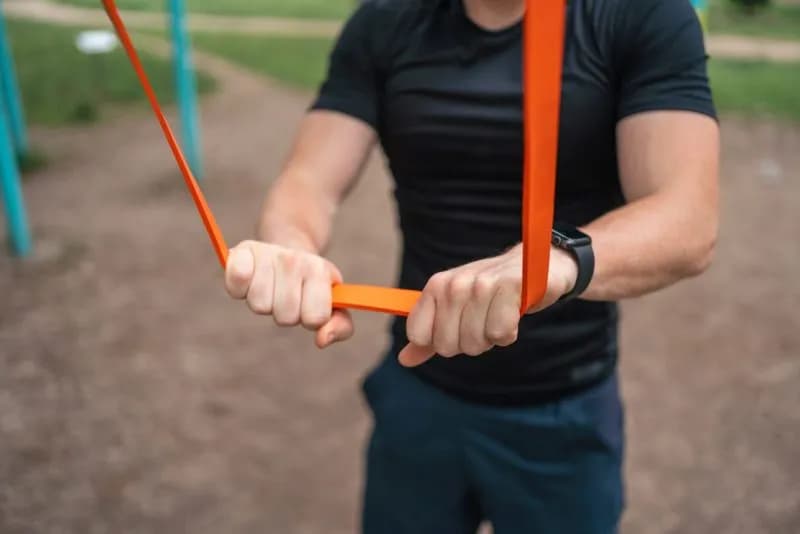
Wondering how to build shoulder muscles effectively? These seven exercises are the most effective for developing well-rounded shoulder strength and muscle. Most can be done without equipment, and all are beginner-friendly when performed with correct form.
Pike Push-Up
Start in a downward-dog position with hips raised high, then lower your head toward the floor and press back up. This bodyweight move directly targets the anterior and medial deltoid. Aim for 3 sets of 8–12 reps. It’s one of the best ways to build shoulder muscles without equipment.
Lateral Raise
With arms at your sides (holding light dumbbells or water bottles), raise both arms out to shoulder height and slowly lower. This isolates the medial deltoid — the muscle that creates shoulder width. Try 3 sets of 12–15 reps, keeping a slight bend in the elbow.
Front Raise
Raise one or both arms forward to shoulder height, then lower with control. Targets the front (anterior) deltoid. This pairs well with lateral raises for complete deltoid development. 3 sets of 10–12 reps per side is a solid starting point.
Overhead Press (Bodyweight or Dumbbell)
Standing or seated, press arms overhead and lower slowly. This is the king of shoulder exercises — it recruits all three deltoid heads plus the triceps and upper traps. Start with a range of motion that feels comfortable and progress gradually. 3 sets of 8–10 reps.
Wall Handstand Hold
Kick up into a handstand against a wall and hold for as long as comfortable. This builds tremendous shoulder stability and pressing strength using pure bodyweight. Even 15–30 second holds done consistently will develop real strength over time.
Band Pull-Apart
Hold a resistance band (or towel) in front of you at shoulder height and pull it apart until your arms are wide. This targets the rear deltoid and rotator cuff — muscles that are critical for shoulder health and often undertrained. 3 sets of 15–20 reps.
Reverse Fly
Hinge forward at the hips with a flat back, arms hanging down, and raise both arms out to the sides in a wide arc. Excellent for the posterior deltoid and upper back. 3 sets of 12 reps. This movement also improves posture by strengthening the muscles that retract the shoulder blades. For more structured programming, a dedicated shoulder workout can help you sequence these movements effectively.
Common Mistakes to Avoid
- Poor Form Using momentum to swing the weight up during lateral raises or front raises removes the load from the shoulder muscles entirely. Slow, controlled reps — especially on the way down — are far more effective than heavier, sloppy reps. If you find yourself rocking or swinging, reduce the weight and focus on the muscle doing the work.
- Skipping Warm-Up The shoulder joint has a wide range of motion and a complex structure. Jumping straight into overhead pressing without warming up with arm circles, band pull-aparts, or light mobility work is a common cause of shoulder discomfort over time. A five-minute warm-up is non-negotiable.
- Overtraining A well-planned strength routine can teach you how to build shoulder muscles while improving mobility and upper-body strength. Shoulders are involved in most upper body exercises — chest work, back work, and arms all recruit the shoulder to varying degrees. Training them directly every single day stacks too much volume on a joint that needs recovery time. Two to three dedicated sessions per week, with rest days in between, is genuinely enough.
- Inconsistency Consistency is key when learning how to build shoulder muscles, as noticeable muscle development takes time and progressive training. This is the most common reason shoulder muscles don’t develop. The body responds to regular, repeated stimulus — not sporadic effort. Building a weekly routine and sticking to it for at least eight weeks is what separates those who see results from those who don’t.
Who Should Try Shoulder Muscle Training?
- Beginners Shoulder training has a very low barrier to entry. Pike push-ups and lateral raises with light resistance are approachable for almost anyone with no prior training experience. Starting simple, focusing on form, and adding volume gradually is the most effective beginner path. Pair shoulder work with a broader strength training for beginners program for the best results.
- Women A common concern is that shoulder training will create a bulky appearance. In reality, most women lack the hormonal profile to gain bulk quickly. What shoulder training does produce is a toned, defined look and significantly better posture — outcomes most people actively want. Moderate weight with moderate to high reps is an ideal approach.
- Older Adults Shoulder strength is closely linked to independence in older adults — from lifting grocery bags to reaching overhead shelves. Strengthening the shoulder muscles can help support the maintenance of muscle mass and joint function as you age. Note: If you have a pre-existing shoulder condition or joint pain, consult your doctor or physiotherapist before starting a shoulder training program.
- Working Professionals Hours spent at a desk, looking at screens, or commuting tend to round the shoulders forward and tighten the chest. Targeted shoulder exercises — particularly rear deltoid and rotator cuff work — help counteract this pattern. Even 15–20 minutes of shoulder work two to three times a week can noticeably improve how you feel by end of day.
Build Shoulder Strength with a Routine That Actually Works
If you’re wondering how to build shoulder muscles at home, start with simple exercises such as lateral raises, shoulder presses, and pike push-ups. Focus on controlled movements and gradually increase the resistance as your strength improves. Building shoulder muscles isn’t about doing random workouts — it’s about consistency, guidance, and following a structured plan. With the right support, you can train effectively from home and see real progress over time.
What You Get with Habuild’s Strong Everyday Program:
- Daily live guided strength and yoga sessions
- Beginner to advanced progression built in
- No-equipment and home-friendly workouts
- Expert guidance to ensure correct form and safe technique
- Community support to help you stay consistent week after week
Start Your Shoulder Training Journey
Enter your details below to get started:
Not sure if strength training is right for you? Explore how full body strength training can complement your shoulder goals with a complete program.
Related reads: How to Build Trapezius Muscles: Exercises, Tips, and a Routine That Works · How to Strengthen Shoulder Muscles: Exercises, Tips, and a Plan That Works
Training all three deltoid heads evenly takes more planning than most people give it — miss one angle consistently and shoulder development tends to stall no matter how hard you push the others. A structured program can rotate pressing, raising, and pulling work so nothing gets left behind. Habuild’s Strong Everyday program offers that kind of guided shoulder and upper-body training, built around the consistency real development requires.
Frequently Asked Questions
Related Articles

How to Build Trapezius Muscles: Exercises, Tips, and a Routine That Works
Shrugs, face pulls, bent-over rows, and farmer’s carries target all three regions of the trap — noticeable strength and posture gains appear within six to eight weeks. See the full routine.

How to Build Chest Muscles at Home
A push-up progression — standard, wide-grip, incline, decline, and diamond variations — develops measurable pectoral strength within eight to twelve weeks. See the full plan.

How to Build Leg Muscles at Home
Squats, lunges, and glute bridges consistently train the quads, hamstrings, glutes, and calves — no gym or dumbbells needed. See the routine to build real leg strength.

How Many Reps to Build Muscle? The Complete Guide to Sets, Reps, and Progression
6 to 12 reps per set is the classic hypertrophy range, but sets, rest periods, and consistency matter just as much. See the full breakdown of reps, sets, and progression.
Best Exercise Routine for Beginners
Squats, push-ups, lunges, and planks done three days a week, with progressive difficulty, need no gym or equipment. See the full beginner routine.