
How to Build Muscle for Women: A Complete Strength Guide
Progressive resistance training — bodyweight, dumbbells, or bands — boosts metabolism and bone density without the bulk most women fear. See how two to four sessions a week deliver results.
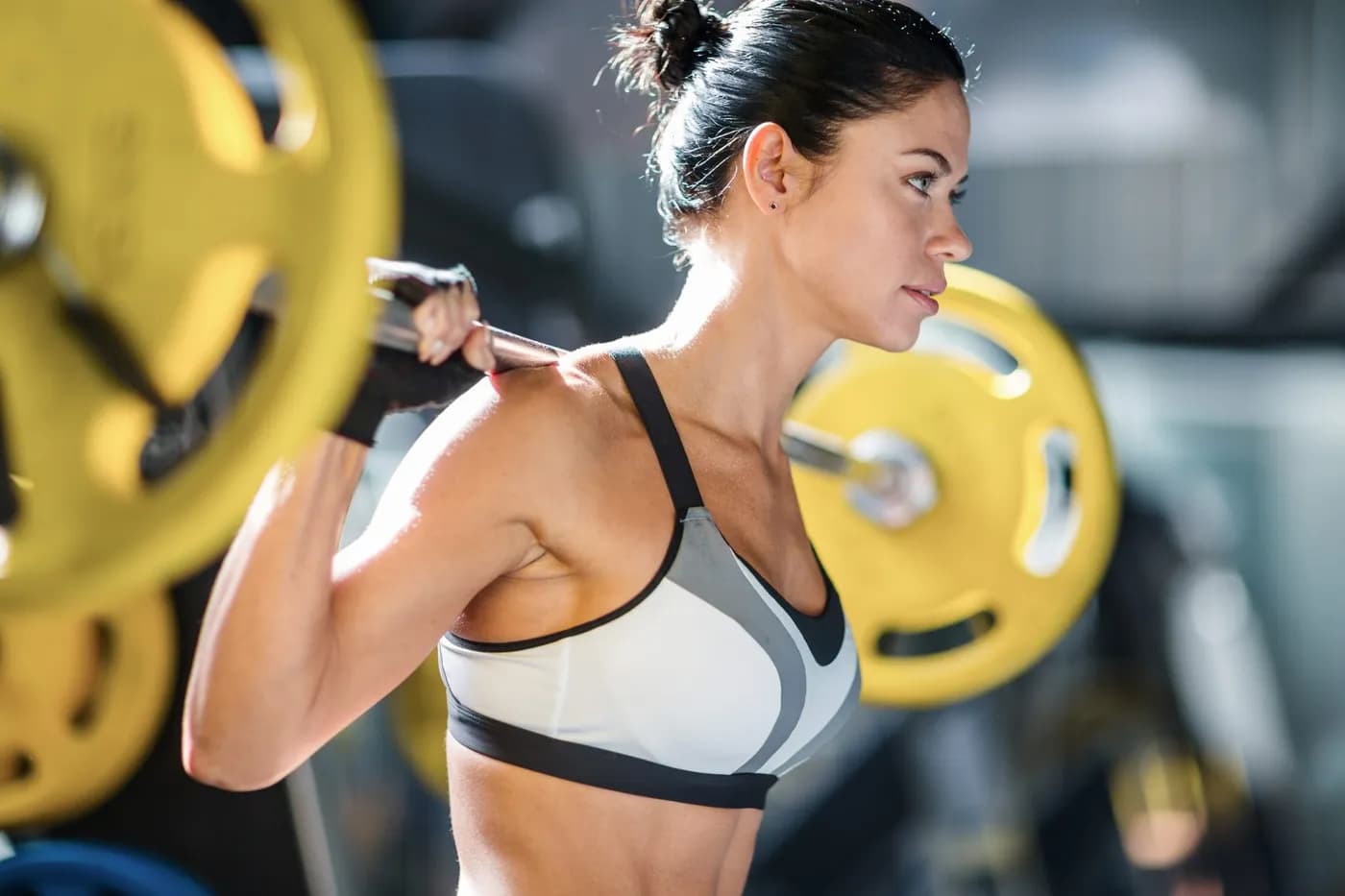
Key Takeaways
- Two to four sessions a week, done consistently, is enough to see real results
- Lower testosterone means the result is lean and toned, not excessive size
- Muscle building and fat reduction often progress together, not competing goals
- A clear 2×2 metre floor space is enough — no gym membership required
- Linked to reduced anxiety and better mood through visible progress
Building muscle as a woman means using progressive resistance training — bodyweight, dumbbells, or bands — to strengthen and define your physique over time. It boosts metabolism, supports bone density, and improves everyday functional strength, all without the bulk most women fear. Two to four sessions a week, done consistently, is enough to see real results.
If you've been wondering how to build muscle for women the right way, you're not alone. Millions of women want to get stronger, feel more capable, and support a healthier metabolism — but most don't know where to begin. This guide covers the real benefits, how to start, the best exercises, and the mistakes that slow most women down.
6 Benefits of Building Muscle as a Woman
- Builds Lean, Toned Muscle Strength training helps women develop defined, functional muscle over time. Women have significantly lower testosterone than men, so the result is a leaner, stronger physique rather than excessive size. Consistent resistance work gradually reshapes how your body looks and moves.
- Boosts Resting Metabolism Muscle tissue burns more calories at rest than fat tissue does. As you build lean muscle through structured training, your body becomes more metabolically active — meaning better energy utilisation throughout the day, even when you're not working out.
- Improves Bone Density Weight-bearing and resistance exercises apply gentle stress to your bones, prompting them to become denser and stronger over time. This is especially important for women, who are at a higher risk of bone loss with age. Regular strength practice may help support long-term skeletal health. (Always consult your doctor if you have a pre-existing bone condition.)
- Enhances Functional Strength Everyday tasks — carrying groceries, climbing stairs, lifting children — become noticeably easier as your strength improves. Strength training for women builds the kind of real-world muscle that makes daily life feel lighter and more manageable.
- Supports Fat Loss Muscle building and fat reduction often go hand in hand. As lean muscle increases and metabolism becomes more active, your body gradually becomes more efficient at managing stored fat — particularly when paired with consistent training and good nutrition habits.
- Strengthens Mental Resilience There is a growing body of evidence linking regular strength training with reduced anxiety, better mood, and improved confidence. Completing a challenging set or progressing to a heavier variation gives a real, measurable sense of achievement.
How to Get Started with Building Muscle
What You Need to Begin
You don't need a gym membership or expensive equipment to start. Bodyweight exercises are highly effective for beginners. As you progress, a pair of light dumbbells or resistance bands can add variety and challenge — but they're optional at the start.
- A clear floor space of at least 2×2 metres
- Comfortable, supportive footwear
- A resistance band or light dumbbells (optional)
- A structured plan you can follow consistently
Setting Realistic Goals
Visible muscle development takes time — typically 8 to 12 weeks of consistent training before you notice meaningful changes. Set process-based goals ("I'll train 3 days this week") rather than outcome-only goals ("I want to look different in 2 weeks"). This mindset shift separates women who stay consistent from those who give up early.
Avoid overtraining. Muscles grow during rest, not during the workout itself. Two to three sessions per week with adequate recovery is more productive than seven sessions with poor form and no rest. How to do strength training at home is a practical starting point if you're new to structured sessions.
Start with the Basics
Compound movements — exercises that work multiple muscle groups at once — give you the most return on your time. Squats, push-ups, lunges, and hip hinges form the foundation of any effective beginner programme. Master these with proper form before adding load or complexity.
Best Exercises for Building Muscle as a Woman
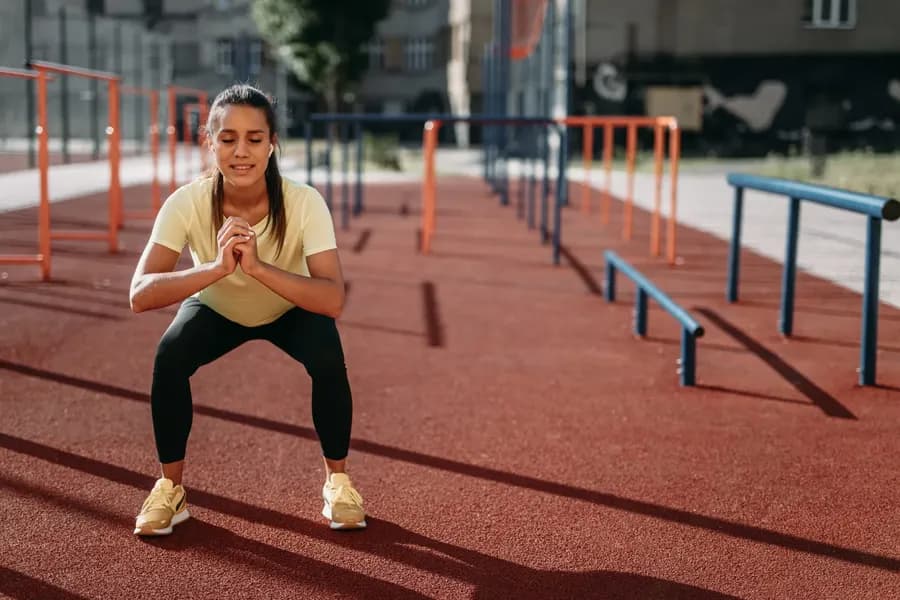
Squats
Squats are the single most effective lower-body exercise for women. They work the quads, hamstrings, glutes, and core simultaneously. Start with bodyweight squats — feet shoulder-width apart, chest tall, knees tracking over toes. Aim for 3 sets of 12–15 reps. Progress to goblet squats with a dumbbell once form is solid.
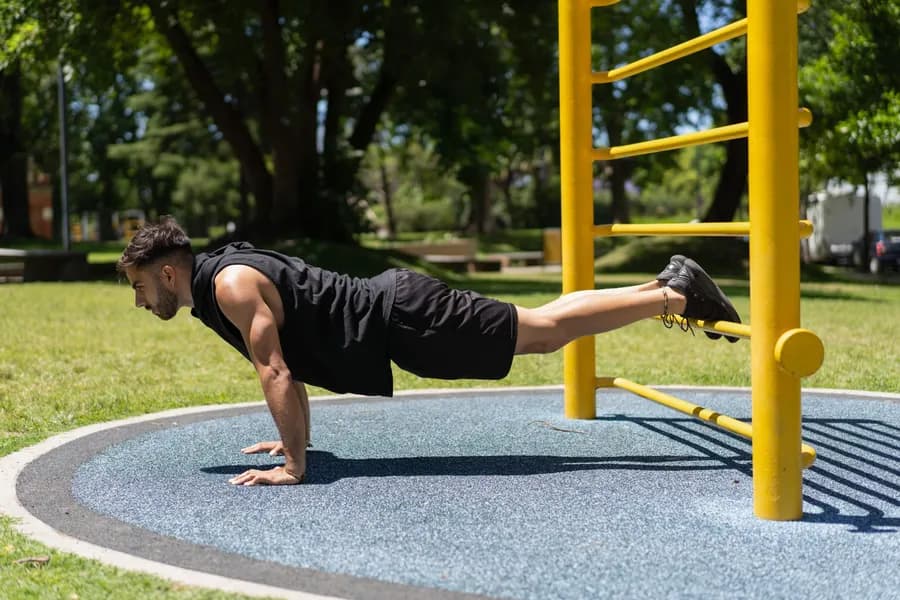
Push-Ups
Push-ups build chest, shoulder, and tricep strength while engaging the core. Begin with knee push-ups if needed, then progress to full push-ups. Focus on keeping your body in a straight line and lowering your chest all the way to the floor. Try 3 sets of 8–12 reps.
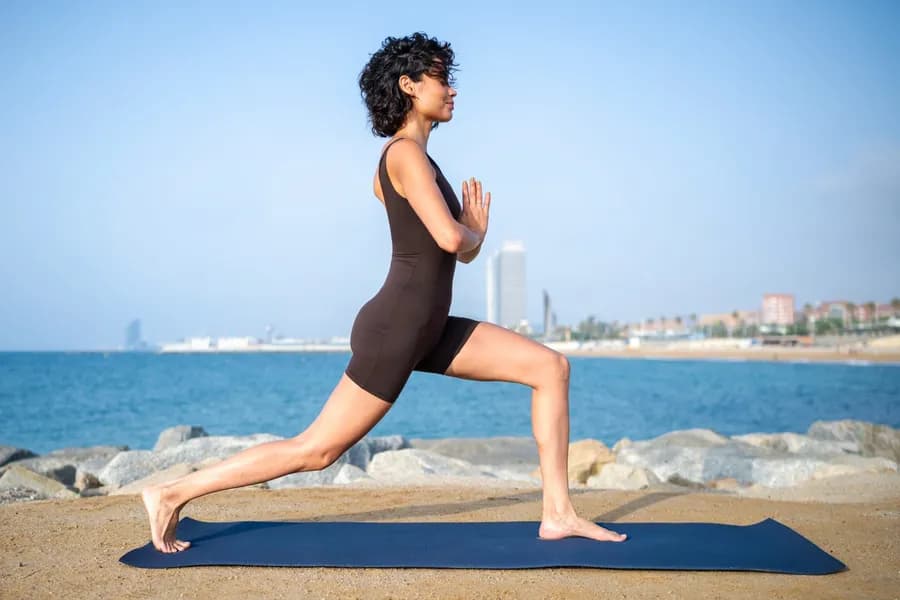
Lunges
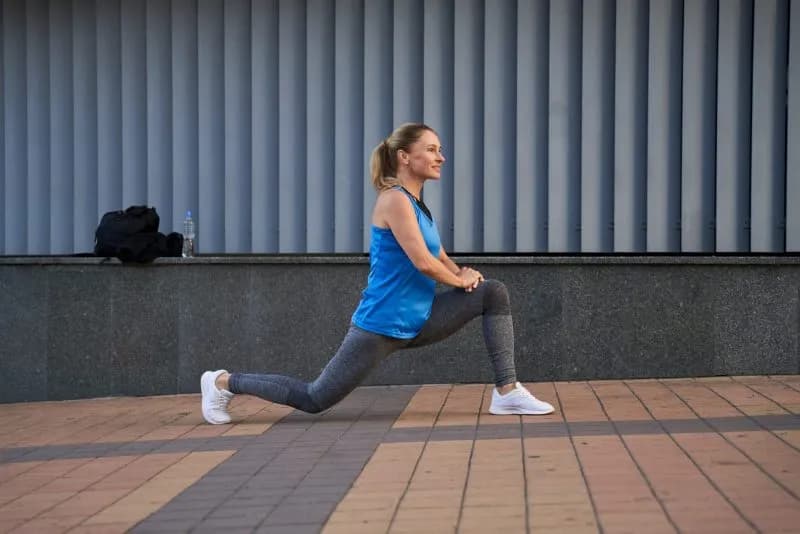
Lunges target the glutes and quads while challenging balance and stability. Reverse lunges are gentler on the knees than forward lunges and are a better starting point for most women. Complete 10 reps per leg for 3 sets.
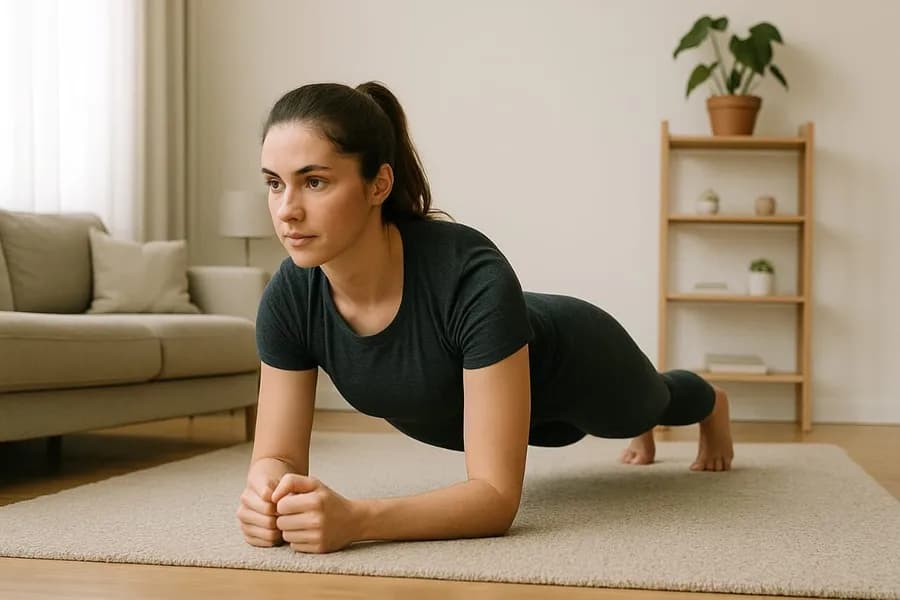
Plank
The plank builds deep core stability, which is essential for safe, effective strength training. Hold a forearm plank with hips level — no sagging or raised hips. Start with 20–30 second holds and work up to 60 seconds across 3 sets. For detail on maximising this move, see the guide on core strength plank technique.
Glute Bridges
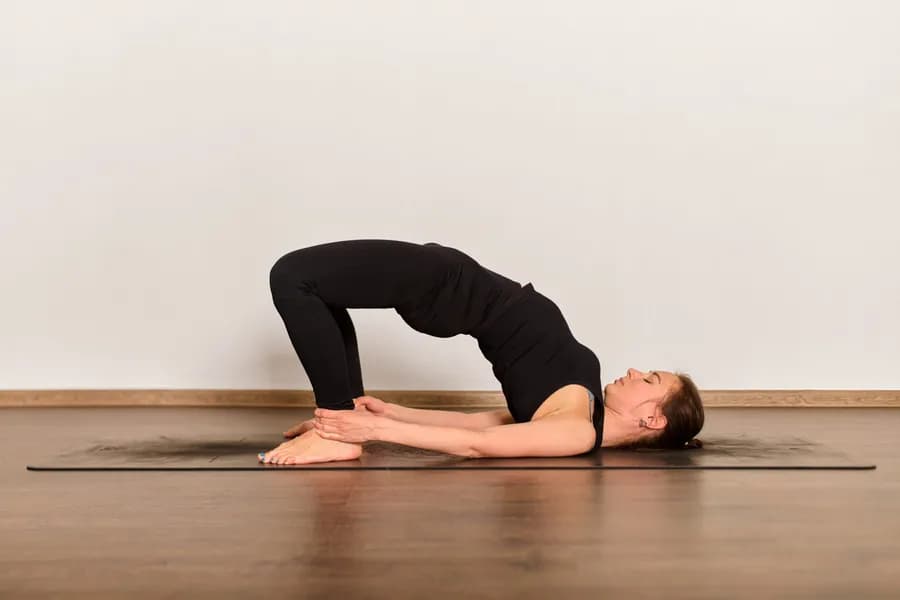
Glute bridges activate and strengthen the posterior chain — glutes, hamstrings, and lower back. Lie on your back, feet flat on the floor, and drive your hips up until your body forms a straight line from knees to shoulders. 3 sets of 15 reps with a 2-second hold at the top.
Dumbbell Rows
Rows build the upper back, biceps, and rear deltoids — muscles that improve posture and counteract desk-work hunching. Use a bench or chair for support, pull the weight in a controlled arc toward your hip, and squeeze your shoulder blade at the top. 3 sets of 10–12 reps per arm.
Hip Hinges / Romanian Deadlifts
The hip hinge pattern trains the hamstrings and glutes through a full range of motion. With a dumbbell in each hand, send your hips back while keeping a neutral spine, then drive through your heels to return upright. 3 sets of 10–12 reps. This is one of the most important movement patterns to master for long-term strength and injury prevention.
Common Mistakes to Avoid
- Poor Form Rushing through reps with sloppy technique is the fastest route to injury and the slowest route to results. Every rep should be deliberate — move through the full range of motion, control the lowering phase, and feel the target muscle working. If you can't maintain form, reduce the load or reps.
- Skipping the Warm-Up Cold muscles are less responsive and more prone to strain. Spend 5–8 minutes before every session doing light cardio (marching in place, arm swings) and dynamic stretches (leg swings, hip circles). This primes your nervous system and joints for the work ahead.
- Overtraining Without Recovery More is not always better. Muscles need 48 hours to recover after being trained. Training the same muscle group every day stalls results and increases injury risk. Schedule rest days, prioritise sleep, and eat enough protein — roughly 1.6–2 g per kg of body weight daily — to support muscle repair.
- Inconsistency The single biggest barrier to building muscle for women isn't the wrong exercise or diet — it's inconsistency. Three moderate sessions per week, done reliably over three months, will produce far better results than a burst of intense training followed by weeks of inactivity. Building the habit matters more than any individual workout.
Who Should Try Building Muscle?
- Beginners If you've never done structured strength training before, you'll see some of the fastest early progress — a phenomenon called "newbie gains." Your neuromuscular system adapts rapidly, meaning strength increases come quickly even before visible muscle changes appear. Start with two sessions per week and build from there.
- Women The fear of "getting bulky" stops many women from ever picking up a weight. Women lack the hormonal profile to build the kind of mass seen in professional bodybuilders. What strength training actually does is create a leaner, more defined physique, stronger bones, better posture, and more energy — it is one of the most health-positive things you can do at any age.
- Older Adults Muscle mass naturally declines from around age 30 onwards — a process called sarcopenia. Resistance training is one of the most evidence-backed ways to slow this decline, support joint health, and maintain independence as we age. If you're over 50 or have a health condition, consult your doctor before starting a new programme. This is supportive fitness guidance, not medical advice.
- Working Professionals Effective muscle-building sessions can be done in 30–40 minutes. Three sessions per week, programmed intelligently, deliver real results without requiring hours at a gym. The posture benefits alone — particularly for those who sit at a desk all day — make it worth starting. Explore a full body workout for strength designed to fit a busy schedule.
Build Strength with a Routine That Actually Works
Building muscle isn't about doing random workouts — it's about consistency, guidance, and following a structured plan. With the right support, you can train effectively from home and see real progress over time. If you've been searching for how to build muscle for women without the guesswork, a guided programme removes all the uncertainty.
What You Get with Habuild's Strong Everyday Program:
- Daily live guided strength sessions
- Beginner to advanced progression built in
- No-equipment and home-friendly workouts
- Expert guidance to ensure correct form
- Community support to help you stay consistent
Ready to start? Explore strength training for beginners and take the first step toward a stronger you.
Related reads: Strength Training for Women at Home: The Complete Guide · Strength Training for Beginners Women: Your Complete Guide
Building muscle as a woman depends on resistance training that keeps progressing session after session — the same weights and reps repeated indefinitely tend to stop delivering results. A structured program can plan that progression so your strength, metabolism, and bone density keep moving forward together. Habuild's Strong Everyday program offers exactly that kind of guided, progressive strength training.
Frequently Asked Questions
Related Articles

How to Make Muscles Strong: Exercises, Habits, and a Plan That Works
Muscle strength comes from consistent, progressive effort paired with smart recovery — not random workouts. See the exercises and habits that actually build it.
How to Strengthen Glute Muscles: Exercises, Tips & a Plan That Works
Strong glutes support your lower back, improve posture, and make everyday movement easier — built at home with bodyweight alone. See the exercises and how to train with consistency.
How to Strengthen Hamstrings: Exercises, Tips, and a Plan That Works
The hamstrings power walking, running, squatting, and protect your knees — training them two to three times a week with hip-dominant and knee-flexion moves builds real strength. See the full plan.
Benefits of Squats for Women — 7 Real Results from Daily Practice and What to Expect Honestly
Consistent daily squat practice produces measurable results in glute shape, leg strength, and posture within 8-12 weeks — the 'bulky thigh' myth doesn't hold up given women's hormonal profile. See all 7 real results.
Benefits of Push Ups for Women
Discover the top benefits of push ups for women — from strength to posture. Start your free 7-day trial with Habuild's guided strength program at just 14-day free trial.
Beginner Bodyweight Workout: The Complete No-Equipment Guide
Squats, push-ups, lunges, planks, and bridges, performed in a structured sequence, build strength and movement quality from the ground up — no gym required. See the complete no-equipment guide.