
Benefits of Squats for Women — 7 Real Results from Daily Practice and What to Expect Honestly
Consistent daily squat practice produces measurable results in glute shape, leg strength, and posture within 8-12 weeks — the 'bulky thigh' myth doesn't hold up given women's hormonal profile. See all 7 real results.
Key Takeaways
- Debunks the ‘bulky thighs from squats’ myth, citing women’s hormonal profile as the reason.
- A 2019 study found 12 weeks of squat training produced 25-30% greater gluteal thickness gains.
- The LIFTMOR trial found bone density gains at the spine and hip in postmenopausal women.
- Squats are linked to supporting oestrogen-progesterone balance and reducing PCOS-linked resistance.
- Framed as beneficial across every life stage a woman goes through, not just one age group.
- Cortisol reduction from squats is named as a specific lever for reproductive hormone balance.
Consistent daily squat practice produces measurable results in glute shape, leg strength, posture, and overall body composition within 8–12 weeks, while myths about "bulky thigh growth" from squat training remain exactly that — myths, since women lack the hormonal profile to gain large muscle mass quickly. Squats are one of the most beneficial single exercises for women across every life stage, supporting reproductive hormonal balance, bone density, metabolic health, and the lifted glute shape most women actively want to develop. This guide covers the seven real benefits, the right form, and the daily routine that produces lasting results. The same habit-building structure that powers our daily online yoga classes makes consistent practice possible.
7 Benefits of Daily Squats for Women
Daily squats produce measurable benefits within the first weeks, with deeper changes compounding across months of consistent practice.
- Stronger, Lifted Glutes and Toned Legs — Daily squats build the gluteus maximus (the largest muscle in the body), producing a firmer, more lifted appearance over 8–12 weeks. A 2019 study in the Journal of Strength and Conditioning Research found that 12 weeks of squat-focused training produced 25–30% greater gluteal muscle thickness improvements compared to control groups. Members focused on glute development often pair their squats with our strength training for glutes programme.
- Improved Bone Density and Reduced Osteoporosis Risk — Particularly important for women who face elevated osteoporosis risk after menopause. Squat training produces axial loading that directly stimulates bone density improvements. The LIFTMOR clinical trial (Watson et al. 2018) demonstrated measurable bone mineral density improvements at the spine and hip in postmenopausal women from high-intensity resistance and impact training.
- Better Hormonal Balance and Reproductive Health — Moderate resistance training, including squats, supports healthy oestrogen-progesterone balance, improves insulin sensitivity (a major driver of PCOS symptoms), and reduces cortisol that disrupts reproductive hormones. Members managing concurrent hormonal concerns often pair their work with our strength training for legs programme.
- Higher Resting Metabolism and Better Body Composition — Building lean muscle in the largest muscle groups (quadriceps, glutes, hamstrings) raises resting metabolic rate more efficiently than work on smaller muscle groups. Adding 1 kg of lean muscle through compound movements like squats raises resting metabolic rate by approximately 10–15 calories per day.
- Reduced Lower Back Pain and Better Posture — Strong glutes and core muscles support pelvic position — weak glutes are one of the leading drivers of chronic lower back pain in women, particularly postpartum. Daily squat practice directly retrains this pattern.
- Better Knee Health and Joint Stability — Properly executed squats strengthen the muscles that stabilise the knee joint (quadriceps, hamstrings, glutes) — actually protecting against the knee pain many women fear from squats. Members building broader lower-body strength often pair their work with our lower body workout programme.
- Better Confidence and Long-Term Health — The visible body composition improvements, strength gains, and pain reductions produce significant confidence improvements, combined with long-term protection against osteoporosis, type 2 diabetes, and age-related muscle loss.
How to Get Started with Daily Squats
What You Need to Begin
A flat clear floor space, comfortable clothing that allows full hip and knee movement, and 10–15 minutes daily for the squat-focused component. A sturdy chair helps with beginner progression. No specialised equipment required.
Setting Realistic Goals
Be honest about timelines. Visible glute and leg shape change takes 8–12 weeks of consistent practice. Aim for measurable progressions (more reps, deeper squats, weighted variations) rather than chasing dramatic transformations. Avoid the "bulky thighs" fear — women lack the hormonal profile to gain large muscle mass quickly through squat training.
Start with the Basics
Begin with three foundational practices: 3 sets of 12–15 bodyweight squats 3–4 times per week, 30 minutes of daily moderate cardio for systemic fat burn, and adequate protein intake (1.2–1.6 g per kg bodyweight) to support muscle adaptation.
Best Squat Variations for Women
Bodyweight Squat — Glutes, Quadriceps, Hamstrings, Core — 3 Sets × 15 Reps
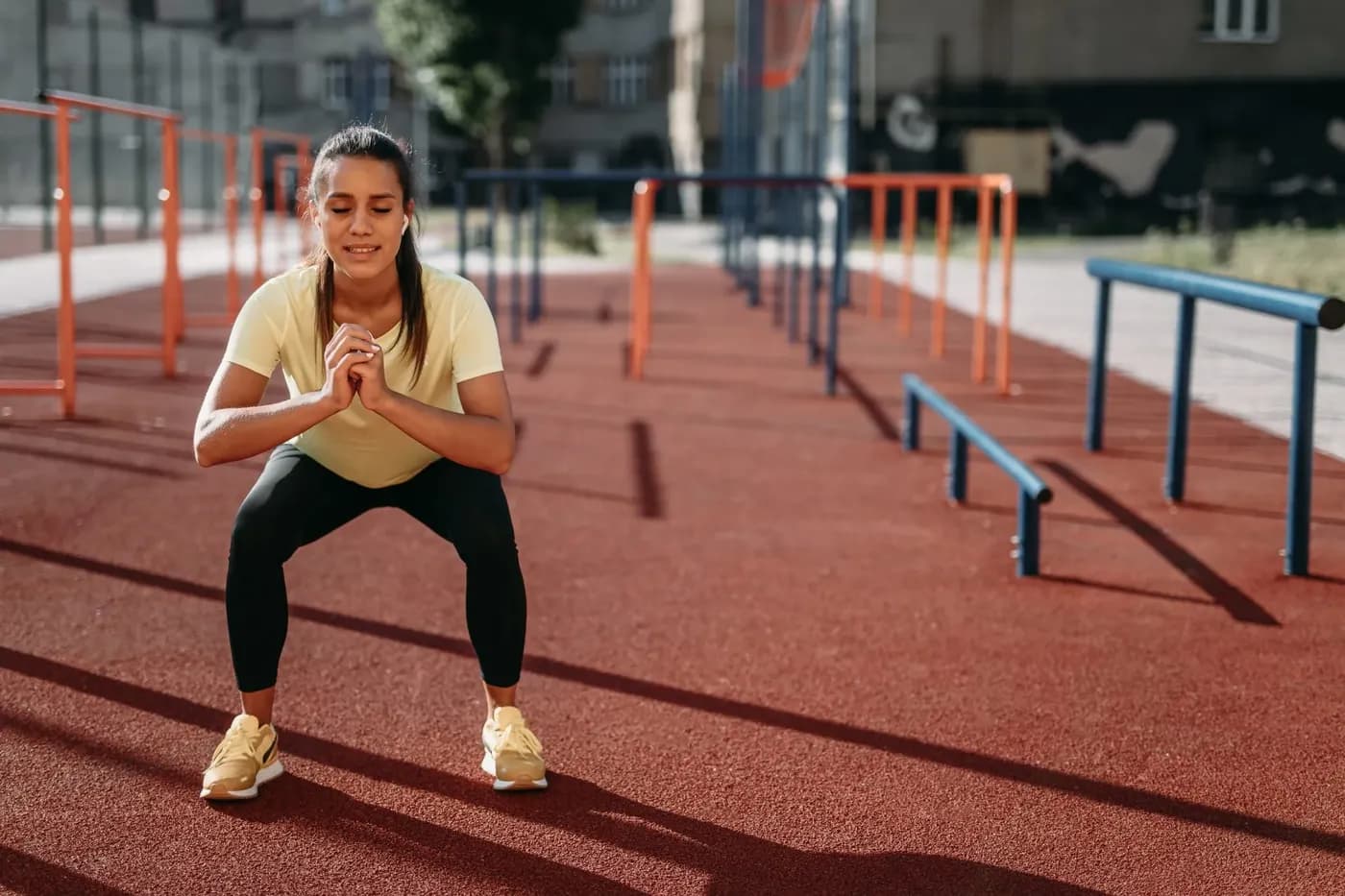
The foundational squat — performed standing with feet shoulder-width apart, descending until thighs are parallel to the floor, and driving back up through the heels. 3 sets of 15 reps with 60 seconds rest, 3–4 times per week. Modification: chair-assisted squats for absolute beginners.
Goblet Squat — Glutes, Quadriceps, Core — 3 Sets × 12 Reps
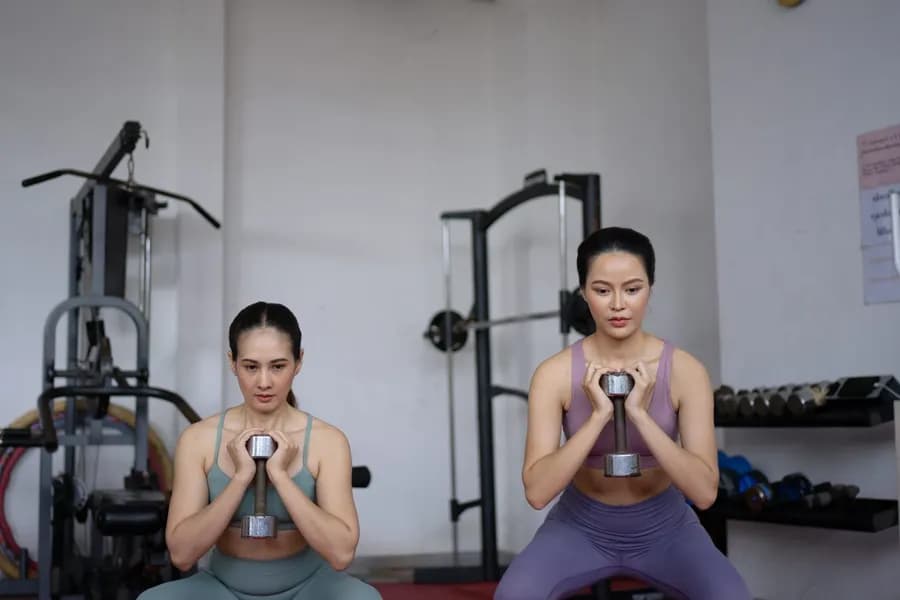
Holds a weight (dumbbell, water bottle, backpack with books) close to the chest while squatting — adding load that drives faster muscle and shape change. 3 sets of 12 reps with 60 seconds rest, 2–3 times per week. Modification: begin with 3–5 kg load and progress over weeks.
Sumo Squat — Inner Thighs, Glutes, Quadriceps — 3 Sets × 12 Reps
A wider stance with toes pointed outward — emphasising the inner thigh adductors and glutes more than standard squats. 3 sets of 12 reps with 60 seconds rest, 2–3 times per week.
Bulgarian Split Squat — Single-Leg Glutes, Quadriceps — 3 Sets × 12 Reps per Leg
Trains each leg independently — exposing and correcting strength imbalances most women develop. 3 sets of 12 reps per leg with 60 seconds rest, 2 times per week. Modification: shallow range of motion with wall support for early weeks.
Pause Squat — Increased Time Under Tension — 3 Sets × 10 Reps with 3-second Hold
Adds a 3-second hold at the bottom of each rep — dramatically increasing time under tension and removing the bounce that masks weak positions. 3 sets of 10 reps, 90 seconds rest, 2 times per week.
Jump Squat — Power + Cardiovascular Demand — 3 Sets × 10 Reps
Adds an explosive jump at the top of each rep — increasing cardiovascular demand and caloric burn. Modification: regular bodyweight squats for beginners; build to jump squats over 4–6 weeks. Members building broader glute development often pair their work with our glutes workout programme.
Single-Leg Pistol Squat (Progression) — Maximum Single-Leg Strength — 3 Sets × 5 Reps per Leg
The destination single-leg variation — building strength most women cannot replicate with bodyweight alone. 3 sets of 5 reps per leg with 90 seconds rest, 1–2 times per week. Modification: begin with assisted pistol squats holding a doorframe; progress to unassisted over months.
Common Mistakes to Avoid
- Knees Caving Inward During Squats — Particularly common in women due to hip anatomy and weak glute medius. Knee valgus loads the medial knee structures dangerously and prevents proper glute activation. Actively press the knees outward in line with the toes throughout every rep.
- Avoiding Resistance Out of Fear of "Bulking Up" — Many women avoid loaded squats believing resistance will produce bulky thighs, when reality is that women lack the hormonal profile to gain large muscle quickly. Progressively add weight (resistance bands, dumbbells, water bottles, backpacks with books) over weeks. Members building broader leg strength often pair their work with our strength training for legs programme.
- Skipping Warm-Up Before Squats — Cold tissue lacks elasticity and skipping warm-up dramatically increases injury risk. Always warm up for 5–10 minutes (gentle cardio, hip mobility, light bodyweight squats) before any squat-focused session.
- Inconsistency — Training intensely for 2 weeks then skipping a month produces no lasting glute or leg adaptation. Daily moderate practice outperforms intense intermittent sessions.
Who Should Try Daily Squats?
- Beginners Wanting to Tone Legs and Build Glute Shape — Bodyweight squats are beginner-appropriate from day one and produce visible improvements within the first 4–6 weeks.
- Women Postpartum (With Medical Clearance) — Postpartum women benefit dramatically from squat training to rebuild pelvic floor and lower-body strength — but only after medical clearance and pelvic floor assessment.
- Women Approaching or in Menopause — Squats are particularly important during perimenopause and post-menopause for protecting bone density, supporting hormonal balance, and preventing muscle loss. Those with osteoporosis, joint conditions, or chronic concerns should consult a doctor before beginning loaded squat training.
- Working Professionals with Sedentary Lifestyles — Prolonged sitting weakens the glutes dramatically ("dormant glute syndrome"). Daily squats directly counteract this weakness.
Build Stronger, Shaped Legs and Glutes with a Routine That Actually Works
Building visible benefits from squats isn't about chasing extreme protocols or fearing resistance — it's about consistency, progressive practice, and following a structured plan that builds the lower-body strength and shape most women want.
What you get with Habuild's Strong Everyday Programme:
- Daily live guided strength and yoga sessions
- Beginner to advanced progression
- No-equipment and home-friendly workouts
- Expert guidance to ensure correct form
- Community support to stay consistent
Related reads: Strength Training for Women · 10 Benefits of Squats for Men
The 8–12 week timeline this guide points to for real results from squats assumes consistent practice; glute shape, leg strength and posture don't shift much from occasional sessions squeezed in when convenient. A structured programme is what turns a daily squat routine into measurable results. Habuild's Strong Everyday program is built to carry that consistency for you, session after session.
Frequently Asked Questions
Related Articles
How to Increase Muscle Mass: a Practical Home Training Guide
Progressive overload, adequate protein, and proper recovery working together are what actually build muscle, whether training with bodyweight or dumbbells. See the practical home training guide.
What Are Crunches: a Complete Guide to the Classic Ab Exercise
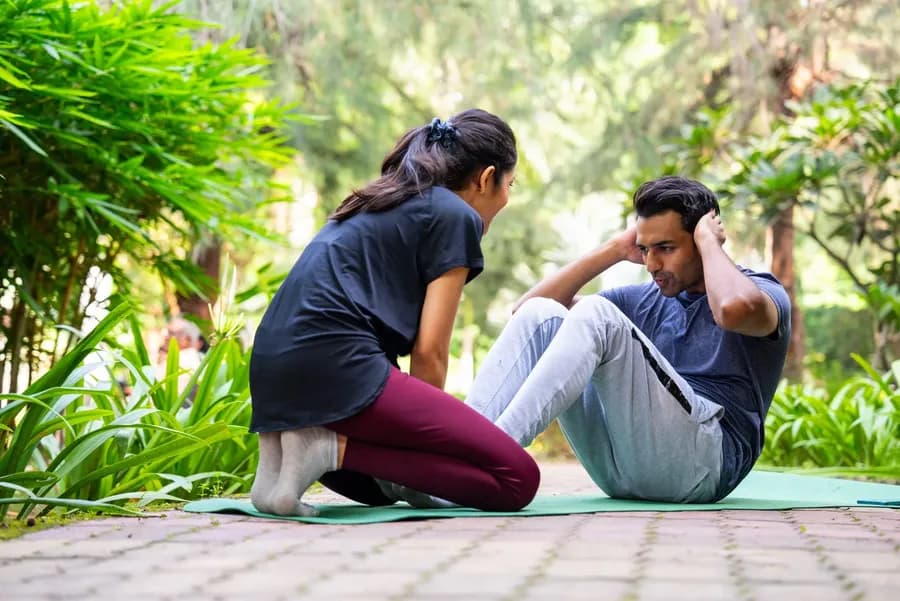
Crunches bias the upper portion of the rectus abdominis, the visible six-pack muscle most beginners want to develop first — though most people perform them poorly. See the complete guide.
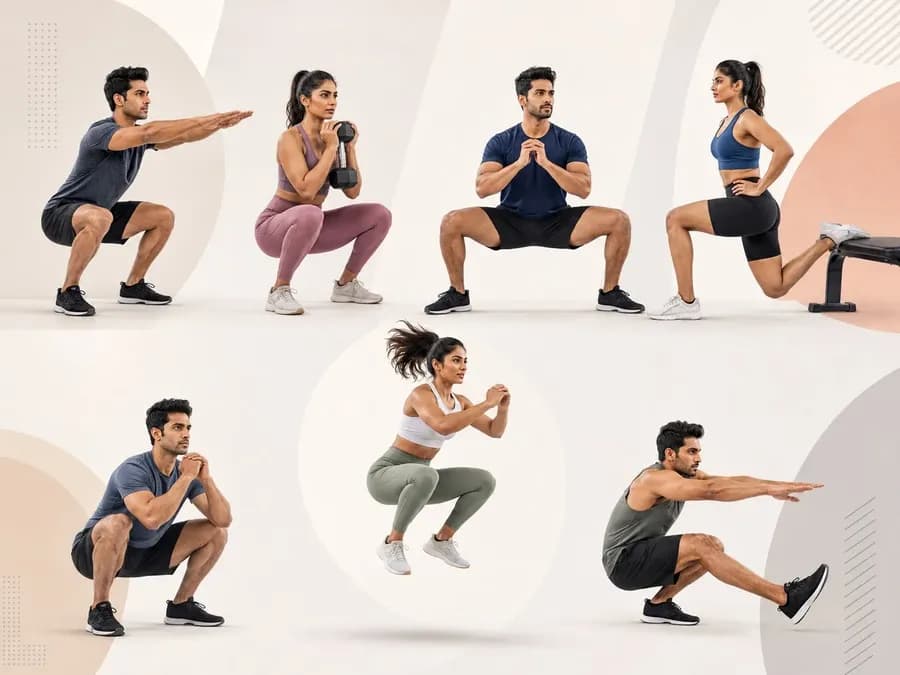
Different Types of Squats — 7 Variations to Build Stronger Legs, Glutes, and Functional Strength
The right squat variations target different muscles, mechanical positions, and movement patterns, building complete lower-body strength rather than partial development. See all 7 most effective variations.