
How to Do Wall Push-Ups Correctly: the Entry-Level Push-Up Guide
Reducing the body weight load by roughly 60-70% compared to floor push-ups makes this the lowest-barrier entry point for beginners and anyone returning from injury. See the entry-level push-up guide.
Key Takeaways
- Reduces bodyweight load by roughly 60-70% compared to floor push-ups, the gentlest entry point.
- Builds the neurological pressing pattern that every subsequent push-up progression relies on.
- Specifically conditions wrist extensor strength before advancing to knee or full push-ups.
- Standing 60-90 cm from the wall with a 2-second lowering phase is the correct starting form.
- Best suited for complete beginners, older adults, and those returning from shoulder injury.
- Progresses to incline push-ups at 2-3 weeks, then knee push-ups by weeks 4-6.
How to do wall push-ups correctly is the perfect starting point for complete beginners, older adults and anyone returning from upper body injury who needs the most accessible available push-up entry. Wall push-ups reduce the body weight load by approximately 60-70% compared to floor push-ups — making them the lowest-barrier available upper body pressing exercise while still developing the foundational pectoral, triceps and shoulder activation pattern that all push-up variations build upon. Understanding how to do wall push-ups for beginners with correct form ensures the movement pattern developed here transfers directly to the floor-based progressions.
Do Wall Push-Ups Build Strength? Here is How
Wall Push-Ups Develop Real Movement Pattern and Baseline Strength
While wall push-ups produce less muscular load than floor variations, they develop the neurological movement pattern — the specific combination of chest pressing, shoulder stabilisation and elbow tracking — that all subsequent push-up progressions build upon. For complete beginners, older adults and injury rehabilitation, wall push-ups provide the entry-level pressing strength that safely prepares the wrists, elbows and shoulders for the increased load of floor variations.
The push-up family — from wall to incline to knee to full — represents the most systematically progressive available bodyweight upper body strength programme, with wall push-ups providing the essential zero-barrier entry that makes upper body training universally accessible.
Wall Push-Ups Are the Correct Starting Point for Specific Populations
How to do wall push-ups for beginners addresses the specific needs of those for whom floor push-ups are currently inaccessible — whether from insufficient strength, wrist sensitivity, shoulder conditions or age-related reduced load tolerance. Starting at the appropriate level and progressing systematically produces better long-term outcomes than attempting floor push-ups with insufficient foundation.
Wrist Conditioning through Wall Push-Up Practice
Wall push-ups condition the wrists for the sustained extension loading of floor push-ups — gradually building the wrist extensor strength that makes knee and full push-ups safe and comfortable. This wrist conditioning function makes wall push-ups specifically valuable for practitioners whose wrists ache during standard floor push-ups.
How to Get Started with Wall Push-Ups
What You Need to Begin
Only a flat wall. How to do wall push-ups requires no equipment, no mat and no floor space — they are accessible from any room with a vertical wall surface.
Setting Realistic Goals
3 x 20 correct wall push-ups within 1-2 weeks. Progression to incline push-ups (hands on a desk or chair) at 2-3 weeks. Knee push-ups at 4-6 weeks. Full push-ups at 8-12 weeks of systematic progression.
Start with These Basics
Stand approximately 60-90 cm from the wall. 3 sets of 15-20 repetitions with 2-second lowering phase. Progress by moving the feet further from the wall (increasing the body angle and load) as strength develops.
Best Exercises Including Wall Push-Ups

Standard Wall Push-Up — How to Do it Correctly
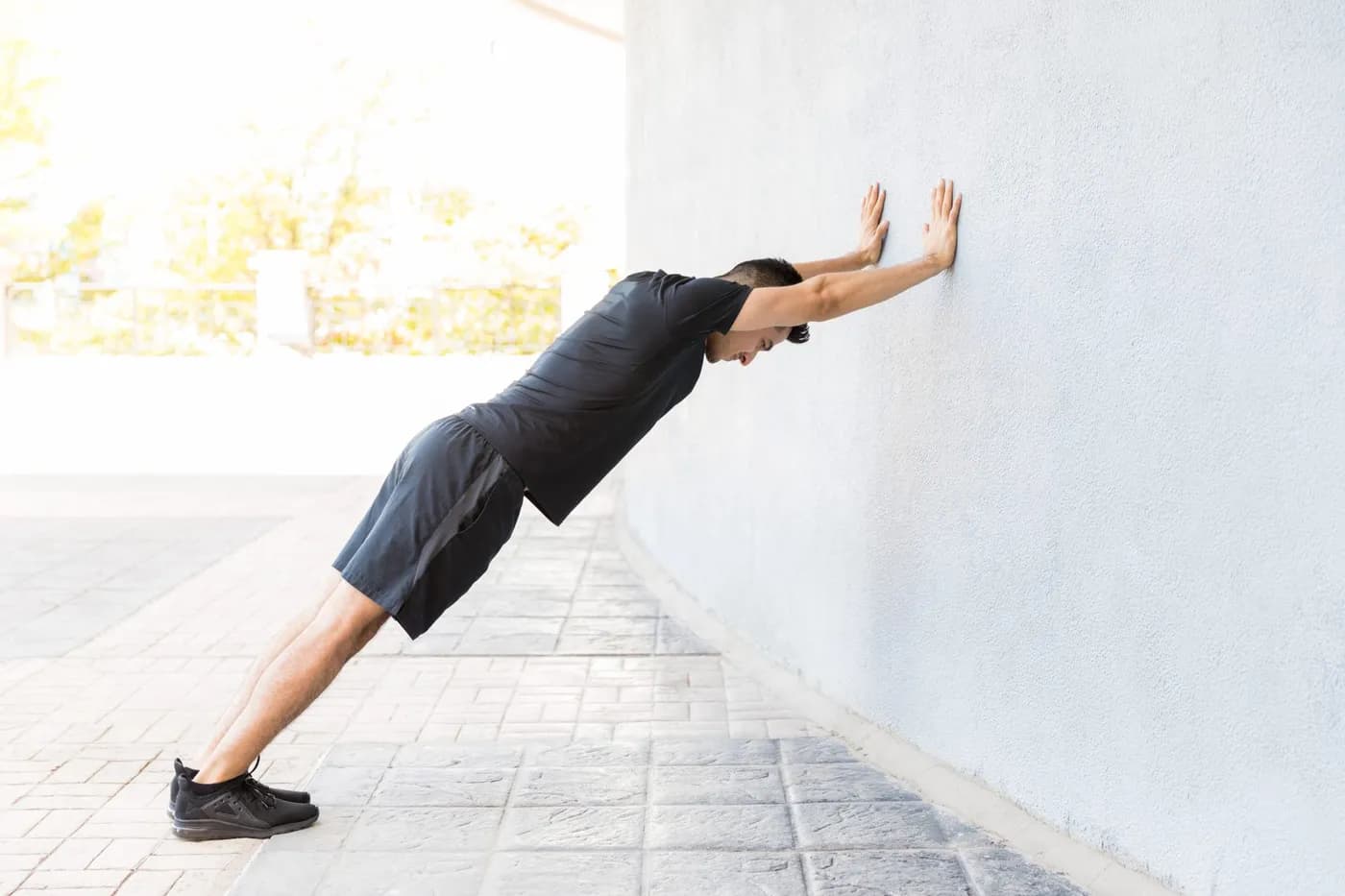
Stand facing a wall, feet hip-width apart and approximately 60 cm from the wall. Place hands on the wall at chest height, shoulder-width apart. Lower the chest toward the wall over 2 seconds (elbows at 45 degrees from the body), then press back. Maintain rigid body alignment throughout — not allowing the hips to push backward. Sets: 3 x 15-20. See also: how-to-do-knee-push-ups
Progressive Wall Push-Up — Feet Further from Wall
Moving the feet further from the wall increases the body angle from vertical — progressively increasing the load toward the incline push-up position. The wall push-up to incline push-up transition is the most systematic available progression for how to do wall push-ups and advance toward floor-based training. Sets: 3 x 12-15. See also: how-many-push-ups-per-day-to-build-muscle
Incline Push-Up (Desk/Chair) — the Next Progression
Hands on a desk or chair at waist height, feet on the floor — the natural next progression after wall push-ups, loading approximately 30-40% of body weight. The bridge between wall and knee push-ups in the systematic progression. Sets: 3 x 12-15. See also: chest-workout-at-home-without-equipment
Wall Plank Hold — Shoulder Stability Foundation
Pressing both palms into the wall in the push-up top position and holding — develops the shoulder girdle stability and serratus anterior engagement that all push-up variations require. Hold 3 x 20 seconds between wall push-up sets.
Wrist Circles and Warm-Up — Before Every Session
30 seconds of wrist circles each direction before every push-up session — the essential wrist preparation that prevents the discomfort that cold wrists experience during sustained extension. Essential for any wrist-sensitive beginner. See also: surya-namaskara
Common Mistakes to Avoid
- Hips Pushing Backward — the Body Must Stay Rigid — Allowing the hips to push backward during wall push-ups produces the compensatory pattern that makes the floor push-up transition unnecessarily difficult. Maintain a rigid body line from heels to crown throughout — contracting the core before each repetition.
- Standing Too Close to the Wall — Standing less than 50 cm from the wall reduces the challenge to near zero and provides insufficient stimulus for strength development. Stand far enough that the movement requires genuine upper body effort throughout the full range.
- Partial Range of Motion — Not lowering the chest to near-wall contact before pressing back misses the bottom-range pectoral activation that produces the genuine strength development benefit. Lower until the nose or chest nearly touches the wall.
- Skipping This Stage to Move to Floor Too Quickly — Practitioners who find wall push-ups "too easy" at correct difficulty and distance are ready to progress — but those who struggle with wall push-ups and move to the floor anyway develop the poor form patterns that limit progress. Earn the progression by achieving 3 x 20 with correct form first.
Who Should Do Wall Push-Ups?
- Complete Beginners with No Prior Upper Body Training — Wall push-ups are the universal entry point for those who cannot perform a single knee push-up — completely accessible from day one with no prerequisite strength.
- Is This Good for Beginners? — Wall push-ups are specifically designed for beginners — the most accessible available upper body pressing exercise. Habuild's sessions provide the specific form and progression guidance from the first class.
- Older Adults Maintaining Upper Body Strength — Wall push-ups are specifically recommended for older adults where floor-based push-ups create joint stress — providing the upper body pressing stimulus at an appropriate load for joint health maintenance and prevention of upper body strength decline.
- Those with Wrist Sensitivity — The reduced wrist extension load of wall push-ups makes them specifically accessible for practitioners with wrist pain, carpal tunnel or wrist injury history — developing the wrist conditioning that eventually makes floor push-ups comfortable.
Build Strength with a Routine That Actually Works
Building pressing strength from the most accessible starting point requires consistent daily practice with proper guidance — not occasional random workouts. With a structured programme you can make real, measurable progress from home.
- Daily live guided strength and yoga sessions — 45 minutes, 6 days a week
- Beginner to advanced progression built in
- No equipment required
- Expert guidance for correct technique every session
- Community of 1.5 Crore+ members for daily accountability
Wall push-ups are meant to be a starting point, not a stopping point, and the road from here to a full push-up moves far faster inside a structured plan than through occasional, unguided attempts. What beginners need most isn't more motivation but a clear sequence to follow. Habuild's Strong Everyday program is built to guide exactly that progression, one stage at a time.
Frequently Asked Questions
Related Articles

How to Do Knee Push Ups Correctly: the Complete Beginner Guide
Reducing the body weight load by about 30% develops the same pectoral, triceps, and shoulder activation pattern as full push-ups while building movement quality first. See the complete beginner guide.

How to Do Diamond Push Ups: Triceps and Inner Chest Guide
The narrow-grip hand position shifts primary loading from the pectorals to the triceps and the inner chest, unlocking the most effective no-equipment triceps exercise. See the full technique guide.
How to Do Push Ups: Step-by-Step Guide for All Levels
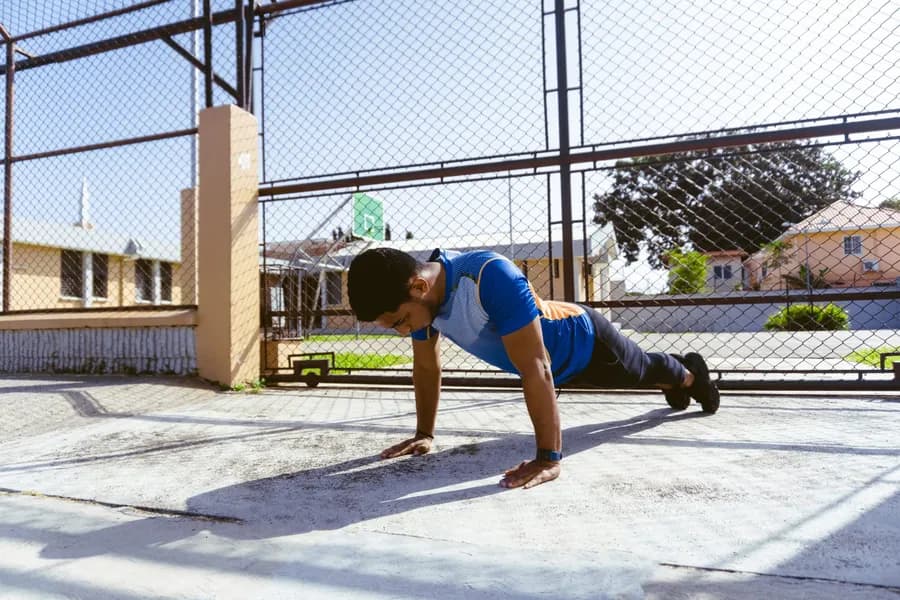
Done correctly, the push-up builds chest, shoulder, tricep, and core strength at once with no equipment — done incorrectly, it strains the wrists and neck. See every variation with precise form cues.
How to Do Push Ups for Beginners: Step-by-Step from Zero to 20 Reps
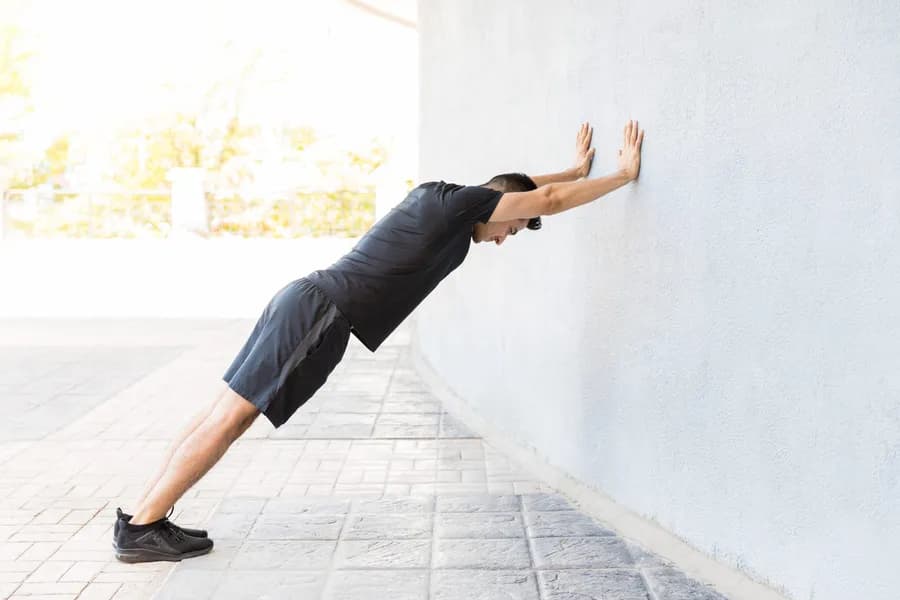
The correct progression runs wall push-ups to incline to knee to standard, taking most beginners from zero to 20 consecutive reps in 6-8 weeks. See the step-by-step guide.

How Many Push-Ups per Day to Build Muscle: the Honest Answer
Push-up volume for real muscle growth depends on training age, current strength, rep range, and whether progressive overload is actually being applied — not a round number. See the evidence-based answer.