
How to Strengthen Forearms: Exercises & Tips
Learn how to strengthen forearms with the best exercises, beginner tips, and a structured plan. Start your strength journey for just ₹1.
Key Takeaways
- Combines wrist curls, reverse wrist curls, dead hangs, and farmer’s carries in a weekly routine.
- Grip strength is the limiting factor in nearly every exercise involving holding something.
- Progress is measurable within 4-6 weeks when training is structured and form-focused.
- Weak forearms often leave the wrist joint and elbow tendon unsupported during daily tasks.
- Many people train biceps and shoulders while neglecting forearms, creating a muscle imbalance.
- Rows, pull-ups, and deadlifts all rely on forearm strength before the target muscle fatigues.
Forearm strength underpins nearly every upper-body movement — pulling, pushing, carrying, and even typing. To strengthen your forearms effectively, combine wrist curls, reverse wrist curls, dead hangs, and farmer’s carries in a consistent 3–4 day weekly routine. Progress is measurable within 4–6 weeks when training is structured and form-focused.
If you’ve ever struggled with weak grip, tired wrists after a workout, or forearms that give out before the rest of your body does — you already know why learning how to strengthen forearms matters. This guide breaks down everything you need: the right exercises, common mistakes to avoid, and how to build consistent progress over time.
8 Benefits of Strong Forearms
- Better Grip Strength — Almost every exercise that involves holding something — a dumbbell, a pull-up bar, a resistance band — depends on your grip. Stronger forearms directly improve your ability to hold on longer and harder, making every other exercise more effective.
- Improved Athletic Performance — Whether you play cricket, tennis, or simply enjoy cycling, forearm endurance plays a quiet but critical role. Athletes with developed forearms tend to have more control, power transfer, and less fatigue in their hands and wrists during sustained effort.
- Reduced Risk of Wrist and Elbow Discomfort — Weak forearm muscles often leave the wrist joint and elbow tendon unsupported during everyday tasks. Gradually building forearm strength may help reduce the frequency of discomfort in these areas, especially for people who work at a desk or use their hands repetitively. (This complements medical care — not a substitute.)
- Enhanced Functional Strength — Think about carrying groceries, opening jars, or turning a steering wheel. These movements all involve the forearm muscles. Building them up through targeted functional strength training translates directly into easier daily life.
- Better Muscle Balance in the Upper Body — Many people train their biceps and shoulders while neglecting the forearms. This creates an imbalance that can pull on the elbow joint over time. Dedicated forearm work keeps the entire arm chain balanced.
- Stronger Pulling Movements — Rows, pull-ups, and deadlifts all rely on forearm strength. When your grip fails before your back or biceps do, you leave gains on the table. Stronger forearms mean you can fully tax the target muscle.
- Supports Long-Term Joint Health — Consistent forearm training builds the tendons and ligaments around the wrist and elbow gradually, giving these connective tissues time to adapt — an often-overlooked component of long-term joint resilience.
- Builds Confidence and Visible Results — Forearms are one of the most visible muscle groups in everyday settings. Developing them adds noticeable, functional definition — and more importantly, the confidence that your body is genuinely getting stronger.
How to Get Started with Forearm Training
What You Need to Begin
You don’t need a gym membership or heavy equipment. A resistance band, a light dumbbell (even a water bottle works initially), or just your own bodyweight is enough to start building forearm strength at home. As you progress, you can add grip tools or heavier weights.
If you’re exploring structured guidance, these at-home strength exercises are a solid starting point alongside your forearm routine.
Setting Realistic Goals
Forearms are a slow-adapting muscle group — they’re used constantly throughout the day, which means they’re also more resilient. Expect to notice a meaningful improvement in grip endurance within 4–6 weeks of consistent practice, with visible muscle development typically following over 8–12 weeks.
Avoid the urge to train forearms every single day with high volume right from the start. Tendons need recovery time too. Three to four targeted sessions per week is more than enough.
Start with the Basics
Begin with wrist curls, reverse wrist curls, and dead hangs. These foundational movements cover both the flexor and extensor muscles of the forearm, which is important for balanced development. Keep reps moderate (12–15) and focus on the full range of motion rather than going heavy too quickly.
Best Exercises to Build Strong Forearms

Wrist Curls
Sit on a bench or chair, rest your forearms on your thighs with palms facing up, and hold a light dumbbell or resistance band. Curl your wrists upward, squeezing at the top, then lower slowly. This works the flexor muscles on the inner forearm. Aim for 3 sets of 15 reps.
Reverse Wrist Curls
Same position as above but with palms facing down. This targets the extensor muscles on the outer forearm — an area most people completely neglect. Keeping both sides balanced is essential for wrist stability. 3 sets of 15 reps.
Dead Hang
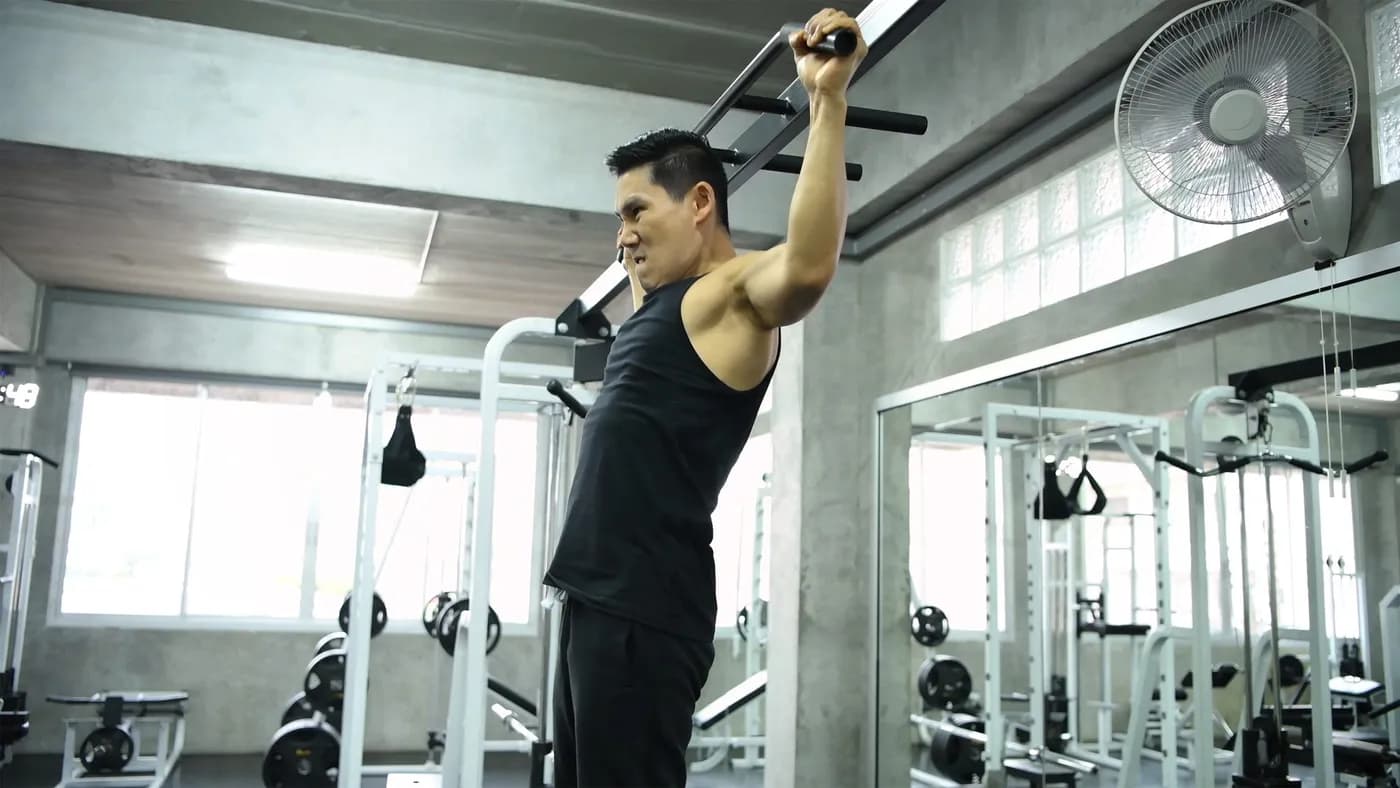
Hang from a pull-up bar (or a sturdy doorframe) with both hands, keeping your body relaxed. Hold for 20–40 seconds per set. The dead hang is one of the most effective bodyweight movements for developing grip endurance and decompressing the spine simultaneously.
Farmer’s Carry
Pick up two heavy objects (dumbbells, filled water jugs, or shopping bags) and walk 20–30 metres at a slow, controlled pace. The constant isometric demand on your grip and forearms during a farmer’s carry is hard to replicate with any other exercise. 3–4 rounds works well.
Towel Pull-Ups or Towel Rows
Loop a towel over a pull-up bar or through a door handle and grip both ends to perform pull-ups or rows. The unstable, thick grip forces the forearm muscles to work significantly harder than a standard bar. Even 2 sets of 6–8 reps is highly effective.
Plate Pinches
Hold a weight plate (or a thick book) between your fingers and thumb and try to keep it off the ground for 20–30 seconds. This trains the often-ignored pinching muscles of the fingers and forearms. Progress by using a heavier plate over time.
Rice Bucket Training
Fill a bucket with dry rice and plunge your hand in, opening and closing your fist repeatedly for 60–90 seconds. This low-tech method has been used by martial artists for decades to build extraordinary forearm and finger strength without overloading the joints.
For more structured arm-focused work, explore dedicated forearm exercises with detailed technique guidance.
Common Mistakes to Avoid
- Poor Form and Rushed Reps — The most common error is rushing through wrist curls and reverse curls with momentum rather than control. The forearm muscles respond far better to slow, deliberate movement through the full range. If your wrist can’t move through its full arc, the weight is too heavy.
- Skipping the Warm-Up — The wrist and elbow joints are particularly vulnerable to sudden loading without preparation. Before any forearm session, spend 3–5 minutes on wrist rotations, finger extensions against resistance, and gentle arm swings. A proper warm-up dramatically reduces tendon strain risk.
- Overtraining the Flexors Only — Most people only do movements that work the underside of the forearm — the flexors. Ignoring the extensors on top creates a muscular imbalance that can contribute to conditions like tennis elbow. Always pair every flexor exercise with an extensor exercise.
- Inconsistency Between Sessions — Forearm strength is built through consistent, regular practice — not occasional hard sessions. Missing two or three weeks and then training intensely is a reliable way to strain tendons. A manageable routine done three times a week for months will far outperform sporadic intense efforts.
Who Should Try Forearm Strength Training?
- Beginners — Forearm training has a very low barrier to entry. You can start with bodyweight hangs and resistance bands at home without any prior fitness experience. The risk of injury is low when you begin light and progress gradually — making it one of the most beginner-friendly forms of strength work available.
- Women — There’s a persistent myth that upper-body training leads to a bulky appearance. In reality, forearm training for women builds lean, functional strength without significant mass gain. It also directly improves grip for yoga, carrying children, and day-to-day tasks. Strength training for women covers this topic in full detail.
- Older Adults — Grip strength is one of the strongest predictors of overall health and longevity in older adults according to multiple long-term studies. Forearm training helps maintain independence in everyday tasks and supports joint integrity as connective tissue naturally becomes less pliable with age. Always consult your doctor before beginning a new exercise programme if you have existing joint conditions.
- Working Professionals — Hours of typing, mouse use, and phone scrolling create chronic tension in the forearm flexors. Targeted forearm strengthening and stretching can support better wrist comfort at a desk. Even 10 minutes of wrist work during a break can make a noticeable difference over weeks.
Build Strength with a Routine That Actually Works
Building forearm strength — and the broader upper-body strength it supports — isn’t about doing random exercises whenever you remember. It’s about consistent practice, correct form, and a plan that progresses with you. With the right structure, you can train effectively from home and see real improvement over time.
What You Get with Habuild’s Strong Everyday Program:
- Daily live guided strength sessions — including forearm and grip work
- Beginner to advanced progression built into the programme
- No equipment required — fully home-friendly
- Expert guidance to ensure correct form and safe loading
- A community of consistent practitioners to keep you accountable
For a broader look at how structured training supports overall progress, see what strength training exercises actually involve and how to sequence them for best results.
Start Your Forearm Strength Journey
Related reads: How to Strengthen Ankles: Exercises & Tips · How to Strengthen Lungs: Exercises & Tips
Grip and forearm strength build slowly, through steady load over weeks, not through a single ambitious session. That’s where a structured program earns its keep — it paces the intensity so your forearms keep adapting instead of plateauing or getting overworked. Habuild’s Strong Everyday program is designed to bring that kind of progressive structure to your training, forearms included.
Frequently Asked Questions
Related Articles

How to Increase Hand Muscle: Exercises & Tips
Learn how to increase hand muscle with proven exercises, beginner tips, and a structured plan. Start your strength journey with a 14-day free trial at Habuild.

How to Build Arm Muscles: Exercises, Tips & Plan
Learn how to build arm muscles at home with the best exercises, beginner tips, and a structured plan. Start your 14-day free trial trial with Habuild today.
How to Do Lat Pulldown: Form, Variations & Home Tips
Learn how to do lat pulldown correctly with step-by-step form, common mistakes, home alternatives, and variations for stronger, wider lats.

How to Strengthen Hair: Exercises, Tips & Routines
Learn how to strengthen hair naturally with proven exercises, scalp routines & lifestyle tips. Start your free 7-day trial with Habuild today.
How to Strengthen Ankles: Exercises & Tips
Learn how to strengthen ankles with proven exercises, beginner tips, and a structured routine. Start your free 7-day trial with Habuild today.