
How to Build Arm Muscles: Exercises, Tips & Plan
Learn how to build arm muscles at home with the best exercises, beginner tips, and a structured plan. Start your 14-day free trial trial with Habuild today.
Key Takeaways
- Beginners can feel stronger in 3-4 weeks and see visible arm definition within 8-12 weeks.
- Muscle tissue burns more calories at rest than fat tissue, giving resting metabolism a gradual lift.
- Weak biceps and triceps often contribute to rounded shoulders and upper-back tightness.
- Forearm and bicep training naturally improves grip strength, a marker of overall health.
- Light dumbbells of 2-5 kg or resistance bands are enough for beginners to start.
- The muscles around the elbow and shoulder act as shock absorbers that training protects.
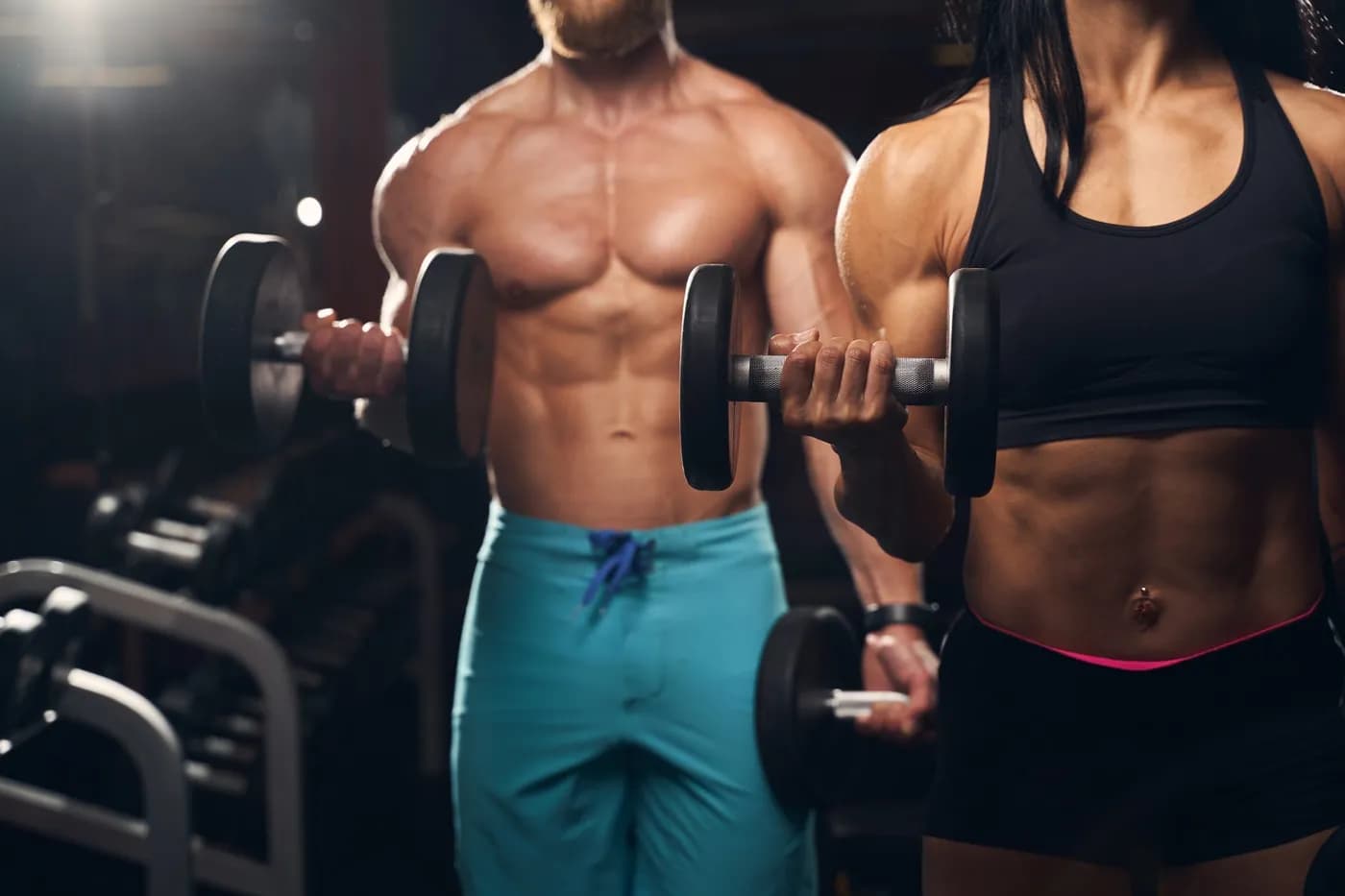
Building arm muscles requires progressive resistance training targeting the biceps, triceps, and forearms — done consistently 3 times per week. Beginners can feel stronger in 3–4 weeks and see visible definition in 8–12 weeks using bodyweight or light dumbbell exercises at home, with no gym required.
If you want to know how to build arm muscles effectively, you're not alone. Stronger arms aren't just about appearance — they support nearly every push, pull, and lift you do in daily life. Whether you're picking up groceries, playing with your kids, or sitting at a desk all day, your arms carry more load than you realise. This guide walks you through everything — from the best exercises to beginner-friendly routines and the most common mistakes that slow your progress.
7 Benefits of Building Arm Muscles
- Builds Functional Upper-Body Strength Strong arms make everyday tasks — lifting, pushing, carrying — noticeably easier. This kind of functional strength reduces fatigue and lowers the risk of minor injuries during routine activities.
- Boosts Metabolic Rate Muscle tissue burns more calories at rest than fat tissue. As you gain arm muscle, your resting metabolism gets a gradual lift, making it easier to manage body weight over time.
- Improves Posture and Shoulder Stability Weak biceps and triceps often contribute to rounded shoulders and upper-back tightness. Building balanced arm strength supports better posture, especially for people who work long hours at a desk.
- Enhances Performance in Other Exercises Push-ups, rows, pull-ups, and even planks rely heavily on arm strength. Stronger arms directly improve your performance in compound movements, accelerating overall fitness progress.
- Supports Joint Health The muscles around your elbow and shoulder act as shock absorbers. Consistently training your arms helps protect these joints from wear, reducing discomfort over the long term.
- Increases Grip Strength Forearm and bicep training naturally improves grip strength — a reliable marker of overall health and a practical asset for sports, climbing stairs with bags, or even opening jars.
- Builds Visible Confidence Seeing your arms get stronger and more defined is one of the most motivating feedback loops in fitness. That visible progress encourages consistency, which drives results in every other area too.
How to Get Started with Arm Muscle Building
What You Need to Begin
You don't need a gym membership or heavy equipment to start building arm strength. A pair of light dumbbells (2–5 kg for beginners) or even resistance bands is enough. Bodyweight exercises like push-ups and diamond push-ups are highly effective on their own. If you want to understand how a structured strength training routine at home looks, that's a great place to begin before adding equipment.
Setting Realistic Goals
Most beginners can feel stronger within 3–4 weeks and notice visible changes in 8–12 weeks of consistent training. Aim for 3 arm-focused sessions per week with at least one rest day in between. Avoid the trap of training arms every single day — muscles grow during recovery, not during the workout itself.
Start with the Basics
Beginners should start with 2–3 sets of 10–12 reps per exercise. Focus on slow, controlled movement rather than heavy weight. Your form matters far more than the number on the dumbbell. Once you can complete 3 sets of 12 reps comfortably, it's time to add a little more resistance or progress to a harder variation.
Best Exercises to Build Arm Muscles at Home
Bicep Curls
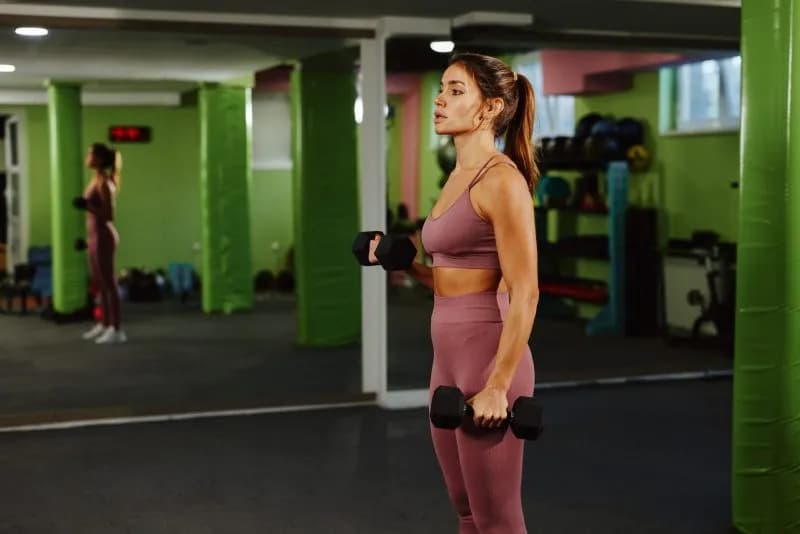
The most direct exercise for bicep growth. Hold a dumbbell in each hand, palms facing up, and curl toward your shoulders without swinging your elbows. 3 sets × 10–12 reps. Slow down the lowering phase for maximum muscle engagement.
Diamond Push-Ups
A bodyweight tricep powerhouse. Place your hands close together beneath your chest (forming a diamond shape) and perform a push-up. This targets the long head of the triceps, which makes up the bulk of arm size. 3 sets × 8–10 reps.
Hammer Curls
Keep your palms facing inward (like holding a hammer) and curl up. This variation targets the brachialis muscle beneath the bicep, which pushes the bicep upward and adds thickness to the arm. 3 sets × 10–12 reps per arm.
Tricep Dips
Use a stable chair or low surface. Place hands on the edge, legs extended, and lower your body by bending your elbows to 90 degrees before pressing back up. This is one of the most effective no-equipment tricep exercises. 3 sets × 10–12 reps.
Overhead Tricep Extension
Hold one dumbbell with both hands, raise it overhead, and slowly lower it behind your head by bending your elbows. This stretches and works the long head of the tricep fully. 3 sets × 10–12 reps. Keep your core braced and elbows pointed forward.
Concentration Curls
Sit down, rest your elbow on your inner thigh, and curl a dumbbell slowly toward your shoulder. This isolates the bicep peak better than most standing curl variations. 3 sets × 10 reps per arm.
Close-Grip Push-Ups
Similar to a standard push-up but with hands placed shoulder-width apart or slightly closer. Engages both the chest and the triceps simultaneously, making it a great compound movement for beginners working with no equipment. 3 sets × 10–15 reps.
Common Mistakes to Avoid When Building Arm Muscles
- Poor Form Swinging the body during curls or flaring elbows during tricep work shifts the load away from the target muscle and increases injury risk. Always move in a controlled, deliberate arc. If you can't do that, reduce the weight.
- Skipping Warm-Up Jumping straight into heavy bicep curls with cold muscles is one of the fastest ways to strain your elbow or shoulder. Spend 5 minutes doing arm circles, shoulder rolls, and light band pull-aparts before any arm workout. Understanding broader strategies to build strength throughout your body always begins with a proper warm-up routine.
- Overtraining Arms are a relatively small muscle group. Training them intensely every day without recovery time leads to persistent soreness, stalled progress, and eventually injury. Three focused sessions per week is more than sufficient for consistent growth.
- Inconsistency The biggest limiter for most people isn't the workout itself — it's showing up regularly. Missing sessions disrupts the progressive overload cycle that drives muscle growth. Committing to a structured schedule, even for 20–30 minutes a day, produces far better results than occasional intense sessions followed by long breaks.
Who Should Try Arm Muscle Building?
- Beginners Arm training is one of the most accessible entry points into strength training. The exercises are intuitive, the equipment required is minimal, and early strength gains provide strong motivation to continue. If you're brand new to fitness, start with bodyweight variations before adding resistance.
- Women A common concern is that arm training will produce overly bulky arms. In reality, women have significantly lower testosterone levels, making that kind of extreme bulk physiologically unlikely without very specific training and dietary conditions. What arm training does produce — lean, defined, functional arms — is something most women actively want. Exploring how to reduce arm fat alongside building muscle gives a fuller picture of what consistent training can do.
- Older Adults Muscle mass naturally declines with age — a process called sarcopenia — and the arms are no exception. Resistance training two to three times a week helps maintain muscle density, improve balance, and support joint health well into later years. Always consult your physician before starting a new exercise programme if you have existing joint or cardiovascular conditions.
- Working Professionals Long hours at a desk lead to tight chest muscles, weak upper arms, and poor posture. A short daily arm workout — even 15–20 minutes — can counteract these effects meaningfully. Stronger arms also reduce the fatigue felt during prolonged typing, carrying bags, or commuting.
Build Strength with a Routine That Actually Works
Building arm muscles isn't about doing random curls whenever you remember — it's about consistent, progressive training with proper guidance. Without structure, most people either plateau quickly or lose motivation within weeks. With the right support system, you can train effectively from home and see steady progress every month.
What You Get with Habuild's Strong Everyday Programme:
- Daily live guided strength and yoga sessions
- Beginner to advanced progression built in
- No-equipment and home-friendly workouts
- Expert coaching to ensure correct form
- A community that keeps you consistent
If you're serious about building stronger arms — and making that habit stick — Habuild gives you the structure to do it. If staying consistent has been your challenge, reading about how to stay fit with a sustainable routine will show you exactly why daily accountability matters more than any single workout.
Start Your Arm Strength Journey
See how Habuild members combine arm training with full-body fat loss — or jump straight in and enrol today.
Related reads: How to Strengthen Hamstring Muscles: Exercises & Tips · How to Strengthen Thigh Muscles: Best Exercises & Tips
Arm muscles respond to progressive resistance applied consistently, not to a burst of curls done for a week and abandoned. Following a structured plan ensures the load on your arms increases in step with your strength, rather than staying flat. Habuild's Strong Everyday program builds that kind of progression into every session, so arm training becomes part of a bigger, guided routine.
Frequently Asked Questions
Related Articles
How to Increase Hand Muscle: Exercises & Tips
Learn how to increase hand muscle with proven exercises, beginner tips, and a structured plan. Start your strength journey with a 14-day free trial at Habuild.
How to Strengthen Forearms: Exercises & Tips
Learn how to strengthen forearms with the best exercises, beginner tips, and a structured plan. Start your strength journey for just ₹1.
How to Do Lat Pulldown: Form, Variations & Home Tips
Learn how to do lat pulldown correctly with step-by-step form, common mistakes, home alternatives, and variations for stronger, wider lats.

Muscle Building Exercises at Home: Complete Guide
Discover the best muscle building exercises at home — no gym needed. Build strength, boost metabolism & start your ₹1 trial with Habuild today.
How to Do Face Pulls: Form, Benefits & Muscles Worked
Learn how to do face pulls correctly for rear delts, posture & shoulder health. Step-by-step guide + common mistakes. Try Habuild free for ₹1.