
Muscle Strengthening Exercises at Home
Discover the best muscle strengthening exercises at home — including isometric holds. Start your 7-day trial for 14-day free trial with Habuild's guided strength program.
Key Takeaways
- Isometric holds contract the muscle without moving the joint, using no equipment at all.
- Holding a position for 30-60 seconds creates sustained tension that drives muscle growth.
- The wall sit may contribute to modest reductions in resting blood pressure over time.
- Not moving through a range of motion sharpens neuromuscular awareness of the target muscle.
- Often recommended during injury recovery since there’s no dynamic joint movement involved.
- A complete isometric session can be done in 20-25 minutes, hitting all major muscle groups.
Isometric holds are muscle strengthening exercises at home that require no equipment — you contract the muscle without moving the joint, building functional strength, endurance, and body control. Beginners can start with 20-second holds; most people see improved tone and posture within four to six weeks of consistent practice.
If you’re looking for effective muscle strengthening exercises at home, you don’t need a gym membership or heavy equipment. Isometric holds are one of the most underrated tools for building functional strength, improving muscle endurance, and developing body control. Whether you’re a complete beginner or returning after a break, this guide walks you through everything you need to know.
10 Benefits of Isometric Hold Exercises
- Builds Functional Strength Without Equipment Isometric holds train your muscles to generate force under tension — the same kind of strength you use in daily movement. No dumbbells or machines needed. Just your body, gravity, and consistency.
- Supports Muscle Hypertrophy Through Time Under Tension Holding a position for 30–60 seconds creates sustained mechanical tension in the muscle fibers. This time-under-tension stimulus is a key driver of muscle growth, making isometrics a valuable complement to dynamic training. For a deeper look at how resistance builds size, see resistance training for hypertrophy.
- Improves Joint Stability Static contractions strengthen the tendons and ligaments surrounding a joint, reducing injury risk over time. This is particularly useful for knees, shoulders, and the lower back.
- Reduces Blood Pressure Over Time Research suggests that isometric exercises like the wall sit may contribute to modest reductions in resting blood pressure when practiced regularly as part of a structured routine.
- Enhances Mind-Muscle Connection Because you’re not moving through a range of motion, isometric holds force you to focus entirely on squeezing and activating the target muscle — sharpening your neuromuscular awareness.
- Accessible for All Fitness Levels Beginners can start with shorter holds and build duration gradually. Advanced practitioners can layer difficulty by adjusting joint angles or adding instability. The entry barrier is genuinely low.
- Time-Efficient A complete isometric session can be done in 20–25 minutes. You hit all major muscle groups without needing to cycle through heavy sets and long rest periods.
- Safe for Recovery and Rehabilitation Because there’s no dynamic joint movement, isometric holds are often recommended during injury recovery. They keep muscles active without aggravating inflamed tissues — always under the guidance of a healthcare professional.
- Improves Posture and Core Bracing Exercises like the plank and hollow hold train deep stabilizer muscles that support spinal alignment — directly addressing the posture issues common among desk workers.
- Requires Zero Space and Zero Gear A yoga mat and two square metres of floor space is all you need. This makes isometric training genuinely sustainable for anyone with a busy schedule or limited home space.
How to Get Started with Isometric Training at Home
What You Need to Begin
The honest answer: almost nothing. A non-slip mat protects your joints on hard floors. A timer on your phone is the only other essential. If you want to progress over time, a resistance band adds variety — but it’s optional for the first few weeks.
Setting Realistic Goals
Don’t chase duration in week one. A 20-second wall sit done with correct alignment is far more productive than a sloppy 60-second hold. Set a simple target — three sessions per week, four holds per exercise — and build from there. Consistency over intensity is the principle that actually produces results. Explore how to improve muscle strength progressively so you understand the longer arc of adaptation.
Start with the Basics
Begin with four foundational holds: the plank, the wall sit, the glute bridge hold, and the dead hang (or doorframe grip hold). These cover your core, quads, glutes, and upper back. Master a 30-second hold for each before adding more complex exercises.
Best Isometric Exercises for Muscle Strength at Home
Wall Sit
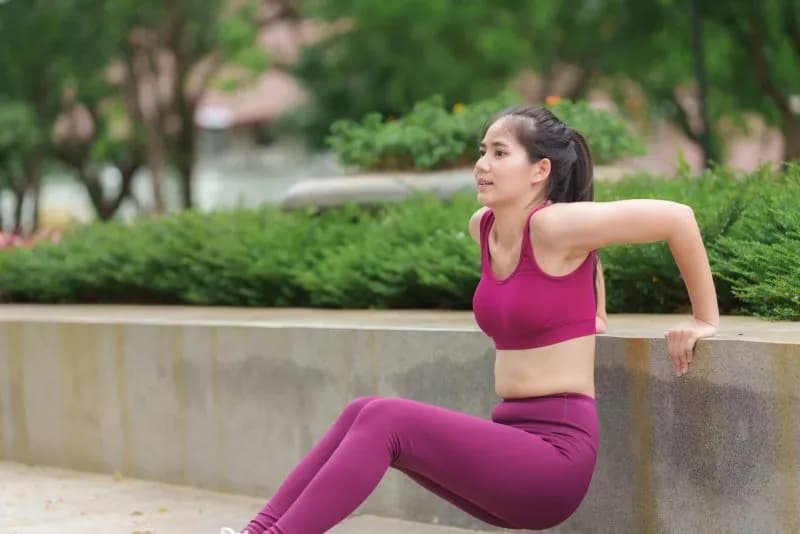
Stand with your back flat against a wall, lower until thighs are parallel to the floor, and hold. This targets the quadriceps, glutes, and calves simultaneously. Start with 20–30 seconds per set. Build to 60 seconds over four weeks.
Plank Hold
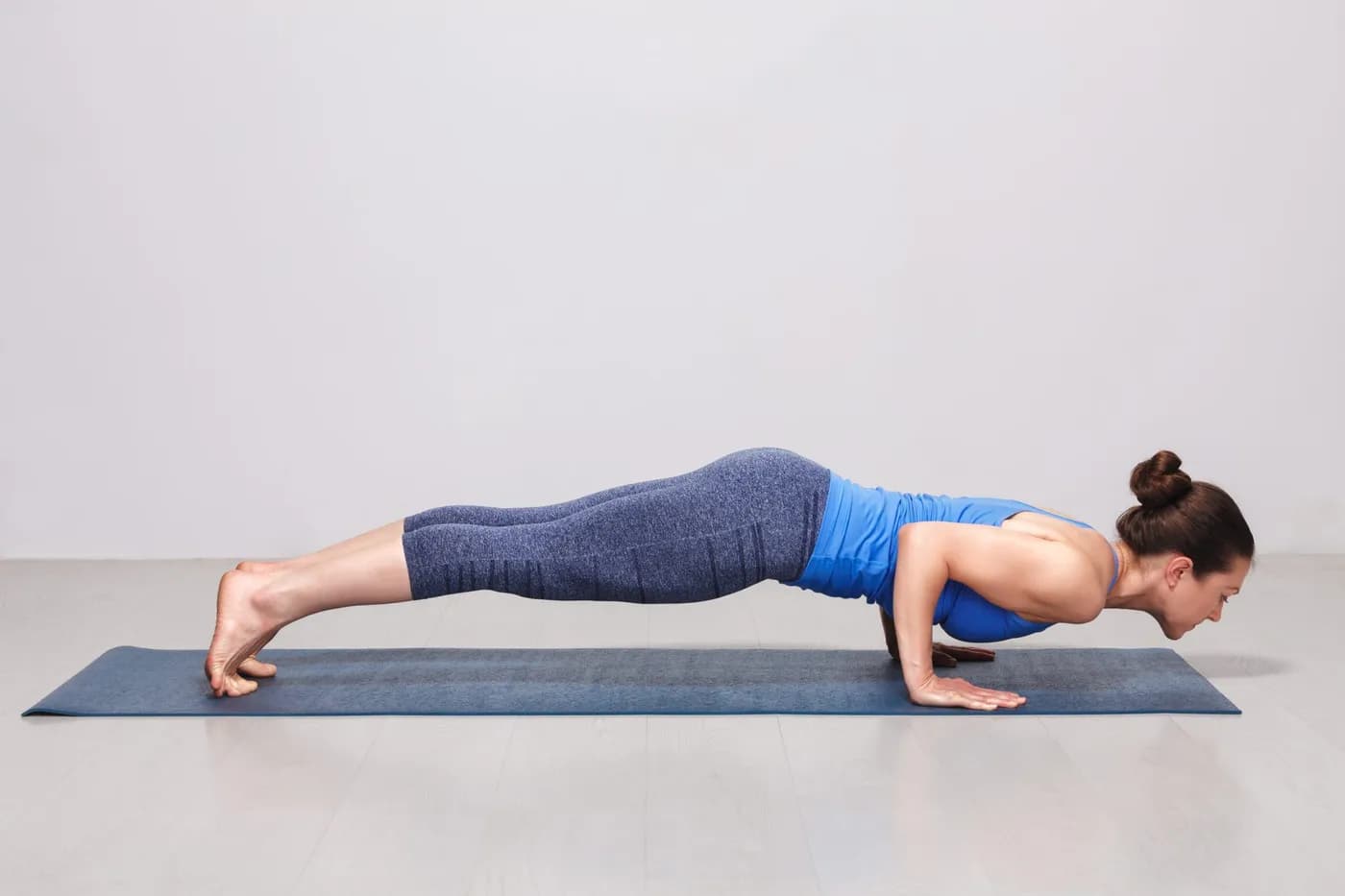
Forearms or straight arms on the mat, body in a rigid line from heels to crown. The plank is a full-body isometric that primarily challenges the core, shoulders, and hip flexors. Aim for 3 sets of 30–45 seconds. Focus on bracing your abs as if bracing for a punch.
Glute Bridge Hold
Lie on your back, feet flat, knees bent. Drive your hips up and hold at the top, squeezing the glutes hard. This strengthens the posterior chain — glutes, hamstrings, and lower back. Hold for 20–40 seconds per set, 3 sets.
Dead Hang
Grip a sturdy overhead bar and simply hang. This decompresses the spine, builds grip strength, and trains the lats and shoulder stabilizers. Start with 15–20 seconds. Progress toward 45 seconds.
Hollow Body Hold
Lie on your back, arms extended overhead, legs straight and raised to about 30 degrees. Press your lower back into the floor and hold. This trains the anterior chain — essential for overall body control. Hold for 20–30 seconds per set.
Side Plank Hold
Stack your feet or stagger them for easier balance, raise your hips off the ground, and hold. The side plank isolates the obliques and lateral hip stabilizers — muscle groups that conventional exercises often miss. Hold 20–30 seconds per side.
Isometric Push-Up Hold (Mid-Point)
Lower into the mid-point of a push-up and hold the position without resting on the floor. This creates intense chest, tricep, and anterior shoulder activation. Begin with 10–15 second holds for 3 sets and progress to 30 seconds.
Common Mistakes to Avoid
- Poor Form Under Fatigue The most common error is compensating when the hold gets uncomfortable — letting hips sag in a plank or rounding the lower back in a wall sit. The moment your form breaks, end the set. A shorter clean hold beats a long sloppy one every time.
- Skipping the Warm-Up Cold muscles are less responsive to static contractions and more prone to strain. Spend 5–7 minutes on dynamic movement — leg swings, arm circles, hip rotations — before your first hold. This also improves the quality of muscle activation during the session.
- Overtraining Frequency Because isometric holds don’t create the same micro-tear soreness as dynamic training, many beginners assume they can train daily without consequence. Muscles still need 48 hours to recover and adapt. Three to four sessions per week is optimal for most people starting out.
- Inconsistency The most significant results from isometric training appear after six to eight consistent weeks. Missing sessions repeatedly resets the adaptation clock. Build the habit first — even two 20-minute sessions per week is better than perfect planning with no follow-through. Understanding what strength training exercises actually achieve can help you stay motivated during the early weeks.
Who Should Try Isometric Training?
- Beginners Isometric holds are ideal for anyone new to structured exercise. There are no complex movement patterns to learn, the risk of injury is low, and you can scale every exercise by adjusting hold duration. It’s one of the most accessible entry points into muscle strengthening exercises at home.
- Women Many women avoid strength training out of concern it will cause bulk. Isometric training builds lean, defined muscle without the heavy-load hypertrophy associated with bodybuilding. It supports bone density, improves posture, and enhances how you feel — not just how you look. Strength training for women covers this in further depth.
- Older Adults For adults over 50, maintaining muscle mass and joint stability becomes increasingly important. Isometric exercises place less stress on cartilage and tendons than dynamic lifting, making them a practical option for gradual, consistent strengthening. Always consult your doctor before starting any new exercise program, particularly if you have existing joint or cardiovascular conditions.
- Working Professionals Long hours at a desk compress the spine, tighten hip flexors, and weaken postural muscles. A 20-minute isometric session — including planks and glute bridge holds — directly counters these effects. No commute, no equipment, no excuses.
Build Strength with a Routine That Actually Works
Building strength isn’t about doing random workouts — it’s about consistency, proper guidance, and following a structured plan that progresses intelligently. With the right support, you can train effectively from home and notice real, gradual improvement over time. Habuild’s Strong Everyday program gives you exactly that.
- Daily live guided strength sessions — including isometric holds and progressive bodyweight training
- Beginner-to-advanced progression built into the schedule
- No-equipment, home-friendly workouts
- Expert coaching to ensure correct form and prevent injury
- Community support to help you stay consistent week after week
Start Your Strength Training Journey
Not sure where to begin? Explore Habuild’s strength training for beginners guide to understand what your first few weeks should look like.
Related reads: Muscle Building Exercises at Home: Complete Guide · Best Exercises for Strengthening the Knee
Isometric holds and strengthening exercises deliver their real benefit through repeated practice over weeks, not through a single tough session. A structured program keeps that repetition purposeful, gradually increasing hold times and intensity as your body adapts. Strong Everyday is designed to guide exactly that kind of progressive, at-home strength training.
Frequently Asked Questions
Related Articles

Muscle Building Exercises at Home: Complete Guide
Discover the best muscle building exercises at home — no gym needed. Build strength, boost metabolism & start your ₹1 trial with Habuild today.

Strength Training for Muscle Gain: Complete Guide
Discover the best strength training for muscle gain with exercises, beginner tips, and a home workout plan. Start your 14-day free trial trial with Habuild today.

Does Muscle Gain Increase Weight? What the Scale is Not Telling You
Muscle is roughly 18% denser than fat by volume, so a given weight of muscle takes up less space — the scale can rise, stay flat, or fall while the body visibly transforms. See what the scale isn't telling you.

How to Increase Muscle Mass: a Practical Home Training Guide
Progressive overload, adequate protein, and proper recovery working together are what actually build muscle, whether training with bodyweight or dumbbells. See the practical home training guide.

What Is Hypertrophy Training? Benefits, Exercises & Tips
Discover what is hypertrophy training, how it builds muscle, key exercises, and who it suits. Start your strength journey with Habuild — try free for 14 days.