
How to Increase Muscle Mass: a Practical Home Training Guide
Progressive overload, adequate protein, and proper recovery working together are what actually build muscle, whether training with bodyweight or dumbbells. See the practical home training guide.

Key Takeaways
- Each kilogram of skeletal muscle burns roughly 6-10 calories daily at rest, modest but compounding.
- Muscle is named the body’s primary glucose disposal site, directly improving blood sugar control.
- Stronger leg muscles are called the single best predictor of healthy ageing for fall prevention.
- A 2000 study found muscle mass declines progressively after age 30 without resistance training.
- Most adults gain 0.25-0.5 kg of skeletal muscle monthly with consistent training.
- Resistance bands are named an excellent budget alternative to dumbbells for home training.
Increasing muscle mass requires three things working together: progressive overload, adequate protein, and proper recovery. Whether you are training at home with bodyweight exercises or with dumbbells, this guide covers how to increase muscle mass naturally, including approaches for women, men, and adults seeking to rebuild lost muscle. The methods are evidence-backed and the timelines are realistic.
10 Benefits of Increasing Muscle Mass
- Improves Body Composition — More muscle and less fat is the body composition most people want. Direct muscle training is the most efficient path.
- Boosts Resting Metabolism — Each kilogram of skeletal muscle burns roughly 6 to 10 calories per day at rest. Modest individually but compounds across larger muscle mass and consistent training.
- Strengthens Bones — Muscle mass and bone density rise together. Resistance training reduces osteoporosis risk substantially in adults over 40.
- Improves Insulin Sensitivity — Muscle is the body's primary glucose disposal site. More muscle improves blood sugar control measurably.
- Reduces Fall Risk — Stronger leg muscles reduce fall risk meaningfully in adults over 50 — the single best predictor of healthy ageing.
- Supports Better Posture — Stronger upper-back and core muscles maintain the upright posture that prevents chronic neck and back pain.
- Improves Athletic Performance — Muscle mass directly correlates with strength, speed, and power output in nearly every sport.
- Increases Energy Levels — More muscle means daily activities feel easier. The energy carryover into work, parenting, and recreation is substantial.
- Improves Mental Health — Resistance training reduces anxiety and depressive symptoms with effects measurable within 8 to 12 weeks.
- Slows Age-Related Decline — Muscle mass declines progressively after age 30 without training, with the rate varying by activity level. Direct training reverses much of this trend.
How to Get Started Increasing Muscle Mass
What You Need to Begin
Bodyweight only for the first 8 to 12 weeks. After that, a pair of dumbbells (5 to 15 kg) accelerates progress. Resistance bands are an excellent budget alternative.
Setting Realistic Goals
Most adults gain 0.25 to 0.5 kg of skeletal muscle per month with consistent training. Visible body composition change takes 6 to 12 months. Patience is the differentiator between people who succeed and those who quit.
Start with the Basics
Compound exercises (squats, push-ups, rows) build the most muscle in the least time. The pattern fits inside a complete strength training programme that sequences movements for total adaptation.
Best Exercises for Muscle Mass
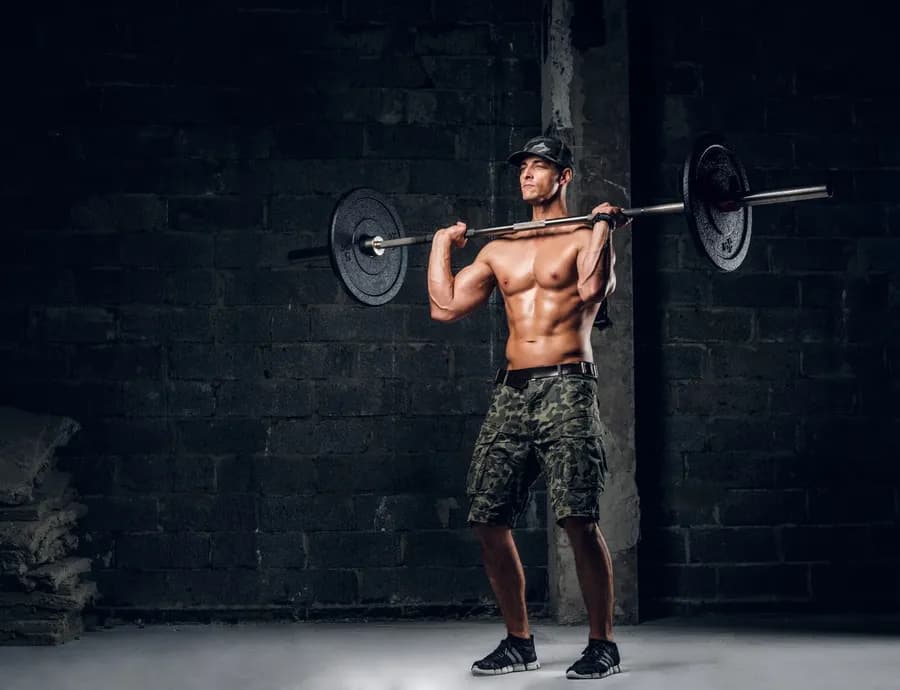
Squats
3 sets of 8 to 12 reps. The single best lower-body muscle builder. Bodyweight first, then weighted.
Push-Ups
3 sets of as many clean reps as possible. The foundation upper-body bodyweight exercise. Builds chest, shoulders, and triceps.
Bent-Over Dumbbell Row
3 sets of 10 reps per side. Builds the lats and middle back, completing the chest work for balanced upper-body development.
Lunges
3 sets of 10 reps per side. Single-leg work that fixes left-right strength imbalances most squats hide.
Overhead Press
3 sets of 8 to 10 reps with dumbbells. Builds the front and side shoulders for the rounded shape that completes the upper body.
Romanian Deadlift
3 sets of 10 reps. Builds the hamstrings and glutes that lunges and squats partially miss.
Plank
3 sets of 30 to 60-second holds. Builds the deep core stabilisers that support every other lift.
Common Mistakes to Avoid
- No Progressive Overload — Doing the same workout every week stalls muscle growth. Add weight, reps, or sets every 1 to 2 weeks.
- Inadequate Protein — 1.2 to 1.6 grams of protein per kg bodyweight per day is the muscle-building threshold. Below this, growth stalls.
- Skipping Sleep and Recovery — Muscle grows during 7 to 9 hours of sleep. Less than 6 hours per night cuts muscle growth substantially.
- Cardio Before Strength — Cardio before lifting reduces strength output noticeably. Lift first, cardio second on the same day. The trade-off and balance is covered in cardio and strength training workout plan, which addresses how to combine them without losing muscle gains.
Who Should Try Muscle Building?
- Beginners — Beginners gain muscle fastest. The first year often delivers substantial newbie gains for previously untrained adults, typically 4 to 8 kg of lean mass for men and proportionally less for women.
- Women — How to increase muscle mass for females uses the same protocol as men with proportionally smaller absolute gains. The toned, defined look comes from muscle, not from cardio alone.
- Older Adults — Muscle building works at any age. Adults over 60 gain at slower rates but the absolute strength gain is similar. Always consult a doctor first if joint or chronic conditions are present.
- Hardgainers — Skinny adults who struggle to gain muscle usually undereat. Fast muscle gain requires both training stimulus and a moderate calorie surplus.
Build Strength with a Routine That Actually Works
Building muscle is not about doing random workouts. It is about consistency, progressive overload, and following a structured plan. With the right support, you can train effectively from home and see real progress over months. Habuild's structured progression takes the same approach you will find in our broader work on resistance training muscle growth, where the science of muscle hypertrophy is applied to home training.
What you get with Habuild's Strong Everyday Programme:
- Daily live guided strength and yoga sessions
- Beginner to advanced progression
- No-equipment and home-friendly workouts
- Expert guidance to ensure correct form
- Community support to stay consistent
Related reads: Diet for Strength Training: a Practical Eating Guide for Muscle and Recovery · Muscle Mass Kaise Badhaye | मसल्स बढ़ाने के तरीके
Progressive overload, protein and recovery all need to work together over months, and that kind of coordination is exactly what a structured programme handles better than a routine pieced together week to week on your own. Muscle mass responds to consistency far more than to any single workout. Habuild's Strong Everyday program is designed to manage that progression for you, at home, without equipment.
Frequently Asked Questions
Related Articles

What Are Crunches: a Complete Guide to the Classic Ab Exercise
Crunches bias the upper portion of the rectus abdominis, the visible six-pack muscle most beginners want to develop first — though most people perform them poorly. See the complete guide.
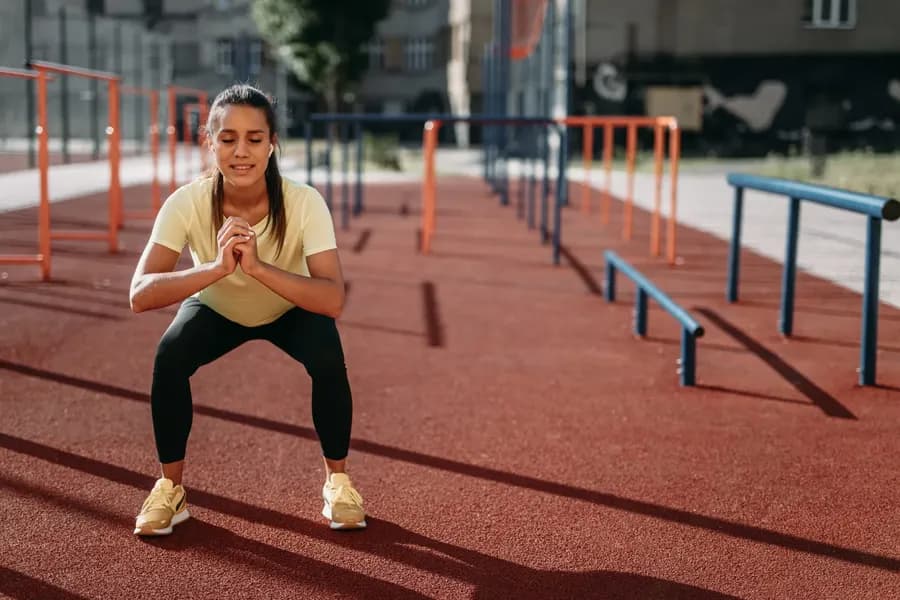
Benefits of Squats for Women — 7 Real Results from Daily Practice and What to Expect Honestly
Consistent daily squat practice produces measurable results in glute shape, leg strength, and posture within 8-12 weeks — the 'bulky thigh' myth doesn't hold up given women's hormonal profile. See all 7 real results.
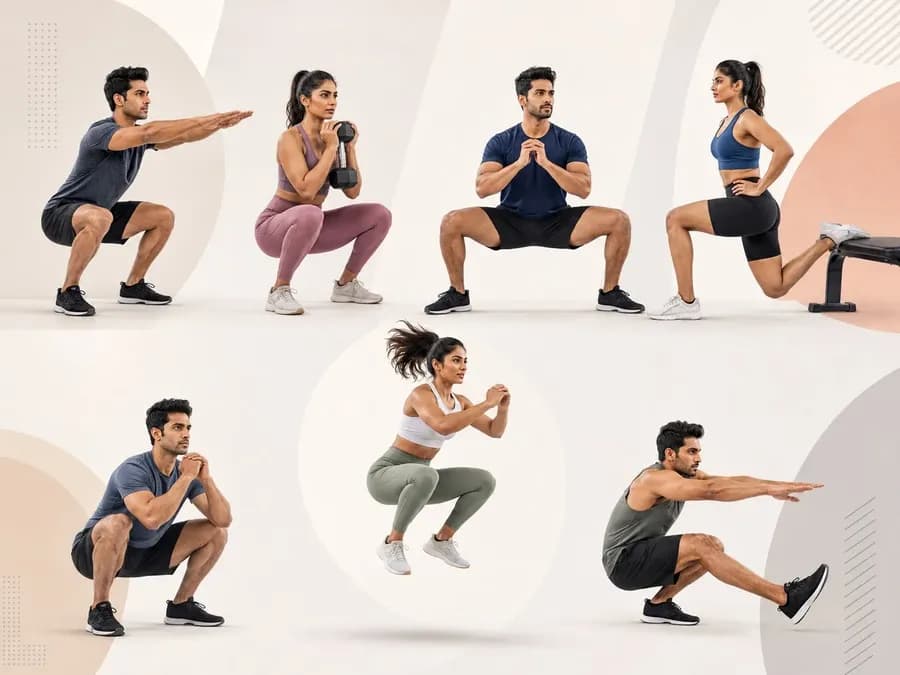
Different Types of Squats — 7 Variations to Build Stronger Legs, Glutes, and Functional Strength
The right squat variations target different muscles, mechanical positions, and movement patterns, building complete lower-body strength rather than partial development. See all 7 most effective variations.