
Muscle Building Exercises at Home: Complete Guide
Discover the best muscle building exercises at home — no gym needed. Build strength, boost metabolism & start your ₹1 trial with Habuild today.

Key Takeaways
- Push-ups, squats, lunges, planks, and glute bridges stimulate muscle growth without a gym.
- Most people notice real strength gains within 3-4 weeks and visible definition within 8-12 weeks.
- Strength training creates an afterburn effect (EPOC) that continues burning energy post-workout.
- Muscle tissue burns more calories at rest than fat tissue, gradually raising resting metabolism.
- Core, back, and shoulder exercises correct muscle imbalances caused by long hours of sitting.
- All exercises can be done with just a yoga mat and bodyweight – no membership fees needed.
Muscle building exercises at home use bodyweight movements — push-ups, squats, lunges, planks, and glute bridges — to stimulate muscle growth without a gym. With consistent effort and correct form, most people notice real strength gains within 3–4 weeks and visible muscle definition within 8–12 weeks.
If you've been wondering whether you can build real muscle without a gym, the answer is yes — and muscle building exercises at home are often more sustainable than gym routines. No commute, no waiting for equipment, and no excuses. Whether you're a complete beginner or returning to fitness after a long break, home-based strength training helps you build lean muscle, improve posture, and feel noticeably stronger over time.
8 Benefits of Muscle Building Exercises at Home
- Builds Lean Muscle Without Equipment Bodyweight resistance is more than enough to stimulate muscle growth, especially in the early months. Movements like push-ups, squats, and dips progressively challenge your muscles when performed with proper form and consistent intensity.
- Boosts Metabolism Muscle tissue burns more calories at rest than fat tissue. As you add lean muscle through regular training, your resting metabolic rate gradually improves — making it easier to manage body weight over time. Learn more about strength training for metabolism and how it supports long-term body composition.
- Improves Bone Density Resistance-based exercises place healthy stress on bones, encouraging them to stay dense and strong. This is particularly valuable as you age, when natural bone loss accelerates.
- Enhances Functional Strength Everyday tasks — carrying groceries, climbing stairs, lifting children — become noticeably easier when your muscles are regularly trained. Functional strength is one of the most underrated benefits of home workouts.
- Supports Fat Loss Strength training creates an afterburn effect (EPOC), where the body continues to use energy even after the workout ends. Paired with a reasonable diet, this supports gradual fat loss without the need for long cardio sessions.
- Improves Posture Core, back, and shoulder exercises correct muscle imbalances caused by long hours of sitting. Over weeks of consistent training, posture improves noticeably.
- No Gym or Equipment Required All exercises in this guide can be done with just a yoga mat and your bodyweight. No membership fees, no travel time, no dependency on machines.
- Supports Mental Well-Being Regular strength work releases endorphins and creates a daily sense of accomplishment. Many people find that consistent home workouts help them manage stress and sleep better over time.
How to Get Started with Muscle Building at Home
What You Need to Begin
Very little. A yoga mat, enough floor space to extend your arms, and a consistent schedule are the three essentials. No dumbbells, no resistance bands, and no pull-up bar are required at the beginner stage. As you progress, a pair of light dumbbells or a resistance band can add variety — but they're optional.
Setting Realistic Goals
Most beginners notice improved strength within 3–4 weeks and visible muscle definition within 8–12 weeks of consistent training. Set goals around consistency rather than appearance — aim to complete 4 sessions per week rather than "get a six-pack in 30 days." Overtraining is a real risk: rest days allow your muscles to recover and grow, so build them into your plan from day one.
For a structured approach, this guide on how to do strength training at home is worth reading before you begin.
Start with the Basics
Beginners should focus on mastering 5–6 foundational movements before adding complexity. These movements train the major muscle groups, build coordination, and reduce injury risk. Start with 2 sets of 8–10 reps each, resting 60–90 seconds between sets. Once the basics feel comfortable, progress to 3–4 sets with shorter rest periods.
Best Muscle Building Exercises at Home
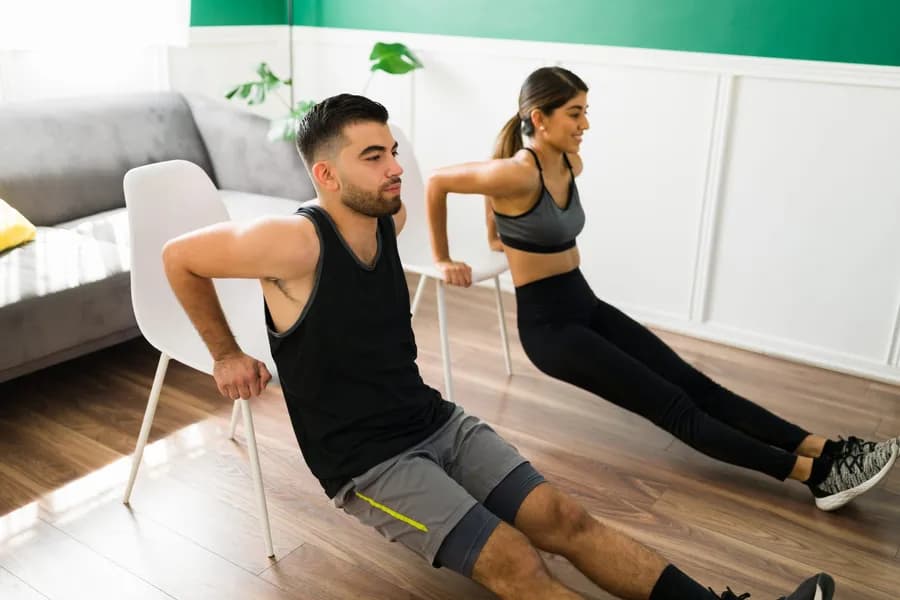
Push-Ups
The single most effective chest, shoulder, and tricep builder you can do without equipment. Keep your core tight, lower your chest to just above the floor, and push back up in a controlled motion. Start with 3 sets of 10. Progress to wide-grip, diamond, or decline push-ups as you get stronger.
Targets: Chest, shoulders, triceps, core
Squats
The foundation of lower body strength. Stand with feet shoulder-width apart, lower until thighs are parallel to the floor, then drive through your heels to stand. Keep your chest up and knees tracking over your toes throughout. Progress to jump squats or Bulgarian split squats for added challenge.
Targets: Quadriceps, glutes, hamstrings, core
Sets/Reps: 3 sets of 12–15
Plank
The most efficient core exercise for building deep stabilising muscles. Hold a high plank position — arms straight, body in a straight line from head to heel — for 30–60 seconds. Avoid letting your hips sag or rise. For a structured progression plan, explore core strength plank exercises.
Targets: Core, shoulders, lower back
Sets/Duration: 3 holds of 30–60 seconds
Lunges
Step forward with one foot, lower your back knee to just above the floor, then return to standing. Lunges train each leg independently, correcting imbalances and building functional strength. Add a forward lean for more glute activation.
Targets: Quads, hamstrings, glutes, calves
Sets/Reps: 3 sets of 10 per leg
Glute Bridges
Lie on your back with knees bent. Drive your hips toward the ceiling, squeezing your glutes at the top, then lower slowly. This is one of the best movements for the posterior chain — glutes, hamstrings, and lower back — and requires no equipment whatsoever.
Targets: Glutes, hamstrings, lower back
Sets/Reps: 3 sets of 15
Dips (Using a Chair)
Place your hands on the edge of a sturdy chair, extend your legs forward, and lower your body by bending the elbows. Push back up to full extension. This movement effectively targets the triceps and chest without any gym equipment.
Targets: Triceps, chest, shoulders
Sets/Reps: 3 sets of 8–12
Superman Hold
Lie face down, then simultaneously raise your arms, chest, and legs off the floor. Hold for 2–3 seconds before lowering. This movement strengthens the entire posterior chain and gradually eases lower back discomfort through consistent practice.
Targets: Lower back, glutes, upper back, hamstrings
Sets/Reps: 3 sets of 10–12
Common Mistakes to Avoid
- Poor Form Rushing through reps with bad technique is the fastest route to injury and the slowest route to muscle gain. Slow, controlled reps with full range of motion are far more effective than fast, sloppy ones. If you're unsure of your form, train in front of a mirror or follow a guided session until the movements feel natural.
- Skipping Warm-Up Cold muscles are stiff and far more prone to strains. Spend 5–7 minutes on light movement — arm circles, leg swings, and cat-cow stretches — before every session. A proper warm-up also prepares the nervous system for heavier effort, improving your overall performance.
- Overtraining More is not always better. Muscles grow during rest, not during the workout itself. Training the same muscle group every day without adequate recovery leads to fatigue, plateau, and injury. Plan at least one full rest day between sessions targeting the same muscles.
- Inconsistency This is by far the most common reason people don't see results. Two weeks of hard training followed by two weeks off produces virtually no lasting change. A manageable routine done consistently over months — even if it's just 4 sessions per week — will always outperform occasional intense bursts. Build that habit with strength training for beginners as your starting framework.
Who Should Try Muscle Building Exercises at Home?
- Beginners Home training is actually ideal for beginners. The learning curve is gentler, you can move at your own pace, and bodyweight resistance is perfectly appropriate for building a foundation. There's no intimidating gym environment, no peer pressure, and no equipment to figure out. Start with the basics, focus on form, and progress gradually.
- Women A persistent myth suggests that strength training will make women "bulky." It won't. Women have significantly lower testosterone levels than men, making substantial muscle bulk biologically unlikely without specific pharmaceutical intervention. What consistent strength training does for women is build lean muscle definition, improve bone density, support hormonal balance, and increase resting metabolism. Strength training for women is one of the most effective investments in long-term health.
- Older Adults Muscle loss (sarcopenia) accelerates after the age of 35 and significantly so after 50. Home-based strength training helps slow this process, maintains mobility, and supports bone density — all of which directly affect quality of life. Movements should be low-impact, controlled, and progressive. Always consult your physician before starting a new exercise programme if you have existing health conditions.
- Working Professionals No commute, no waiting for machines, and no scheduling around gym hours. A 30-minute home session done consistently 4–5 days per week delivers measurable results. The posture benefits alone — strengthening back and core muscles weakened by desk work — make this an especially practical choice for people who spend long hours seated.
Build Strength with a Routine That Actually Works
Building muscle at home isn't about doing random workouts whenever you feel motivated — it's about showing up consistently, following a structured plan, and having expert guidance to keep your form and progression on track. That's exactly what Habuild's Strong Everyday programme is designed for.
- Daily live guided strength and yoga sessions
- Beginner to advanced progression built in
- No equipment required — home-friendly from day one
- Expert coaches to ensure correct form and prevent injury
- An active community that keeps you consistent
Related reads: Muscle Strengthening Exercises at Home · Best Home Exercises for Muscle Gain
Building muscle at home comes down to progressive overload applied consistently, not to any one exercise being especially effective. Without a plan guiding that progression, it's easy to plateau or lose momentum after the first few weeks. Habuild's Strong Everyday program structures that progression for you, so your at-home training keeps moving forward.
Frequently Asked Questions
Related Articles
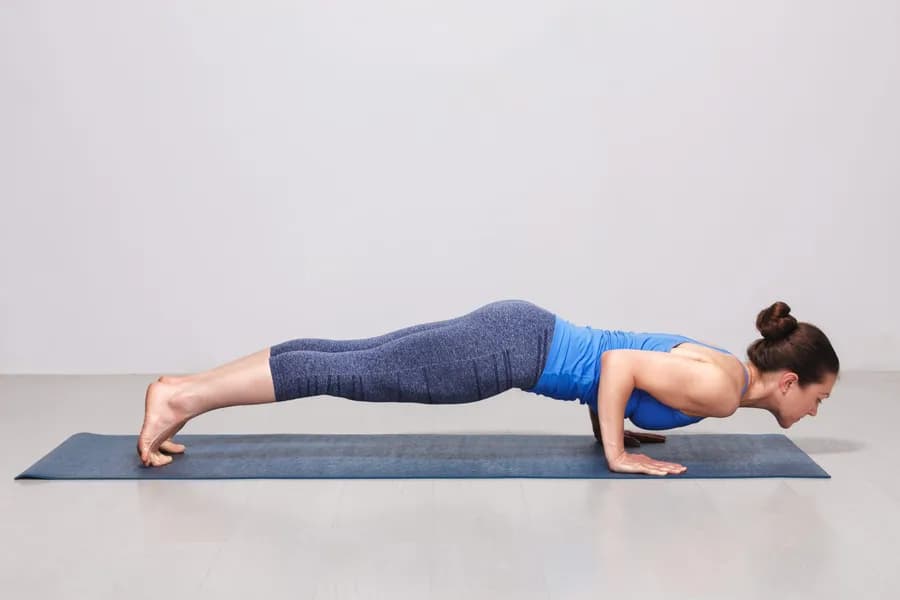
Muscle Strengthening Exercises at Home
Discover the best muscle strengthening exercises at home — including isometric holds. Start your 7-day trial for 14-day free trial with Habuild's guided strength program.

Strength Training for Muscle Gain: Complete Guide
Discover the best strength training for muscle gain with exercises, beginner tips, and a home workout plan. Start your 14-day free trial trial with Habuild today.
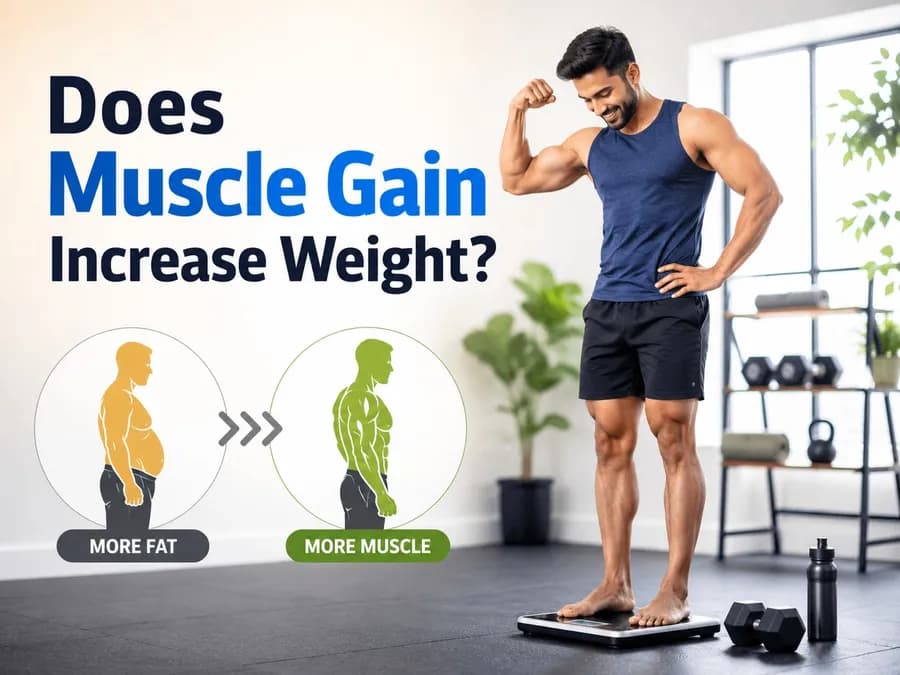
Does Muscle Gain Increase Weight? What the Scale is Not Telling You
Muscle is roughly 18% denser than fat by volume, so a given weight of muscle takes up less space — the scale can rise, stay flat, or fall while the body visibly transforms. See what the scale isn't telling you.

How to Increase Muscle Mass: a Practical Home Training Guide
Progressive overload, adequate protein, and proper recovery working together are what actually build muscle, whether training with bodyweight or dumbbells. See the practical home training guide.

How to Build Body at Home: the Complete No-Equipment Muscle Building Guide
The best available workout is the one performed daily, not the theoretically best programme that requires a commute and a fee. See the complete no-equipment muscle building guide.