
Neck Exercises for Pain Relief: Stretches, Routines & What Actually Works
Stretches, mobility drills, and isometric holds reduce neck tension and restore range of motion, with noticeable improvement within two to three weeks. See the routines that actually work.

Key Takeaways
- Forward head posture from screen use keeps neck muscles contracted for hours at a time.
- Weak deep cervical flexors and tight upper traps are the two biggest postural culprits.
- Tension headaches often root in the suboccipital and upper trapezius muscles.
- Gentle cervical traction and rotation can ease nerve compression symptoms like tingling.
- Noticeable improvement typically appears within two to three weeks of daily practice.
Neck exercises for pain relief are structured movements — stretches, mobility drills, and isometric holds — that reduce muscle tension, restore cervical range of motion, and build the muscular support that keeps discomfort from returning. Most require no equipment and show noticeable improvement within two to three weeks of consistent daily practice.
If you spend hours at a desk, on your phone, or driving, you already know that familiar tightness — the kind that creeps up your neck and makes turning your head feel like work. Neck exercises for pain relief are one of the most practical, evidence-backed ways to gradually ease that tension, restore mobility, and build muscular support that keeps discomfort from coming back. This guide covers where to start, which movements deliver the most value, and the mistakes that undo progress.
6 Key Benefits of Neck Exercises for Pain Relief

- Reduces Chronic Muscle Tension Sustained postures — particularly forward head posture from screen use — cause the neck muscles to stay contracted for hours at a time. Targeted movement gradually coaxes those muscles to release, helping you feel noticeably lighter within a few sessions of consistent practice.
- Improves Range of Motion When neck stiffness sets in, even small everyday movements become effortful. Regular stretching and strengthening exercises work together to restore the full range of rotation, flexion, and extension your neck is designed to perform.
- Supports Better Posture Weak deep cervical flexors and tight upper traps are the two biggest postural culprits behind neck pain. Exercises that address both — not just stretches, but also activation work — help realign the head over the spine. You can explore a broader set of exercises to improve posture that complement neck-specific work.
- Reduces Headache Frequency Tension headaches are often rooted in the suboccipital and upper trapezius muscles. When those muscles are consistently overloaded, pain radiates upward. Neck mobility and strengthening work may help reduce the frequency and intensity of these headaches over time with regular practice.
- Enhances Nerve Mobility Gentle cervical traction and rotation exercises create space in the intervertebral joints, which can help reduce nerve compression symptoms like tingling or mild radiating discomfort into the shoulder. Always consult a physician if you experience sharp or radiating nerve pain.
- Builds Long-Term Resilience A neck that is both mobile and strong is far less susceptible to injury. Strength-based exercises — chin tucks, isometric holds, scapular retractions — train the supporting musculature so your neck isn’t relying solely on passive structures to bear load through the day.
How to Get Started with Neck Pain Relief Exercises
What You Need to Begin
You need nothing more than a chair or a yoga mat. No resistance bands, weights, or equipment are required at the beginner stage. A rolled towel or small pillow can help support the neck in certain lying positions, but it is completely optional. The barrier to starting is genuinely low.
Setting Realistic Goals
Most people feel a meaningful reduction in tension within two to three weeks of daily practice. The goal at the start is not pain elimination — it is gradually building tolerance, mobility, and muscle endurance. Avoid pushing into sharp pain during any movement. Work within a comfortable range and expand it slowly over days, not hours.
Overtraining the neck is a real risk, especially with strengthening exercises. Two to three focused sessions per week for strengthening, combined with daily gentle mobility work, is a sustainable starting point.
Start with the Basics
Begin every session with three to five minutes of gentle shoulder rolls and scapular retractions to warm up the surrounding musculature before moving into the neck. Cold, stiff muscles are more susceptible to strain. Start with low-resistance, high-repetition patterns rather than attempting deep or forceful stretches from day one.
Best Neck Exercises for Pain Relief
Chin Tucks
Sit or stand tall. Gently draw your chin straight back — not down — creating a subtle double-chin position. Hold for 5 seconds, release. This retrains the deep cervical flexors and directly counteracts forward head posture. Aim for 10–15 repetitions per set, 2–3 sets daily.
Neck Side Flexion Stretch
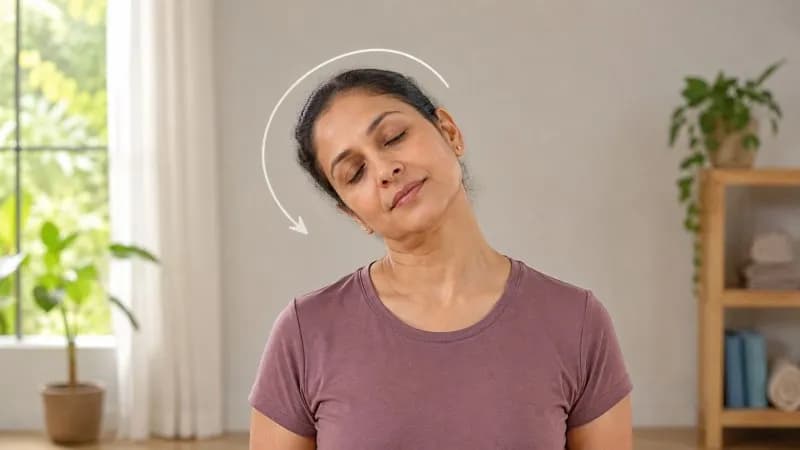
Sitting upright, slowly lower your right ear toward your right shoulder until you feel a gentle pull on the left side of the neck. Hold for 20–30 seconds, breathing steadily. Switch sides. This is one of the most effective stretches to relieve neck pain caused by lateral muscle tightness from carrying bags, sleeping awkwardly, or one-sided screen use.
Cervical Rotation
Turn your head slowly to the right until you reach your comfortable end range. Hold briefly, then return to centre and rotate left. Perform 8–10 repetitions each side. Never force or bounce the movement. Gradual, controlled rotation maintains joint health and restores range of motion over time.
Neck Flexion and Extension
Lower your chin toward your chest (flexion) and hold for 15–20 seconds, feeling the stretch across the back of the neck. Then gently look upward (extension) to a comfortable range — avoid compressing the cervical spine by over-extending. This pairing works the full anterior-posterior range and is especially useful as an exercise to relax neck muscles after prolonged sitting.
Isometric Neck Strengthening
Place your palm against your forehead and gently push forward while your neck resists the movement — no actual movement should occur. Hold for 5–7 seconds. Repeat with hand on the back of the head, then on each side of the temple. This builds deep cervical strength without loading the spine. Perform 3 holds in each direction per session.
Scapular Retraction
Sit or stand with arms relaxed. Squeeze your shoulder blades together and slightly downward, as if tucking them into your back pockets. Hold for 5 seconds, release. This relieves the chronic upper trapezius overload that often feeds neck tension. Do 15–20 repetitions. Exercises for rounded shoulders pair well with neck-specific work for a more complete upper-body approach.
Upper Trapezius Stretch with Overpressure
Drop your right ear toward your right shoulder. With your right hand, very gently add a few grams of extra pressure by placing it lightly on the left side of your head — do not pull. Breathe into the stretch for 30 seconds. This targets the upper trapezius more deeply than passive gravity alone and is one of the most reliable long-term stretches to relieve neck pain from desk-bound tension.
Common Mistakes to Avoid
- Poor Form The most common error is combining neck movements with shoulder or trunk compensation. If you are rotating your head but your shoulders are also rotating, you are not actually increasing cervical mobility — you are just moving the whole upper body together. Focus on isolating the neck, keeping the torso and shoulders still throughout each movement.
- Skipping the Warm-Up Jumping straight into deep stretches on a cold, tight neck increases the likelihood of microstrain. Three to five minutes of shoulder circles, arm swings, and scapular rolls prepares the surrounding tissue and makes every subsequent movement more effective and safer.
- Overtraining More repetitions do not mean faster progress when it comes to neck rehabilitation. The cervical spine is a sensitive area. Excessive daily strengthening — particularly heavy isometric holds — can increase inflammation rather than reduce it. Two to three focused strength sessions per week, with daily gentle mobility work, is far more effective than daily intense loading.
- Inconsistency A single session of neck exercises will produce temporary relief, not structural change. The muscles, joints, and connective tissue adapt over weeks of regular practice. Sporadic effort — two sessions one week, nothing the next — delivers very little lasting benefit. Consistency is the single biggest predictor of outcome, and it is the one variable entirely within your control.
Who Should Try Neck Exercises for Pain Relief?
- Beginners If you have never followed a structured movement practice, neck exercises are an ideal starting point precisely because they require no equipment, take under 15 minutes, and produce noticeable improvements in comfort relatively quickly. Begin with gentle mobility work and add isometric strengthening only after two to three weeks of regular practice. Strength training for beginners is a useful companion resource for building a broader foundational routine alongside neck-specific work.
- Women Women are disproportionately affected by tension-related neck pain due to a combination of factors including hormonal variation, posture patterns, and occupational demands. Neck exercises and complementary upper-body strength training build postural resilience without adding bulk — they create a functional, supported frame that makes daily life more comfortable.
- Older Adults Age-related changes in cervical disc hydration and joint mobility make neck pain increasingly common after 45. Gentle range-of-motion exercises and low-load isometric strengthening are generally safe and supportive for this group, though anyone with diagnosed cervical spondylosis, disc herniation, or stenosis should consult a physiotherapist before beginning. This content is informational and does not replace medical advice.
- Working Professionals If you spend six or more hours a day at a desk or on a screen, your neck is under sustained postural load for most of your waking hours. A 10-minute structured neck routine — ideally split between morning and a midday break — can make a significant difference to how you feel by end of day. It also protects against the progressive stiffness and tension headaches that tend to compound over months and years of sedentary desk work.
Build Strength with a Routine That Actually Works
Building lasting relief from neck pain isn’t about doing random stretches — it’s about consistency, guided progression, and a structured plan that addresses both mobility and strength together. With the right support, you can train effectively from home and feel real progress week by week.
What You Get with Habuild’s Strong Everyday Program:
- Daily live guided strength and mobility sessions
- Beginner-to-advanced progression with clear milestones
- No-equipment, home-friendly workouts
- Expert guidance to ensure correct form and safe loading
- Community support to help you stay consistent
If you want expert-guided neck and full-body strength sessions without leaving home, explore Habuild’s beginner-friendly strength training program — a structured path from tension and discomfort to genuine physical resilience.
Start Your Neck Pain Relief Journey
Related reads: How to Strengthen Neck Muscles: Exercises & Tips · Best Cardio for Fat Loss: Exercises, Tips & What Actually Works
Loosening a tight neck is a good start, but lasting comfort tends to depend on the muscles around it staying consistently supported through varied movement, not just occasional stretching. A well-rounded strength routine that trains the neck alongside the shoulders and upper back can complement that targeted work rather than replace it. For that broader foundation, Habuild’s Strong Everyday program offers guided sessions built around posture and upper-body strength over time.
Frequently Asked Questions
Related Articles
Hip Exercises for Pain: Best Moves to Feel Better at Home
Targeted hip movements strengthen the muscles around the joint and can meaningfully ease discomfort from bursitis, osteoarthritis, or impingement. See the best moves to try at home.

How to Strengthen Lower Back Muscles: Exercises, Tips & Routines
Targeted training of the erector spinae, multifidus, and quadratus lumborum builds the stability that protects the spine during everyday movement. See the exercises that work, no equipment needed.

How to Build Trapezius Muscles: Exercises, Tips, and a Routine That Works
Shrugs, face pulls, bent-over rows, and farmer’s carries target all three regions of the trap — noticeable strength and posture gains appear within six to eight weeks. See the full routine.
Foot Exercises for Flat Feet: Best Moves to Strengthen Your Arches
Targeted moves strengthen the arch, calf, and posterior tibialis to improve balance and lower-limb alignment — no equipment needed. See the best exercises for flat feet.
Best Exercise Routine for Beginners
Squats, push-ups, lunges, and planks done three days a week, with progressive difficulty, need no gym or equipment. See the full beginner routine.