Average Walking Speed by Age: What's Normal?
How fast do people normally walk, and does it change with age? Here's what research shows about average walking speed, why it matters for health and how to improve yours.
Key Takeaways
- Healthy adults usually walk at about 4.7 km/h, and about 6.2 km/h when walking fast.
- Walking speed tends to peak in middle age and slow down later in life.
- In older adults, every 0.1 m/s faster walking speed was linked to lower risk of death.
- A walking speed of about 1 m/s (3.6 km/h) or more is a good sign for people over 65.
- Regular walking, strength and balance exercises can help you keep a healthy pace.
What Is a Normal Walking Speed?
Most of us never think about how fast we walk. But walking speed turns out to be a useful number, both for planning walks and as a simple sign of overall health. So what counts as normal?
A 2021 review in Sports Medicine combined 35 studies with more than 14,000 healthy adults to answer exactly that question. It found that the average usual outdoor walking speed was about 1.31 metres per second, or about 4.7 km/h. When people were asked to walk fast, the average was about 1.72 metres per second, or about 6.2 km/h.
In practical terms, that means most healthy adults take about 12 to 13 minutes to walk 1 km at their normal pace, and about 10 minutes when they walk fast.
Walking Speed by Age
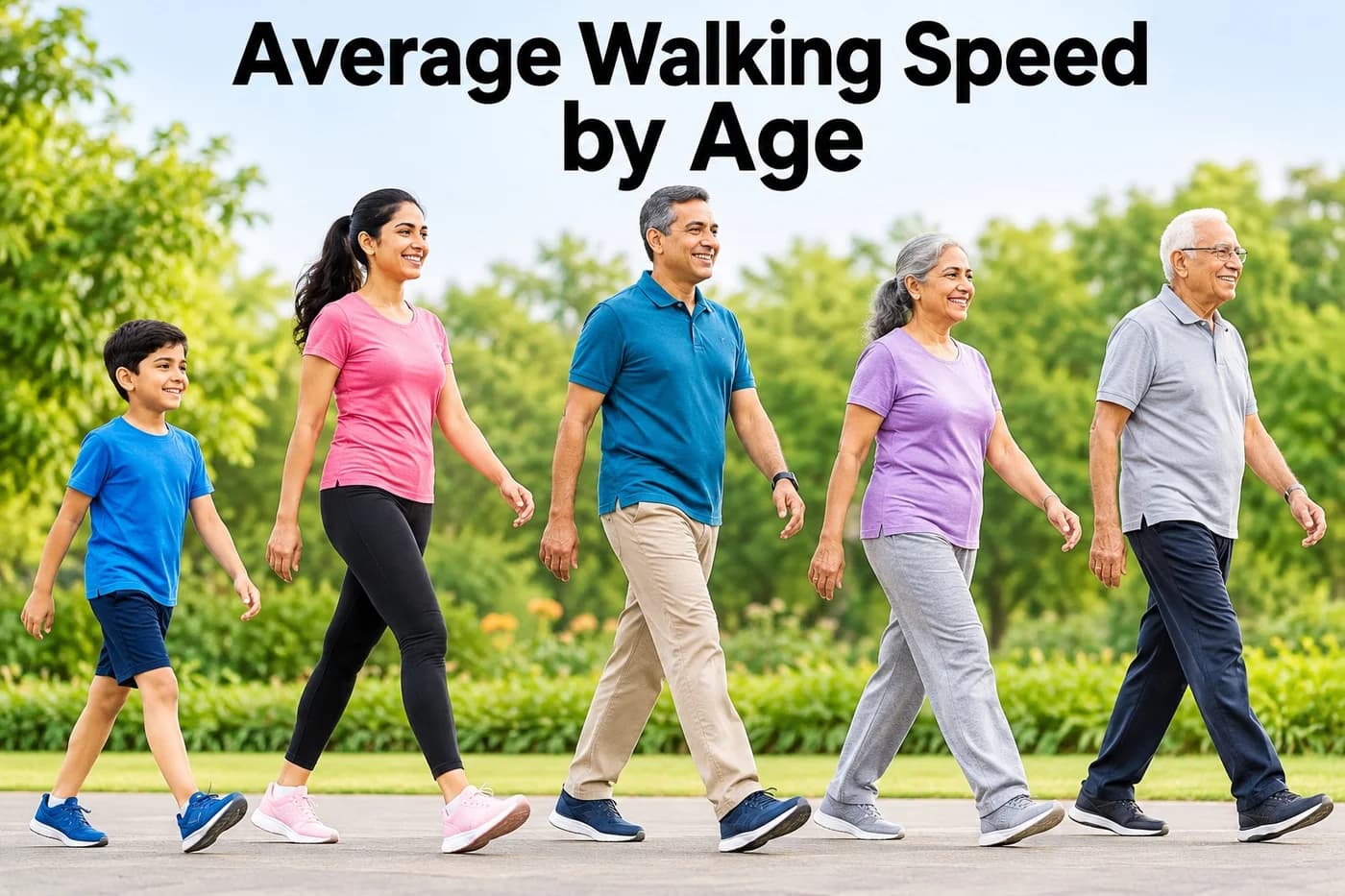
Walking speed doesn't stay the same throughout life. A large 2011 review in the journal Physiotherapy combined data from 41 studies and more than 23,000 people to look at how speed changes with age and sex. The fastest average speed was found in men aged 40 to 49, at about 1.43 m/s, or about 5.1 km/h. The slowest average speed was in women aged 80 to 99, at about 0.94 m/s, or about 3.4 km/h.
In general, walking speed stays fairly steady through early and middle adulthood and then slows down gradually from around the 60s and 70s. Men tend to walk slightly faster than women on average, partly because of differences in height and leg length.
What this means in practice
For younger and middle-aged adults, a usual pace of around 4.5 to 5 km/h is typical. In older adults, speeds often fall towards 3.5 to 4 km/h, and lower in the very old. But these are averages. Your own speed depends on your height, fitness, health and how much you walk, and many older adults who stay active walk faster than the average for their age.
Why Walking Speed Matters for Health
Walking speed is more than just a number. Doctors sometimes use it as a simple sign of overall health, especially in older adults, because walking draws on so many parts of the body at once.
A major 2011 study published in JAMA pooled data from 34,485 adults aged 65 and over from 9 earlier studies. It found that each 0.1 m/s increase in walking speed was linked to a lower risk of death, about 12% lower. A speed of about 0.8 m/s, roughly 2.9 km/h, matched the average life expectancy for a person's age and sex, while speeds of 1.0 m/s, about 3.6 km/h, or faster were linked to longer-than-expected survival.
The reason is that walking speed reflects the health of many systems together, including the heart, lungs, muscles, joints, balance and nerves. That's why a slow or slowing walking speed can be an early sign that something needs attention, and why staying active matters so much as we age.
What Affects Your Walking Speed?
Many everyday factors influence how fast you walk. Height and leg length play a part, which is one reason men tend to walk slightly faster than women on average. Fitness matters too: regular walkers usually move more quickly and comfortably than people who are inactive. Joint pain, foot problems, balance issues and breathlessness can all slow you down, as can carrying shopping bags or walking on crowded, uneven footpaths. Even your mood and how rushed you feel can change your pace from one day to the next, so check your speed a few times rather than relying on a single measurement.
How to Check Your Walking Speed
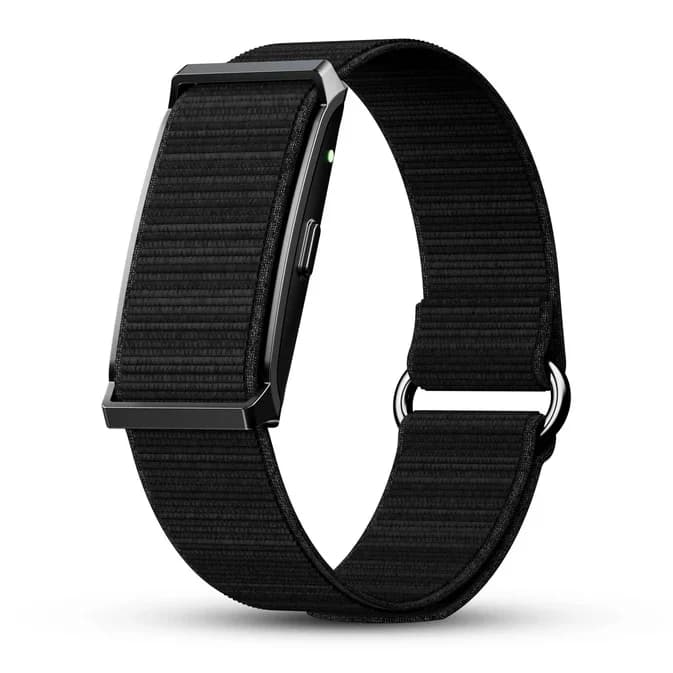
You can measure your walking speed at home or outdoors using a simple method or wearable fitness gadgets. Here are a few easy ways:
- Measure a distance: Choose a flat, measured distance, such as 10 metres in a corridor or on a walking path.
- Walk at your normal pace: Start walking a few steps before the starting line so you reach your natural speed before timing begins.
- Time yourself: Use your phone's stopwatch to record how long you take to cover the measured distance.
- Calculate your walking speed: Divide the distance by the time taken to get your speed in metres per second (m/s). Multiply the result by 3.6 to convert it into kilometres per hour (km/h).
For example: If you cover 10 metres in 8 seconds, your walking speed is 1.25 m/s or 4.5 km/h. - Use step-counter gadgets: Fitness bands, smartwatches and digital pedometers can track your daily steps, walking distance and, on many devices, walking pace or speed. Some smartphones also offer built-in step-counting features through health and fitness apps. These gadgets make it easier to monitor your walking activity and observe changes in your pace over time.
- Check your progress regularly: Compare your walking speed under similar conditions to understand whether your pace is improving or changing with age and fitness levels.
Safety tip: If you are older, have balance difficulties or feel unsteady while walking, ask someone to accompany you during the test. Stop if you experience dizziness, pain or unusual breathlessness.
How to Improve Your Walking Speed
The most effective way to improve your walking speed is simply to walk regularly, aiming for at least 150 minutes of brisk walking a week. Adding a few short, faster sections of 1 to 3 minutes to each walk can help you get used to a quicker pace.
Strength and balance matter too. Exercises such as sit-to-stands, step-ups and calf raises build the leg muscles you use to walk, while standing on one leg near a support can improve your steadiness. Supportive, well-fitting shoes help you walk with confidence. And if knee, hip or foot pain is slowing you down, get it checked, because treating the cause can make a big difference.
When to See a Doctor
Speak to a doctor if your walking has slowed noticeably in a short time, if you feel unsteady or have fallen, or if pain, breathlessness or weakness is slowing you down. Habuild's live sessions include walking along with exercises, yoga and breathing, and its Strong Everyday classes include leg-strengthening exercises. The Habuild app's Walk Daily habit helps you track your walks.
Editorial Sources
- Murtagh et al. – Outdoor walking speeds of apparently healthy adults, Sports Medicine (2021)
- Bohannon & Williams Andrews – Normal walking speed: a descriptive meta-analysis, Physiotherapy (2011)
- Studenski et al. – Gait speed and survival in older adults, JAMA (2011)
- WHO – Physical activity fact sheet
Health Disclaimer
This article is for general information only and is not medical advice. Please consult a doctor if your walking has slowed suddenly, you feel unsteady or you have fallen.
Frequently Asked Questions
Related Articles
10 Benefits of Walking for Men
Walking supports cardiovascular health, helps manage weight, and reduces stress — one of the most accessible daily habits, especially for men over 35 or.

Walking Exercise: a Complete Guide to Walking Programs, Treadmill Plans, and Daily Workouts
The difference between a casual stroll and a transformative walking routine isn't speed or distance — it's intentional pacing, consistent volume, and progression. See the complete guide to programs and plans.