
Walking vs Strength Training: Do You Need Both?
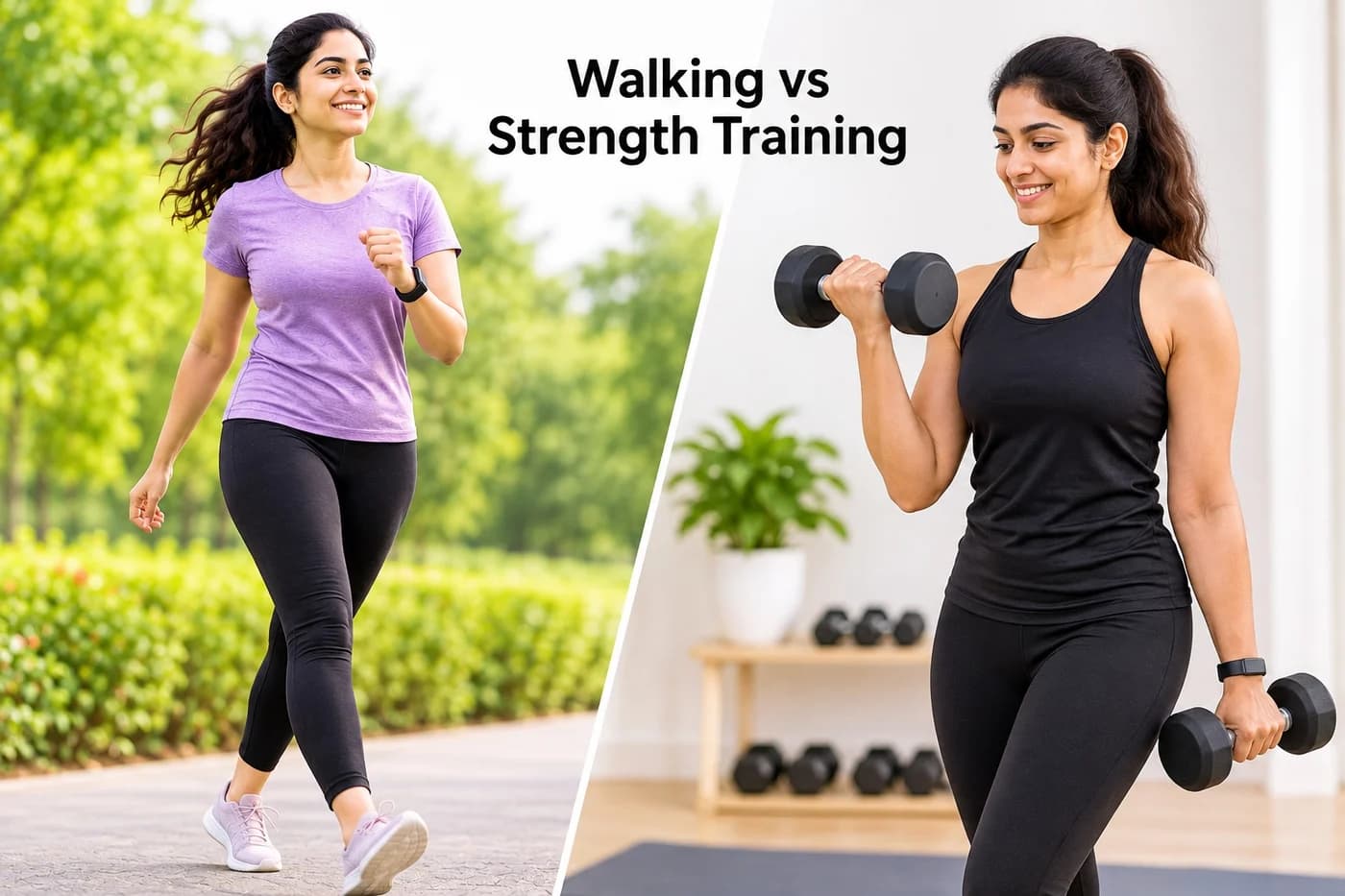
Walking builds stamina and heart health; strength training builds muscle. Here's what each one does best, which matters more for your goals and how to fit both into your week.
Key Takeaways
- Walking mainly builds stamina and heart health; strength training builds muscle and strength.
- WHO recommends both: 150+ minutes of moderate activity and strength work on 2+ days a week.
- In one review, 30 to 60 minutes of strength training a week was linked to 10–20% lower death risk.
- For weight loss, walking burns calories while strength training helps you keep muscle.
- Most people get the best results by combining both across the week.
The Quick Answer
Walking and strength training aren't rivals. They do different jobs for your body, and that's exactly why most health guidelines recommend doing both.
Walking is aerobic exercise. When you walk briskly, your heart and lungs work harder to deliver oxygen to your muscles, and over time this builds stamina and supports heart health. Strength training, sometimes called resistance training, works your muscles against a load, such as your own body weight, resistance bands or dumbbells. It mainly builds muscle strength and power, and supports your bones and joints.
The World Health Organization recommends that adults do at least 150 minutes of moderate aerobic activity a week, such as brisk walking, and muscle-strengthening activities on 2 or more days a week. If you only ever do one of them, you miss out on the benefits of the other.
What Walking Does Best
Heart and lung fitness
Brisk walking raises your heart rate and breathing for a sustained period, which trains your cardiovascular system. Because you can keep it up for 30 to 60 minutes, it's one of the easiest ways to build the aerobic fitness that makes everyday life feel less tiring.
Easy to start and keep
Walking is low-impact, needs no equipment and suits almost every age and fitness level. You can do it on your way to work, after dinner or with family, which makes it one of the easiest exercise habits to stick with for years.
Steps and longevity
A large 2022 analysis in The Lancet Public Health found that people who took more steps each day had a lower risk of dying during the study period. The benefit levelled off at about 6,000 to 8,000 steps a day for adults aged 60 and over, and at about 8,000 to 10,000 for younger adults. A daily walk is one of the simplest ways to reach those numbers.
Mood and stress
Many people find that a daily walk helps them clear their mind and unwind, especially when it takes them outdoors or away from screens for a while.
What Strength Training Does Best
Builds and protects muscle
Muscle naturally declines with age if you don't use it. Harvard Health notes that resistance exercise is one of the best ways to preserve muscle mass as you get older. Walking keeps your legs moving, but it doesn't challenge your muscles enough to stop this gradual loss, especially in the upper body.
Makes daily tasks easier
Stronger legs, back and arms make everyday jobs easier, from climbing stairs and carrying shopping bags to lifting children and getting up from the floor. For many people, this practical strength is the most noticeable benefit of regular strength work.
Linked to a longer, healthier life
A 2022 review of 16 studies, published in the British Journal of Sports Medicine, found that muscle-strengthening activities were linked to a 10 to 17% lower risk of death from any cause, heart disease, cancer and diabetes. The biggest benefit was seen at about 30 to 60 minutes a week, which is surprisingly little time.
Supports bones and balance
Resistance exercise loads your bones and muscles, which supports bone health and balance as you age. That matters more and more with every decade.
Walking vs Strength Training for Weight Loss

Both help with weight loss, but in different ways. Walking burns calories during the activity itself, and because it's gentle, you can do a lot of it. An hour of brisk walking most days adds up quickly over a week.
Strength training usually burns fewer calories during the session, but it plays a different and important role: it helps you keep muscle while you lose fat. Without it, some of the weight you lose may come from muscle rather than fat, which can leave you feeling weaker.
For most people, the most effective approach is a healthy diet, regular walking and two or three strength sessions a week. Your diet usually has the biggest effect on the number on the scale, while exercise shapes what that weight is made of and how strong and energetic you feel.
Which Matters More as You Get Older?
Both matter, but strength becomes increasingly important with age. Walking keeps your heart healthy and your legs moving, but it does little for upper-body strength or for slowing the age-related loss of muscle. For people over 50 or 60, adding strength and balance exercises can make a big difference to independence and everyday ability, from getting out of a chair to carrying groceries.
If you're older or have health conditions, check with your doctor before starting strength training, and begin with light, controlled movements.
How Much of Each Do You Need?
Based on WHO's recommendations for adults, aim for at least 150 minutes of moderate aerobic activity a week, which could be 30 minutes of brisk walking on 5 days. Building up to 300 minutes gives extra benefit. Alongside that, include strength training on at least 2 days a week, working all the major muscle groups: legs, hips, back, chest, shoulders, arms and core.
A Sample Week Combining Both
- Monday: 30-minute brisk walk + 20 minutes of strength training
- Tuesday: 40-minute walk
- Wednesday: 30-minute walk + 20 minutes of strength training
- Thursday: 40-minute walk
- Friday: 30-minute walk + 20 minutes of strength training
- Saturday: a longer, relaxed walk of 45 to 60 minutes
- Sunday: rest, or gentle stretching or yoga
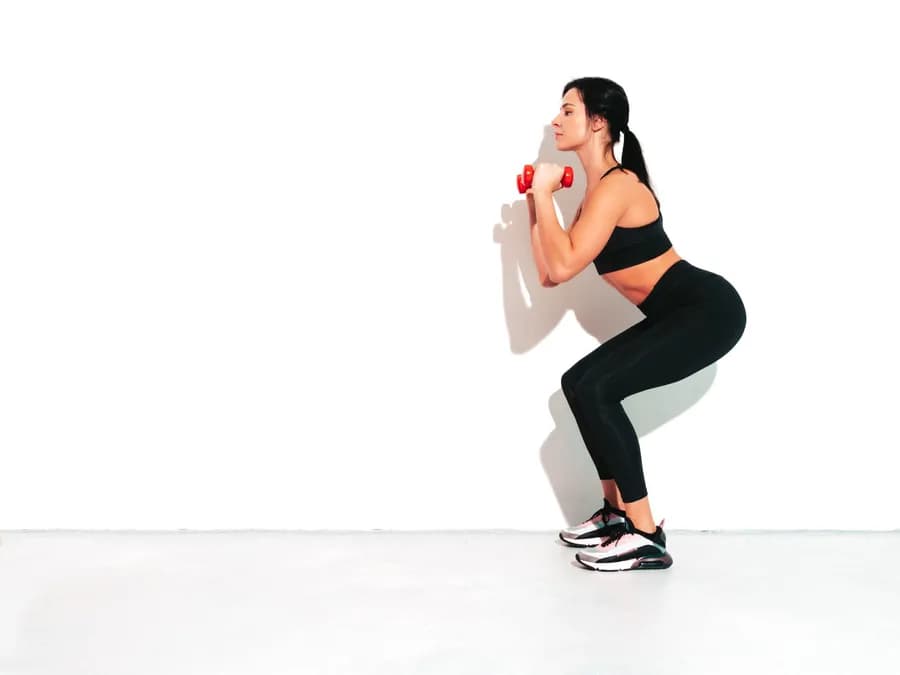
You don't need a gym for the strength sessions. Squats, lunges, push-ups against a wall or on your knees, glute bridges and planks build real strength at home.
Strength Training Without a Gym
If you're not sure how to start strength training, a guided class helps. Habuild's Strong Everyday live sessions are 45-minute bodyweight strength classes you can join from home, with easier and harder options for each exercise. Habuild's yoga sessions also include walking, and the Habuild app's Walk Daily habit helps you track your walks.
Editorial Sources
- WHO Europe – Physical activity fact sheet
- Momma et al. – Muscle-strengthening activities and lower risk and mortality, British Journal of Sports Medicine (2022)
- Paluch et al. – Daily steps and all-cause mortality, The Lancet Public Health (2022)
- Harvard Health – Preserve your muscle mass
Health Disclaimer
This article is for general information only and is not medical advice. Please consult a doctor before starting any new exercise routine, especially if you have a health condition, an injury or are pregnant.
Frequently Asked Questions
Related Articles

Why Is Strength Training Important for Your Health and Life
Strength training builds lean muscle, strengthens bones, boosts metabolism, and improves how your body functions every day. See why it's one of the most evidence-backed investments in long-term health.

Can Strength Training Burn Fat? Here’s How It Works
Building lean muscle raises the calories your body burns even at rest, creating a sustained calorie deficit over time — a different mechanism than cardio alone. See exactly how it works.

10 Benefits of Walking 30 Minutes a Day for Health, Fitness, and Weight Loss
The trick isn't to walk longer, it's to walk daily, at the right pace, with consistency over months. See all 10 benefits for health, fitness, and weight loss.
Strength Training at Home: Benefits, Exercises & How to Get Started
Using just your bodyweight and consistent practice, you can build lean muscle and improve body composition entirely from your living room. See the benefits, exercises, and how to start.