
Difference between Cardio and Strength Training: Which One Should You Do?
The two train different systems, produce different adaptations, and serve different goals — the WHO recommends 150-300 minutes of aerobic activity plus 2+.


Key Takeaways
- WHO guidelines recommend 150-300 weekly minutes of aerobic activity plus 2+ strength sessions.
- A 30-minute brisk walk burns roughly 200 calories versus roughly 150 for strength training.
- Strength training’s EPOC afterburn is significantly larger than steady-state cardio’s.
- Over a full 24-hour period, total calorie burn often ends up favouring strength training.
- States plainly that cardio and strength training don’t substitute for each other.
- Strength training is named as having the highest bone-density impact of any exercise category.
Cardio and strength training are two pillars of fitness, and the question “which one should I do?” comes up almost as often as “what should I eat?” The honest answer is both but for different reasons. Per the WHO Physical Activity Guidelines (2020), adults need 150–300 minutes of moderate aerobic activity plus 2+ strength sessions per week, a target the daily routine in this guide easily achieves. They train different systems, produce different adaptations, and serve different goals. This guide explains the difference between cardio and strength training in plain terms, the difference between cardio and resistance training (often used interchangeably with strength training), and how to combine them for the best results without doing too much of either.
Quick Comparison Cardio vs Strength Training
| Factor | Cardio | Strength Training |
| --- | --- | --- |
| Primary Adaptation | Heart, lungs, aerobic endurance | Muscle, bone, force production |
| Calories Burned (Per 30 min) | 200–300 | 150–250 |
| Calories Burned After (EPOC) | Modest | Significant (24+ hours) |
| Muscle Building | Minimal | High |
| Bone Density | Modest (impact cardio only) | Highest of any exercise |
| Resting Metabolism Boost | Minor (session only) | Significant (long-term) |
| Joint Stress | Variable (running high, walking low) | Low (form-dependent) |
| Time Required | 30–45 min, 3–5×/week | 30 min, 2–3×/week |
| Equipment Needed | None for walking; bike/pool optional | Bodyweight; bands/dumbbells optional |
| Best For | Heart health, endurance, fat burn | Muscle, bone, metabolism, strength |
How Cardio and Strength Training Differ
What Cardio Trains
Cardio (cardiovascular or aerobic exercise) trains the heart, lungs, and aerobic energy system. Examples: running, cycling, swimming, brisk walking, dancing, rowing. The goal is sustained elevation of heart rate over 20+ minutes, which improves cardiovascular fitness, blood pressure, and aerobic endurance over weeks of consistent practice.
What Strength Training Trains
Strength training (also called resistance training) loads muscles against external resistance bodyweight, dumbbells, machines, or bands. Examples: squats, push-ups, deadlifts, rows, presses. The goal is muscle force production, which builds muscle, bone density, and strength. The adaptations are completely different from cardio.
What Each Burns
Cardio burns more calories during the session. A 30-minute brisk walk burns around 200 calories; at the same time strength training burns roughly 150. But strength training burns more calories after the session for hours afterward, as the muscle repairs and rebuilds. Per research summarised by the American Council on Exercise on EPOC (excess post-exercise oxygen consumption), this afterburn is significantly larger after strength training than steady-state cardio. Over a 24-hour period, the total calorie burn often favors strength training.
What Each Builds
Cardio builds endurance, lung capacity, and a stronger heart. Strength training builds muscle, bone density, and force production. They don’t substitute for each other; one builds the engine, the other builds the chassis.
The Honest Conclusion
For overall health, you need both. Strength training 2–3 times per week builds the muscle and bone density that decline with age. Cardio 3–5 times per week builds the heart and endurance. Most people need 4–5 sessions of mixed work per week for complete fitness and the combination outperforms either alone.
How to Combine Cardio and Strength Training
What You Need to Begin
A small space, optionally light dumbbells, and 30–45 minutes per session. Walking shoes for the cardio portion. No gym required.
Setting Realistic Goals
Don’t pick one and ignore the other. Aim for 2–3 strength sessions and 3–5 cardio sessions per week; even short ones count.
Start with the Basics
Two full-body strength sessions per week, daily 30-minute walks, and one optional yoga or mobility session weekly. Build from there. Pair with our strength training vs cardio comparison for a deeper breakdown.
Best Exercises for Cardio + Strength Combined
Brisk Walking (Cardio Foundation)
30–45 minutes daily at 5–6 km/h. The most accessible, most sustainable cardio.
Bodyweight Squats (Strength Foundation)
3 sets × 12–15 reps. The foundational strength exercise.
Push-Ups (Upper Body Strength)
3 sets × 8–12 reps. Builds the entire upper body pushing chain.
Bent-Over Rows (Upper Body Pull)
3 sets × 10 reps each side. Trains the back most under-trained at home.
Cycling or Swimming (Low-Impact Cardio)
30–45 minutes 2–3 times per week. Joint-friendly cardio alternatives.
High-Intensity Intervals (Mixed Cardio + Strength)
20 minutes, twice weekly. Combines cardio and strength stimulus efficiently.
Yoga or Mobility (Flexibility Foundation)
30 minutes weekly. Maintains range and prevents injury. Pair with our cardio strength training programme for structured combinations.
Common Mistakes Combining Cardio and Strength
- Doing Only One The single most common mistake. People who only do cardio lose muscle; people who only strength train miss cardiovascular benefits. Both are essential.
- Doing Cardio Before Heavy Strength Sessions If you do both in the same session, strength comes first when you’re fresh. Cardio depletes glycogen and reduces strength performance.
- Excessive Cardio Volume Too much cardio (90+ minutes daily, six days a week) can erode muscle. For most people, 30–45 minutes daily is plenty.
- Skipping Mobility Both cardio and strength benefit from one weekly mobility session. Skipping it accelerates injury risk.
Who Should Combine Cardio and Strength?
- Almost Everyone The combination outperforms either alone for almost every adult. Beginners can start with bodyweight strength and brisk walking.
- Working Professionals The combination fits a 30-minute morning routine. Strength three days, cardio two days, one rest day.
- Older Adults Both are essential after 50. Strength maintains muscle and bone, cardio maintains heart and endurance.
- Athletes Across Sports Almost every sport benefits from the combination. Strength provides power; cardio provides endurance.
Build a Cardio + Strength Routine with Habuild
Combining cardio and strength isn’t complicated but it does need structure. With expert daily guidance, you can build a balanced practice without programming it yourself.
What you get with Habuild’s daily program:
- Daily live guided strength, cardio, and yoga sessions
- Beginner to advanced progression with no equipment
- Expert form correction in real time
- Community accountability for daily consistency
Rather than treating cardio and strength as a binary choice, most people do best folding both into one plan that runs on a schedule instead of mood. A structured routine takes the guesswork out of how much of each you actually need in a week and keeps you accountable when motivation dips. Strong Everyday from Habuild blends that balance into a guided program you can simply follow.
However you frame the difference between strength training and cardio, the honest answer is that most people benefit from both rather than picking a side.
Frequently Asked Questions
Related Articles
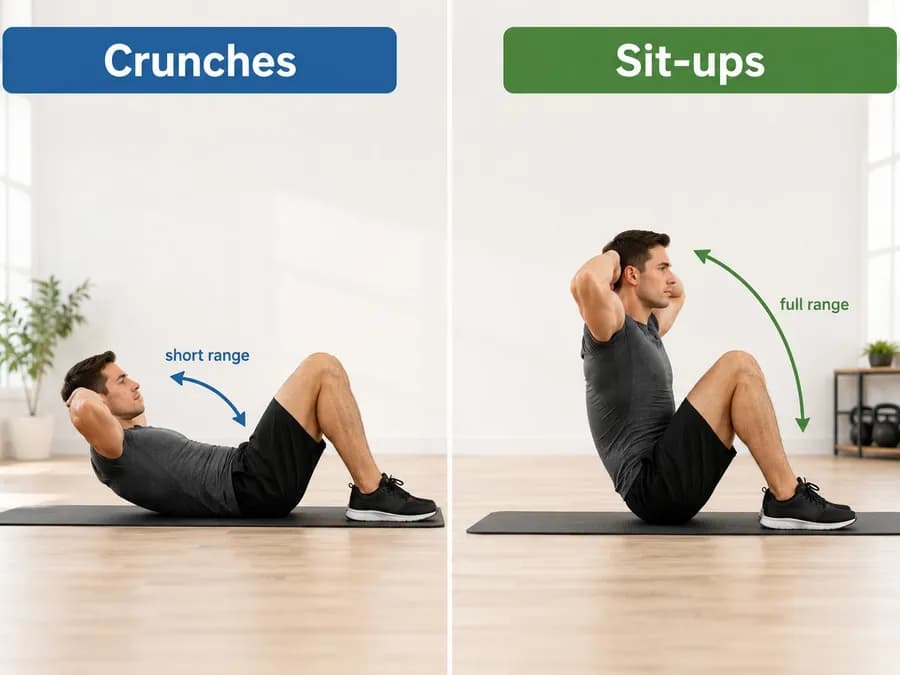
Difference between Crunches and Sit-Ups: Which One Should You Do?
Crunches isolate the rectus abdominis through a short-range spinal flexion; sit-ups involve the full range with significant hip flexor contribution and higher lumbar disc load. See which is appropriate for your goals and spine health.


10 Benefits of Strength Training for Women
Resistance training builds lean muscle, supports fat loss, and improves bone density — all achievable from home with no equipment. See all 10 benefits.

Strength Training for Women Over 40: Benefits, Exercises & How to Start
After 40, women naturally lose muscle mass, about 3-5% per decade, while bone density also shifts — a structured strength routine directly addresses both. See how to begin safely.