
Stretching Yoga Poses: Best Asanas, Benefits & Flexibility Guide
Sustained holds of 30 seconds to 5 minutes progressively increase the range of motion at each joint, using relaxed, breath-supported holds rather than.
Key Takeaways
- Uses sustained holds of 30 seconds to 5 minutes, unlike ballistic or bouncing stretches.
- Covers five distinct zones in one session – posterior, anterior, lateral, inner thigh, and hips.
- Measurable flexibility improvements typically appear within 4-6 weeks of daily practice.
- Post-exercise stretching reduces DOMS by restoring resting muscle length and flushing waste.
- Paschimottanasana, held 2-5 minutes with a strap, stretches the entire posterior chain at once.
- Pigeon pose prep is held 2-3 minutes each side for the deepest available hip-flexor release.
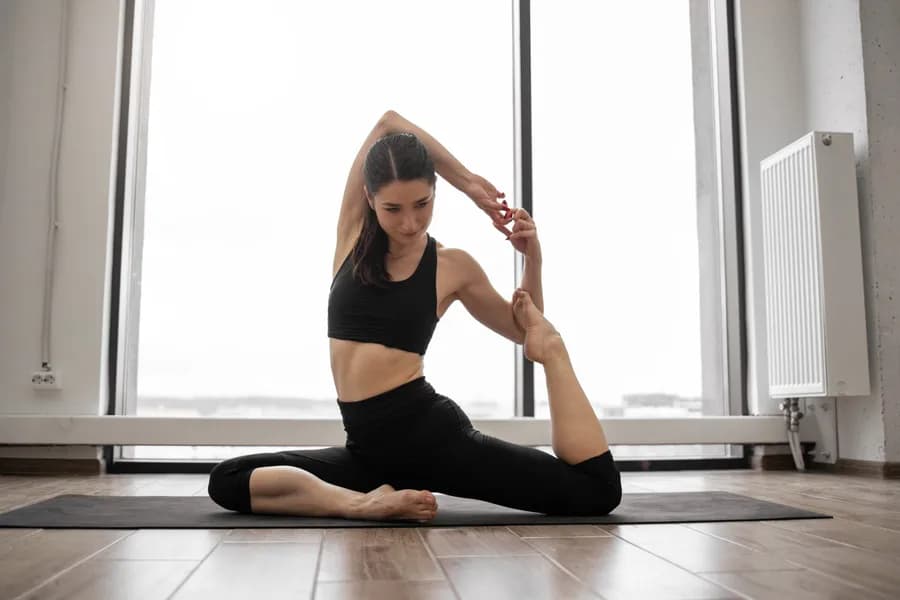
Stretching yoga poses develop the full-body flexibility, joint mobility, and muscle release that form the physical foundation of every yoga practice — using the body’s own weight, gravity, and sustained holds to systematically lengthen every major muscle group.
What are Stretching Yoga Poses?
Yoga stretching poses use passive and active elongation of muscles and connective tissues through sustained holds — typically 30 seconds to 5 minutes — to progressively increase the range of motion available at each joint. Unlike ballistic or bouncing stretches, yoga poses use relaxed, breath-supported holds that allow the stretch reflex to relax and the tissues to genuinely lengthen.
Yoga stretches cover all major muscle groups in a single comprehensive session: posterior chain (hamstrings, calves, erector spinae), anterior chain (hip flexors, quadriceps, chest), lateral body (IT band, lateral hip), inner thigh (adductors, groin), and the deep hip rotators and spinal mobility that daily movement requires. This comprehensive approach distinguishes yoga stretching from single-muscle gym stretching.
At Habuild, stretching yoga poses are integrated throughout every session — in warm-ups, cool-downs, and dedicated flexibility work. The flexibility developed supports every other dimension of yoga for health and physical practice.
Benefits of Stretching Yoga Poses
Physical Benefits
Improves Full-Body Flexibility and Range of Motion
Consistent stretching yoga poses progressively lengthen the shortened muscles of modern sedentary life — particularly the hip flexors, hamstrings, and thoracic extensors compressed by prolonged sitting. Measurable flexibility improvements typically appear within 4–6 weeks of daily practice.
Reduces Muscle Tension and Post-Exercise Soreness
Yoga stretching after exercise or at the end of the day reduces delayed onset muscle soreness (DOMS) by restoring resting muscle length, improving circulation through stretched tissues, and flushing the metabolic waste that contributes to soreness.
Improves Joint Mobility and Injury Prevention
Flexible muscles place less stress on joints during movement — well-stretched hip flexors reduce lumbar loading, flexible hamstrings reduce knee stress, and open thoracic mobility reduces shoulder injury risk. Daily stretching yoga practice is among the most effective injury prevention approaches available.
Best Stretching Yoga Poses
Paschimottanasana — Full Posterior Chain
Paschimottanasana (seated forward fold) provides the most comprehensive posterior chain stretch in yoga — hamstrings, calves, lower back, and the entire spine simultaneously. Hold 2–5 minutes with a strap if needed.
Eka Pada Rajakapotasana Prep — Hip Flexor and Rotator
Eka Pada Rajakapotasana preparatory position (pigeon pose) provides the deepest available hip external rotator and hip flexor stretch — the two muscle groups most shortened by prolonged sitting. Hold 2–3 minutes each side.
Supta Padangusthasana — Supine Hamstring Stretch
Lying on the back with one leg raised vertically (held by a strap) — the most controlled and gravity-supported hamstring stretch. Hold 2 minutes each side. The supine position prevents lumbar rounding that reduces effectiveness in seated hamstring stretches.
Anjaneyasana — Hip Flexor Lengthening
Anjaneyasana (low lunge) directly stretches the iliopsoas and rectus femoris — the primary hip flexors shortened by prolonged sitting. Hold 2 minutes each side. This single pose addresses the most common postural restriction causing lower back pain.
Baddha Konasana — Inner Thigh and Groin
Baddha Konasana (butterfly pose) provides sustained adductor and groin stretching — the inner thigh muscles that restrict full hip mobility. Hold 3–5 minutes with the spine upright.
Ustrasana — Anterior Chain Stretch
Ustrasana (camel pose) provides the most comprehensive anterior chain stretch in yoga — hip flexors, quadriceps, chest, and anterior shoulder simultaneously. The full backbend counteracts the forward-folding compression of all sitting-based activities.
Common Mistakes to Avoid
Bouncing in stretches — Ballistic bouncing activates the stretch reflex, causing muscles to contract — exactly the opposite of the relaxed lengthening that yoga stretching requires. Always hold stretches still and steady.
Forcing beyond comfortable range — Yoga stretching works through relaxed holds, not forced depth. Forcing a stretch activates the protective stretch reflex and risks muscle tears. Breathe into the stretch and let it deepen naturally.
Holding breath — Breath is the tool that deepens yoga stretches — each exhale allowing further release. Holding the breath prevents the nervous system relaxation that allows genuine stretching.
Stretching cold muscles — Yoga stretching is most effective after warmup. Do 5–10 minutes of gentle movement (Cat-Cow, light Surya Namaskar) before deep stretching poses.
Who Should Practise Stretching Yoga Poses?
Start your 14 day free yoga journey with Habuild, today!
Frequently Asked Questions
Related Articles
Best Yoga Poses for Athletes: Flexibility, Recovery and Performance
These poses target exactly what sport and training tighten and weaken — hip flexors, hamstrings, thoracic spine, and shoulder girdle. See how yoga reduces

Yoga Stretches for Flexibility: Best Poses & Warm-Up Routine
Discover the best yoga stretches for flexibility with poses, warm-up tips, and a beginner routine. Start your 14-day free trial trial with Habuild Yoga.
Yoga for Stretching and Flexibility: Best Poses, Benefits & How to Start
Held poses, controlled breathing, and consistent daily practice gradually open the body and improve range of motion, no equipment needed. See the best poses and common mistakes to avoid.