
What Is Prana in Yoga? Meaning, the Five Pranas, and How to Work with It
Prana is the vital life-force energy that flows through every living being, closely linked to breath but extending beyond it. See the five pranas and how.
Key Takeaways
- Prana comes from pra (primary) and ana (breath) – literally primary breath or life-force.
- Breath is the most direct vehicle for prana, which is why pranayama means expansion of prana.
- Flows through nadis – Ida (cooling), Pingala (activating), and Sushumna (central channel).
- Yoga postures, breathwork, and mudras are designed to keep these energy channels clear.
- Building sensitivity to breath patterns gradually reveals shifts in energy, mood, and focus.
- Just 10-15 minutes of conscious breathing paired with simple asanas daily is enough to start.
Prana is the vital life-force energy in yoga that flows through every living being. It is closely linked to breath but extends beyond it — prana animates physical movement, mental activity, and emotional experience. Yoga, especially pranayama, is one of the most systematic ways to become aware of prana, regulate it, and let it support your overall wellbeing.
If you have spent any time exploring yoga, you have almost certainly come across the word prana. Understanding what prana is in yoga goes beyond a simple dictionary definition — it shapes how you breathe, move, and sustain energy throughout every practice. Exploring yoga for beginners is a practical first step before diving into the deeper layers of breath and energy work.
What Prana Means in Yoga — and Why It Matters
The Root Meaning of Prana
The Sanskrit word prana comes from two parts: pra (before, primary) and ana (breath, to breathe). Literally translated, it means “primary breath” or “first life-force.” In the yogic framework, prana is not merely the air you inhale — it is the underlying energy that animates all physical and mental activity. Ancient texts such as the Upanishads describe prana as the very thread connecting body, mind, and consciousness.
Prana vs. Breath — An Important Distinction
Many beginners treat prana and breath as the same thing. They are closely related but not identical. Breath — the physical movement of air — is the most direct vehicle for prana, which is why pranayama (literally “expansion of prana”) is central to traditional yoga. When you breathe consciously and with awareness, you are not just oxygenating your blood; you are influencing the quality and direction of prana within your system.
Where Does Prana Flow?
According to yogic anatomy, prana moves through a network of subtle channels called nadis. The three most significant are the Ida (left, cooling), Pingala (right, activating), and Sushumna (central channel, associated with awakening). Yoga postures, breath work, and mudras are all designed to keep these channels clear so that prana can circulate freely — which practitioners often describe as feeling alert, light, and emotionally steady.
How to Start Working with Prana in Your Practice
What You Need to Begin
No special equipment is required to start exploring prana. A yoga mat, comfortable loose-fitting clothing, and a quiet space are enough. If you are brand new to the practice, building foundational awareness before diving into nuanced breathwork will serve you well.
Setting Realistic Goals
Working with prana is a gradual process. Begin with 10–15 minutes of conscious breathing paired with simple asanas every day. The goal is not dramatic transformation overnight — it is building daily sensitivity to notice how different breathing patterns shift your energy levels, mood, and focus over time.
Start with the Basics
The simplest entry point is diaphragmatic breathing: inhale slowly for four counts, allow the belly to expand fully, then exhale for four counts. Pair this with gentle seated or supine postures. Once that feels natural, layer in alternate nostril breathing (Nadi Shodhana), which is specifically designed to balance the flow of prana across both channels.
The Five Pranas — Understanding the Vayus
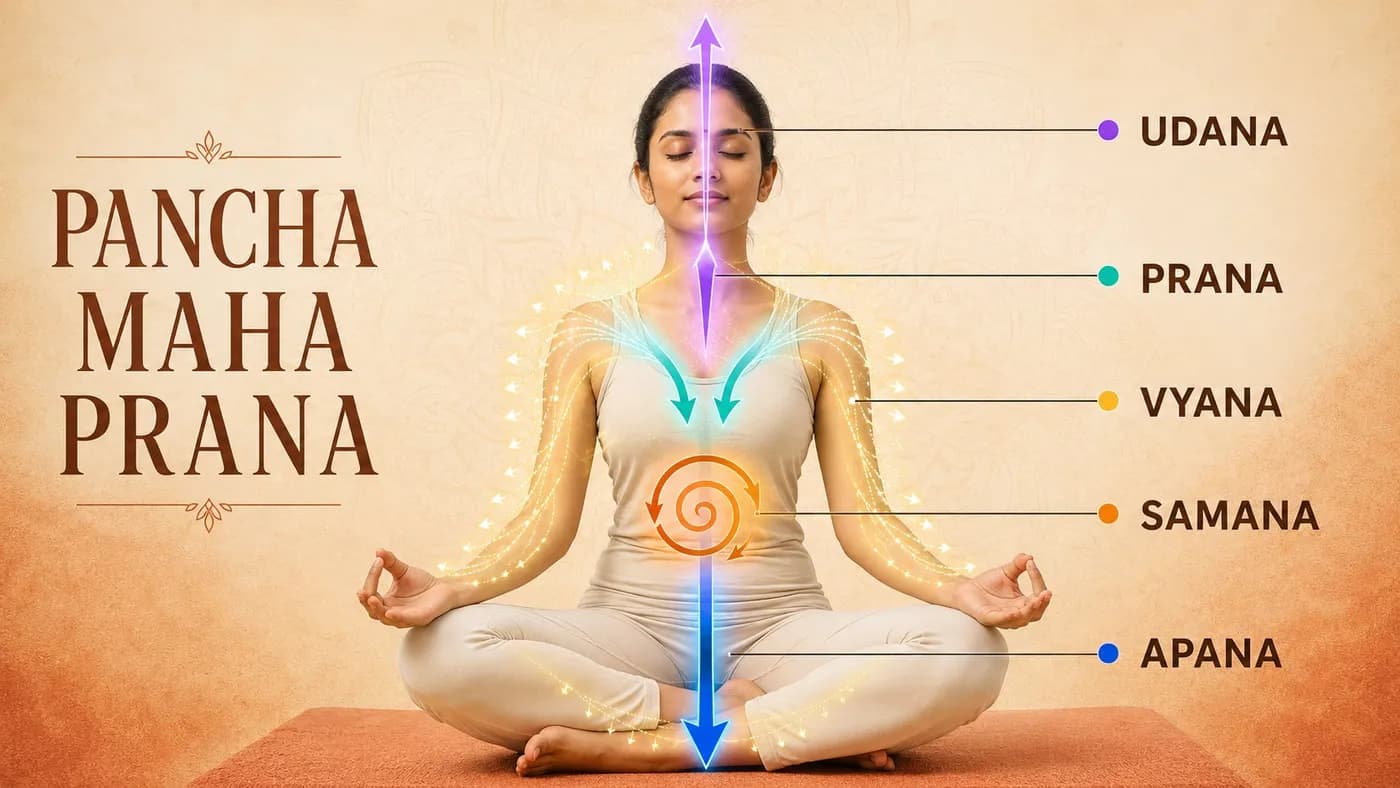
Yoga philosophy divides prana into five distinct sub-energies called Pancha Vayus (five winds or five pranas). Each governs a different zone and function in the body. Understanding them helps you use your practice more deliberately.
1. Prana Vayu — The Inward-Moving Force
Located in the chest and heart region, Prana Vayu governs inhalation, intake, and receptivity. It is the force behind drawing in — breath, food, impressions, and experience. When this vayu is balanced, you feel open, enthusiastic, and able to absorb new ideas. Practices like Bhujangasana (Cobra Pose) and chest openers support Prana Vayu directly.
2. Apana Vayu — The Downward-Moving Force
Apana Vayu sits in the lower abdomen and pelvic region and governs all downward and outward movement — exhalation, elimination, and release. A well-functioning Apana Vayu supports digestion, reproductive health, and the body’s ability to let go of what it no longer needs. Forward folds and grounding postures are particularly helpful here.
3. Samana Vayu — The Equalising Force
Found at the navel centre, Samana Vayu balances and integrates the upward pull of Prana Vayu and the downward pull of Apana Vayu. It governs digestion and assimilation — both of food and of experience. Twisting postures and core work activate Samana Vayu effectively.
4. Udana Vayu — The Upward-Moving Force
Udana Vayu operates in the throat and head and is associated with speech, expression, growth, and the upward movement of energy during meditation. When it is strong and clear, communication feels effortless and the mind reaches states of clarity. Inversions and backbends that open the upper body support this vayu.
5. Vyana Vayu — The Pervasive Force
Vyana Vayu permeates the entire body and coordinates all the other four vayus. It governs circulation, nerve impulses, and the distribution of energy to every cell. This is the vayu that makes you feel whole and coordinated. A flowing Sun Salutation sequence nourishes Vyana Vayu beautifully — exploring a complete Surya Namaskara practice is a practical way to feel it at work.
Common Mistakes to Avoid When Practising Pranayama and Prana Awareness
- Skipping Warm-Up Jumping straight into intense breathwork without preparing the body first can create tension and even dizziness. Always begin with a few minutes of gentle movement to open the chest and release the spine before attempting any pranayama technique.
- Holding the Breath Forcefully Many beginners interpret breath retention (kumbhaka) as gripping or straining. This is counterproductive — forced holding creates resistance in the pranic channels. Retention should feel like a natural pause, not a struggle. If you feel anxious or gasping, reduce the count immediately.
- Jumping to Advanced Techniques Too Quickly Practices like Kapalabhati or Bhastrika generate significant pranic movement and are not ideal starting points. Begin with softer techniques such as even-ratio breathing or Nadi Shodhana, and only progress when simpler practices feel completely comfortable. The full range of yoga exercises and breathwork is best approached in a progressive, guided manner.
- Practising Inconsistently The single biggest obstacle to experiencing the benefits of prana work is inconsistency. A short daily session does far more for pranic awareness than an occasional long one. Regularity is what gradually refines your sensitivity to subtle energy.
Who Should Try Prana-Based Yoga Practice?
- Beginners Anyone starting yoga can engage with prana immediately — simply by paying attention to the breath during every posture. No prior knowledge or flexibility is required. Curiosity and a willingness to breathe consciously are the only prerequisites.
- Women Pranayama and prana-aware yoga can gradually support hormonal balance and help manage stress-related symptoms through consistent practice. Many women find that daily breathwork helps them feel more emotionally steady and energised across different phases of their cycle.
- Older Adults Prana-focused practices are particularly accessible for older adults because they place low demand on joints and require no equipment. Gentle breathwork can support respiratory health and help maintain mental clarity. Anyone with a cardiovascular or respiratory condition should consult a doctor before beginning breath-retention practices.
- Working Professionals Stress depletes prana rapidly. Short pranayama sessions — even five minutes of structured breathing mid-day — can help working professionals reset their nervous system and approach the rest of the workday with greater focus and less reactive thinking.
Build a Prana-Aware Practice with a Routine That Actually Works
Understanding prana intellectually is a worthwhile start — but the real shift happens through consistent, guided practice. Reading about the five pranas is different from experiencing them in your body through a structured daily routine. With the right support, you can build that routine from home without any equipment.
What You Get with Habuild’s Yoga Everyday Program:
- Daily live guided yoga and pranayama sessions
- Beginner-to-advanced progression — no experience needed
- No equipment, fully home-friendly practice
- Expert guidance to ensure correct breath technique and form
- Community support to help you stay consistent beyond the first week
Join Habuild’s Yoga Everyday program and begin building the daily consistency that makes prana work real. Explore online yoga classes and take the first step toward a practice that is sustainable, structured, and genuinely transformative.
Frequently Asked Questions
Related Articles

What is Karma Yoga? Meaning, Bhagavad Gita Philosophy and Daily Practice
Performing one’s duties and work without attachment to the results, Karma Yoga involves no specific poses — it’s a way of approaching daily life. See the.

What is Power Yoga? Meaning, Benefits and Difference from Traditional Yoga
Developed in the 1990s, Power Yoga retains the dynamic flowing nature of Ashtanga while removing its rigid sequence requirements. See the meaning.
Ashtanga Yoga Kya Hai | Habuild पर जानें पूरी जानकारी
Ashtanga yoga kya hai? जानें इसके फायदे, आसन, शुरुआत कैसे करें और रोज़ अभ्यास से जीवन कैसे बदलता है। Habuild के साथ शुरू करें।