
What is Power Yoga? Meaning, Benefits and Difference from Traditional Yoga
Developed in the 1990s, Power Yoga retains the dynamic flowing nature of Ashtanga while removing its rigid sequence requirements. See the meaning.


Key Takeaways
- Developed in the 1990s as a Western adaptation that removed Ashtanga’s rigid sequence rules.
- A 60-minute class burns roughly 450-600 calories, among the most calorie-intensive yoga styles.
- Held poses like plank variations and chair pose build strength comparable to bodyweight training.
- Combines strength work with dynamic stretching, addressing the strength-flexibility imbalance.
- Requires practising on an empty stomach, at least three hours after eating.
- Most beginners notice strength and stamina gains within 4 weeks of 3 weekly sessions.
Power Yoga is the modern Western adaptation of Ashtanga Yoga that emphasises strength, stamina, and dynamic flow over traditional yoga’s slower-paced approach. Developed in the 1990s by yoga teachers who wanted to make Ashtanga more accessible to fitness-minded practitioners, Power Yoga retains the dynamic flowing nature of Ashtanga while removing the rigid sequence requirements. This guide explains what Power Yoga is, its benefits for fitness and weight loss, the key exercises involved, and how it differs from traditional yoga styles.
Benefits of Power Yoga: Why People Practise It
- Builds Significant Strength and Muscle Tone Power Yoga’s emphasis on held strength poses (plank variations, warriors, chair pose) and dynamic transitions builds genuine muscle strength comparable to bodyweight training. Members focused on broader core development often pair their practice with ouryoga for core strength programme.
- Effective Weight Loss and Fat Burning A 60-minute Power Yoga class burns 450–600 calories — making it one of the most effective yoga styles for weight management. Combined with mindful eating, Power Yoga produces measurable body composition change. Members focused on broader weight management often pair their practice with ouryoga asanas for weight loss programme.
- Improves Cardiovascular Fitness The continuous flowing movement elevates heart rate sufficiently to produce measurable cardiovascular fitness improvements — a benefit that traditional Hatha yoga produces only modestly.
- Increases Flexibility through Dynamic Stretching Power Yoga combines strength work with dynamic stretching — improving flexibility while building strength simultaneously. This integrated approach addresses the common imbalance between strength and flexibility. Members focused on broader flexibility often pair their work with ouryoga for flexibility programme.
- Improves Posture and Body Awareness The detailed alignment focus of Power Yoga progressively restores upright posture and addresses the chronic forward-rounded patterns that modern lifestyles produce. Members focused on broader posture work often pair their training with ouryoga for posture programme.
How to Get Started with Power Yoga
What You Need to Begin
A sticky yoga mat (essential due to sweat), fitted moisture-wicking clothing, water, and a small towel. Practise on an empty stomach (3+ hours after eating). Power Yoga produces significant sweat — make sure your mat has good grip.
Setting Realistic Goals
Beginners with reasonable baseline fitness should start with 30-minute Power Yoga sessions 3 times per week, building to 4–5 sessions per week of 45–60 minutes over 4–6 weeks. Most beginners notice strength and stamina improvements within 4 weeks; significant body composition changes emerge over 8–12 weeks.
Start with the Basics
Begin with foundational Surya Namaskar (Sun Salutations) and basic standing poses (Warrior I, II, III; Triangle Pose; Side Angle Pose). Build to longer flowing sequences as foundation establishes. Focus on breath-movement coordination from day one.
Key Exercises in Power Yoga
Surya Namaskar (Sun Salutations) — Power Variation
The foundational sequence — performed at a faster pace with deeper engagement than traditional Hatha. 5–10 rounds of Power Surya Namaskar are typically the warm-up of every Power Yoga class.
Phalakasana (Plank Pose) and Variations
Held plank for 30–90 seconds, side plank variations, plank with leg lifts — all foundational core builders in Power Yoga.
Chaturanga Dandasana (Four-Limbed Staff Pose)
The push-up-like pose performed multiple times throughout a Power Yoga class — building significant arm, shoulder, and core strength.
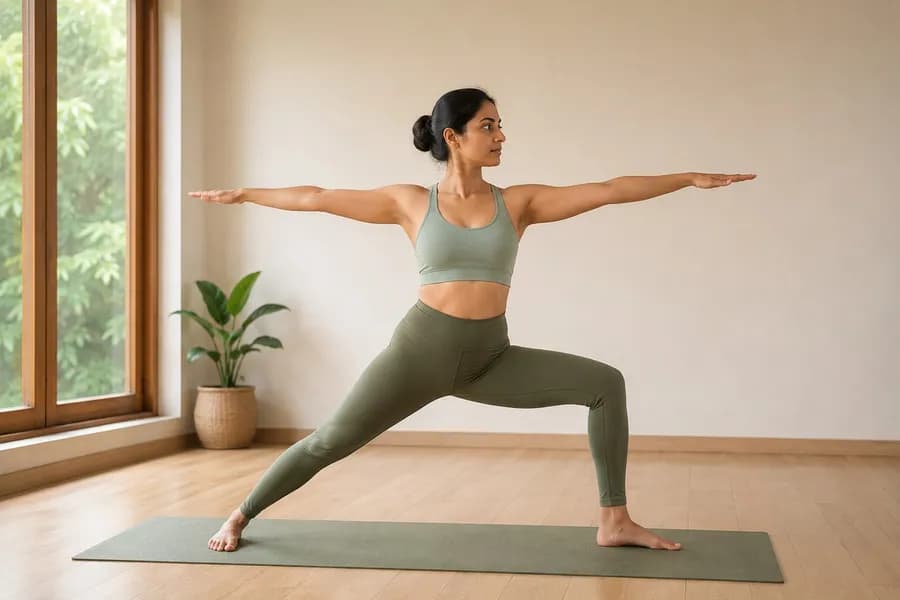
Virabhadrasana Series (Warrior I, II, III)
Held warrior poses building leg strength, balance, and stamina. Core poses of every Power Yoga class.
Utkatasana (Chair Pose)
Held squat-like pose building leg strength, with arms extended overhead adding shoulder demand. Often held for 30–60 seconds in Power Yoga.
Navasana (Boat Pose)
Direct core engagement — essential for the abdominal strength Power Yoga builds.
Adho Mukha Svanasana (Downward Dog)
The transitional rest pose between sequences — but in Power Yoga, even Downward Dog is held with active engagement of the entire body.
Common Mistakes to Avoid in Power Yoga
- Skipping Warm-up Power Yoga’s intensity makes warm-up essential — beginners often skip it and risk strain. Correction: spend 10 minutes warming joints and basic mobility before starting Power Yoga sequences.
- Holding Breath During Intense Sequences The intensity makes breath-holding common — but this eliminates the benefits and risks dizziness. Correction: prioritise steady Ujjayi breath; if breath becomes ragged, slow down or take Child’s Pose.
- Forcing Beyond Capacity Too Soon Eager beginners attempt advanced Power Yoga sequences before building foundation. Correction: respect the progression; build foundation poses for 4–6 weeks before progressing to advanced flows.
- Inconsistent Practice Power Yoga’s strength and stamina benefits require consistency — sporadic practice produces minimal results. Correction: aim for 4–5 sessions per week as a non-negotiable foundation.
Who Should Try Power Yoga?
- Beginners with Reasonable Baseline Fitness Power Yoga suits beginners with some baseline fitness — though pure beginners may benefit from establishing Hatha foundation first. Most fitness-minded beginners can start Power Yoga directly with 30-minute classes 3 times per week.
- Women Seeking Strength and Weight Management Women benefit from Power Yoga’s combined strength building and weight management effects — addressing the lean muscle and cardiovascular fitness goals that traditional Hatha alone may not provide.
- Older Adults with Established Yoga Foundation Older adults with established yoga practice and good baseline fitness can enjoy Power Yoga — though significant modification is typically needed. (Disclaimer: those with diagnosed cardiovascular, joint, or balance conditions should consult a doctor before beginning Power Yoga.)
- Working Professionals Seeking Time-Efficient Fitness Working professionals benefit from Power Yoga as a time-efficient combined fitness practice — replacing separate cardio, strength, and flexibility sessions with one comprehensive workout 4–5 times per week.
Build Strength with a Yoga Routine That Actually Works
Building real strength through Power Yoga isn’t about occasional intense sessions — it’s about consistency, progressive challenge, and a structured routine that builds with you. With the right support, you can practise Power Yoga effectively from home and see real strength and body composition changes over weeks and months. The same daily-practice habit foundation drives ourdaily online yoga classes that members rely on every morning.
What You Get with Habuild’s Yoga Everyday Program:
- Daily live guided yoga sessions
- Beginner to advanced progression
- No-equipment & home-friendly practice
- Expert guidance to ensure correct form
- Community support to stay consistent
Start Your Yoga Journey
Power Yoga’s dynamic, strength-building sequences ask more of the body than a gentler practice, which makes daily consistency — not occasional intensity — the safer and more effective way to build the stamina it demands. Jumping into intense flows sporadically raises the risk of strain without delivering the conditioning benefits regular practice does. Habuild’s Yoga Everyday program can help build toward that kind of dynamic practice gradually, through consistent daily sessions rather than occasional pushes.
Summed up, what is power yoga benefits and what is power yoga exercises come down to: a fast-paced, strength-building flow that raises the heart rate more than traditional styles.
Frequently Asked Questions
Related Articles

What Is Yoga Mudra? A Complete Guide to Types, Benefits & Practice
Mudras are intentional hand gestures — and sometimes full-body postures — used to influence the flow of energy in the body. See the types, benefits, and how consistent practice supports mental clarity.

What Is Yoga Asana? A Complete Guide to Poses, Benefits & Getting Started
A yoga asana is a specific body posture held with awareness, breath, and intention — working on flexibility, strength, posture, and the nervous system simultaneously. See the complete guide to poses and benefits.


What is Mudra in Yoga? a Complete Guide to Yoga Mudras
Mudras are psycho-physical seals that influence the physiological state through nerve endings in the fingers, the psychological state through symbolism,