
What is Karma Yoga? Meaning, Bhagavad Gita Philosophy and Daily Practice
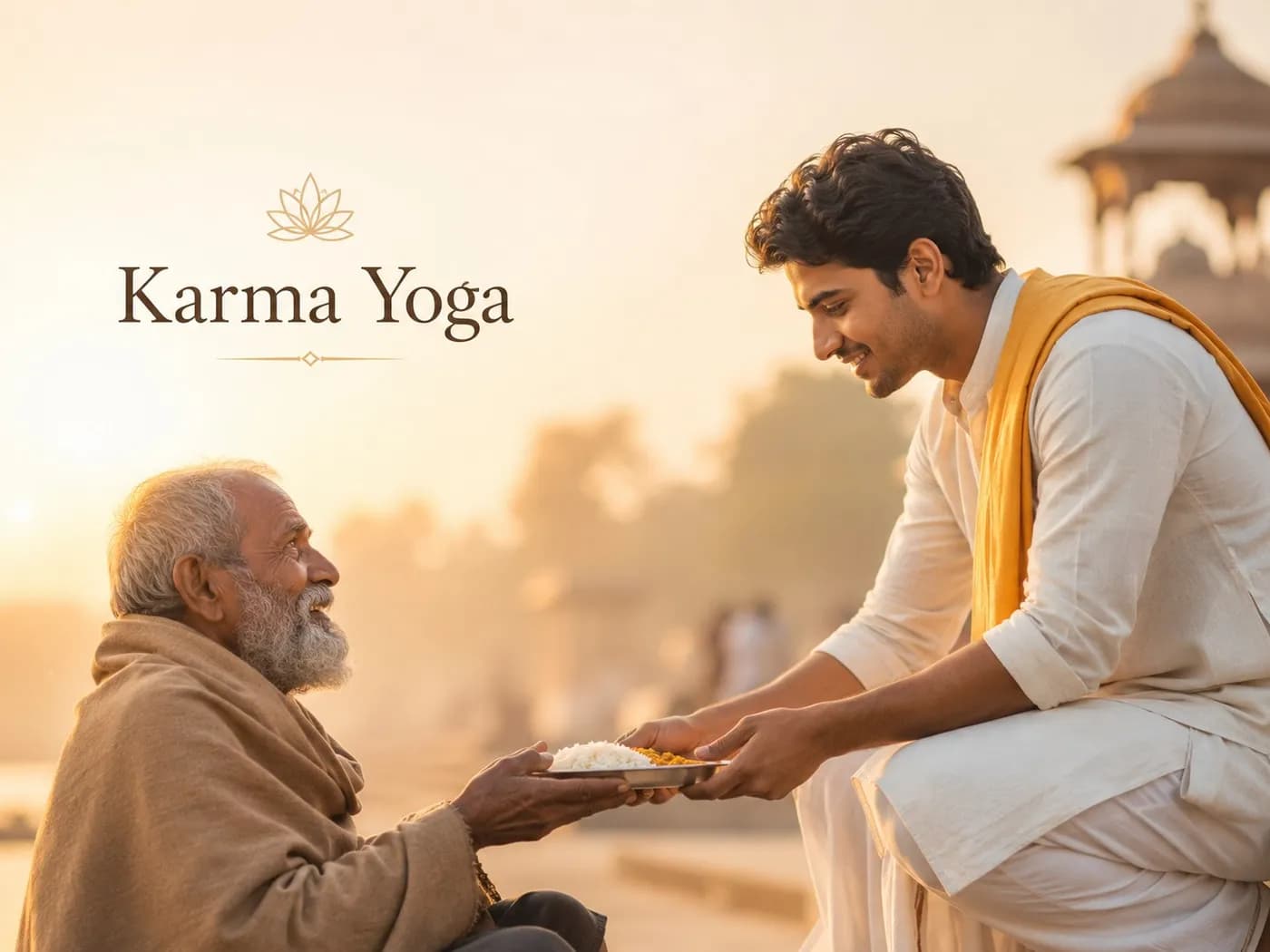
Performing one’s duties and work without attachment to the results, Karma Yoga involves no specific poses — it’s a way of approaching daily life. See the.

Key Takeaways
- Its Sanskrit name simply means ‘action’ – a way of living, not a set of poses or breath work.
- Central practice is acting without attachment to outcomes, reducing outcome-driven anxiety.
- Teaches that the action itself matters, protecting against emotional swings from success or failure.
- Reframes work as service to others rather than a means to personal gain or recognition.
- Freedom from outcome attachment is described as improving decision quality under pressure.
- Beginners are guided toward process goals – one action without attachment – rather than big shifts.
Karma Yoga is the yoga of selfless action — performing one’s duties and work without attachment to the results. Pronounced KAR-mah, the Sanskrit word means “action.” Unlike the physical yoga most modern practitioners encounter, Karma Yoga involves no specific poses or breath techniques — it is a way of approaching daily life and work with selfless intention. This guide explains what Karma Yoga is, its central place in the Bhagavad Gita, its core philosophy, and how to integrate Karma Yoga into modern daily life.
Benefits of Karma Yoga: Why People Practise It
- Reduces Stress through Non-Attachment to Outcomes The central practice of Karma Yoga — acting without attachment to results — directly reduces the stress, anxiety, and disappointment that come from outcome-driven striving. Practitioners report measurable reductions in work-related anxiety. Members managing concurrent stress often pair their work with ouryoga for stress management programme.
- Cultivates Equanimity in Success and Failure Karma Yoga teaches that the action itself matters, not the outcome. This equanimity protects practitioners from the emotional swings of success and failure — supporting consistent contribution regardless of external recognition.
- Develops Sense of Purpose and Service The framing of work as service to others rather than means to personal gain produces a deeper sense of purpose and meaning — addressing the existential dissatisfaction that affects many modern professionals. Members focused on broader posture work often pair their training with ouryoga for posture programme.
- Improves Workplace Relationships The selfless intention of Karma Yoga transforms workplace relationships — replacing competitive, transactional interactions with cooperative, service-oriented exchanges that build deeper trust and team capacity.
- Supports Mental Clarity and Better Decision-Making The freedom from outcome attachment paradoxically improves decision quality — when fear of failure doesn’t distort thinking, clearer judgements emerge. Members focused on broader breath capacity often pair their training with ouryoga for breathing programme.
How to Get Started with Karma Yoga
What You Need to Begin
Karma Yoga requires no special equipment — only the intention to approach daily activities with selfless attitude. A copy of the Bhagavad Gita (or its translations) is valuable for understanding the philosophical foundation. Members focused on broader flexibility often pair their study with ouryoga for flexibility programme.
Setting Realistic Goals
Karma Yoga is a lifelong practice — beginners should set process-oriented intentions (today, I will perform one action without attachment to its result) rather than transformation-oriented goals. Subtle shifts emerge over months; deeper transformation over years.
Start with the Basics
Begin with simple daily practices — performing one work task for its own sake (not for praise or reward), one act of service for someone unable to repay you, or simply acknowledging the gap between action and outcome. The Bhagavad Gita Chapter 3 is the foundational text.
Core Principles and Themes of Karma Yoga
Action Without Attachment to Results (Nishkama Karma)
The central principle of Karma Yoga — performing actions with full effort but without attachment to outcomes. This is the main theme of Karma Yoga as taught throughout the Bhagavad Gita.
Duty and Right Action (Dharma)
Karma Yoga teaches that performing one’s righteous duties (dharma) without selfish desire constitutes the highest path. This aligns personal action with cosmic order.
Service to Others (Seva)
Selfless service to others — performing actions for the benefit of all beings rather than personal gain — is central to Karma Yoga as embodied practice.
Equanimity (Samattva)
Maintaining mental balance in success and failure, pleasure and pain — the equanimity that Karma Yoga develops through consistent practice over years.
Surrender of Ego (Ego Renunciation)
Karma Yoga teaches that the practitioner is not the doer — the actions arise through the practitioner from a higher source. This surrender of ego is the deepest dimension of the practice.
Integration with Daily Life and Work
Unlike retreat-based spiritual practices, Karma Yoga is integrated directly into work, family, and daily life — making spiritual practice accessible without withdrawal from the world.
The Bhagavad Gita Chapter 3 Foundation
The third chapter of the Bhagavad Gita (titled “Karma Yoga”) is the foundational text — Krishna’s teachings to Arjuna on selfless action remain the essential reference for Karma Yoga practice.
Common Mistakes to Avoid in Karma Yoga
- Misunderstanding “Non-Attachment” as Indifference Some practitioners interpret non-attachment as not caring about quality of work. Correction: Karma Yoga requires full effort — only the attachment to outcomes is released, not the commitment to excellence.
- Neglecting Personal Responsibilities Karma Yoga is about transforming the way you perform duties, not abandoning them. Correction: maintain all family, professional, and personal responsibilities — practise Karma Yoga within them.
- Performing “Service” for Recognition Performing service while secretly seeking recognition reverses the entire practice. Correction: the work is the practice; recognition is irrelevant to whether the action was Karma Yoga.
- Inconsistent Application Practising Karma Yoga only in formal settings while reverting to ego-driven action elsewhere produces minimal transformation. Correction: integrate the principle across all daily activities.
Who Should Try Karma Yoga?
- Beginners Seeking Practical Spirituality Karma Yoga is particularly accessible to beginners because it requires no physical practice or meditation foundation — only intention and integration into daily life. Most people can start practising within their existing work and life immediately.
- Women Balancing Multiple Responsibilities Women navigating multiple roles (professional, family, personal) benefit dramatically from Karma Yoga’s framework — providing meaning and reduced stress within demanding life patterns rather than requiring withdrawal from them.
- Older Adults Reflecting on Life Purpose Older adults exploring deeper questions about life meaning find Karma Yoga particularly resonant — providing a framework for the wisdom and service orientation that often emerges with age. (Disclaimer: those with severe depression or psychological conditions should engage Karma Yoga as complement to, not replacement for, professional mental health care.)
- Working Professionals Seeking Meaning Working professionals managing burnout and existential dissatisfaction benefit dramatically from Karma Yoga — transforming the relationship to work from extractive to service-oriented produces measurable improvements in life satisfaction.
Build a Yoga Practice with a Routine That Actually Works
Building a sustainable Karma Yoga practice — alongside physical yoga and meditation — isn’t about isolated retreats but about consistent integration into daily life. With the right guidance and supporting physical practice, you can practise yoga effectively from home and see real progress in body and mind. The same daily-practice habit foundation drives ourdaily online yoga classes that members rely on every morning.
What You Get with Habuild’s Yoga Everyday Program:
- Daily live guided yoga sessions
- Beginner to advanced progression
- No-equipment & home-friendly practice
- Expert guidance to ensure correct form
- Community support to stay consistent
Start Your Yoga Journey
In yoga philosophy what is karma if not the residue left by attachment to outcomes — and Karma Yoga is the practice of dissolving that residue through selfless action. That is also what is the main theme of Karma Yoga running through every chapter that discusses it, and it captures what is the essence of Karma Yoga philosophy in a single line Krishna gives Arjuna: your right is to the action alone, never to its results. Read simply, what is Karma Yoga according to Bhagavad Gita comes down to exactly that instruction, and that is also what is Karma Yoga in Bhagavad Gita in a single sentence.
Karma Yoga isn’t confined to the mat at all — it’s a way of meeting daily work and duties without attachment to outcome, which by definition can only be practised in the accumulation of ordinary days rather than in any single moment of insight. A steady physical and breath practice often makes that mental discipline easier to access consistently. Habuild’s Yoga Everyday program offers that grounding daily routine, giving the mind a steadier base from which to practise Karma Yoga’s approach to action.
Frequently Asked Questions
Related Articles

What Is Yoga Mudra? A Complete Guide to Types, Benefits & Practice
Mudras are intentional hand gestures — and sometimes full-body postures — used to influence the flow of energy in the body. See the types, benefits, and how consistent practice supports mental clarity.

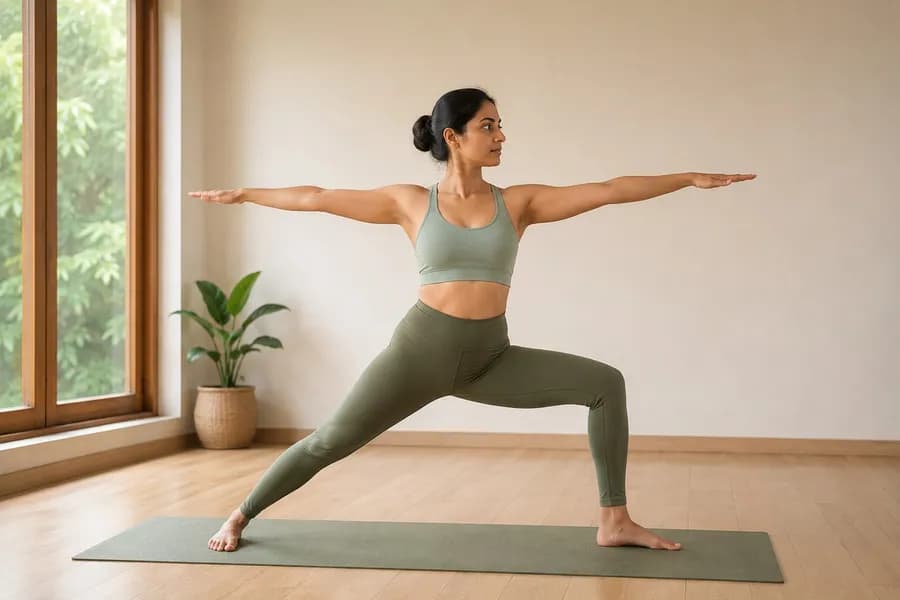
What Is Yoga Asana? A Complete Guide to Poses, Benefits & Getting Started
A yoga asana is a specific body posture held with awareness, breath, and intention — working on flexibility, strength, posture, and the nervous system simultaneously. See the complete guide to poses and benefits.
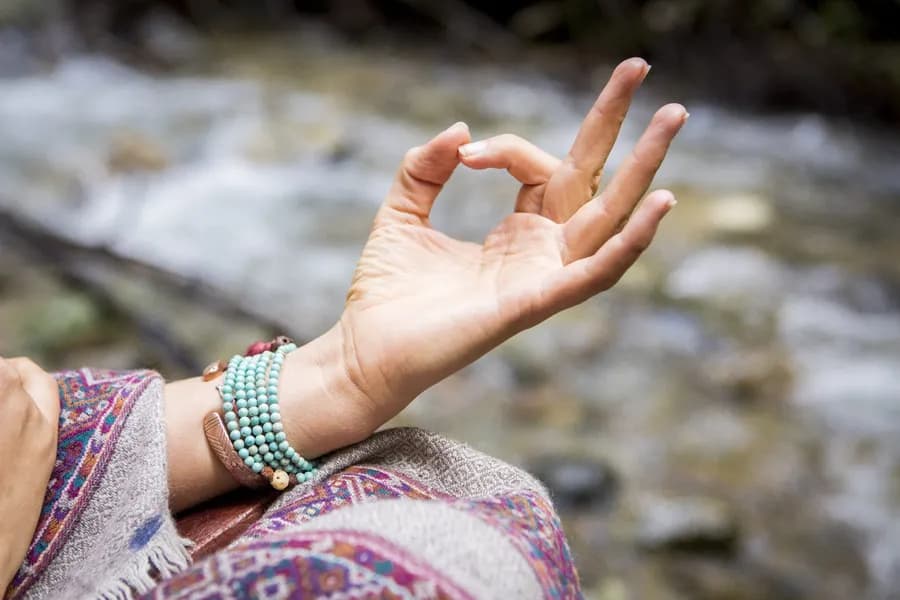
What is Mudra in Yoga? a Complete Guide to Yoga Mudras
Mudras are psycho-physical seals that influence the physiological state through nerve endings in the fingers, the psychological state through symbolism,